Safety Clean Parts Washers: Gear and Setup Tips
Flow-through parts washer brushes bring solvent straight to the bristles, and this guide covers safe use, hose and brush size, and setup before the first wash.

On this page
A brake job leaves calipers and bolts coated in grease, and the parts washer is where they get clean. A safety clean parts washers setup means a flow-through brush, the right solvent, and a routine that keeps solvent off your skin and off the floor. This guide covers the brush, the safety rules, and the setup, in that order.
As an Amazon Associate I earn from qualifying purchases. GarageToolHQ earns a commission when you buy through links on our product pages, at no extra cost to you. Read our affiliate disclosure.
Below: how a flow-through brush works, where the risk comes from, and a checklist to run before the first wash.

2 Pcs Parts Washer Brush with 31in Hose,Wear
A 2-pack of parts washer brushes with a 31 inch flow-through hose and a 10.5 inch brush with PP bristles, for parts washers, on-engine cleaning and fluid evacuation.
Pros
- Two brushes in the pack, a spare on hand
- 31 inch hose delivers solvent to the bristles
- 10.5 inch brush with soft PP bristles
- Ergonomic threaded grip prevents slip-off
Cons
- No weight stated on the listing
- Spec table gives 1.0 inch dimensions, not 31 inch
- No warranty term is stated
- Same brush as the single-pack listing

Parts Washer Brush with 31 Inch Hose
A single parts washer brush with a 31 inch flow-through hose and a 10.5 inch brush with PP bristles, for parts washers, on-engine cleaning and fluid evacuation.
Pros
- 31 inch hose delivers solvent to the bristles
- 10.5 inch brush with soft PP bristles
- Ergonomic threaded grip prevents slip-off
- Lightweight hose with good bending performance
Cons
- One brush only, no spare in the pack
- Spec table gives 1.0 inch dimensions, not 31 inch
- No warranty term is stated
- Same brush as the 2-pack listing
Safety clean parts washers: where the risk comes from
Solvent does the cleaning, and solvent is the risk. It strips grease from parts, and it strips the oils from your skin too. Solvent vapors can be flammable, and in a closed garage the heavier vapors build up near the floor, where a water heater pilot or a grinder spark can find them. A splash in the eyes hurts, and the fumes are the reason to keep the air moving. None of that means you skip the washer: it means you treat the solvent with respect, keep the air moving, and keep the brush between your hands and the parts.
- Flammable vapors. Solvent vapors can be flammable, and the heavier vapors collect near the floor. Keep the washer away from open flames, pilot lights and sparks, and never smoke at the bench.
- Skin contact. Solvent strips oils from skin. Wear gloves, and wash your hands with soap and water when the job is done.
- Eye splash. A brush flicks solvent. Wear eye protection when you scrub, and keep the brush low in the basin.
- Fumes. Work with the garage door open or a fan moving air, and step out if the smell gets strong.
How a flow-through brush works
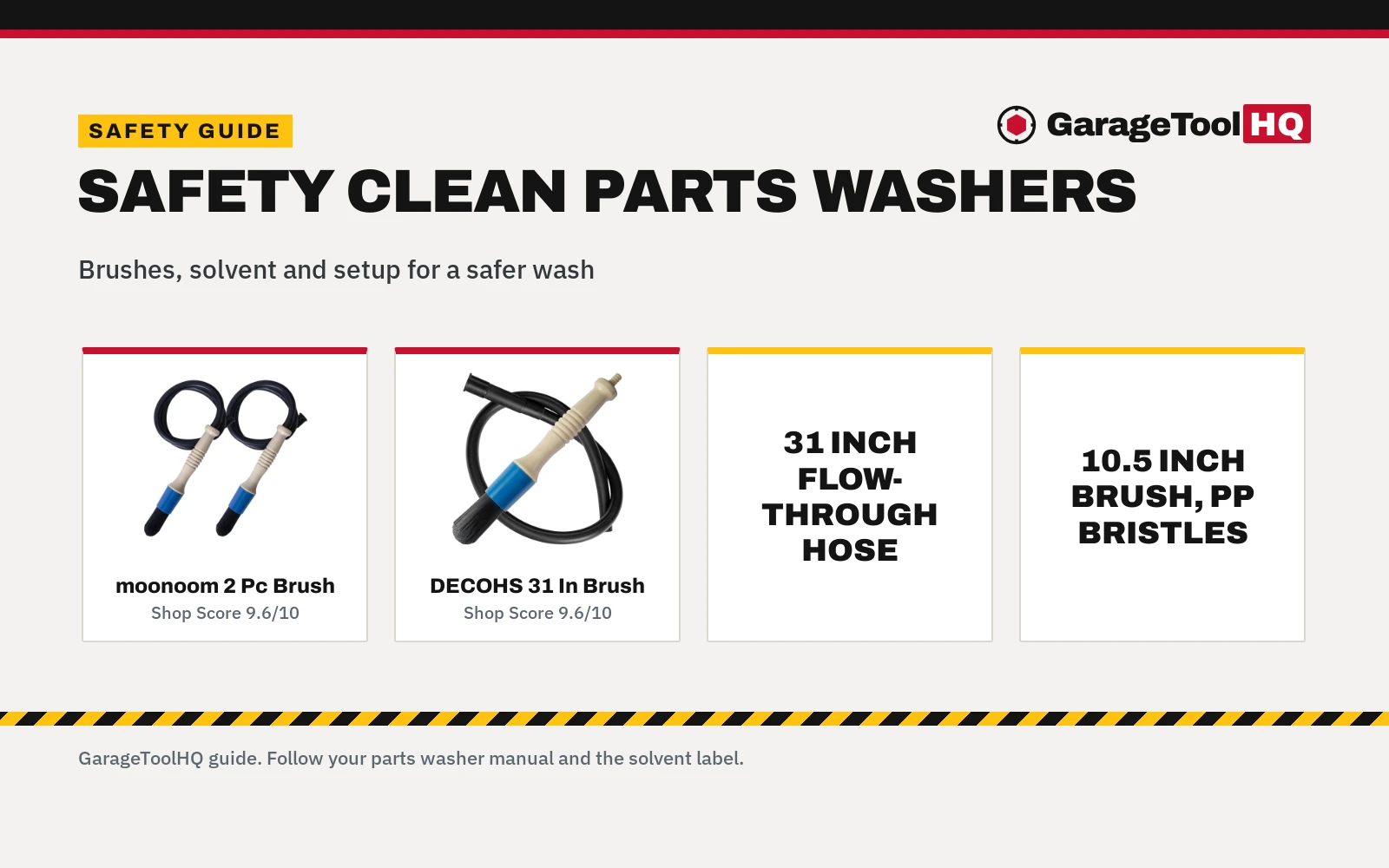
A flow-through brush is a brush with a hose. The hose connects to the washer pump, and solvent runs through the hose to the bristles, so the brush scrubs with solvent delivered straight to the bristles. Both brushes below work this way: a 31 inch rubber hose, a 10.5 inch brush, and PP bristles that the listings call soft and not easy to fall off. The hose is stated to resist corrosion, oil and abrasion, and to bend well, so the brush gets into deep crevices and loosens stubborn deposits.
| Brush | Pack | Hose | Brush size |
|---|---|---|---|
| moonoom 2 Pc Brush | 2 pcs | 31 inch | 10.5 inch |
| DECOHS 31 In Brush | 1 pc | 31 inch | 10.5 inch |
The two listings describe the same brush: the same hose, the same brush size, the same bristles and the same uses. The pack is the stated difference: one brush, or two. The DECOHS listing also states a weight of 0.5952481074 pounds; the moonoom listing states no weight. Pick the DECOHS pack if a brush is all you need, and the moonoom pair if you want a spare on the shelf.
The safety rules that matter
- Ventilate. Open the garage door or run a fan before you start, and keep the air moving while you wash.
- Gloves and eye protection. Wear solvent-resistant gloves and eye protection for every wash, even a quick one.
- No flames or sparks. Keep the washer away from pilot lights, grinders and anything that sparks. Never smoke at the bench.
- Keep the brush in the basin. Scrub with the brush low in the washer so solvent stays in the basin and off the floor.
- Close the lid when you stop. A closed lid cuts vapor and keeps dust out of the solvent.
- Wash up after. Wash your hands with soap and water when the job is done, and change out of solvent-splashed clothes.
- Store solvent right. Keep spare solvent in its labeled container, away from heat and flames, and follow the label for disposal of used solvent.
Solvent strips grease from parts and the oils from your skin alike. If it gets on your skin, wash it off with soap and water right away, and keep it out of your eyes.
Use rated jack stands on solid ground, wear eye protection with power and air tools, keep fuel-burning equipment out of a closed garage, and follow the manual for every tool. Read our Safety Disclaimer.
Parts washer brushes for the job
The washing step is where the brush earns its keep: the hose brings solvent to the bristles, and the bristles reach the crevices a rag cannot.
| Product | Shop Score | Perf. /35 | Build /25 | Value /25 | Safety /10 | Warranty /5 |
|---|---|---|---|---|---|---|
| moonoom 2 Pc Brush | 9.6 | 29 | 21 | 21 | n/a | 0 |
| DECOHS 31 In Brush | 9.6 | 29 | 21 | 20 | n/a | 0 |
Scores run from 9.2 to 9.8: each product’s point total is placed on that range, so more points always means a higher score. Safety counts only for powered gear or where the listing states safety features; where it does not apply, the score is taken over the remaining 90 points.
For a full washer to pair with a brush, see our picks for the best parts washer for a home garage.
Setup checklist before the first wash
- Check the hose. Make sure the 31 inch hose is seated on the washer pump and the brush, with no kinks.
- Check the brush head. Give the brush a tug: the listings say the bristles are soft and not easy to fall off, and a loose head belongs back in the box.
- Set the washer on a level floor. A level washer keeps solvent in the basin and the pump fed.
- Fill to the level the manual calls for. Add solvent to the level the washer manual calls for, not over it, and check the manual for the solvent type.
- Put on gloves and eye protection. Do this before the first part goes in, not after the first splash.
- Run the pump and check the flow. Watch solvent reach the bristles before you start scrubbing.
FAQ: garage tools
Can I use a parts washer brush on an engine?
Yes. Both listings say the brushes suit on-engine cleaning, as well as parts washing and fluid evacuation. Keep the brush low in the basin, and keep solvent off wiring and rubber hoses where you can.
What size hose does a parts washer brush need?
Both brushes here come with a 31 inch hose, and the brush itself is 10.5 inches. The hose is stated to resist corrosion, oil and abrasion, and to bend well enough to reach deep crevices.
How do I clean the brush itself?
Wash it with water directly, as both listings state. Let it dry before it goes back in the washer, and check the bristles for wear before the next job.
Do I need one brush or two?
It depends on the shop. The DECOHS listing holds one brush, and the moonoom listing holds two of the same brush. One brush covers a washer; the pair gives you a spare for when the bristles wear.
What solvent should I use in a parts washer?
Neither listing names a solvent, so follow the washer manual and the solvent label. Use the solvent the washer maker calls for, and never mix solvents or use gasoline as a parts wash.
Related: the best parts washer for a home garage, our best brake cleaner picks, the engine and shop equipment hub and the best oil drain pan.