Air Compressor Price: What Drives the Cost
What sets the cost of an air compressor, from a portable tire inflator to a shop unit, and how to match a machine to the job.

On this page
Air compressor price depends on what the machine has to do: a small portable inflator that tops up tires costs less than a shop compressor that runs air tools through a workday. The gap comes from size, air output, tank, power and features. This guide explains what sets the cost, so the compressor bought matches the job.
As an Amazon Associate I earn from qualifying purchases. GarageToolHQ earns a commission when you buy through links on our product pages, at no extra cost to you. Read our affiliate disclosure.
Below: the cost drivers, how to match a compressor to the job, and the safety checks that matter before use.
Air compressor price: what sets the cost
Price follows capability. A compressor that moves more air at higher pressure, stores more of it, and runs longer without stopping costs more to build, so it costs more to buy. The list below walks through each driver, with figures from a portable inflator listing to show what the numbers on a listing mean.
- Type and size. A portable tire inflator is a small pump with a battery and a hose, built to top up tires on the roadside. A shop compressor is a larger machine with a motor, a pump and a tank, built to run air tools in the garage. The shop machine has more parts and more metal, so it costs more.
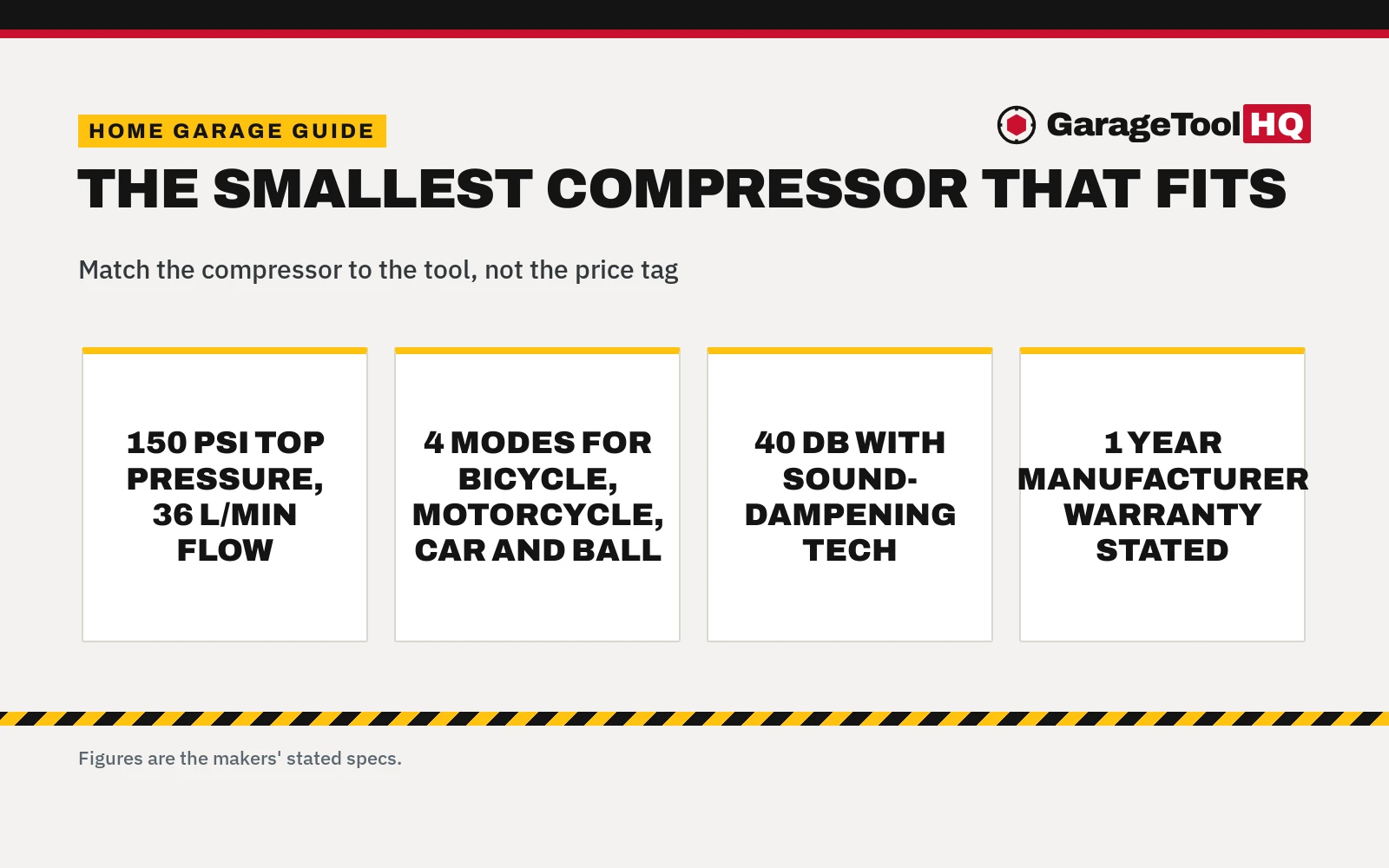
- Maximum pressure. The pressure a compressor can reach sets which jobs it can do. The Hafuloky tire inflator listing states a maximum of 150 PSI, with a manual setting that adjusts from 3-150 psi, and preset modes for bicycle, motorcycle, car and ball inflation. A machine that reaches higher pressure needs a stronger pump and stronger fittings, and that adds cost.
- Air flow. Flow is how fast the machine moves air, and it sets how fast a tire fills or a tool runs. The Hafuloky listing states a flow rate of 36 L/min. More flow means a bigger pump and a bigger motor, so flow is a main cost driver.
- Tank. A tank stores air so the motor can rest between bursts and the tool keeps running while the pump catches up. A larger tank holds more air and needs a larger frame, which adds cost. A portable inflator has no tank at all, which is part of why it costs less.
- Power source. A battery inflator runs where there is no outlet, and the battery is part of the cost. The Hafuloky listing states its inflator also acts as an emergency power bank. A corded shop compressor draws power from the wall and needs no battery, but it stays where the outlet is.
- Noise. A quiet machine costs more to build, because it needs sound-dampening parts. The Hafuloky listing states noise of 40 dB and credits sound-dampening tech with the low figure. If the compressor runs near the house or late in the day, quiet is worth paying for.
- Controls and features. A digital gauge with a preset pressure and auto stop, preset modes, LED lights and a deflation function all add cost. The Hafuloky listing states 4 preset modes, a dual display panel that shows the preset pressure and the live pressure, an auto stop once the tire reaches the preset value, LED lights, and a deflation function for letting air out when pressure runs above the target.
- Warranty length. The Hafuloky listing states a 1 year manufacturer warranty. A longer warranty usually comes with a higher price, because the maker stands behind the machine for longer.
How to match a compressor to the job
Start from the job, not the machine. A tire inflator suits topping up tires and balls on the road, while a shop compressor suits air tools that need a steady supply of air. Match the pressure and the flow to the tool or the tire, and check the listing for the figures before buying.
Think about where the machine will run. A battery inflator goes in a trunk or a saddlebag and works at the roadside, while a shop compressor stays in the garage near an outlet. If the job is in the driveway or on the road, portability matters more than tank size.
Think about noise and run time too. A quiet machine suits work near the house, and a tank suits tools that use air in bursts. Read the manual for the machine bought, and follow it for maintenance and storage.
Drain the tank after use so water does not rust it from the inside, never exceed the tool's rated pressure, wear eye protection, and run 240V units on the circuit the manual calls for. Do not run a gas engine compressor in a closed garage. Read our Safety Disclaimer.
Compressor safety checks
Compressed air is stored energy, so treat it with respect. Wear eye protection, keep the air stream away from people, and never point a nozzle at skin. Follow the manual for the machine bought for maintenance and storage. Keep flammable materials away from a running compressor, and switch the machine off before servicing it.
FAQ: garage tools
How much does a portable tire inflator cost compared with a shop compressor?
A portable tire inflator costs less than a shop compressor, because it is a smaller machine with no tank and a smaller pump. A shop compressor costs more because it moves more air, stores it in a tank and runs air tools. Buy the smaller machine when the job is topping up tires, and the larger machine when the job needs air tools.
What pressure do I need from an air compressor?
Match the pressure to the job: tires and inflatable goods need the pressure the tire or the product calls for, and air tools need the pressure their maker lists. The Hafuloky inflator listing states a maximum of 150 PSI and a manual range of 3-150 psi, which covers bicycle, motorcycle, car and ball inflation. Check the requirement before buying, and buy a machine that reaches it with room to spare.
Does a bigger tank cost more?
Yes. A bigger tank holds more air, needs more material and a stronger frame, which adds cost. A tank also lets the motor rest between bursts, so it suits tools that use air in short bursts. A portable inflator with no tank suits topping up tires, where steady flow matters more than stored air.
Is a quiet air compressor worth the extra cost?
It can be, when the compressor runs near the house or in shared space. The Hafuloky listing states noise of 40 dB and credits sound-dampening tech. A quiet machine is easier to live with, but check the noise figure on the listing and compare it with the figures other listings state.
What does an air compressor warranty cover?
It depends on the maker, so read the listing. The Hafuloky listing states a 1 year manufacturer warranty. Check what the warranty covers, how long it lasts, and what the maker asks for when a claim is made.
Do air compressors need oil?
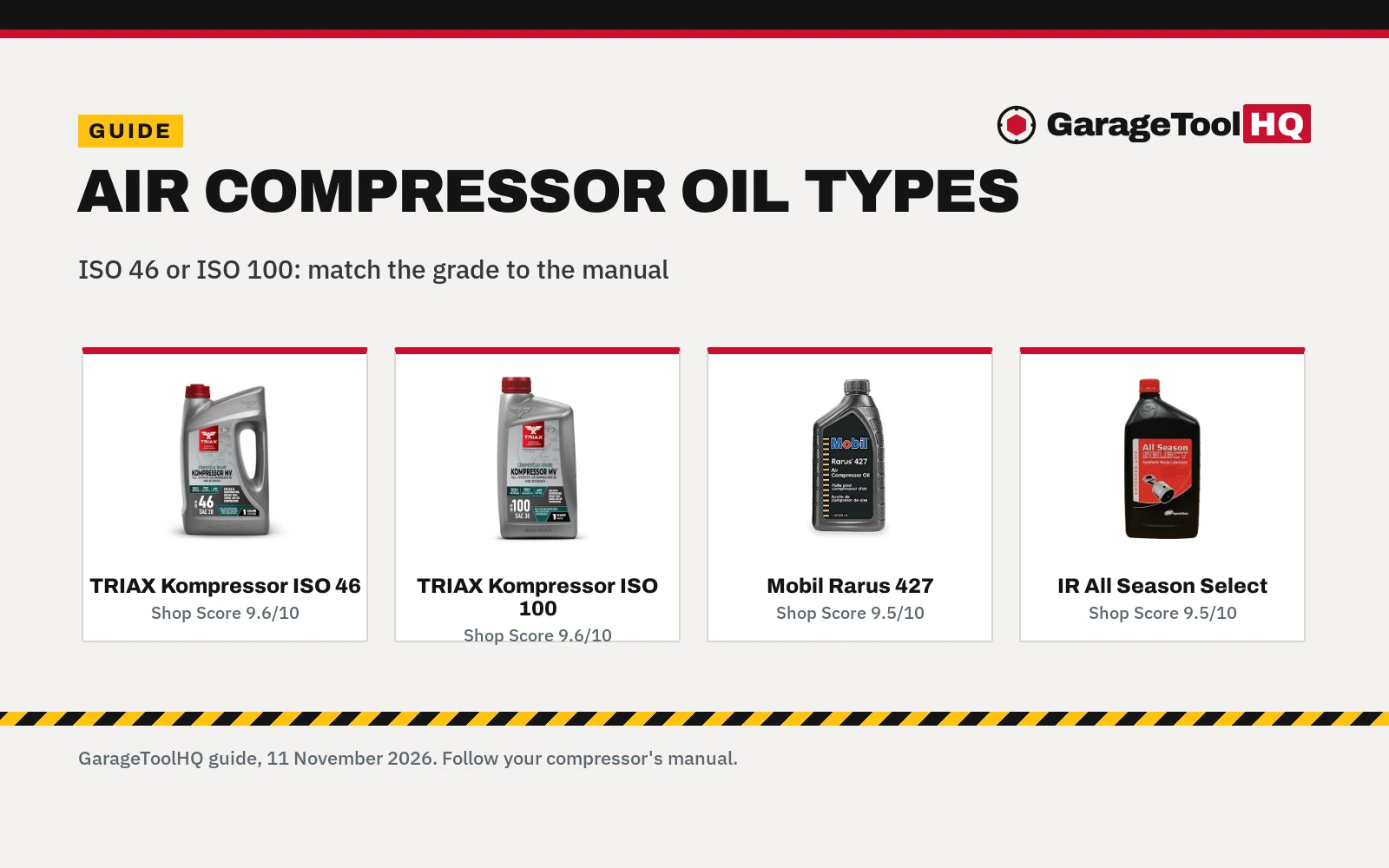
Some do and some do not. Oil-lubricated pumps need the oil their maker lists, while oil-free pumps need none. Check the manual for the machine bought, and see our guide to air compressor oil types for which oil to use.
Related: our air compressors hub, the best air compressors, a low cost air compressor for a home garage, the best quiet air compressor and the best cordless tire inflator. For choosing between tank styles, see pancake vs twin tank air compressor.