How to Use Carpet Extractor with Heater: Step-by-Step Guide
Learn how to use a carpet extractor with a built-in heater to clean vehicle upholstery, lift oily grime, and dry fabrics safely in your garage.

On this page
Top picks at a glance
As an Amazon Associate we earn from qualifying purchases.
- 1
 BISSELL Little Green HydroSteam Portable Carpet Cleaner9.6/10View on Amazon
- 2
 McCulloch MC1275 Heavy-Duty Steam Cleaner9.6/10View on Amazon
- 3
 McCulloch MC1385 Canister Steam Cleaner9.5/10View on Amazon
- 4
 Mytee Lite 8070 Heated Carpet Extractor W/Free ChemicalsView on Amazon
- 5
 Heated Carpet & Upholstery ExtractorView on Amazon
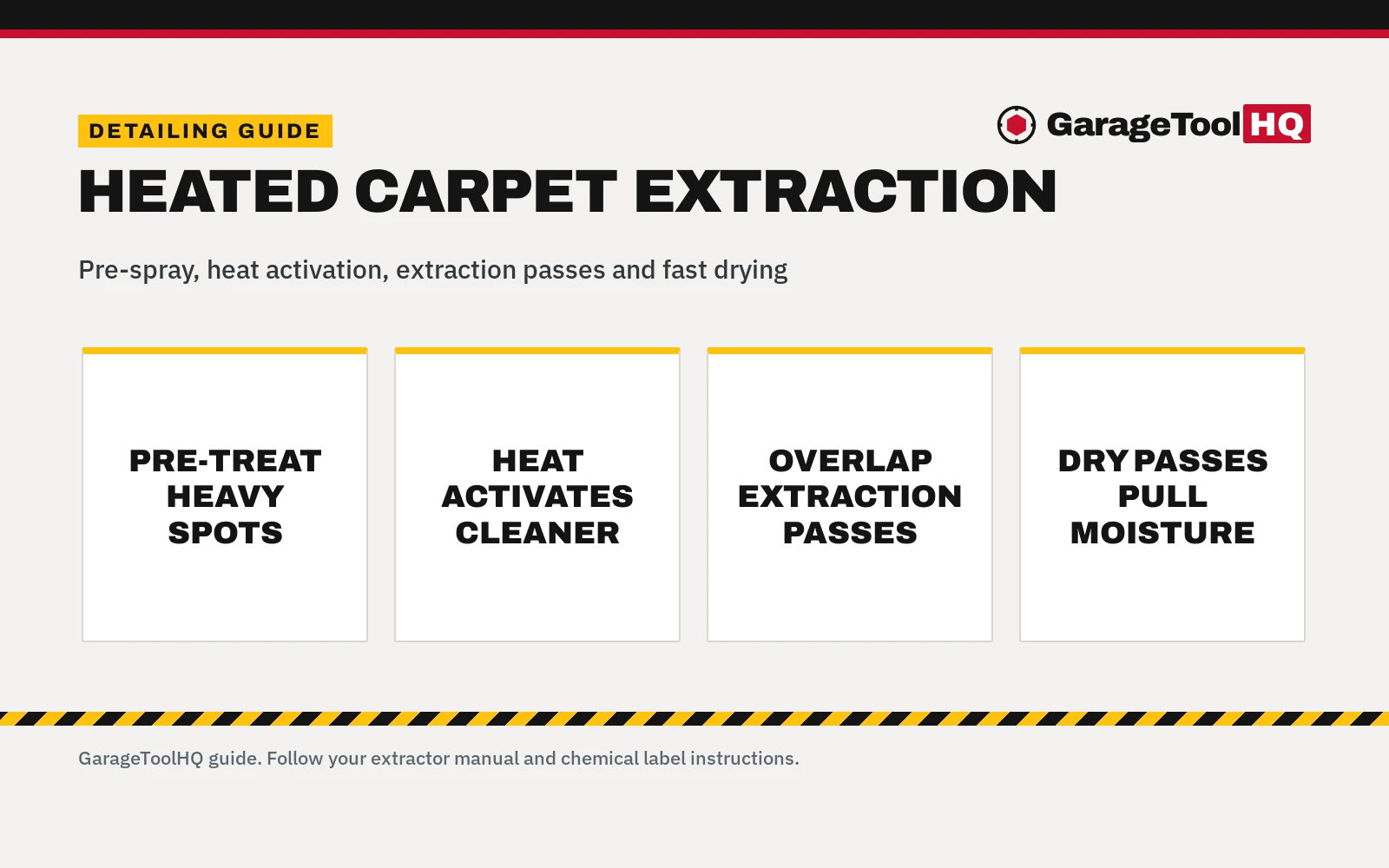
After dragging motor oil and grime onto vehicle floor mats during a weekend brake job, a standard vacuum will not clean the mess. To understand how to use carpet extractor with heater equipment properly, the core process requires applying a dedicated fabric pre-spray to loosen oily grime, letting the machine heating core bring rinse water up to temperature, and extracting the dissolved residue with overlapping fluid passes followed by vacuum recovery passes. Hot rinse water softens petroleum grease and accelerates detergent action that cold water cannot match. Performing slow, continuous dry recovery passes pulls the remaining moisture out so automotive carpets dry clean without musty garage odors.
More options to compare
 Mytee Lite 8070 Heated Carpet Extractor W/Free ChemicalsCheck price on Amazon
 Heated Carpet & Upholstery ExtractorCheck price on Amazon
GarageToolHQ earns a commission when you buy through links on our product pages, at no extra cost to you. Read our affiliate disclosure.
Below: why heat is essential for automotive fabrics, how heated extractors compare to alternative detailing equipment, an operating checklist to follow in your shop, electrical precautions for home garages, and answers to common detailing questions.
How to use carpet extractor with heater units: why heat matters for automotive fabric
Automotive carpeting and seat upholstery endure much harsher abuse than residential living room rugs. Vehicle floor pans collect dropped tools, greasy boots, road salt, spilled drinks, and tracked-in engine fluids. Cleaning these deep contaminants requires understanding the physical advantages of heated water extraction:
- Thermal breakdown of petroleum grease: Engine oil, drivetrain lubricants, and asphalt residues soften under hot water, allowing cleaning surfactants to emulsify and lift stubborn oily films from carpet fibers.
- Reduced liquid surface tension: Heating the rinse fluid lowers surface tension, allowing hot water to wet fabric fibers and penetrate soil deposits faster, which flushes grime free with fewer wet passes.
- Enhanced chemical efficiency: Cleaning solutions activate faster at elevated temperatures, which means you can break down tough traffic lanes using milder chemical concentrations rather than harsh industrial solvents.
- Accelerated drying periods: Warm fabric fibers release moisture into garage air much faster than cold, saturated upholstery, significantly shortening overall drying periods and preventing mildew formation inside closed vehicle cabins.
Carpet extractor types and detailing tools compared
| Tool Category | Operating Principle | Best Garage Application |
|---|---|---|
| Heated carpet extractor | In-line heater core with pressurized fluid injection and high-lift vacuum recovery | Heavily soiled vehicle floor pans, greasy floor mats, and deep fabric seat stains |
| Cold water extractor | Ambient fluid delivery paired with continuous vacuum recovery suction | Light maintenance cleaning, surface dust removal, and delicate vintage fabrics where heat is avoided |
| Detailing steam cleaner | High-temperature vapor output with minimal moisture volume and no vacuum extraction | Sanitizing leather seats, detailing air conditioning vents, dissolving console grime, and cleaning door jambs |
Choosing the appropriate equipment depends on whether your project requires high-volume fluid flushing or low-moisture sanitizing. While a heated extractor remains the primary choice for deep upholstery recovery, combining it with specialized tools from our car detailing hub or a dedicated car detailing kit ensures complete vehicle cleaning coverage.
How to operate a heated carpet extractor: step-by-step checklist
- Begin with thorough dry vacuuming. Always remove loose sand, dried mud, and gravel with a dedicated car vacuum for detailing before introducing liquid. Spraying hot water onto dry dirt turns road grit into mud that packs into extractor wand shoes and clogs recovery tanks.
- Apply dedicated fabric pre-spray. Mist traffic areas and stained seats with an automotive upholstery pre-cleaner using a handheld pump sprayer. Keep concentrated chemicals out of the extractor clean water tank to prevent foaming and internal scale buildup.
- Agitate carpet fibers thoroughly. Work the pre-spray into fabric strands using an interior detailing brush or soft drill brush attachment. Mechanical agitation loosens bonded grease from fiber roots so the heated rinse stream can flush contaminants away freely.
- Allow chemical dwell periods. Give the cleaning chemistry adequate dwell time to break down ground-in soils and food spills. The surfactants need opportunity to loosen dirt, but never allow the pre-treatment solution to dry completely on vehicle upholstery.
- Fill supply tank and prime the heating system. Add clean water to the supply tank, verify drain caps are tight, and switch on the solution pump. Depress the wand trigger until water sprays steadily to purge air pockets from internal plumbing and prime the heater core with fluid. Once the lines are primed, switch on the heating element and allow the unit to reach operating temperature before starting extraction.
- Conduct overlapping extraction passes. Hold the clear extraction wand flat against the fabric, squeeze the solution trigger, and pull the tool backward in straight, overlapping paths. Maintain consistent wand contact across the surface so hot water flushes evenly through the material.
- Complete multiple dry recovery passes. Release the solution trigger and draw the vacuum wand firmly over the cleaned area repeatedly. Continue dry vacuum passes until the clear recovery dome shows minimal moisture collection, extracting deep moisture from seat padding and carpet underlayment.
- Flush recovery lines and clean the waste tank. Empty collected dirty recovery water into an approved utility drain, rinse recovery tank walls clean of grit, and draw clean water through the vacuum hose to flush extracted soil out of the recovery wand and suction line. Drain any remaining supply water from the clean tank so mineral deposits do not form during storage.
Always verify the clean water tank is full and purge air through the spray wand before turning on the heating element. Operating an extractor heating element in dry lines or with an empty supply tank can burn out heating coils, warp internal seals, and trip thermal limit switches. Always shut off the heater switch immediately when the clean water tank runs out.
Keep electric pressure washers on a GFCI outlet, never point the wand at people or pets, wear eye protection with polishers and chemicals, and read the label before mixing any cleaning products. Read our Safety Disclaimer.
Heated extraction versus dedicated vehicle steam cleaning
Both heated extractors and automotive steam machines rely on high temperatures to break down stubborn grime, but their mechanical functions serve completely different detailing needs:
- Fluid volume and flushing capacity: A heated extractor injects pressurized hot water deep into fabric pile and immediately recovers that moisture with powerful vacuum airflow. This continuous flushing action draws trapped sand, salt, and dissolved oils out of dense carpet padding. A dedicated steam cleaner for car detailing produces high-temperature vapor with very low moisture volume and lacks built-in extraction suction, relying on microfiber towels to absorb lifted grime.
- Surface compatibility: Heated extractors excel on porous, high-absorbency surfaces like vehicle floor carpets, trunk liners, and durable cloth bucket seats. In contrast, steam cleaners are built for hard non-porous surfaces, delicate leather seating, instrument cluster seams, cup holders, and dashboard vents where high moisture injection would cause water damage or mold growth.
- Upholstery drying duration: Because steam machines generate vapor with minimal water content, treated surfaces dry rapidly without prolonged moisture retention. Heated extractors leave fabric damp after washing, requiring thorough dry vacuuming passes and shop ventilation to finish drying completely.
For dedicated garage detailing enthusiasts, keeping both machines organized on a mobile detailing cart provides the right tool for both deep fabric extraction and delicate interior surface sanitizing.
Electrical load management and garage circuit safety
Heated carpet extractors rank among the most power-hungry pieces of equipment in an auto detailing setup. Operating an internal fluid heater, a high-pressure pump, and a high-lift vacuum motor simultaneously creates heavy electrical demand on residential garage wiring. Managing this electrical draw safely keeps your workshop running without nuisance breaker trips or damaged machinery:
- Separate power cord design: Many commercial-grade heated extractors feature separate power cords. The primary power cord operates the vacuum motor and solution pump, while the auxiliary power cord supplies electricity exclusively to the heating element. Plug each power cord into separate, independent branch circuits rather than sharing a standard duplex wall outlet, which would overload residential circuit breakers. For compact units operating on a single power cord, plug into a dedicated circuit with no other heavy shop tools running on the same line.
- Heavy-gauge electrical connections: Never run a heated extractor on lightweight household extension cords. Long, thin cords create severe voltage drops that overheat wiring, damage electric vacuum motors, and trigger machine thermal limiters. When an extension cord is required, select a heavy-duty, grounded commercial cord designed for high continuous electrical draw.
- Ground Fault Circuit Interrupter protection: Because carpet extraction involves large volumes of conductive water and high electrical amperage, always connect your equipment to GFCI-protected garage outlets. Inspect power cords regularly for cuts, cracked strain reliefs, or damaged ground pins.
- Professional garage wiring evaluation: If running your extractor repeatedly trips shop breakers or causes overhead lights to dim, avoid resetting the breaker continuously. Have a licensed electrician inspect your garage panel, evaluate branch circuit capacity, and install dedicated shop receptacles suited for high-draw equipment.
Frequently Asked Questions
Can I put detergent directly into the extractor clean water tank?
It is best practice to keep detergent out of the supply tank. Running soapy chemical solutions through the internal heating core can create mineral deposits and chemical buildup that clog spray tips and insulate heating elements. Applying your cleaner as a pre-spray directly onto automotive fabric, followed by a pure hot-water rinse through the extractor, keeps internal plumbing clean and prevents detergent residue from remaining in carpet fibers.
How can I dry automotive carpets faster after heated extraction?
Drying speed depends on thorough vacuum technique and garage airflow. Make repeated dry passes with the extractor wand until the clear window shows no droplets moving into the hose. Position high-velocity garage fans or shop blowers blowing across vehicle floor pans with car doors open. In humid weather or enclosed workshops, placing a garage dehumidifier inside the space accelerates moisture evaporation from seat cushions and carpet backing.
Will hot water set blood, dairy, or food stains?
Yes. High temperatures can coagulate organic proteins found in milk spills, food residue, and blood, binding those stains permanently into synthetic fabric strands. For protein-based spills, pre-treat with a dedicated enzyme cleaner and extract using ambient cold water initially. Reserve heated water extraction for motor oil, road grease, mud, and heavy traffic lane grime.
Do I need distilled water for a heated carpet extractor?
Distilled or demineralized water is strongly recommended if your garage tap water contains high mineral levels. Hard water causes calcium scale to accumulate on the internal heating element and inside narrow spray nozzles, reducing heating efficiency over time. If tap water must be used, periodically run an approved descaling solution through the machine followed by a clean water flush.
Can I use a heated carpet extractor on vehicle headliners?
No. Never use hot water extraction on vehicle headliners. The combination of heat, moisture, and powerful vacuum suction will break down the delicate glue layer bonding headliner fabric to its foam backing, causing the material to sag and separate permanently. Headliners should be cleaned using dry foam products or gentle surface dabbing with clean microfiber towels.
What should I do if the extractor stops spraying heated water?
First, switch off the heating element and confirm the clean water supply tank is not empty. If the tank contains liquid, inspect the wand spray nozzle for mineral clogging or debris. If water sprays normally but remains unheated, check whether the machine thermal safety switch has tripped, allow the heat exchanger core time to cool down, and verify that the electrical circuit supplying the heater remains energized.
Related: explore our guide to the best steam cleaner for car detailing, see our guide on the best car vacuum for detailing, organize your equipment with the best detailing cart, browse the car detailing hub, or compare options for a garage dehumidifier to keep your shop dry.