What Does a Carpet Extractor Do? How It Works and What to Know
How a carpet extractor injects cleaning solution into automotive upholstery, flushes embedded grime from fibers, and recovers wastewater with high-lift vacuum suction.

On this page
Top picks at a glance
As an Amazon Associate we earn from qualifying purchases.
- 1
 BISSELL Little Green HydroSteam Portable Carpet Cleaner9.6/10View on Amazon
- 2
 McCulloch MC1275 Heavy-Duty Steam Cleaner9.6/10View on Amazon
- 3
 McCulloch MC1385 Canister Steam Cleaner9.5/10View on Amazon
- 4
 Mytee Lite 8070 Heated Carpet Extractor W/Free ChemicalsView on Amazon
- 5
 Heated Carpet & Upholstery ExtractorView on Amazon
After finishing a messy brake job or pulling an oily transmission, tracking road grime, spilled fluid, and driveway dirt across vehicle floor mats is almost inevitable. When a standard shop vacuum leaves dark traffic lanes behind in automotive fabric, many vehicle owners wonder: what does a carpet extractor do? A carpet extractor is a specialized wet-cleaning machine that injects pressurized water and detergent deep into fabric fibers, breaks down embedded grime, and immediately pulls the dirty fluid out using high-lift vacuum suction. Unlike a basic vacuum that only lifts loose dry debris from the surface, an extractor flushes out ground-in soil, dissolved oils, and old spills so vehicle carpets and upholstery dry thoroughly clean.
More options to compare
 Mytee Lite 8070 Heated Carpet Extractor W/Free ChemicalsCheck price on Amazon
 Heated Carpet & Upholstery ExtractorCheck price on Amazon
GarageToolHQ earns a commission when you buy through links on our product pages, at no extra cost to you. Read our affiliate disclosure.
Below: how the extraction cycle operates inside vehicle cabins, the difference between extractors and standard vacuums, a step-by-step operating checklist, and key maintenance practices to keep your machine pulling strong suction.
What does a carpet extractor do? The core extraction process
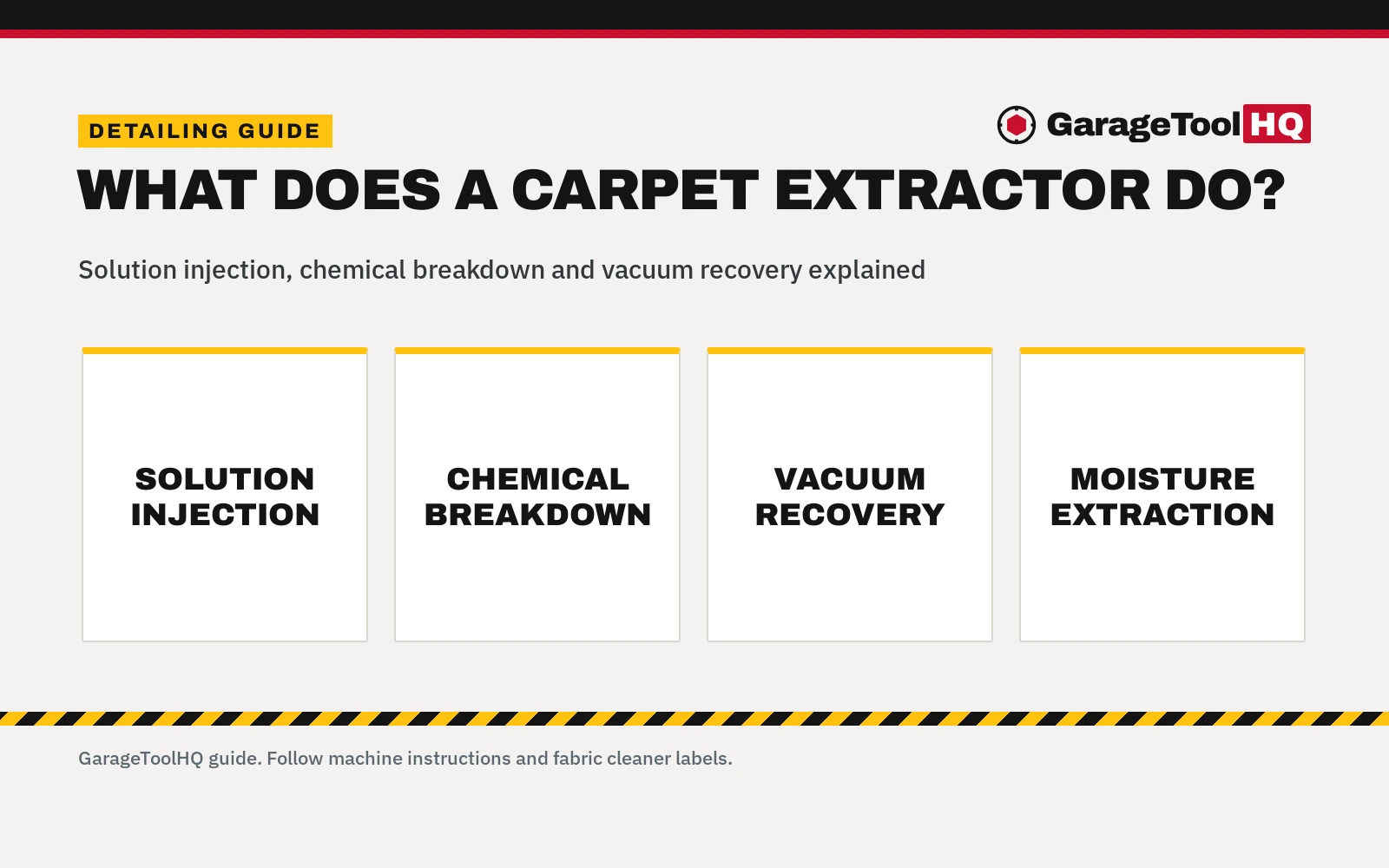
A carpet extractor combines chemical cleaning, pressurized fluid delivery, and mechanical suction in a continuous cycle. While standard household machines rely on broad rolling floor wands, automotive extraction tools use compact hand nozzles with narrow vacuum slots and targeted spray jets designed for tight floorboards and contoured seats. The extraction cleaning process accomplishes deep cleaning through several coordinated stages:
- Pressurized solution injection: A dedicated fluid pump pushes clean water mixed with extraction detergent through high-pressure tubing directly to spray tips mounted behind the vacuum nozzle. When the operator triggers the valve, the pressurized spray drives cleaning fluid into the fabric weave to dissolve settled road dust and spilled liquids.
- Chemical emulsification: The injected surfactant lowers the surface tension of water, encapsulating greasy soils, petroleum residues, and sticky stains. This chemical suspension releases the bond between ground-in dirt and synthetic carpet strands.
- Fiber agitation: Scrubbing the treated fibers with an upholstery brush separates individual yarn strands and works the cleaning solution around embedded particles. Agitation lifts deep contaminants toward the surface where airflow can grab them.
- High-lift vacuum recovery: Powerful vacuum motors generate sealed suction right at the nozzle shoe. As the clear suction head slides across the damp fabric, it creates an airtight seal that evacuates wastewater, suspended soil, and residual detergent straight into a separate recovery tank.
- Moisture reduction: Because high airflow pulls fluid directly out from the carpet pile and fabric face, materials retain only residual dampness rather than becoming saturated waterlogged cushions. Proper extraction allows seats and floor mats to dry thoroughly without foul odors or mildew growth.
Carpet extractor vs shop vacuum vs steam cleaner
In a home workshop or detailing bay, vehicle owners often ask whether an existing shop vacuum or steam cleaner can replace a dedicated extractor. While each piece of equipment handles interior cleanup, their operating principles and cleaning depths differ substantially:
| Equipment Type | Primary Cleaning Action | Fluid and Chemical Handling | Best Garage Use Case |
|---|---|---|---|
| Carpet extractor | Pressurized fluid injection followed immediately by vacuum recovery | Separate tanks for fresh cleaning solution and collected dirty wastewater | Flushing embedded grease, road dirt, food spills, and pet stains from seats and carpets |
| Wet and dry shop vacuum | High-volume suction for dry debris or standing fluid spills | Dedicated collection drum; no fluid injection pump or solution delivery | Initial dry debris pickup, bulk liquid evacuation, and general shop floor cleanup |
| Detailing steam cleaner | High-temperature pressurized steam vapor to dissolve surface grime | Internal boiler tank; produces vapor rather than bulk fluid extraction | Sanitizing cup holders, air vents, dashboard crevices, seat belts, and textured vinyl |
A wet and dry shop vacuum combined with a handheld spray bottle can pull some surface liquid, but it lacks the pressurized spray atomization and specialized narrow extraction shoe required to flush deep pile. For general pre-cleaning, our guide to the best car vacuum for detailing covers units built for dry cabin sweep-outs. Meanwhile, a steam cleaner excels on hard textured plastics, cup holders, air vents, and door jambs where heavy moisture must be avoided, as detailed in our guide to the best steam cleaner for car detailing. A dedicated extractor remains the specialized tool when porous automotive textiles require thorough deep flushing.
How to use a carpet extractor on automotive interiors: step by step
Operating a carpet extractor properly ensures thorough cleaning without soaking underlying seat cushions or damaging electrical wiring beneath vehicle seats. Follow this methodical shop workflow:
- Perform thorough dry vacuuming. Always remove all loose sand, dried mud, and surface crumbs with a dry utility vacuum before adding any liquid. Introducing cleaning solution to dry dirt turns grit into heavy sludge that clogs carpet fibers and fouls extractor filters. For a complete detailing setup, see our review of the best car detailing kit.
- Pre-treat stubborn spots. Mist a dedicated automotive interior cleaner or enzyme fabric spotter directly onto heavy traffic zones, grease marks, and drink spills. Allow adequate dwell time according to the chemical manufacturer label so the surfactants can dissolve oily residues.
- Agitate fabric fibers. Work the pre-treatment into the upholstery pile using a handheld horsehair brush or soft nylon detailing brush. Gentle circular brushing separates matted fibers and dislodges trapped particles from the base of the carpet weave.
- Fill the clean solution tank. Fill the clean water reservoir with warm or room-temperature water and the recommended dilution of low-foaming carpet extraction shampoo. Avoid regular dish soaps or high-foaming laundry detergents, which fill the recovery tank with frothy suds that bypass the float shutoff and enter the vacuum motor.
- Perform overlapping wet passes. Place the clear extraction nozzle firmly against the fabric. Depress the solution trigger while pulling the tool backward in straight, overlapping strokes. Maintain consistent downward pressure so the vacuum shoe maintains an airtight seal against the carpet.
- Execute thorough dry recovery passes. Release the fluid spray trigger and make repeated vacuum-only passes over the wet section. Watch the transparent tool window: continue slow extraction passes until virtually no liquid droplets are visible moving through the recovery channel.
- Ensure complete cabin ventilation and drying. Park the vehicle in a dry garage bay, roll all windows down, and position a shop air mover or floor fan to blow air across the carpets and seats. Proper air movement ensures the interior dries completely to the touch before the vehicle is parked outside or closed up.
Modern vehicle seats contain dense foam cushions, passenger occupant sensors, side airbag modules, and heating grids. Excessive fluid injection can saturate deep cushion cores that dry slowly or risk moisture damage to electrical connectors. Always minimize wet trigger passes, release the fluid spray early, and rely on multiple dry extraction passes to remove the maximum volume of moisture.
Keep electric pressure washers on a GFCI outlet, never point the wand at people or pets, wear eye protection with polishers and chemicals, and read the label before mixing any cleaning products. Read our Safety Disclaimer.
Heated vs non-heated carpet extractors
When selecting or operating an extractor, understanding the distinction between heated and cold-water units helps tailor the machine to the job:
- Non-heated carpet extractors: These units rely on ambient water or warm tap water poured directly into the solution tank. They work effectively for routine interior cleaning, dust accumulation, fresh spills, and light vehicle upkeep. Because they lack internal electric heating elements, they draw less electrical current and operate reliably on standard household garage circuits.
- Heated carpet extractors: Heated units incorporate an internal inline heating core that elevates water temperature as the solution travels toward the spray wand. Elevated water temperature dramatically accelerates the breakdown of motor oils, driveway grease, hardened food sugars, and dried beverage residue. For detailed operating advice on thermal machines, see our guide on how to use carpet extractor with heater.
Maintaining your carpet extractor in the garage
Because carpet extractors pull dirty slurry containing sand, dissolved pet grime, hair, and detergent foam, post-job machine care is essential for long-term reliability:
- Empty and flush the recovery tank immediately: Never leave dirty wastewater sitting inside the collection bucket. Empty the tank into an approved shop drain, rinse away collected sediment, and leave the lid open so the plastic dries without sour smells.
- Flush the fluid lines with clean water: After finishing an extraction session, run clean warm water through the solution tank and spray nozzles thoroughly. Flushing clears concentrated detergent residue that could crystallize and clog tiny brass spray orifices during storage.
- Clean the vacuum shoe and filter screens: Lint, hair, and carpet fuzz collect inside the narrow mouth of the clear hand tool and on the recovery tank dome filter. Rinse these screens clear under running water to maintain peak airflow and vacuum lift.
- Store with tanks detached or vented: Allow all tanks, hoses, and caps to dry completely on a shop shelf before assembling for storage. Storing a damp extractor sealed airtight encourages mold growth inside internal hoses and can degrade internal pump diaphragms.
Frequently Asked Questions
What is a carpet extractor used for in automotive detailing?
A carpet extractor is used to deep-clean porous automotive surfaces including cloth seats, woven floor carpets, fabric floor mats, trunk liners, and upholstered door panels. It injects detergent under pressure to lift ground-in dirt, dissolves oil residues, and vacuums away the dirty wastewater.
Can a carpet extractor be used on vehicle headliners?
Automotive headliners should not be cleaned with a carpet extractor. Headliners consist of thin fabric bonded to a foam backing and rigid substrate with adhesive. Moisture and heavy vacuum suction degrade the delicate foam layer and pull the fabric loose, causing the headliner to sag.
What cleaning chemicals should be put in a carpet extractor?
Only use dedicated low-foaming carpet and upholstery extraction detergents formulated for automotive or commercial machines. High-sudsing cleaners create excessive foam inside the recovery tank that can overwhelm the shutoff float, enter the vacuum motor impellers, and damage the electrical assembly.
How long does car upholstery take to dry after extraction?
Drying times depend on ambient garage temperature, relative humidity, air movement, and the thoroughness of your dry vacuum passes. When dry extraction passes are performed properly and an air mover circulates fresh air through open cabin doors, upholstery dries thoroughly to the touch without lingering dampness.
Can a wet and dry shop vacuum work as a carpet extractor?
A shop vacuum can extract loose fluid from spills, but it cannot inject pressurized cleaning solution deep into fabric pile or create the concentrated vacuum seal provided by a dedicated clear extraction shoe. While a shop vacuum works for rough water pickup, it does not match the deep flushing performance of an extractor.
What are carpet extractors with built-in heaters capable of handling?
Heated carpet extractors excel at dissolving stubborn petroleum-based grime, mechanic shoe grease, hardened food deposits, and road salt crusting. The elevated water temperature melts grease bonds rapidly, reducing the volume of chemical detergent required to lift severe stains.
Related: our guide on how to use carpet extractor with heater, our comparison of the best car vacuum for detailing, our review of the best steam cleaner for car detailing, our selection for the best car detailing kit, and the car detailing hub.