Spark Plug Socket Magnetic vs Rubber: Which Should You Buy? (2026)
Magnetic vs rubber spark plug sockets: how each holds the plug, when each wins, and four magnetic sockets ranked on stated specs.

On this page
Top picks at a glance
As an Amazon Associate we earn from qualifying purchases.
- 1
 3/8-Inch Drive Torque Wrench Set9.5/10View on Amazon
- 2
 VEVOR Manual Tire Bead Breaker9.6/10View on Amazon
- 3
 GEARWRENCH 3 Pc. 3/8" Drive 6 Pt. Magnetic Swivel Spark Plug9.5/10View on Amazon
- 4
 LEXIVON 5/8" Swivel Magnetic Spark Plug SocketView on Amazon
- 5
 CASOMAN 6PCS 3/8-Inch Drive Magnetic Swivel Spark Plug SocketView on Amazon
- 6
 DURATECH 5/8" Swivel Magnetic Spark Plug Socket with EnhancedView on Amazon
- 7
 5PCS Magnetic Spark Plug Socket Set Includes 14mm 16mm ThinView on Amazon
- 8
 5/8-inch Magnetic Spark Plug Socket 3/8-inch Drive 6-PointView on Amazon
- 9
 BJSIA 16mmView on Amazon
In the spark plug socket magnetic vs rubber question, the difference is how the socket holds the plug: magnetic spark plug sockets hold the plug with a magnet; rubber-insert sockets grip it with a rubber ring. The magnet grabs harder and lasts longer, but a strong magnet can be a nuisance around steel shavings, and the rubber insert on some sockets also centers the plug in the socket. For most home mechanics, a magnetic socket is the better buy; the rubber insert is a nice backup on the one socket here that has both. The four sockets below are all magnetic, ranked on what each listing states.
More options to compare
 LEXIVON 5/8" Swivel Magnetic Spark Plug SocketCheck price on Amazon
 CASOMAN 6PCS 3/8-Inch Drive Magnetic Swivel Spark Plug SocketCheck price on Amazon
 DURATECH 5/8" Swivel Magnetic Spark Plug Socket with EnhancedCheck price on Amazon
 5PCS Magnetic Spark Plug Socket Set Includes 14mm 16mm ThinCheck price on Amazon
 5/8-inch Magnetic Spark Plug Socket 3/8-inch Drive 6-PointCheck price on Amazon
 BJSIA 16mmCheck price on Amazon
GarageToolHQ earns a commission when you buy through links on our product pages, at no extra cost to you. Read our affiliate disclosure.
How a magnetic spark plug socket works: spark plug socket magnetic vs rubber
A magnetic socket has a magnet set into the socket’s interior that grabs the metal shell of the spark plug and holds it while you lower the plug into the well or lift it out. The listings here describe it the same way: the LEXIVON’s magnetic core retains the plug and minimizes damage, the GEARWRENCH’s magnetic insert holds the plug for removal and installation, the CASOMAN’s interior magnets retain and protect the plug, and the QWORK’s magnet holds the plug firmly during installation and removal. The magnet does not wear out the way rubber does, and it holds through oil and grime that would make a rubber ring slip.
How a rubber-insert socket works
A rubber-insert socket has a rubber ring or sleeve inside that grips the plug’s ceramic insulator by friction. It holds the plug firmly enough to lower it into the well, and it has one advantage the listings here confirm: the GEARWRENCH listing says its rubber insert protects the spark plug and centers the socket, which helps the socket seat straight on the plug. Rubber wears and hardens with heat and age, so the grip fades over time; none of the four listings here is a rubber-only socket, so the comparison below uses the GEARWRENCH’s dual design as the rubber example.
When magnetic wins
Magnetic wins for holding power and longevity. A magnet does not care about oil on the plug, it does not harden with heat, and it keeps holding after years in the toolbox. All four sockets here are magnetic for that reason. The magnet also helps on removal: a plug that has been in the head for a long service interval comes out stuck, and the magnet keeps it from dropping back into the well. The listings state no pull-force figures, so the holding claims are the makers’ descriptions, not measurements.
When rubber wins
Rubber wins for centering and for delicate handling. The rubber ring guides the plug straight into the socket, which matters on deep plug wells where you cannot see the plug. It also cushions the ceramic insulator; a magnet grabs the steel shell, which is fine, but the rubber’s centering is the one functional edge. Rubber also avoids the magnet’s one annoyance: a magnetic socket picks up steel shavings and chips from the workbench, which then need wiping off before the socket goes near the engine.
What to look for in either type
Swivel first. All four listings here describe a swivel or rotating head: 360-degree on the LEXIVON, CASOMAN and QWORK, and a swivel design on the GEARWRENCH. A swivel lets the socket follow the plug in tight engine bays without binding the ratchet. Thin wall second: the LEXIVON and QWORK list thin-wall construction, which fits the tight plug tubes on many modern engines. Size third: 5/8 in covers most plugs, 13/16 in covers the larger ones, and 14 and 16 mm cover the metric plugs; the CASOMAN set includes 9/16 in, 5/8 in, 13/16 in and 14 mm in one box. Length matters too: 4, 6, 10 and 11 in lengths appear across these listings, and deep wells need the longer ones.
The gear: four magnetic sockets, ranked
GEARWRENCH 80546. The 5/8 in x 6 in magnetic swivel socket with both a magnetic insert and a rubber insert, plus an off-corner loading design the listing says reduces fastener rounding. Standard limited lifetime warranty stated. It is the only one here with the rubber centering advantage and the magnet’s holding power in one socket.
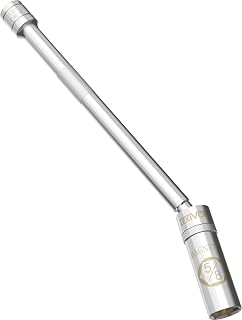
LEXIVON LX-122. The 5/8 in swivel magnetic socket, 3/8 in drive by 10 in total length, with a thin-wall design in chrome vanadium steel. The listing claims it meets and exceeds ANSI standards and backs it with a lifetime limited warranty. The 10 in length reaches deep plug wells without needing an extension.
CASOMAN 6-piece set. Four socket sizes, 9/16 in, 5/8 in, 13/16 in and 14 mm, in 4, 6 and 11 in lengths, 12-point with 360-degree swivel and interior magnets. The listing claims it meets or exceeds ANSI performance standards and states a Standard Limited Lifetime warranty in its bullets (its spec table lists a 1-year term instead). The set covers every common plug size in one box.
QWORK 2-piece set. The 14 mm and 16 mm magnetic swivel sockets with thin-wall construction, listed for BMW and MINI engines. Chrome vanadium steel with a polished finish and a 12-point design. The listing states no warranty, which puts it last here despite the thin-wall design.
Use rated jack stands on solid ground, wear eye protection with power and air tools, keep fuel-burning equipment out of a closed garage, and follow the manual for every tool. Read our Safety Disclaimer.
Frequently Asked Questions
What socket do I need for spark plugs?
A spark plug socket in the right size for your plugs: 5/8 in covers most, 13/16 in the larger ones, 14 and 16 mm the metric plugs. A swivel head and a thin wall help in tight engine bays, per the listings here.
What size socket fits a spark plug?
Common sizes are 5/8 in, 13/16 in, 14 mm and 16 mm. The CASOMAN set here includes 9/16 in, 5/8 in, 13/16 in and 14 mm; the QWORK set covers 14 and 16 mm. Check your plug size before buying.
Are magnetic spark plug sockets better than rubber?
For holding power and longevity, yes: the magnet keeps its strength far longer than rubber keeps its grip. For centering the plug in the socket, the rubber insert has the edge, per the GEARWRENCH listing. The GEARWRENCH here has both.
How do you clean a spark plug hole?
Blow it out with compressed air before removing the plug so debris does not fall into the cylinder. None of the listings here describes a cleaning procedure; this is standard shop practice.
Why do spark plugs need a special socket?
The socket holds the plug while you lower it into the well or lift it out, which a standard socket cannot do. The magnetic or rubber insert is what retains the plug.