Foam vs Microfiber Polishing Pad: Which One Should You Buy?
Foam pads cut in stepped grades and finish cleanly, microfiber pads cut faster on neglected paint, and the four kits below show what each listed kit includes.

On this page
Top picks at a glance
As an Amazon Associate we earn from qualifying purchases.
- 1
 Westinghouse ePX3100v Electric Pressure Washer9.8/10View on Amazon
- 2
 WORKPRO 12-Pack Car Wax Applicator Pads with Finger Pocket9.6/10View on Amazon
- 3
 Chemical Guys Premium Microfiber Applicator Pads9.6/10View on Amazon
- 4
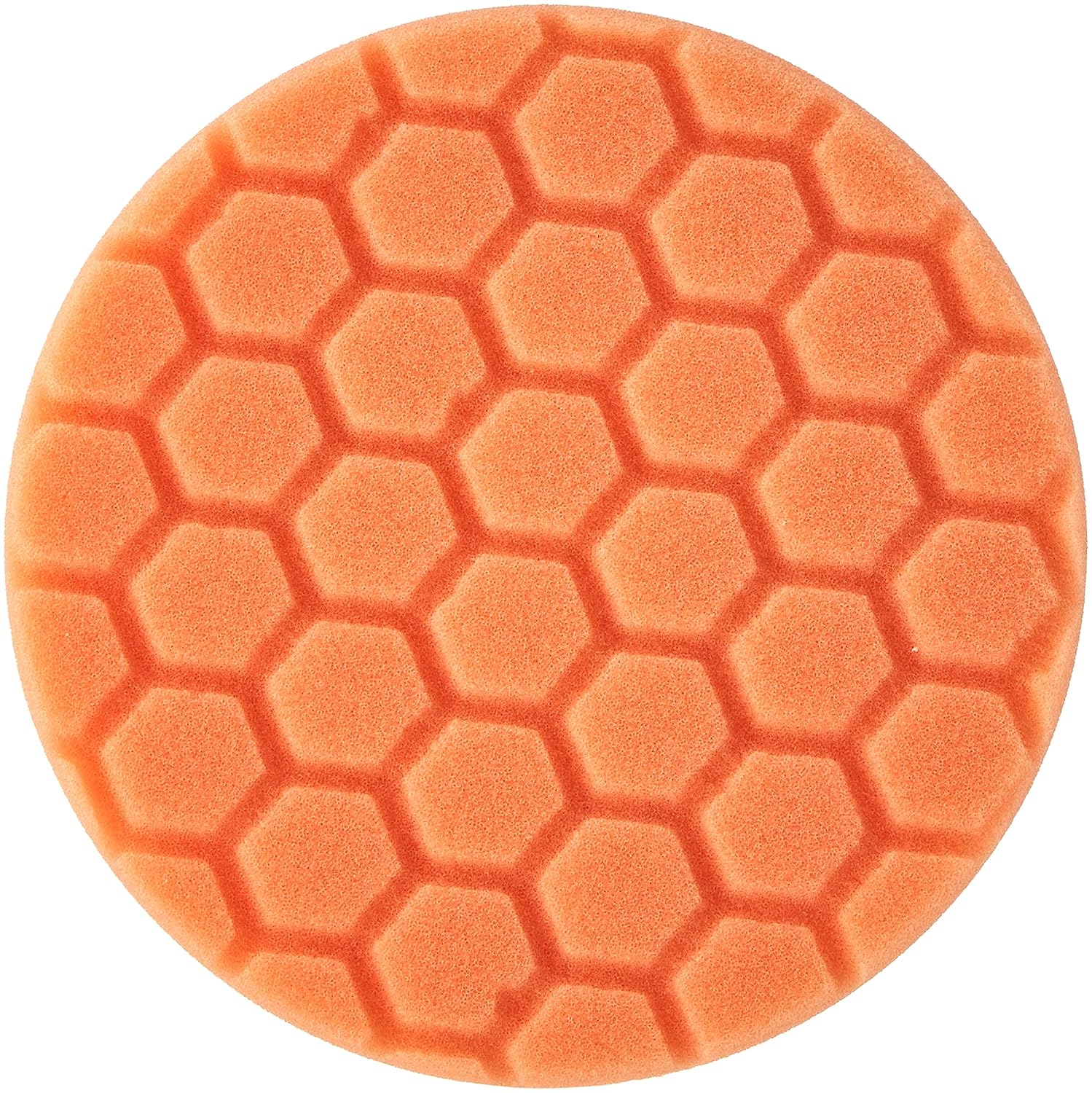 Chemical GuysView on Amazon
- 5
 3M 05738 Perfect-It 8" Foam Polishing PadView on Amazon
- 6
 Nanoskin Speedy Foam Polishing Pad Reduces SwirlsView on Amazon
- 7
 Meguiar's 6” Soft Buff DA Foam Cutting Disc DFC6View on Amazon
- 8
 3M Wool Polishing PadView on Amazon
- 9
 SPTA Wool Polishing PadView on Amazon
Your project car has a hood full of swirl marks and oxidation, and the polisher is already on the workbench. Foam vs microfiber polishing pad is the first call to make: choose foam when you want predictable cutting in clear grades and a clean finish, and choose microfiber when the paint is neglected and you need faster cutting, with a foam finishing step after. Foam pads like the SPTA system remove marks in stepped grades and finish paint cleanly. Microfiber pads use short fibers over a foam base to cut faster, and the light haze they leave is where a foam finishing pad takes over. The four kits below, all from the listings we compared, show what foam kits actually include, so you can match the pad to the job.
More options to compare
 Chemical GuysCheck price on Amazon
 3M 05738 Perfect-It 8" Foam Polishing PadCheck price on Amazon
 Nanoskin Speedy Foam Polishing Pad Reduces SwirlsCheck price on Amazon
 Meguiar's 6” Soft Buff DA Foam Cutting Disc DFC6Check price on Amazon
 3M Wool Polishing PadCheck price on Amazon
 SPTA Wool Polishing PadCheck price on Amazon
GarageToolHQ earns a commission when you buy through links on our product pages, at no extra cost to you. Read our affiliate disclosure.
Below: what each material does, the four kits ranked from the listing facts, and a short checklist for your polisher.
Foam vs microfiber polishing pad: what each material does
Foam is the graded, predictable material. The SPTA kit in the listings is a set of 5 pads with a 5.5 inch face for a 5 inch backing plate, in grades from T120 heavy cut down to T10 ultra-fine finishing. Its grades are named for the sanding-disc marks they remove: T120 green removes 1200/1500# marks and heavy oxidation, T80 yellow and T60 blue remove 1500/2000# marks and medium oxidation, T40 orange removes 2000# marks and light oxidation, and T10 red finishes swirl-free. That stepped system is the main reason foam suits a garage detailer: you move down in cut until the paint looks right.
Foam is also the forgiving material on daily drivers. The Meguiar’s listing is a 4-pack of 4 inch tight-cell foam pads made for hand application of waxes, polishes and dressings, with machine-washable pads weighing 0.6 ounces each. When the paint only needs a refresh and protection, foam applicators do the job without a machine.
Microfiber is the aggressive material. It is short fibers laid over a foam base, and it cuts neglected paint faster than foam of the same size. The trade is finish: microfiber leaves a light haze that a finishing foam pad removes. None of the four kits below is a microfiber pad, so treat these foam kits as the workhorses for cutting and finishing, and add microfiber only when the paint is too far gone for foam cutting alone.
The four kits, ranked
All four are foam-based kits from the listings, ordered by how complete the listing is for a garage polishing job.
| Kit | Foam pads | Wool pads | Pad size | How they mount |
|---|---|---|---|---|
| SPTA mixed pad kit | 5 | 0 | 5.5 inch face | Hook and loop on 5 inch backing plate |
| Petutu drill kit | 16 | 2 | 3 inch | Hook and loop, drill adapter included |
| Meguiar’s applicator pack | 4 | 0 | 4 inch | Hand application |
| Kshineni drill kit | 8 | 1 | 3 inch | Self-adhesive, drill adapter included |
1. SPTA 5-pad mixed foam kit
The most complete foam system of the four. You get five 5.5 inch pads sized for a 5 inch backing plate (138mm face on a 125mm backing), in grades T120 down to T10, so cutting and finishing are covered by one kit. The listing states open-cell foam, washable and reusable pads, and that they last 4 to 5 cars of polishing. One oddity: the spec table lists the compatible material as glass and a grit number of 400, while the title and bullets describe five car-paint grades removing 1200/1500# to 2000# marks. Trust the title and bullets here.
2. Petutu 22-piece drill kit
The biggest kit: 16 sponge pads and 2 wool pads, all 3 inch, with 2 drill adapters and 2 suction cups, mounted by hook and loop. It is aimed at drill users working small areas, and the listing says the different colored sponges have different softness. The listing describes the wool and foam pad system as an efficient way to cut difficult oxidation, so the wool pads are the cutting end of the kit and a foam pad should follow them.
3. Meguiar’s 4 inch foam applicators
A different job: four 4 inch tight-cell foam pads for hand application of waxes, polishes, dressings and interior products. They are machine washable and weigh 0.6 ounces each, and the listing notes use on wheels, tires, leather, vinyl and rubber as well as paint. Do not buy these for a machine polisher; they are hand pads.
4. Kshineni 11-piece drill kit
A compact drill kit: 8 sponge pads and 1 woolen buffer pad, all 3 inch, with a drill adapter and a suction cup. The listing says the pads are thicker for longer wear, washable and reusable, with a self-adhesive backing for quick pad changes. It ranks fourth only because the Petutu kit above lists more pads and a second drill adapter for the same kind of drill job.
Keep electric pressure washers on a GFCI outlet, never point the wand at people or pets, wear eye protection with polishers and chemicals, and read the label before mixing any cleaning products. Read our Safety Disclaimer.
Picking the right pad for your polisher
Match the pad to the machine and the paint:
- Size. Pad size must match the backing plate: the SPTA kit states a 5.5 inch face for a 5 inch plate. The 3 inch drill kits suit tight areas like pillars and bumpers.
- Cut first, refine second. Start with the least aggressive pad that removes the defect, then finish down the grades. Our compound vs polish guide covers the same order with liquids.
- Microfiber only when needed. If foam cutting leaves the defect untouched, a microfiber pad cuts faster. Plan a finishing foam step after any microfiber pass.
- Clean pads as you go. All four listings state washable, reusable pads. Rinse used pads and let them dry fully, so dried compound does not scratch the next panel. The SPTA listing specifically says to wash with clean water and dry naturally.
Frequently Asked Questions
Can I use these pads with a drill?
Yes for the drill kits. The Petutu and Kshineni listings include drill adapters with 3 inch pads, made for drill-mounted polishing and waxing. The SPTA kit is for a 5 inch backing plate on a polisher, and the Meguiar’s pads are for hand application.
What is the difference between foam and microfiber pads?
Foam pads cut in predictable grades and finish paint cleanly, like the five-grade SPTA system. Microfiber pads cut neglected paint faster but leave a light haze that a finishing foam pad removes.
Do I need different pads for cutting and finishing?
Yes. Cutting pads remove defects and finishing pads refine the surface. The SPTA kit labels its grades from T120 heavy cut to T10 ultra-fine finishing, so one kit covers both ends.
How long do foam polishing pads last?
The SPTA listing states its pads last 4 to 5 cars of polishing and are washable and reusable. The Petutu, Meguiar’s and Kshineni listings also state washable, reusable pads, so clean them after each job and let them dry fully. The SPTA listing specifically says to wash with clean water and dry naturally.
Are hand applicator pads a substitute for machine pads?
No. The Meguiar’s 4 inch pads are made for hand application of waxes and dressings, not machine polishing. Use machine pads on a polisher or drill, and hand pads for spreading and wiping.
Related: our compound vs polish guide, spray wax vs paste wax, the clay bar vs clay mitt comparison and clay bar kits. Also see the car detailing hub.