Jump Starter vs Battery Charger: Which One Should You Buy?
Learn the critical differences between a jump starter and a battery charger, including roadside cranking power, garage replenishment, and proper battery maintenance.

On this page
Top picks at a glance
As an Amazon Associate we earn from qualifying purchases.
- 1
 YaberAuto 12-in-1 Jump Starter with Air Compressor 8000A9.7/10View on Amazon
- 2
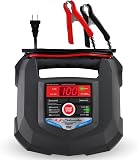 Schumacher Electric 15A Car Battery Charger & Maintainer9.8/10View on Amazon
- 3
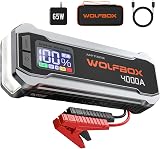 WOLFBOX 4000A Jump Starter9.7/10View on Amazon
- 4
 NOCO Boost GB150: 3000A UltraSafe Jump StarterView on Amazon
- 5
 Jump Starter Car Jump Starter Auto Battery Booster Pack 5000AView on Amazon
- 6
 NOCO Boost X GBX155: 4250A UltraSafe Jump StarterView on Amazon
- 7
 OXILAM Jump Starter 6000A for All Gas/12L DieselView on Amazon
- 8
 TREKURE Car Battery Jumper Starter Portable 5000AView on Amazon
- 9
 S ZEVZO ET05 Jump Starter 5000A Portable Car Jump StarterView on Amazon
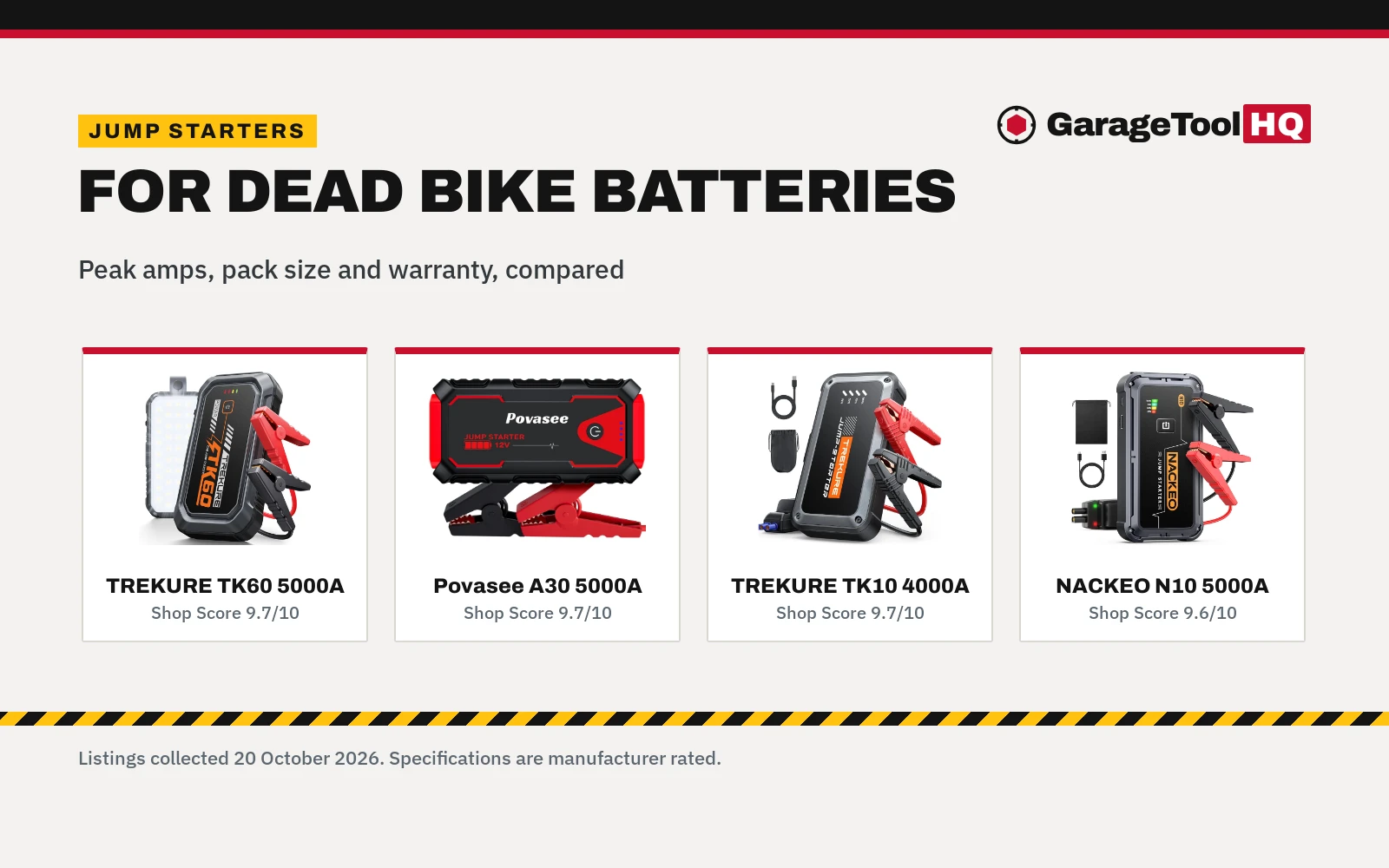
When comparing a jump starter vs battery charger, the decision centers on immediate roadside assistance versus sustained garage charging. A portable jump starter uses an internal battery pack to supply sudden cranking amps to start an engine with a depleted battery right away, getting you back on the road without waiting. A dedicated battery charger connects to a standard electrical outlet to slowly restore depleted lead-acid chemistry over several hours, making it the proper instrument for long-term battery health and vehicle storage maintenance. If you face an unexpected dead battery away from home, you need a jump starter, but if you need to restore or maintain batteries in your shop, you need a charger.
More options to compare
 NOCO Boost GB150: 3000A UltraSafe Jump StarterCheck price on Amazon
 Jump Starter Car Jump Starter Auto Battery Booster Pack 5000ACheck price on Amazon
 NOCO Boost X GBX155: 4250A UltraSafe Jump StarterCheck price on Amazon
 OXILAM Jump Starter 6000A for All Gas/12L DieselCheck price on Amazon
 TREKURE Car Battery Jumper Starter Portable 5000ACheck price on Amazon
 S ZEVZO ET05 Jump Starter 5000A Portable Car Jump StarterCheck price on Amazon
GarageToolHQ earns a commission when you buy through links on our product pages, at no extra cost to you. Read our affiliate disclosure.
Below: how jump starters and battery chargers differ in everyday operation, a side-by-side comparison table, an essential jump starting checklist, and guidance on selecting the right equipment for your garage.
Jump starter vs battery charger: how each tool works
While both devices connect to 12V automotive battery terminals using heavy-duty clamps, they serve entirely different mechanical roles in vehicle electrical maintenance. Understanding how each device delivers electrical energy clarifies why one cannot substitute for the other.
- Energy delivery method. A jump starter functions as an emergency booster pack. It bypasses a flat battery by discharging a momentary burst of high amperage directly into the vehicle starter motor. Conversely, a battery charger delivers a low, regulated current over a prolonged duration to reverse lead-acid sulfation and restore stored chemical energy.
- Power independence. Jump starters operate cordlessly using internal lithium cells, allowing you to boost an engine stranded in a driveway or parking lot. A standard battery charger relies on continuous AC power from an electrical wall outlet, restricting its operation to areas with accessible power outlets.
- Impact on vehicle battery state. Cranking an engine with a jump starter provides enough electrical force to spin the starter motor, but it leaves the vehicle battery discharged. After the jump start, the car alternator must recharge the battery during driving. A battery charger systematically fills depleted cells until the battery reaches complete charge capacity.
- Storage and maintenance capability. A jump starter cannot maintain a battery during seasonal storage. Connecting a jump starter to a sitting car does not maintain charge levels. In contrast, an automatic battery maintainer monitors voltage continuously, entering a float mode to keep stored batteries healthy across winter months without overcharging.
Jump starter vs battery charger: side-by-side comparison
| Feature | Portable Jump Starter | Car Battery Charger |
|---|---|---|
| Primary purpose | Instant engine cranking during roadside emergencies | Gradual replenishment and seasonal battery maintenance |
| Power source | Internal rechargeable lithium-ion battery pack | Standard household AC electrical wall outlet |
| Starting speed | Immediate engine ignition within seconds | Requires several hours of charge before engine cranking |
| Portability | Compact hand-held design stored in trunk or glove box | Stationary garage equipment requiring extension cords |
| Battery recovery | Spins starter motor; leaves depleted battery uncharged | Reverses sulfation and fully recharges battery capacity |
| Float maintenance | No maintenance mode; requires periodic manual recharge | Monitors voltage and floats stored batteries safely |
The gap in peak electrical output explains these operational differences. Jump starters provide massive momentary amperage for engine cranking. For instance, the NOCO GB20 listing specifies a 500A peak output rating for gasoline engines up to 4.0L, delivering up to 20 starts per charge from a 2.4 lb housing with 7 inches cables and a 1-year warranty. The NOCO GB70 listing provides 2000A of peak lithium power for engines up to 8.0L gas and 6.0L diesel, with a 5000 milliamp_hours battery capacity, an IP65-rated housing, and up to 40 starts per charge. For larger displacements, the BIUBLE JS001 listing provides 5000A peak current for gasoline engines up to 7.0L and diesel engines up to 5.5L, featuring a 6000 milliamp_hours capacity, 8 types of protection, a 2-Year warranty, and an operating range of -4°F to 140°F. The WOLFBOX MegaVolt24 listing delivers 4000A peak power from an 88.8Wh battery for engines under 10 liters, operating between -4 to 140°F with an IP64 protection rating, a 3 pounds weight, and a 2 Year warranty.
Battery chargers, on the other hand, do not deliver massive amperage surges. Instead, automotive battery chargers deliver controlled low amperage from an AC source to restore depleted lead-acid, AGM, and gel cell plates safely without overheating battery components.
How to use a portable jump starter safely: the checklist
- Confirm voltage compatibility. Verify that the booster unit matches your vehicle. Passenger cars, SUVs, and light trucks use a 12V electrical system.
- Shut down vehicle accessories. Turn off the ignition, headlights, radio, climate controls, and interior lights to direct all available amperage to the starter motor.
- Inspect battery casing. Check the battery for cracks, leaks, or visible swelling. Never attempt to jump start or charge a damaged or frozen battery.
- Attach the positive red clamp. Fasten the red booster clamp firmly to the positive battery terminal, marked with a plus sign or red cover.
- Attach the negative black clamp to ground. Connect the black clamp to an unpainted metal bracket or engine ground point away from the battery to reduce spark risks.
- Verify status indicators. Check the LED indicator lights on the jumper cable pack. Modern units like the NEXPOW Q10S feature 10 intelligent protection systems with spark-proof protection.
- Engage the vehicle ignition. Turn the key or press the start button. Units like the NOCO GBX45 include a 60-second timer to conserve internal lithium power between cranks.
- Remove clamps in reverse order. Once the engine runs, turn off the jump pack, disconnect the negative black clamp from ground, and then remove the positive red clamp.
- Recharge the booster pack. Recharge the unit after use. The BIUBLE JS001 listing advises recharging every 2-3 month and starting only when charge is greater than 25%.
Automotive lead-acid batteries emit flammable hydrogen gas during electrical discharge and charging cycles. Connecting jumper clamps or charger leads in reverse can create electrical arcs, melt wiring harnesses, or ignite venting battery gases. Always confirm terminal polarity before attaching clamps, wear eye protection, and never attempt to charge or jump start a cracked, leaking, or frozen battery.
Lead-acid batteries can release hydrogen while charging, so charge in a ventilated space away from sparks and flames, connect positive first and negative last, set the charger to the battery type (flooded, AGM, gel, lithium), and wear eye protection. Read our Safety Disclaimer.
How to choose between a jump starter and a battery charger
Selecting the right equipment depends on how you use your vehicles and where battery trouble is most likely to occur. Review these practical scenarios to decide which tool belongs in your automotive setup.
When you should buy a portable jump starter:
- Daily commuters and road trips. If a dead battery strikes in an office parking garage or along a highway shoulder, an AC-powered charger is useless. A portable lithium booster pack starts your vehicle without relying on another driver or jumper cables. Explore dedicated models in our guide to the best portable jump starters.
- Cold climate starting assistance. Winter temperatures reduce lead-acid battery output while thickening engine oil. Keeping a high-output booster rated for your engine size ensures reliable cranking in freezing weather.
- Remote off-road and outdoor travel. Boating, camping, and trail driving place vehicles far from electrical infrastructure, making a portable power bank essential gear.
When you should buy a car battery charger:
- Seasonal vehicles and storage. Classic cars, motorcycles, lawn tractors, and boats sitting idle for weeks experience parasitic electrical drain. A dedicated battery charger maintainer prevents permanent sulfation damage by supplying an automatic float charge.
- Infrequent short trips. Vehicles driven only on brief errands never run long enough for the alternator to replace the energy consumed during startup. Connecting a car battery charger restores full plate saturation.
- Deeply discharged batteries. If headlights were left on overnight, the battery requires deep replenishment that an alternator cannot deliver quickly without excessive wear.
Jump starters with air compressors and extra features
Many modern jump boxes combine multiple emergency functions into a single portable housing. If you want roadside peace of mind beyond electrical starting, consider a multi-function unit.
A popular configuration pairs a booster battery with an integrated tire inflator. A jump starter with air compressor allows you to handle low tire pressure warnings, seasonal tire top-offs, and sudden flats alongside dead battery emergencies. Having tire inflation and jump-starting power in one compact box clears clutter from your trunk.
Other integrated accessories expand everyday utility. Flashlights are standard across quality packs: listings such as the NOCO GB70 include a 400-lumen LED flashlight with 7 light modes for nighttime repairs. Fast device charging is also common: the WOLFBOX MegaVolt24 listing includes a 65W USB-C quick-charging port and a PD65W fast charger that recharges the unit in 1.3 hours. For rapid vehicle recovery, the NOCO GBX45 and NOCO GBX75 listings feature 60-watt USB-C Power Delivery capable of gaining jump-starting power in just 5 minutes from empty. For stubborn batteries drained below 3V, the NOCO GBX75 provides a manual override button held for 3 seconds to deliver forced starting power.
Frequently Asked Questions
What is a jump starter?
A jump starter is a portable emergency device equipped with an internal high-discharge battery pack and jumper clamps. It supplies high peak amperage directly to a vehicle starter motor, allowing an engine to start when the vehicle battery is discharged.
Can a jump starter recharge a dead car battery?
No. A jump starter does not recharge a car battery. It provides momentary electrical energy to spin the starter motor and start the engine. Once the engine runs, the vehicle alternator must recharge the automotive battery, or you must connect a dedicated battery charger.
Can a battery charger start a car immediately?
Standard car battery chargers cannot start an engine immediately because they supply low, steady current rather than the massive surge amperage required by a starter motor. You must leave the charger connected for hours to build sufficient charge before attempting ignition.
Can I leave a battery charger connected indefinitely?
You can leave a smart charger or maintainer connected indefinitely if it features an automatic float mode. Smart maintainers monitor battery voltage and shut off charging once full saturation is reached, preventing electrolyte boil-off and plate damage. Basic manual chargers without automatic shutoff must be disconnected once the battery reaches full charge.
How often should I recharge a portable battery jump starter?
Recharge a portable lithium jump starter after each use and every few months during storage. For instance, the BIUBLE JS001 listing recommends recharging the unit every 2-3 month to keep internal cells healthy and ready for roadside emergencies.
Do I need both a jump starter and a battery charger?
Many vehicle owners benefit from owning both devices. A jump starter is an indispensable roadside emergency tool kept in your vehicle, while a battery charger is a garage workshop asset that restores depleted batteries and maintains seasonal equipment.
Related: our guide to the best automotive multimeter for charging checks, our diagnostics and electrical category hub, and the best LED rechargeable work light.