Siphon vs Electric Fuel Transfer Pump: Which One Should You Buy?
Siphon flow relies on gravity and a height drop, while an electric pump uses motor power to move fuel and lift it higher, so the right pick depends on the job, the fuel and the hose reach you need.

On this page
Top picks at a glance
As an Amazon Associate I earn from qualifying purchases.
- 1
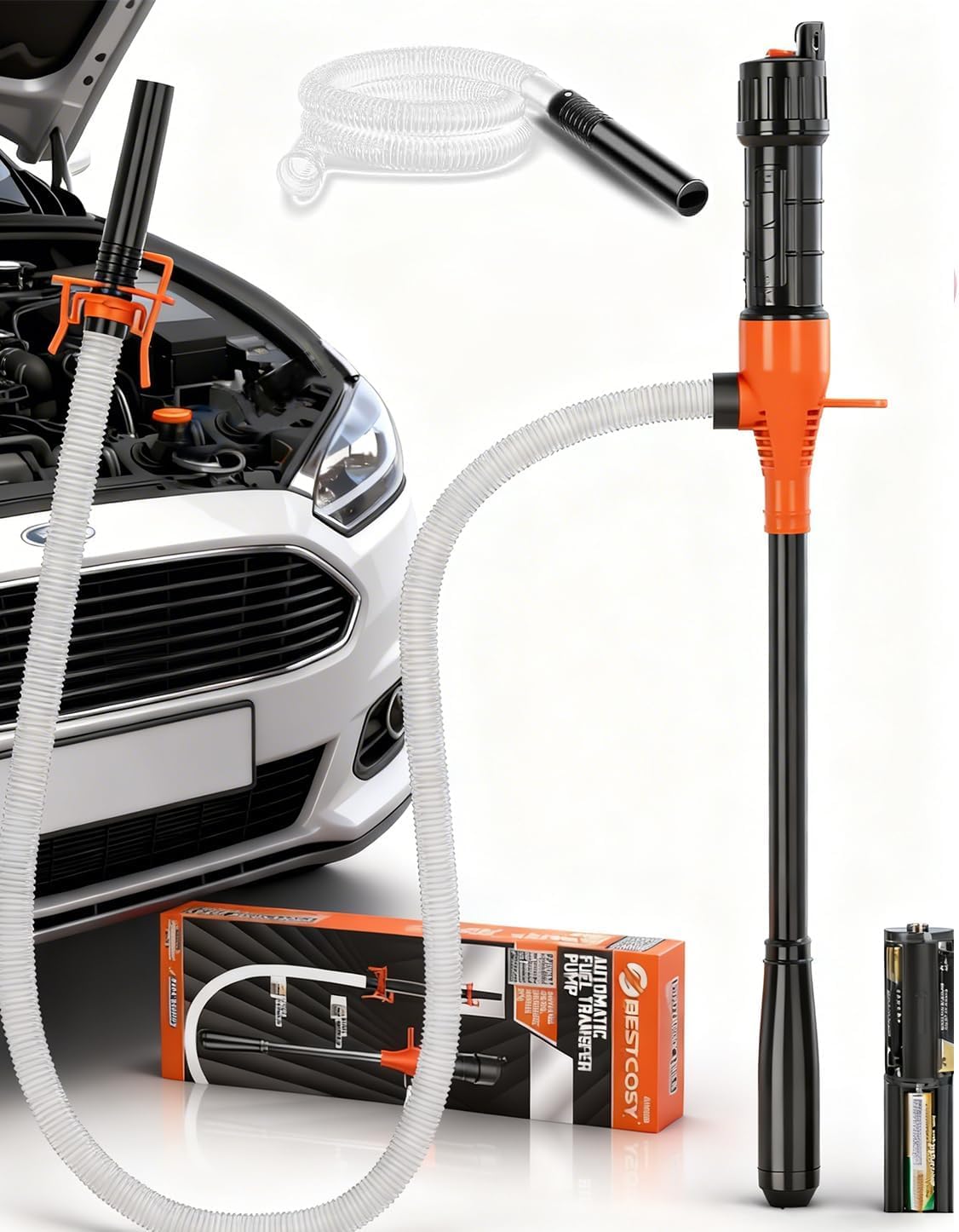 Portable Fuel Transfer Pump with 47" Hose-High Flow Hand Fuel9.6/10View on Amazon
- 2
 OMT Diesel Transfer Pump9.8/10View on Amazon
- 3
 Cordless Fuel Transfer Pump9.5/10View on Amazon
- 4
 Fill-Rite FR4204H 12V 20 GPM Fuel Transfer PumpView on Amazon
- 5
 Portable DC 12V 75W Electric Gasoline Transfer PumpView on Amazon
- 6
 Fill-Rite FR711VA 115V 20 GPM Fuel Transfer Pump withView on Amazon
- 7
 Milwaukee 2771-20 M18 Transfer Pump Brand: MilwaukeeView on Amazon
A tank that needs draining, a mower tank that needs filling, or a can that needs emptying into a vehicle: that is the job where the siphon vs electric fuel transfer pump choice matters. A siphon moves fuel by gravity once flow starts, with no motor and no power source. An electric fuel transfer pump uses motor power to move fuel and lift it while the pump runs. For draining into a container that sits lower than the source fuel, a siphon can do the job with little gear. For lifting fuel or working where gravity alone will not carry fuel to the destination, an electric pump is the more capable pick.
Other tools worth a look
 Fill-Rite FR4204H 12V 20 GPM Fuel Transfer PumpCheck price on Amazon
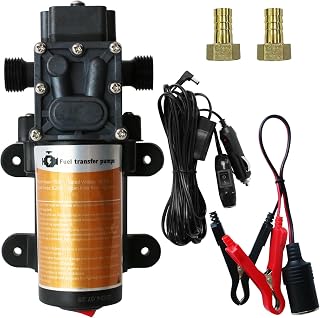 Portable DC 12V 75W Electric Gasoline Transfer PumpCheck price on Amazon
 Fill-Rite FR711VA 115V 20 GPM Fuel Transfer Pump withCheck price on Amazon
 Milwaukee 2771-20 M18 Transfer Pump Brand: MilwaukeeCheck price on Amazon
GarageToolHQ earns a commission when you buy through links on our product pages, at no extra cost to you. Read our affiliate disclosure.
Below: how each method moves fuel, the electric pumps in this guide, and safety points to check.
Siphon vs Electric Fuel Transfer Pump: How Each Method Moves Fuel
A siphon relies on a height drop between the surface of the source fuel and the discharge end of the hose. Gravity keeps it moving once the hose is full and flow has started. The limits are plain: the discharge end must sit below the surface of the source fuel, flow stops when the source level falls to the hose intake, and a siphon cannot deliver fuel to a destination higher than the source.
An electric pump changes that picture. A motor drives the flow, so the pump can lift fuel and keep moving it while power is supplied. Stated flow figures, hose lengths, power sources, and fuel types differ from pump to pump, and the right pick depends on matching those stated figures to the job.
| Method | How it moves fuel | Power needed | Watch out for |
|---|---|---|---|
| Siphon | Gravity, through a hose, once flow starts | None stated | Discharge end below the source fuel surface; flow stops when the source level reaches the hose intake |
| Electric pump | Motor-driven flow through a hose | Battery, USB, or vehicle battery as stated | Match the stated fuel types, hose reach, and duty limits |
Fuel type matters more than the method. A listing that states diesel and kerosene does not automatically cover gasoline, and a listing that warns against high-viscosity fluids does not suit motor oil.
The Electric Pumps in This Guide
Every pump covered here is electric or battery powered; no siphon-only pump appears among the listings supplied for this guide.
Orion Motor Tech Diesel Transfer Pump Kit. The listing states a 12V kit that moves diesel or light oils at up to 11.9 gpm, with a 0.2 hp motor rated at 175W, a stated maximum suction of 16 feet 5 inches, a stated maximum lift of 32 feet 10 inches, and a nozzle with an adjustable trigger for manual flow control or continuous pumping. The listing gives hose figures that do not agree: the bullets list a 4 feet 11 inches supply hose and a 6 feet 6 inches discharge hose, while the spec table lists a hose length of 19.5 feet. Trust the bullets over the spec table. The listing also states a rest rule: allow the pump to rest for 5 minutes after every 10 minutes of continuous use when ambient temperatures exceed 45 degrees C, stated as 113 degrees F, and avoid high-viscosity fluids such as motor oil.
FEEDRON Portable Gas Can Pump. The listing states a portable gas can pump with an auto-stop sensor that stops flow when fuel reaches the sensor or the sensor touches fuel, plus a beeper warning when auto-stop engages. Power comes from 4 AA batteries or a USB Type-C cable connected to an adapter or power bank, and the listing states 4 can adapters for North American fuel cans, a 51 inches hose, and a stated flow of up to 3.8 GPM, stated as 14 Liters with sufficient power supply. The listing states a weight of 1.4 pounds and also describes the pump as 0.6kg to carry, with an ABS shell and a polyethylene hose. Stated fuels include diesel, kerosene, gasoline, and DEF. Batteries and a gas can are not included, as the listing notes.
Fill-Rite 12V Fuel Transfer Pump, Pump Only. The listing states a 12V 20 GPM pump, listed as Pump Only, with cast iron construction. It is designed for bung-mounted transferring from fuel tanks on trailers or trucks, pulling fuel at tank depths of 8 ft and discharging fuel up to heights of 37 ft. The listing states a 1 inch manual nozzle, a 1 inch by 12 feet discharge hose, a steel telescoping suction pipe, an 18 feet battery cable, a 5 feet ground wire, and a removable junction box that rotates 180 degrees for wiring in tight spaces. Thermal overload protection guards against motor overheating during abnormal usage, and the specification states a 30 minute on/off duty cycle. The listing states a weight of 22 pounds and a maker warranty description of Limited Lifetime. Stated fuels include gasoline, diesel, kerosene, ethanol blends, methanol blends, and biodiesel.
Neikko Rechargeable Fuel Transfer Pump. The listing states a rechargeable lithium-ion battery pump with an auto-stop sensor that stops flow when liquid reaches the sensor, starting with a click and no installation required, and up to 40 minutes of continuous use on a charge. The stated flow is 3.2 GPM, the pump is handheld with a plastic body, and the package includes a DC 12V cable and a car cigarette lighter adapter. Stated uses include cars, motorcycles, boats, and SUVs, and the listing states transfer of diesel, gasoline, and other non-potable liquids. The listing also mentions wastewater, pool, and aquarium cleaning, which sits outside fuel transfer. The listing states a 365-day after sale service.
Choosing Between a Siphon and an Electric Pump
Pick a siphon when the job is simple: the receiving container sits lower than the source fuel. Pick an electric pump when the source sits low, the destination sits high, or the job calls for steady flow through a hose long enough to reach. A light can pump suits moving fuel from a can, a kit with hoses and a nozzle suits diesel and light oils around cars, boats, and mowers, and a bung-mounted pump suits trailer and truck tanks. Check hose reach, then the power source, then the duty limits.
Use rated jack stands on solid ground, wear eye protection with power and air tools, keep fuel-burning equipment out of a closed garage, and follow the manual for every tool. Read our Safety Disclaimer.
Fuel Safety Points for Either Method
Fuel and ignition sources do not mix. Move fuel outdoors or in a ventilated space, keep open flame, sparks, and running engines away from the work area, and keep fuel containers closed when fuel is not moving. Never run a fuel engine in a closed garage, and never use a pump for a fuel its listing does not state. Read the manual for the pump you buy. For wiring beyond a simple battery connection, follow the manual and use a licensed electrician.
FAQ: garage tools
Can a siphon move fuel uphill?
No, not to a higher destination. A siphon needs the discharge end of the hose below the surface of the source fuel, so it cannot deliver fuel higher than the source. When the destination must sit higher, or the source sits low in a tank, an electric pump with a stated lift figure is the method that fits.
Can an electric fuel transfer pump move gasoline and diesel?
Only if its listing states both. Fill-Rite states gasoline, diesel, kerosene, ethanol blends, methanol blends, and biodiesel. FEEDRON states gasoline, diesel, kerosene, and DEF. Neikko states diesel and gasoline. Orion Motor Tech states diesel, kerosene, and light oils, and warns against high-viscosity fluids such as motor oil.
What hose length should I check before buying?
Check the full reach against the listing. FEEDRON states a 51 inches hose. Orion Motor Tech bullets state a 4 feet 11 inches supply hose and a 6 feet 6 inches discharge hose, while its spec table lists 19.5 feet, so trust the bullets. Fill-Rite states a 1 inch by 12 feet discharge hose, an 18 feet battery cable, and a 5 feet ground wire.
Do electric fuel transfer pumps need a power source?
Yes, and the source differs by listing. Orion Motor Tech and Fill-Rite state 12V power. FEEDRON states 4 AA batteries or USB Type-C power from an adapter or power bank. Neikko states a rechargeable lithium-ion battery with up to 40 minutes of continuous use on a charge, plus a DC 12V cable and a car cigarette lighter adapter.
What does an auto-stop sensor do?
On the FEEDRON and Neikko listings, the auto-stop sensor stops flow when fuel reaches the sensor, which helps avoid spills and overflow. FEEDRON adds a beeper warning when auto-stop engages. Stay with the pump while fuel moves, and keep the receiving container in view.
Can I use an electric pump for motor oil?
Not on the strength of a fuel listing alone. Orion Motor Tech warns against high-viscosity fluids such as motor oil and states diesel and light oils instead. None of the other listings in this guide names motor oil as a stated fuel, so check the listing for the exact pump before moving any fluid it does not name.
Related: the best fuel transfer pump picks, our fuel transfer pump vs oil transfer pump comparison, and the best fuel stabilizer for cars guide. Also see the engine and shop equipment category page.