Butt Connector vs Ring Terminal: Which One Should You Buy?
Butt connectors join wire ends in line, ring terminals land wires on studs, and four kits show how each type is sold.

On this page
Top picks at a glance
As an Amazon Associate I earn from qualifying purchases.
- 1
 Kuject 320PCS Heat Shrink Wire Connectors Kit9.6/10View on Amazon
- 2
 200pcs 12-Sizes9.7/10View on Amazon
- 3
 90Pcs Heat Shrink Wire Connectors Electrical Kit9.4/10View on Amazon
- 4
 Heat Shrink Butt ConnectorsView on Amazon
- 5
 AIRIC 16View on Amazon
- 6
 AIRIC 22View on Amazon
- 7
 VAMRONE 100PCS Red Heat Shrink Butt Wire Connectors 22-16 AWGView on Amazon
- 8
 22View on Amazon
- 9
 1500 PCS Heat Shrink Butt ConnectorsView on Amazon
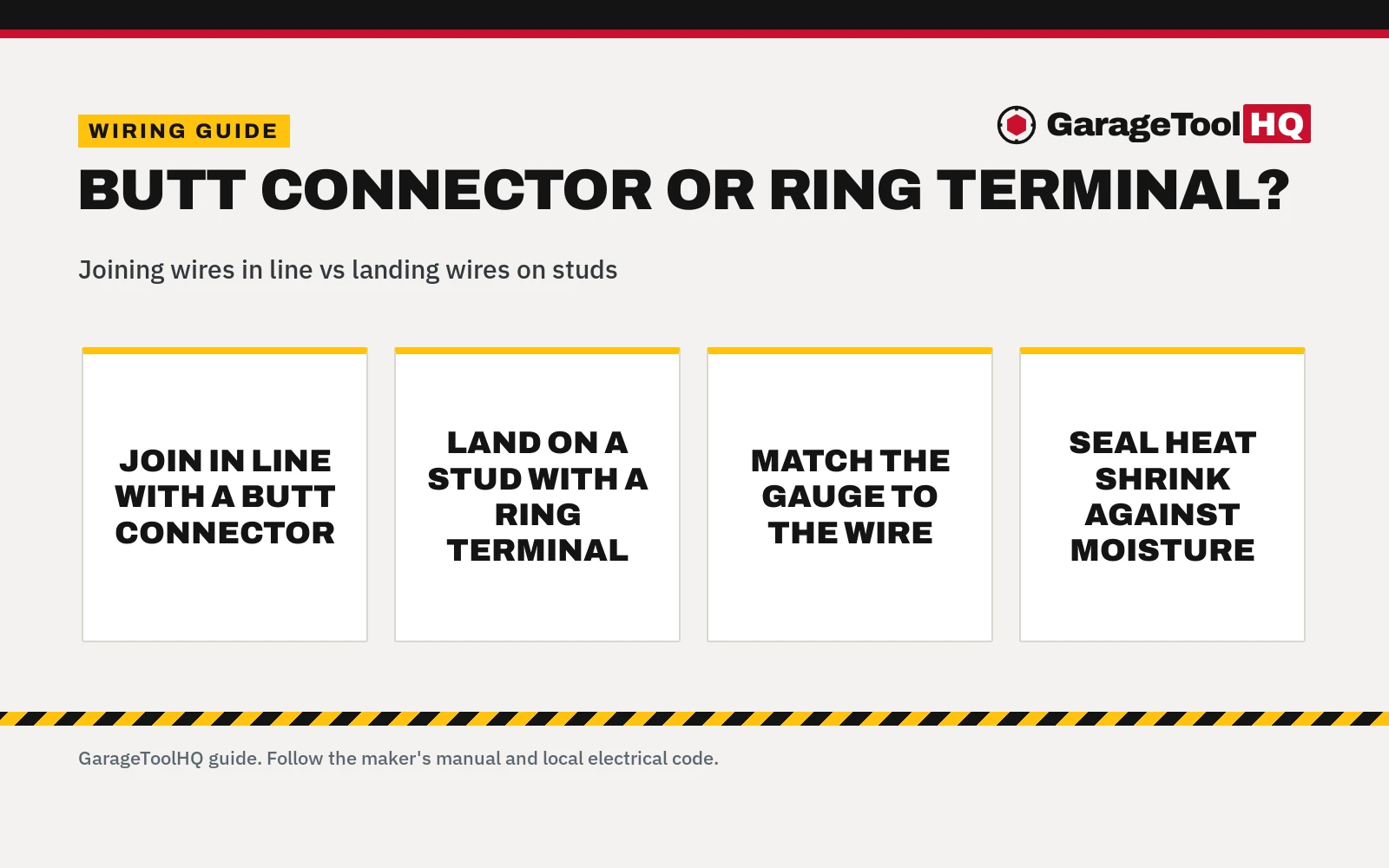
Butt connector vs ring terminal: use a butt connector to join wire ends in line, and use a ring terminal to land a wire on a stud or screw post. The types do different jobs, so the right choice depends on what the wire has to connect to, not on which kit looks larger.
Other tools worth a look
 Heat Shrink Butt ConnectorsCheck price on Amazon
 AIRIC 16Check price on Amazon
 AIRIC 22Check price on Amazon
 VAMRONE 100PCS Red Heat Shrink Butt Wire Connectors 22-16 AWGCheck price on Amazon
 22Check price on Amazon
 1500 PCS Heat Shrink Butt ConnectorsCheck price on Amazon
GarageToolHQ earns a commission when you buy through links on our product pages, at no extra cost to you. Read our affiliate disclosure.
Below: where the difference comes from, how to choose, and four kits that show how each type is sold.
Butt connector vs ring terminal: where the difference comes from
A butt connector is a short tube that takes one wire end in each side and crimps them into a single in-line splice. It is the fitting for extending a wire, repairing a broken run, or joining two wires end to end inside a harness. A ring terminal is different: it crimps onto a single wire end and ends in a closed eye that sits over a stud or screw post, held in place by a nut or screw. It is the fitting for landing a wire on a ground point, a battery post, a fuse block stud, or any fixed terminal point.
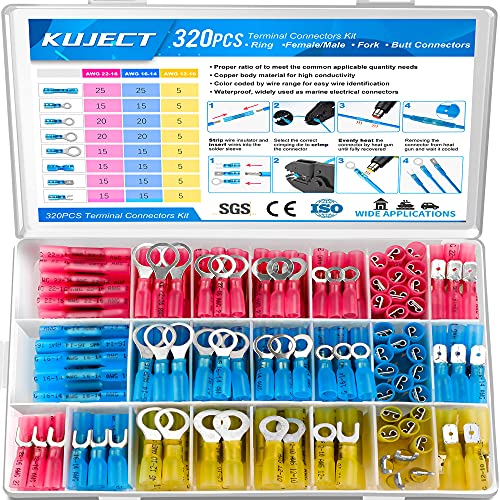
That difference decides most choices on its own. If the job is a splice in the middle of a run, a ring terminal cannot do it, because it has only one wire entry and an eye at the other end. If the job is a connection to a stud, a butt connector cannot do it, because it has no eye to sit over the post. Kits that include both types exist for jobs that need both, and one kit here includes butt, ring, spade and fork terminals in a single assortment.
| Type | Job | Wire entries | Sealing in these kits |
|---|---|---|---|
| Butt connector | Join wire ends in line | One wire end in each side | Heat shrink tube, or bare tube plus separate tubing |
| Ring terminal | Land a wire on a stud or screw post | One wire end, plus a closed eye | Heat shrink insulation in the assortment kit here |
The table describes the types. The kits below show the gauges, piece counts and insulation each maker states.
How to choose between them
- Decide the job first. An in-line splice calls for a butt connector. A landing on a stud or screw post calls for a ring terminal. A job that needs both calls for an assortment that includes both types.
- Match the gauge to the wire. The AIRIC kit covers 22, 20, 18, 16, 14, 12 and 10 gauge wires, split by color across 100 pieces. The SVAAR kit covers 26-6 AWG, including 6 AWG and 8 AWG sizes for larger wires. The Oiojuct assortment kit is listed at 22-10 AWG. Check the wire gauge before buying, since a connector that does not match the wire will not crimp correctly.
- Choose the insulation. Heat shrink butt connectors seal with a shrinking tube, and the AIRIC kit adds a dual-wall tube with hot melt glue inside at a 3:1 shrink ratio. The SVAAR kit is non-insulated, and its listing recommends heat shrink tubing, so insulation is a separate item there. For marine and humid use, the listings point to sealed heat shrink or tinned copper as protection against moisture and corrosion.
- Check the ratings the listing states. The AIRIC listing names UL, CE, ROHS, SGS and ISO9001-2005 for the maker’s factory and quality system. The SVAAR listing states that its connectors conform to the UL486 standard and are rated for 600 Volts, and that they are not rated for aluminum conductors. Do not use a connector outside the ratings its listing states.
- Know when to call in help. For wiring in a house, use a licensed electrician rather than doing the work yourself, and follow the local electrical code. Vehicle and marine wiring still calls for the right gauge, the right crimp and the insulation the listing describes.
Never work on a live circuit. Disconnect power before touching wiring, and keep flammable materials away from any heat source used for shrinking tubing. If the circuit feeds a house panel or a fixed appliance, that work belongs to a licensed electrician.
Use rated jack stands on solid ground, wear eye protection with power and air tools, keep fuel-burning equipment out of a closed garage, and follow the manual for every tool. Read our Safety Disclaimer.
The gear: four kits that show both sides
The kits are ranked from the most complete heat shrink butt kit to the simplest butt-only kit, with the mixed assortment second because it alone includes ring terminals.
AIRIC heat shrink butt connector kit, 100 pieces
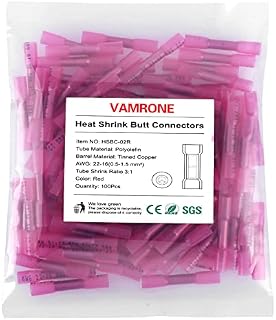
The AIRIC kit is a heat shrink butt connector kit of 100 pieces: 50 red connectors for 22, 20, 18, 16 gauge wires, 40 blue connectors for 16 and 14 gauge wires, and 10 yellow connectors for 12 and 10 gauge wires. The terminals use a seamless copper tubular core, and the heat shrink tube is dual-wall with hot melt glue inside at a 3:1 shrink ratio, sealing against moisture and corrosion. The listing names UL, CE, ROHS, SGS and ISO9001-2005 for the maker’s factory and quality system, and names marine, automobile, industry and electrical use. This is the pick for in-line splices across the common automotive gauges with a sealed finish.
Oiojuct heat shrink connector assortment, 600 pieces
The Oiojuct assortment kit holds 600 pieces and is the only kit here that covers both sides of this guide: it includes butt connectors, ring, spade and fork terminals in one assortment for different wire gauges, listed at 22-10 AWG. The connectors are heat shrink and waterproof, made for marine and automotive electrical use, with insulation that protects against water for outdoor and marine jobs. This is the pick for a bench stock kit that has to cover both splices and stud landings without buying two kits.
SVAAR non-insulated butt connectors, 500 pieces
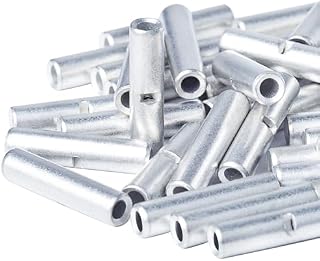
The SVAAR kit holds 500 non-insulated butt splice connectors in marine grade tinned copper, covering 26-6 AWG, including 6 AWG and 8 AWG sizes. The copper is described as 99.9% high conductivity copper and 100% annealed, with seamless barrels, chamfered barrel ends for wire insertion and a built-in wire stop for positioning. The connectors are rated for 600 Volts, conform to the UL486 standard, and are not rated for aluminum conductors. The listing recommends heat shrink tubing, so plan on tubing as a separate item. This is the pick for larger gauge in-line splices where the buyer wants non-insulated connectors and a wide gauge range.
Oiojuct heat shrink butt connectors, 240 pieces
The Oiojuct butt connector kit holds 240 pieces of waterproof heat shrink butt connectors in copper, made for automotive wiring and marine use. The listing describes a variety of butt splice sizes for different wiring needs, with crimping or splicing tools for installation. This is the pick for a straightforward butt-only stock kit, with no ring, spade or fork terminals included.
FAQ: garage tools
Can a ring terminal replace a butt connector?
No. A ring terminal lands a single wire on a stud or screw post, while a butt connector joins wire ends in line. A job that needs both calls for an assortment like the Oiojuct 600 piece kit, which includes butt, ring, spade and fork terminals.
Can I use a butt connector to join wires of different gauges?
Match the connector to the wire gauge first. Kits split their pieces by gauge, such as the AIRIC kit with red connectors for 22, 20, 18 and 16 gauge, blue for 16 and 14 gauge, and yellow for 12 and 10 gauge. A connector sized for one gauge will not crimp correctly on a very different gauge.
Are heat shrink butt connectors waterproof?
The listings here state waterproof seals for the heat shrink kits. The AIRIC kit uses a dual-wall tube with hot melt glue inside, and the Oiojuct kits describe heat shrink insulation that protects against water for marine and automotive use. The SVAAR kit is non-insulated, so it needs separate heat shrink tubing for a sealed finish.
Do I need heat shrink tubing with non-insulated butt connectors?
Yes, if the joint needs insulation or a seal. The SVAAR listing recommends heat shrink tubing for its non-insulated butt connectors, which arrive as non-insulated tinned copper tubes. Heat shrink kits already include the tube, so no separate tubing is needed there.
What gauge range do these kits cover?
The AIRIC kit covers 22, 20, 18, 16, 14, 12 and 10 gauge wires, the Oiojuct assortment kit is listed at 22-10 AWG, and the SVAAR kit covers 26-6 AWG, including 6 AWG and 8 AWG sizes. Pick the kit whose range includes the wire being joined or landed.
Can I use these connectors for house wiring?
Use a licensed electrician for house wiring and follow the local electrical code. The kits here are listed for marine, automobile and general electrical use, and the SVAAR kit states a 600 Volt rating with UL486 conformance, but house panel work still belongs to a licensed electrician.
Related: our diagnostics and electrical hub, our garage upgrades hub, our best ring terminal electrical, our best wire crimping tool and our best automotive wire.