Penetrating Oil vs Silicone Spray: Which One Should You Buy?
When to reach for a loosening oil and when to reach for silicone spray, with 4 loosening oils from the listings ranked by can, nozzle and pack.

On this page
Top picks at a glance
As an Amazon Associate I earn from qualifying purchases.
- 1
 PB Blaster Penetrating Oil Spray9.6/10View on Amazon
- 2
 B’Laster Silicone Lubricant ProStraw9.6/10View on Amazon
- 3
 Free All Rust Eater Deep Penetrating Oil9.6/10View on Amazon
- 4
 Free All Deep Penetrating Oil Rust RemoverView on Amazon
- 5
 Supco MO44 Rust Buster Liquid Penetrating OilView on Amazon
- 6
 SQ Penetrating Catalyst Oil 17-6 Mechanic's AidView on Amazon
- 7
 Lucas Oil 11043 Penetrating OilView on Amazon
- 8
 Free All Rust Eater Deep Penetrating OilView on Amazon
- 9
 Design Engineering High-Temperature Silicone Coating SprayView on Amazon
Penetrating oil vs silicone spray comes down to the job in front of you. For a rusted, stuck fastener, reach for the loosening oil: it creeps into threads and breaks the rust bond so the nut can turn. For hinges, rollers, rubber seals and other parts that need to keep sliding, reach for the silicone spray: it lubricates and protects without cutting rust. Use the wrong one and the job stalls: silicone spray will not free a seized bolt, and a loosening oil is the freeing tool for a seized fastener.
Other tools worth a look
 Free All Deep Penetrating Oil Rust RemoverCheck price on Amazon
 Supco MO44 Rust Buster Liquid Penetrating OilCheck price on Amazon
 SQ Penetrating Catalyst Oil 17-6 Mechanic's AidCheck price on Amazon
 Lucas Oil 11043 Penetrating OilCheck price on Amazon
 Free All Rust Eater Deep Penetrating OilCheck price on Amazon
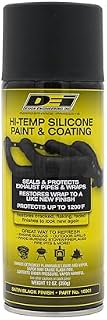 Design Engineering High-Temperature Silicone Coating SprayCheck price on Amazon
GarageToolHQ earns a commission when you buy through links on our product pages, at no extra cost to you. Affiliate disclosure.
Below: what each one does, how to choose between them, and the 4 loosening oils from the listings, ranked by can, nozzle and pack.
Penetrating oil vs silicone spray: what each one does
In these listings, a loosening oil is described as a low surface tension oil that creeps into threads and tight spaces. The listings below describe it breaking through rust and corrosion, freeing stuck nuts, bolts, locks, chains and hinges, and leaving a protective layer or film behind. A silicone spray is a lubricant for parts that need to keep moving: hinges, rollers, seals and plastic parts that slide. It does not cut rust, so it cannot stand in for a loosening oil on a seized fastener.
| Job | Loosening oil | Silicone spray |
|---|---|---|
| Free a rusted, stuck fastener | Yes: creeps into threads and breaks the rust bond | No: it lubricates, it does not cut rust |
| Lubricate a hinge, chain or roller | Yes: the listings name hinges, chains and rollers | Yes: for parts that need to keep sliding |
| Protect rubber and plastic parts | The WD-40 listing names metal, rubber and plastic threads | Yes: suits seals and plastic parts that slide |
| Keep rust from coming back | The listings describe a protective layer or film left behind | Not its job: reach for the loosening oil instead |
How to choose between them
Start from the symptom. If the part will not move because of rust, the answer is the loosening oil: spray it into the threads and work the fastener back and forth. If the part moves but squeaks, sticks or drags, the answer is the silicone spray: it keeps the part sliding and protects the surface. If the part is both rusted and meant to slide, free it first with the loosening oil, then maintain it with the lubricant that suits the material.
Check the label before spraying near rubber, plastic or painted surfaces, and use either spray in a ventilated space, away from open flame. Keep the cans on a shelf where they will not tip, and keep the straw attached so the next job starts with a precise spray instead of a search for a lost straw.
Use rated jack stands on solid ground, wear eye protection with power and air tools, keep fuel-burning equipment out of a closed garage, and follow the manual for every tool. Read our Safety Disclaimer.
The gear: 4 loosening oils, ranked
The listings below hold no silicone spray, so the ranking covers the loosening oils only, ordered by application control and pack usefulness. The silicone side of the comparison stays a category choice: pick it when the job is sliding and protection, not freeing rust.
1. Kroil Original spray can, 13 oz, part KS132ST
The Kroil Original spray can holds 13 oz and pairs a SprayTech 360 nozzle with a straw, so it sprays at every angle, even upside down. The listing names rusted bolts, hinges, chains, bike maintenance, garage door rollers and seized bolts, and describes the oil as one that removes rust, inhibits corrosion, cleans carbon deposits and displaces moisture. Dimensions are 2.94 in by 2.94 in by 9.63 in, and item weight is 1.0 pounds. It ranks first because the 360 nozzle plus straw gives strong control in tight spots and odd angles.
2. PB Blaster, 11 oz cans, 6-pack, part 6-16-PB-DS
The PB Blaster pack holds 6 cans of 11 oz each. The listing describes a ProStraw with flow control and dual spray patterns for controlled application in tight or hard-to-reach areas, a protective film that helps keep moisture off metal parts, and a 50-state VOC compliant formula. It ranks second because the 6-pack stocks a shop that frees stuck hardware often, and the flow control straw keeps the spray where it belongs.
3. WD-40 Specialist Penetrant, 13.3 oz, part 301049
The WD-40 Specialist can holds 13.3 oz and uses a permanently attached Smart Straw that sprays 2 ways, for precise application or broad coverage. The listing describes a low odor formula that frees stuck, frozen or seized parts and leaves a protective layer that prevents rust from reforming, and names metal, rubber and plastic threads, locks, nuts and chains. Note a contradiction inside the listing: the title says 13.3 oz while the spec table lists an item weight of 0.2 pounds, so trust the title and bullets over the spec table on size. It ranks third because the Smart Straw is strong on application, while the size contradiction costs it a place.
4. Kroil Original drip can, 8 oz, part KL081
The Kroil Original drip can holds 8 oz and applies oil by drip instead of spray, for precise placement without overspray. The listing names the same jobs as the spray can: rusted bolts, hinges, chains, bike maintenance, garage door rollers and seized bolts, and describes the same rust removal, corrosion inhibition, carbon deposit cleaning and moisture displacement. Dimensions are 3.0 in by 1.25 in by 5.5 in, and item weight is 0.6 pounds. It ranks last because a drip can cannot cover a broad area or reach an awkward angle the way a spray straw can.
FAQ: garage tools
Can silicone spray free a rusted bolt?
No. Silicone spray lubricates parts that need to keep sliding; it does not cut rust. For a rusted, stuck fastener, use a loosening oil that creeps into the threads and breaks the rust bond, then work the fastener back and forth.
Can I use a loosening oil on rubber and plastic?
The WD-40 listing names metal, rubber and plastic threads, and the Kroil listings name hinges, chains and rollers. For a seal or plastic part that must keep sliding over time, though, a silicone spray is the category pick, since sliding and protection is its job.
Spray can or drip can?
A spray can covers a broad area and reaches awkward angles: the Kroil spray can uses a 360 nozzle with a straw, the WD-40 can uses a Smart Straw that sprays 2 ways, and the PB Blaster cans use a ProStraw with flow control. A drip can suits precise placement without overspray, which is what the 8 oz Kroil drip can offers.
Single can or 6-pack?
A single can suits the occasional stuck bolt: the Kroil spray can at 13 oz, the WD-40 can at 13.3 oz, or the Kroil drip can at 8 oz. The PB Blaster 6-pack of 11 oz cans suits a shop that frees stuck hardware often and wants a spare can on the shelf.
Does a loosening oil keep rust from coming back?
Per the listings, partly. The WD-40 listing describes a protective layer that prevents rust from reforming, the PB Blaster listing describes a protective film that helps keep moisture off metal parts, and the Kroil listings describe corrosion inhibition. None of that makes the part maintenance-free: a part that keeps sliding still wants the lubricant that suits its material.
Related: loosening oil for rust, the best silicone spray, our garage door lubricant spray picks and the engine and shop equipment hub.