Sanding Belt vs Sanding Disc: Which One Should You Buy?
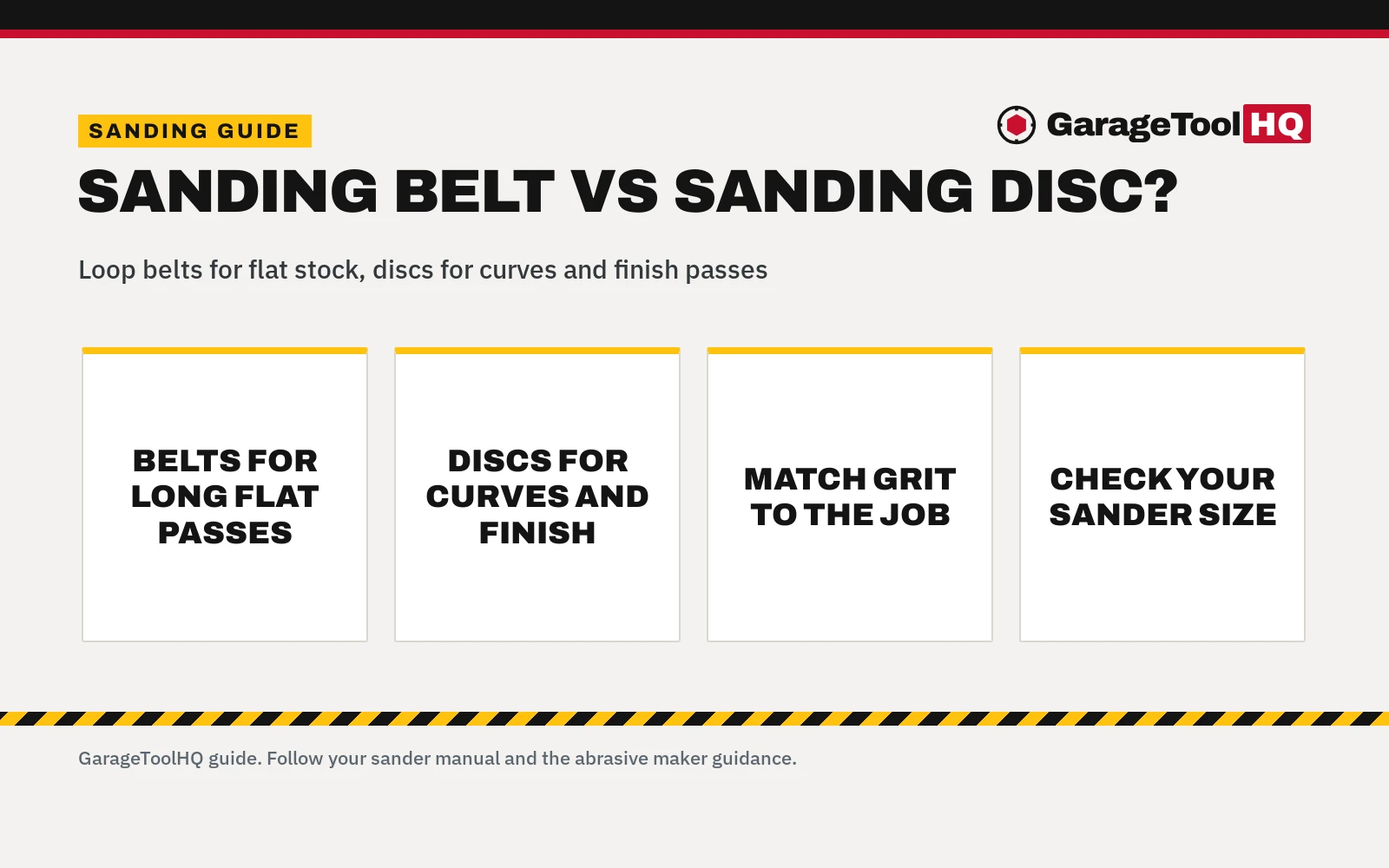
A belt suits long, flat passes and a disc suits curves and finish work, and the grit range in the pack decides how far each format can go.

On this page
Top picks at a glance
As an Amazon Associate I earn from qualifying purchases.
- 1
 POWERTEC 71002-P2 Abrasive Cleaning Stick for Sanding Belts &9.7/10View on Amazon
- 2
 WORKPRO 150 Pack 5 Inch Sanding Discs Sandpaper9.7/10View on Amazon
- 3
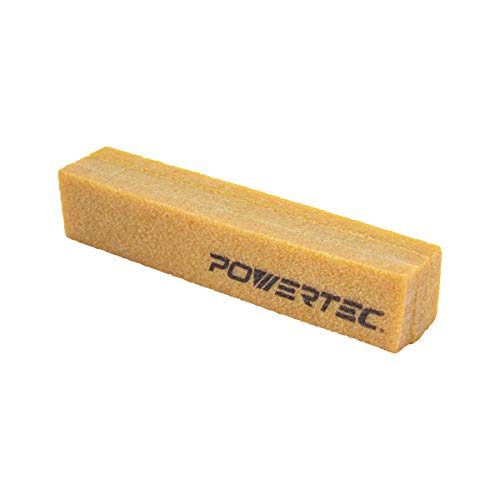 POWERTEC 71002 Abrasive Cleaning Stick for Sanding Belts &9.6/10View on Amazon
- 4
 4x36 4 x 36 inch Sanding Belt Pack 4-Inch x 36-InchView on Amazon
- 5
 1/2x18 1/2 x 18 Inch Sanding Belt Pack 1/2-Inch x 18-InchView on Amazon
- 6
 3x21 3 x 21 Inch Sanding Belt Pack 3-Inch x 21-InchView on Amazon
- 7
 1x30 1 x 30 inch Sanding Belt Pack 1-Inch x 30-InchView on Amazon
- 8
 1 x 42 Inch Sanding Belt Pack 1-Inch x 42-InchView on Amazon
- 9
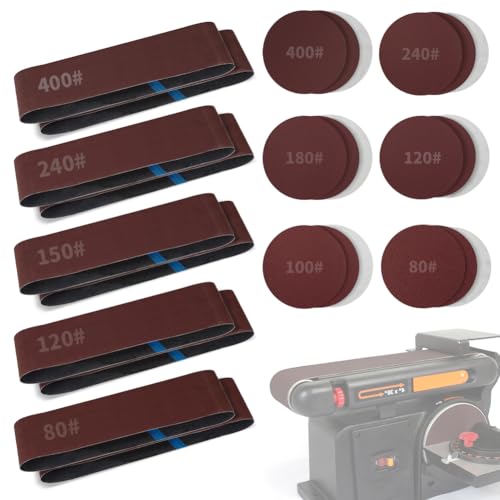 Sanding Belts & PSA Sanding Discs SetView on Amazon
A garage project often reaches a point where bare wood or metal needs smoothing before paint or assembly, and the choice comes down to sanding belt vs sanding disc. A belt wins on long, flat passes where a loop keeps cutting without stopping, while a disc wins on curves, edges and finish passes where a flat pad follows the shape. Neither format replaces the other, so the right pick depends on the shape of the piece, the sander it fits, and the grit range in the pack.
Other tools worth a look
 4x36 4 x 36 inch Sanding Belt Pack 4-Inch x 36-InchCheck price on Amazon
 1/2x18 1/2 x 18 Inch Sanding Belt Pack 1/2-Inch x 18-InchCheck price on Amazon
 3x21 3 x 21 Inch Sanding Belt Pack 3-Inch x 21-InchCheck price on Amazon
 1x30 1 x 30 inch Sanding Belt Pack 1-Inch x 30-InchCheck price on Amazon
 1 x 42 Inch Sanding Belt Pack 1-Inch x 42-InchCheck price on Amazon
 Sanding Belts & PSA Sanding Discs SetCheck price on Amazon
GarageToolHQ earns a commission when you buy through links on our product pages, at no extra cost to you. Read our affiliate disclosure.
Below: how each format works, where each one earns its keep, the gear in this guide, and answers to the questions garage owners ask most.
sanding belt vs sanding disc: how each format works
A sanding belt is a loop of abrasive cloth that runs around the rollers of a belt sander, so the cutting surface keeps moving across the work without lifting. The listings in this guide show loops in 4 x 36 inch and in 1/2 x 18 inch, and the belt format suits work where the sander can travel in a straight line. A sanding disc is a flat round sheet that mounts on a pad, and the self-adhesive kind, called PSA, sticks straight to the pad with no clamp or hook system. The disc format suits work where the pad needs to follow a curve, dress an edge, or blend a finish.
Grit decides how much material comes off and how smooth the surface ends up. Coarse grits such as 40 and 60 cut fast and suit heavy removal, mid grits such as 80, 100, 120 and 150 suit general smoothing, and fine grits such as 240, 320 and 400 suit finish passes. Every grit figure in this guide comes from the listings themselves, and the pack you buy decides which grits you actually have on hand.
| Format | How it cuts | Suits | Watch out |
|---|---|---|---|
| Belt | Loop runs around rollers in a straight line | Flat stock and long passes | Needs the loop size the sander takes |
| Disc | Flat sheet on a pad, PSA sticks to the pad | Curves, edges and finish passes | Needs the pad size the disc matches |
Where each format earns its keep
Reach for a wide belt when the piece is flat and the pass is long: a tabletop, a panel, a board that needs evening out. The loop keeps the abrasive in contact, and the listings describe firm joints and smooth seams that keep the run steady. That flat-stock rule does not cover every belt here: the makiwork belts are listed for flat and curved surfaces, and the narrow 1/2 x 18 inch belts suit detail work such as knife blade sharpening. Reach for a disc when the piece curves, when an edge needs dressing, or when a finish pass needs a light touch: the pad follows the shape instead of bridging over it. Paint stripping, rust removal and smoothing sit in the middle, and either format can do that work as long as the grit matches the job.
The honest answer for a busy garage is that the two formats share the work. A wide belt does the heavy flattening, a disc does much of the shaping and finishing, narrow belts handle detail work, and a pack that covers both formats saves a trip back to the shelf mid-job. That is why the gear section below ranks a combo pack at the top: it puts belts and discs in the same box.
The gear in this guide
makiwork sanding set. This 28-piece set pairs 10 pieces of 4 x 36 inch aluminum oxide belts in 80, 120, 150, 240 and 400 grits with 18 pieces of 6-inch self-adhesive discs in 80, 100, 120, 180, 240 and 400 grits. The maker lists open-coat aluminum oxide grain, a flat reinforced German joint on the belts for smooth bi-directional rotation, and strong self-adhesive backing on the discs. The stated uses cover wood, metal and non-metallic materials, furniture refinishing, automotive work, yacht maintenance, rust or paint removal, and flat and curved surfaces. It ranks at the top here because it is the pack in this guide that covers both formats with a wide grit spread.
TPmax sanding belt pack. This pack holds 12 pieces of 4 x 36 inch aluminum oxide belts, with 80, 120 and 150 grits in the assortment. The maker lists premium aluminum oxide grain, a firm belt interface, diagonal lap splice technology, antistatic and washable construction, and an additive in the resin to resist loading. The stated uses cover wood, aluminum, non-ferrous metal, glass, plastic and stone. It suits a garage that already owns a belt sander in this loop size and wants a straightforward grit ladder for flat work.
Shineboc zirconia belt pack. This 40-piece pack holds 1/2 x 18 inch zirconia belts in 60 grit, listed as 13 x 457 MM, with blue zirconia grains that the maker describes as waterproof, high hardness and heat-resistant. The maker lists precision bi-directional tape seams, bonded resin construction, and anti-clogging and heat dissipation during sanding. The stated uses cover metal, wood, car work, furniture and stainless steel. Read the listing with care: its bullets mention grits from 40 through 400, yet state that the pack itself is 60 grit, so treat this as a 60 grit pack and not as a mixed grit assortment.
abrasticle zirconia belt pack. This pack holds 36 pieces of 1/2 x 18 inch zirconia belts in 80 grit, listed as 13 x 457 mm, with premium blue zirconia grain. The maker lists a smooth seam running joint for uninterrupted sanding, long-lasting performance, and efficient material removal with a smooth and polished finish. The stated uses cover metal polishing, derusting, woodworking and knife blade sharpening. It suits narrow belt sander work where 80 grit is the working grit and a deep pack matters more than a grit ladder.
Picking grit without overbuying
Start coarse only when there is real material to remove, such as paint, rust or a rough-sawn surface, and move up the grit ladder toward a finish pass. A pack that stops at 150 grit leaves finer finish passes to another pack, while a pack that runs to 400 grit covers smoothing and polishing in the same box. Match the loop or disc size to the sander first, then match the grit range to the job: size first, grit second, pack depth last. Check the sander manual for the size it takes before ordering, since a loop or disc in the wrong size will not fit the sander it was bought for.
Wear eye protection with every air tool, use impact-rated sockets on impact wrenches, disconnect the air line before changing accessories, and finish lug nuts with a torque wrench to the vehicle's spec. See OSHA eye and face protection. Read our Safety Disclaimer.
Wear eye protection when sanding, since abrasive dust and loose grit leave the work fast. Work with ventilation and keep the dust away from your face, and follow the sander manual for changing a belt or disc. Disconnect power before swapping abrasive, keep cords and hoses clear of the cutting path, and keep flammable materials away from sparks when sanding metal.
FAQ: garage tools
Can a belt replace a disc sander in the garage?
Not fully. A belt suits flat stock and long passes, while a disc suits curves, edges and finish passes, and the two formats cover different shapes. A garage that does both kinds of work gets more from owning both formats, or from a combo pack, than from forcing either format onto every job.
What grit should I start with?
Start with a coarse grit such as 40 or 60 only for heavy removal, then move through 80, 120 and 150 for general smoothing, and finish with 240 or 400 for a smooth surface. The listings in this guide show grits from 40 through 400, so pick the pack whose grit range matches the jobs on the bench.
Do PSA discs stick to any sander?
No. A PSA disc needs a pad in the matching size, and the discs in this guide are 6-inch self-adhesive discs. Check the pad size and the sander manual before ordering, since a disc in the wrong size has nothing to stick to.
Are zirconia belts only for metal?
No. The zirconia listings in this guide state uses across metal, wood, car work, furniture and stainless steel, along with metal polishing and derusting. Zirconia suits hard metals well, but the listings do not limit it to metal alone.
Which pack in this guide covers the most jobs?
The makiwork set covers the most ground because it pairs belts and discs in a single pack, with belt grits from 80 through 400 and disc grits from 80 through 400. A garage that wants a single box for flat work, curves and finish passes gets both formats without buying two separate packs.
Related: 80 vs 120 grit sanding discs, sanding sponge vs sandpaper, 6 inch sanding discs and belt sander vs DA sander.