Air Compressor Fill Time Calculator: How to Estimate It
Work out how long an air compressor takes to fill its tank from the tank size, the target pressure and the compressor's airflow.

On this page
Top picks at a glance
As an Amazon Associate I earn from qualifying purchases.
- 1
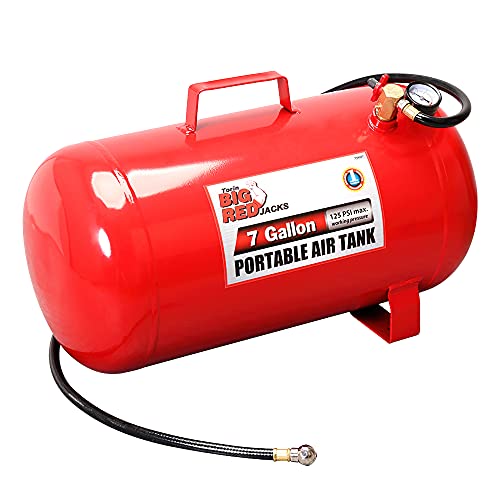 BIG RED Horizontal Portable Air Storage Tank with 36 "Hose9.6/10View on Amazon
- 2
 Performance Tool W10005 5-Gallon Portable Horizontal Air Tank9.6/10View on Amazon
- 3
 Air Tank Repair Kit9.5/10View on Amazon
An air compressor fill time calculator answers a plain garage question: how long before the tank is full and the tool is ready to run. The answer comes from the tank size, the pressure the tank must reach, and the airflow the compressor moves, so a calculator is only as good as the figures fed into it. Feed it the figures from the compressor and tank in front of you, and it gives a usable estimate for planning the job.
GarageToolHQ earns a commission when you buy through links on our product pages, at no extra cost to you. Read our affiliate disclosure.
Below: what a fill time calculator needs, how to work out the time step by step, what the reference tanks show, and what changes the answer.
Air Compressor Fill Time Calculator: What Decides the Wait
Tank size, target pressure and compressor airflow decide how long a fill takes. The tank size sets how much air must be stored. The target pressure sets how tightly that air must be packed. The compressor airflow sets how fast air moves into the tank. Change any one of them and the wait changes with it.
Start with the tank. The reference tanks on this page run from a 3 Gallon onboard tank to a 5 Gallon portable tank and a 30 Gallon receiver tank. A bigger tank holds more air, so with the same compressor it takes longer to fill. Then read the target pressure: the TOOLUXE tank (on Amazon) is rated to 125 PSI, while the HPDAVV and CNRAQR tanks (on Amazon) are rated to 200 PSI. A higher target pressure means more air packed into the same tank, so the fill runs longer. Finally, read the airflow figure on the compressor, given as CFM, which states how much air the compressor moves. A compressor that moves more air fills the same tank sooner.
How to Use an Air Compressor Fill Time Calculator
- Read the tank size. Find the gallon figure on the tank. The reference tanks here are 3 Gallon, 5 Gallon and 30 Gallon.
- Read the target pressure. Pick the pressure the job needs, and stay inside the tank’s rated maximum: 125 PSI on the TOOLUXE tank, 200 PSI on the HPDAVV and CNRAQR tanks.
- Read the compressor airflow. Find the CFM figure on the compressor. Airflow stated at different pressures does not compare directly, so read the pressure the figure was measured at.
- Work out the time. Tank gallons alone do not give the air needed, because air stored at pressure takes far more free air than the tank volume suggests. Use the delivery figure at the target pressure where the maker states it, and treat the result as an estimate for that tank, that pressure and that compressor, not an exact time.
- Check the answer against the tank. A bigger tank, a higher pressure or a lower airflow all stretch the time. If the result looks wrong, recheck the figures before trusting it.
What the Reference Tanks Show
| Tank | Size | Maximum pressure | Notes |
|---|---|---|---|
| TOOLUXE portable tank | 5 Gallon | 125 PSI | 140 PSI safety valve, 40 Inch hose, 1/4 inch NPT fittings |
| HPDAVV receiver tank | 30 Gallon | 200 PSI | ASME certified, 3/4 inch NPT drain port |
| CNRAQR onboard tank | 3 Gallon | 200 PSI | 12 Liter tank in a compressor kit; compressor stated for full duty cycles at 100 PSI, 30A fuse, IP67 rating for the unit |
The spread shows why a single fill time never fits every garage. The 30 Gallon receiver holds far more air than the 3 Gallon onboard tank, so on the same compressor it takes far longer to reach 200 PSI. The 5 Gallon portable tank sits between them in size and is rated to a lower maximum of 125 PSI. Read the figures off the tank in front of you and feed those into the calculator.
What Changes the Answer
- Tank size. A bigger tank takes longer to fill on the same compressor.
- Target pressure. A higher target pressure packs more air into the same tank, so the fill runs longer.
- Compressor airflow. A compressor that moves more air fills the tank sooner. Check the CFM figure and the pressure it was measured at.
- Leaks and open fittings. Air escaping through a loose fitting or an open drain stretches the fill time. Close the drain and check the fittings before timing a fill.
- The safety valve. The TOOLUXE tank lists a 140 PSI safety valve as a relief backup. It is not a fill target or a pressure control, and the tank must never be pushed past its rated maximum.
Drain the tank after use so water does not rust it from the inside, never exceed the tool's rated pressure, wear eye protection, and run 240V units on the circuit the manual calls for. Do not run a gas engine compressor in a closed garage. Read our Safety Disclaimer.
FAQ: garage tools
How long does it take to fill a 5-gallon air tank?
There is no single figure. The TOOLUXE 5 Gallon tank is rated to 125 PSI, and the time depends on the airflow of the compressor feeding it. Feed the tank size, the target pressure and the compressor airflow into the calculator and it gives the time for that setup.
Does a bigger tank always take longer to fill?
On the same compressor and to the same target pressure, generally yes. A 30 Gallon receiver holds far more air than a 3 Gallon tank, so it takes longer to reach the same pressure from empty. A lower target pressure, or topping up from a partly filled tank, also shortens the wait.
What pressure should I fill my air tank to?
Fill to the pressure the job needs and never past the tank’s rated maximum: 125 PSI on the TOOLUXE tank and 200 PSI on the HPDAVV and CNRAQR tanks. The TOOLUXE tank lists a 140 PSI safety valve as a backup, not as a target.
What is CFM and why does it decide fill time?
CFM states how much air the compressor moves. A higher CFM fills the same tank sooner, and a lower CFM stretches the wait. Read the CFM figure with the pressure it was measured at; those figures belong together. See the guide to what air compressor CFM means.
Why does my compressor take longer to fill the tank than it used to?
Possible causes include air escaping through a loose fitting or an open drain, a clogged intake, or pump wear. Close the drain, check the fittings, and check the intake, and follow the compressor manual before assuming the compressor is failing.
Can I add another tank to get more air between fills?
Yes. The HPDAVV 30 Gallon tank (on Amazon) works as a vertical auxiliary storage tank with a compressor, adding storage without changing the compressor. A bigger total volume takes longer to fill from empty, but it holds more air once full.
Related: the air compressors hub, CFM vs PSI, how to fill an air tank and best portable air compressor for home garage.