Automotive Oscilloscope vs Multimeter: Which One Should You Buy?
An oscilloscope shows electrical signals as waveforms over time, while a multimeter gives quick one-value readings; this comparison matches each to the garage jobs it suits.

On this page
Top picks at a glance
As an Amazon Associate we earn from qualifying purchases.
- 1
 FNIRSI 2C53P 3-in-1 50MHz Oscilloscope Multimeter DDS Signal9.6/10View on Amazon
- 2
 KAIWEETS Digital Multimeter 20000 Counts Auto-Range Voltmeter9.8/10View on Amazon
- 3
 3 in 1 Handheld Oscilloscope Automotive Dual Channel 50MHz9.5/10View on Amazon
- 4
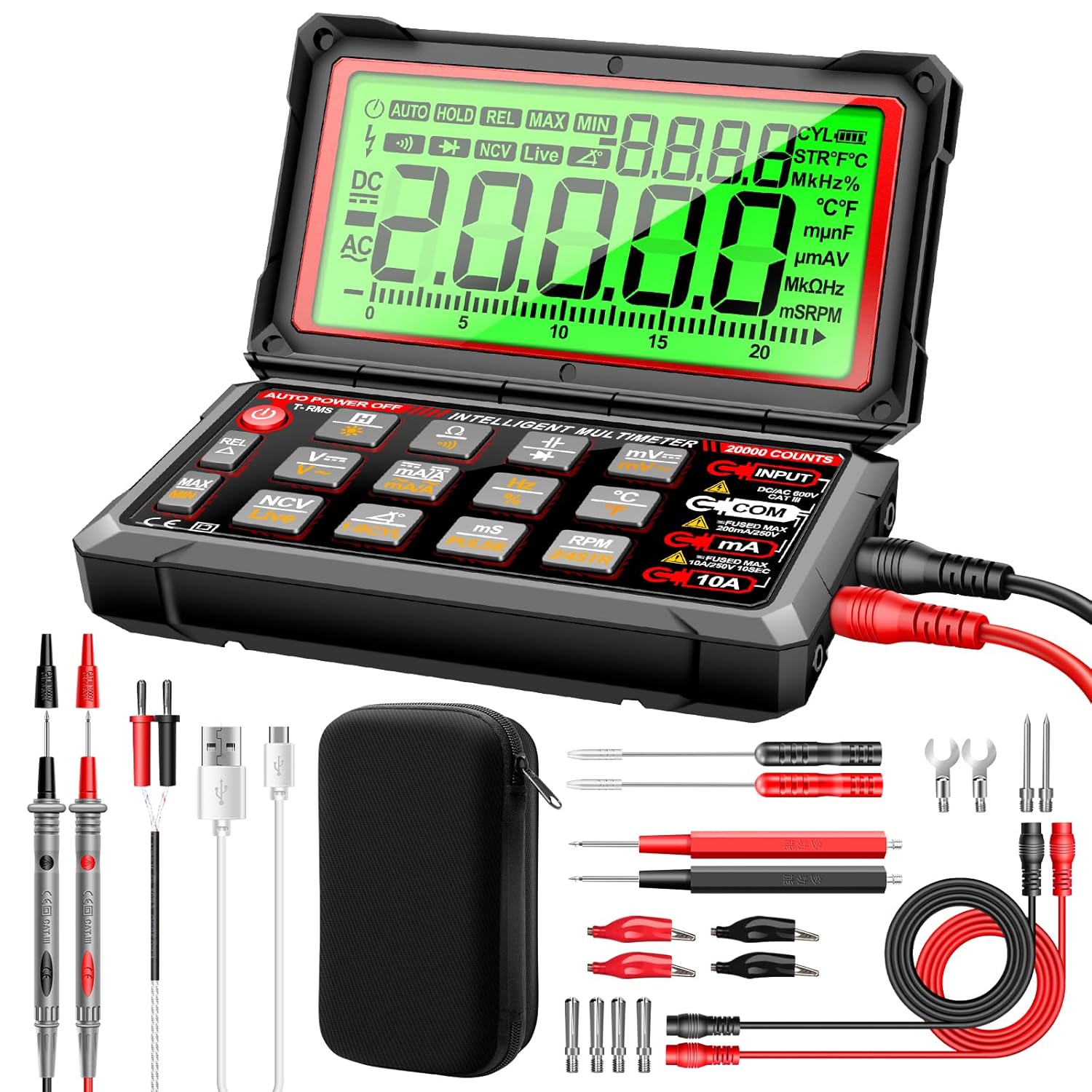 ANENG 20000 Count Digital MultimeterView on Amazon
- 5
 Micsig Oscilloscope SATO1004View on Amazon
- 6
 FNIRSI 2C53T 3-in-1 50MHz 2CH Oscilloscope Multimeter DDSView on Amazon
- 7
 702S 2 in 1 Handheld Automotive Oscilloscope MultimeterView on Amazon
- 8
 FNIRSI DST-210 3-in-1 10MHz Handheld Oscilloscope MultimeterView on Amazon
- 9
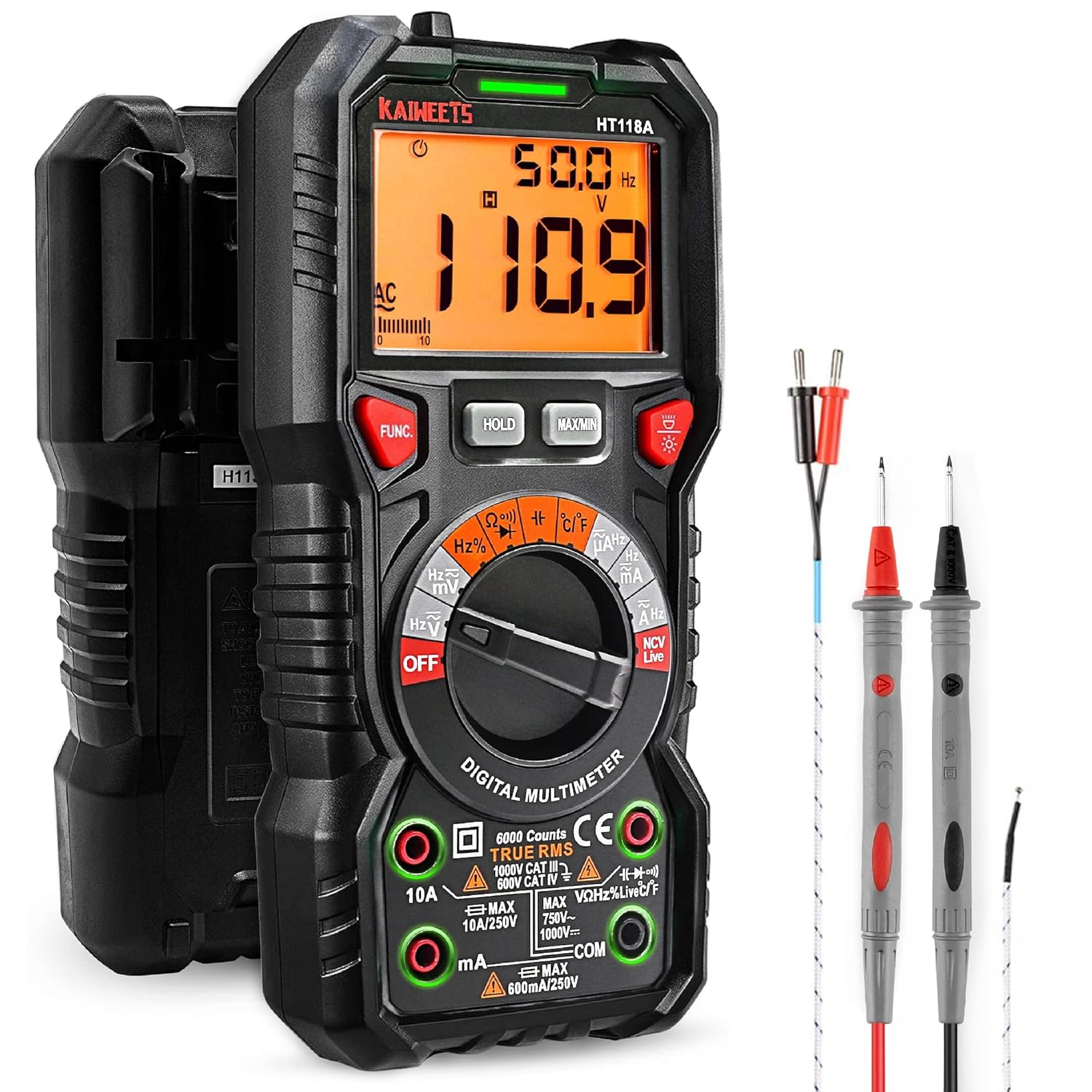 KAIWEETS Digital Multimeter Automotive TRMS Tester 6000View on Amazon
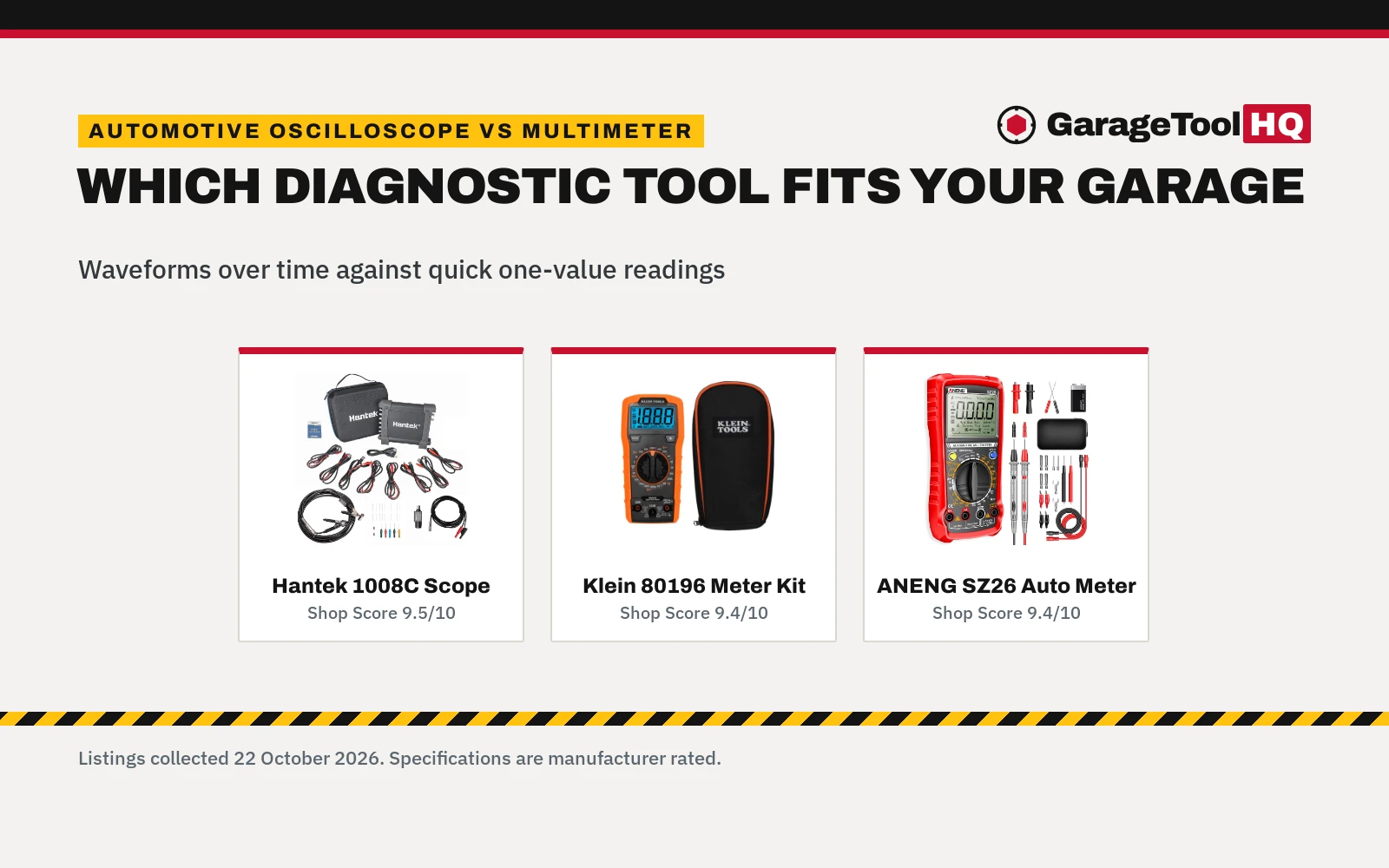
Verdict: Choose an automotive oscilloscope if you chase intermittent faults, need to see sensor waveforms change over time, or want the multi-channel view and signal simulation the Hantek example offers. Choose a multimeter if most of your electrical work is quick checks of voltage, current, resistance and continuity, or engine readings like RPM and dwell angle where the ANENG example shines.
The engine cranks strong but will not catch, and the battery holds a charge just fine. That is the automotive oscilloscope vs multimeter fork in the road: is the crank sensor dropping its signal mid-crank, or is something simpler going on? The answer decides which tool earns a spot on your bench. This comparison lays out what each side does and where each wins, with concrete examples from current listings.
GarageToolHQ earns a commission when you buy through links on this page, at no extra cost to you. Read our affiliate disclosure.

Hantek1008C+HT201+HT30A+HT307 PC USB 8CH
A PC-based 8-channel automotive oscilloscope with 12-bit resolution, 4K memory depth and 2.4MSa/s sampling, plus more than 80 automotive diagnostic functions and a programmable signal generator.
Pros
- 8 analogue channels with 12-bit resolution and 2.4MSa/s sampling.
- More than 80 automotive diagnostic functions stated.
- Programmable signal generator, 0-250KHz, simulates crankshaft and camshaft signals.
- Kit includes probes and 8 cables.
Cons
- Needs a Windows PC and USB 2.0; no standalone display.
- No warranty term is stated in the listing.
- No safety certification is stated.
- Spec table lists AWG fields as no data though the bullets describe the generator.

Klein Tools 80196 Digital Multimeter Kit with Case
A manual-ranging digital multimeter kit with a heavy-duty case, measuring AC/DC voltage to 600V, 10A DC current and 2 megaohm resistance, with battery, diode and continuity checks.
Pros
- Measures 600V AC/DC, 10A DC current and 2 megaohm resistance.
- Lead-alert LEDs confirm proper lead placement.
- Backlit LCD for low-light work.
- Kit includes case, leads, batteries and CAT III/IV caps.
Cons
- Manual-ranging: you select the measurement range yourself.
- Spec table describes a CL810 auto-ranging clamp meter, contradicting the 80196 manual-ranging kit in the title.
- Warranty states see manufacturer website, which gives no concrete term.
- No safety certification is stated for the meter itself.

ANENG SZ26 Digital Multimeter, Engine Analyzer
An automotive digital multimeter with a 500-10000 RPM tachometer, dwell angle and duty cycle readings, 1999 counts, overload protection and a large LCD with data hold.
Pros
- 500 to 10000 RPM tachometer plus dwell angle and duty cycle for engine work.
- 1999 counts with overload protection and insulated probes.
- CAT III 600V and CAT II 1000V specification stated.
- Accessory kit with 9V battery, leads and storage bag.
Cons
- No warranty term is stated in the listing.
- No UL, ETL or CSA listing is stated.
- Voltage and current ranges are not stated, only the functions.
- Single meter: no waveform view for intermittent faults.
More options to compare
 ANENG 20000 Count Digital MultimeterCheck price on Amazon
 Micsig Oscilloscope SATO1004Check price on Amazon
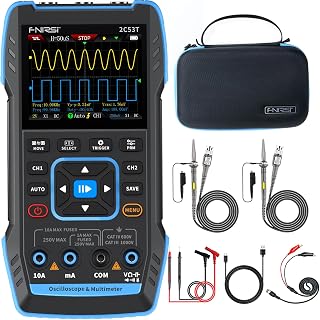 FNIRSI 2C53T 3-in-1 50MHz 2CH Oscilloscope Multimeter DDSCheck price on Amazon
 702S 2 in 1 Handheld Automotive Oscilloscope MultimeterCheck price on Amazon
 FNIRSI DST-210 3-in-1 10MHz Handheld Oscilloscope MultimeterCheck price on Amazon
 KAIWEETS Digital Multimeter Automotive TRMS Tester 6000Check price on Amazon
Automotive oscilloscope vs multimeter: side by side
| Automotive oscilloscope | Multimeter | Multimeter | |
|---|---|---|---|
| Example | Hantek 1008C Scope | Klein 80196 Meter Kit | ANENG SZ26 Auto Meter |
| What it shows | Waveforms across 8 analogue channels | One value at a time | One value at a time, plus RPM |
| Sampling | 2.4MSa/s, 12-bit, 4K memory (Hantek) | Not stated | Not stated |
| Voltage | Not stated | 600V AC/DC (Klein) | AC/DC voltage, range not stated (ANENG) |
| Current | Not stated | 10A DC (Klein) | DC current, range not stated (ANENG) |
| Resistance | Not stated | 2 megaohm (Klein) | Resistance, range not stated (ANENG) |
| Automotive functions | More than 80 diagnostic functions (Hantek) | Battery, diode and continuity checks (Klein) | 500-10000 RPM tachometer, dwell angle, duty cycle (ANENG) |
| Signal generator | 0-250KHz, LVTTL output (Hantek) | Not stated | Not stated |
| Display | PC software, Windows only (Hantek) | Backlit LCD (Klein) | Large LCD with data hold (ANENG) |
| Stated safety features | Not stated | Lead-alert LEDs; CAT III/IV caps included (Klein) | Overload protection; insulated probes; CAT III 600V (ANENG) |
| Weight | 1.4 pounds (Hantek) | 1.1 pounds (Klein) | Not stated (ANENG) |
| Kit extras | Probes and 8 cables (Hantek) | Case, leads, batteries (Klein) | 9V battery, leads, storage bag (ANENG) |
Example figures are manufacturer rated, as published on each listing and collected 22 October 2026.
What each tool actually does
An automotive oscilloscope draws the electrical signal as a waveform across time. The Hantek example gives you 8 analogue channels at 12-bit resolution with a 2.4MSa/s sampling rate, so you can watch several signals at once and catch a glitch that comes and goes. A multimeter instead gives you one value at a time: the Klein example measures AC/DC voltage to 600V, 10A DC current and 2 megaohm resistance, while the ANENG example adds engine readings like a 500 to 10000 RPM tachometer, dwell angle and duty cycle. One tool shows the shape of the signal; the other gives the number, fast.
When the oscilloscope earns its keep
Intermittent faults are the oscilloscope’s home turf. A sensor that drops out for a fraction of a second will not show on a meter’s steady reading, but it shows as a gap in a waveform. The Hantek listing states more than 80 automotive diagnostic functions covering ignition, sensors, bus detection, actuators, and starting and charging systems. Its programmable signal generator runs 0 to 250KHz with LVTTL output to simulate crankshaft and camshaft signals, which suits bench-checking components. The trade is setup: the Hantek is a virtual scope that needs a Windows PC over USB 2.0, with 20 automatic measurement modes to read the results.
When the multimeter is enough
For most garage electrical work, a meter is faster. Checking battery voltage, a blown fuse, continuity through a harness, or a diode takes seconds with the Klein example’s one-value display, backlit LCD and lead-alert LEDs that confirm the leads are placed right. The ANENG example leans into engine work with its tachometer, dwell angle and duty cycle readings, 1999 counts and overload protection. Neither meter shows a waveform, so neither catches a signal that misbehaves for an instant and then looks fine.
Garage setup: what each asks of you
The oscilloscope asks for bench space and a computer. The Hantek unit itself measures 7.48 by 6.57 by 1.38 in and weighs 1.4 pounds, but it only works paired with PC software over USB 2.0, and only on Windows. The meters are grab-and-go: the Klein is battery powered and ships in a 600D nylon carry case, and the ANENG runs on the included 9V battery with a storage bag. If your diagnostics happen at the fender, the meters travel better; if they happen at the bench, the scope’s 8 channels earn their space.
Choose an oscilloscope if
- You chase intermittent faults and sensor glitches
- You want to see waveforms across 8 channels at once
- You bench-check components with a signal generator
- You have a Windows PC at the bench for the software
Choose a multimeter if
- Most jobs are quick voltage, current and resistance checks
- You want engine readings like RPM, dwell angle and duty cycle
- You need a grab-and-go tool with no computer attached
- You prefer a backlit display and lead-placement alerts
Example tools
For more on meters, see the best automotive multimeter for troubleshooting and the analog vs digital multimeter comparison; for scan tools, the best OBD2 scanner for live data.
Use rated jack stands on solid ground, wear eye protection with power and air tools, keep fuel-burning equipment out of a closed garage, and follow the manual for every tool. Read our Safety Disclaimer.
Garage Fit Check
- Bench space: the Hantek box is 7.48 by 6.57 by 1.38 in, but leave room for the Windows laptop it requires.
- Power: the Klein runs on batteries and the ANENG on its included 9V battery; the Hantek draws through USB 2.0 from the PC.
- Storage: the Klein ships in a 600D nylon case and the ANENG in a storage bag; the Hantek kit includes probes and 8 cables to keep together.
- First job: confirm the meter leads and the scope probes are all present before you start, since both kits list multiple pieces.
Frequently Asked Questions
Can a multimeter replace an oscilloscope?
For steady readings, yes: voltage, current, resistance and continuity are meter jobs. For signals that change over time or drop out intermittently, no meter here shows a waveform, so the oscilloscope keeps that job.
Do I need a computer for the Hantek oscilloscope?
Yes. The listing describes a virtual oscilloscope that transfers signals through USB 2.0 and supports PC software on Windows only. There is no standalone display.
What is the difference between manual-ranging and auto-ranging?
A manual-ranging meter, like the Klein 80196 kit in its title and bullets, needs you to select the measurement range; an auto-ranging meter picks it for you. Note the Klein spec table names the CL810 auto-ranging clamp meter, which contradicts the title; trust the title and bullets.
Which is better for engine diagnostics, the ANENG or the Klein?
It depends on the job. The ANENG lists a 500 to 10000 RPM tachometer, dwell angle and duty cycle, which are engine-specific. The Klein covers general electrical checks to 600V and 10A with a backlit display and lead alerts. For ignition and sensor waveforms, step up to the oscilloscope.
Are these safe to use on car electrical systems?
The ANENG listing states overload protection, insulated probes, and a CAT III 600V and CAT II 1000V specification; the Klein listing states lead-alert LEDs and includes CAT III/IV caps. No listing states a UL, ETL or CSA listing. Follow each manual, and keep the meter within its stated limits.
Related: the best automotive multimeter for troubleshooting, the analog vs digital multimeter comparison, and the best OBD2 scanner for live data.