Bolt Cutter Parts: Jaws, Blades and Replacements
Replacement jaws, pivot hardware and adjustment bolts: the bolt cutter parts that wear out, how to match them to your cutter, and when to swap them.

On this page
Top picks at a glance
As an Amazon Associate I earn from qualifying purchases.
- 1
 4pc Bolt Cutter Pliers Sets9.7/10View on Amazon
- 2
 OEMTOOLS 22609 8" Bolt Cutter9.7/10View on Amazon
- 3
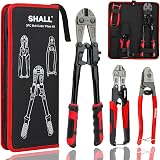 SHALL 3-Piece Bolt Cutters9.7/10View on Amazon
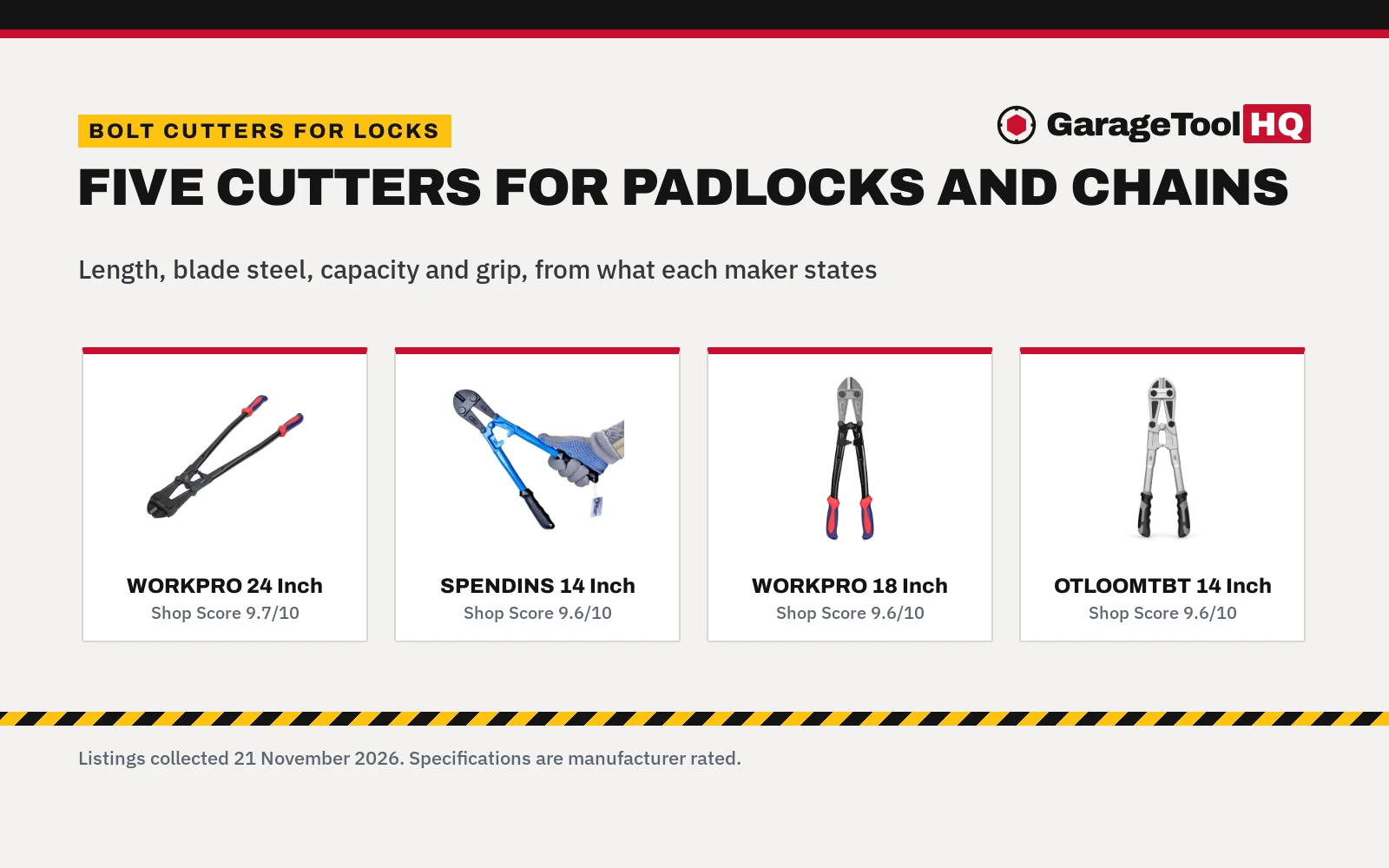
A padlock that will not open, a length of chain across a gate, a fence panel that needs to come down: each of these jobs ends at the cutting edges of a bolt cutter. When those edges dull or chip, the tool stops cutting cleanly and starts crushing instead. Bolt cutter parts are the pieces you swap to bring the tool back, and the replacement jaws are the part that does most of the work.
GarageToolHQ earns a commission when you buy through links on our product pages, at no extra cost to you. Read our affiliate disclosure.
Below: the parts that wear out, how to match a replacement head to the cutter you own, what the steel and hardness figures mean, and how to swap the jaws.
Bolt cutter parts: what wears out first
A bolt cutter has few moving parts, and the cutting edges take the wear. The jaws are the steel heads that meet in the middle and do the cutting. Each jaw carries a cutting edge, and the edges close against each other when the handles come together. With use, the edges dull, nick, or chip, and the cut turns ragged. The pivot bolt holds the halves together at the joint. The handles give the leverage, and the adjustment sets how the cutting edges meet. Klein Tools notes that one adjustment realigns the cutting edges on its replacement blades.
- Replacement jaws. The cutting heads, sold to match the size of the cutter. This is the part you replace most often.
- Pivot bolt and nuts. The hardware that holds the jaws in place and lets them swing. The HARFINGTON CR-V head ships with 2 screws and 2 nuts in the set.
- Adjustment bolt. The bolt that sets how the cutting edges meet. Turn it to bring the edges back together after a swap.
- Handles. The long arms that give the leverage. Handles wear far slower than the edges dull, so they rarely need replacing.
When a cutter stops cutting well, check the edges before anything else. A dull or chipped edge is a jaw problem, while a loose pivot or a gap that will not close is an adjustment problem.
How to match replacement jaws to your cutter
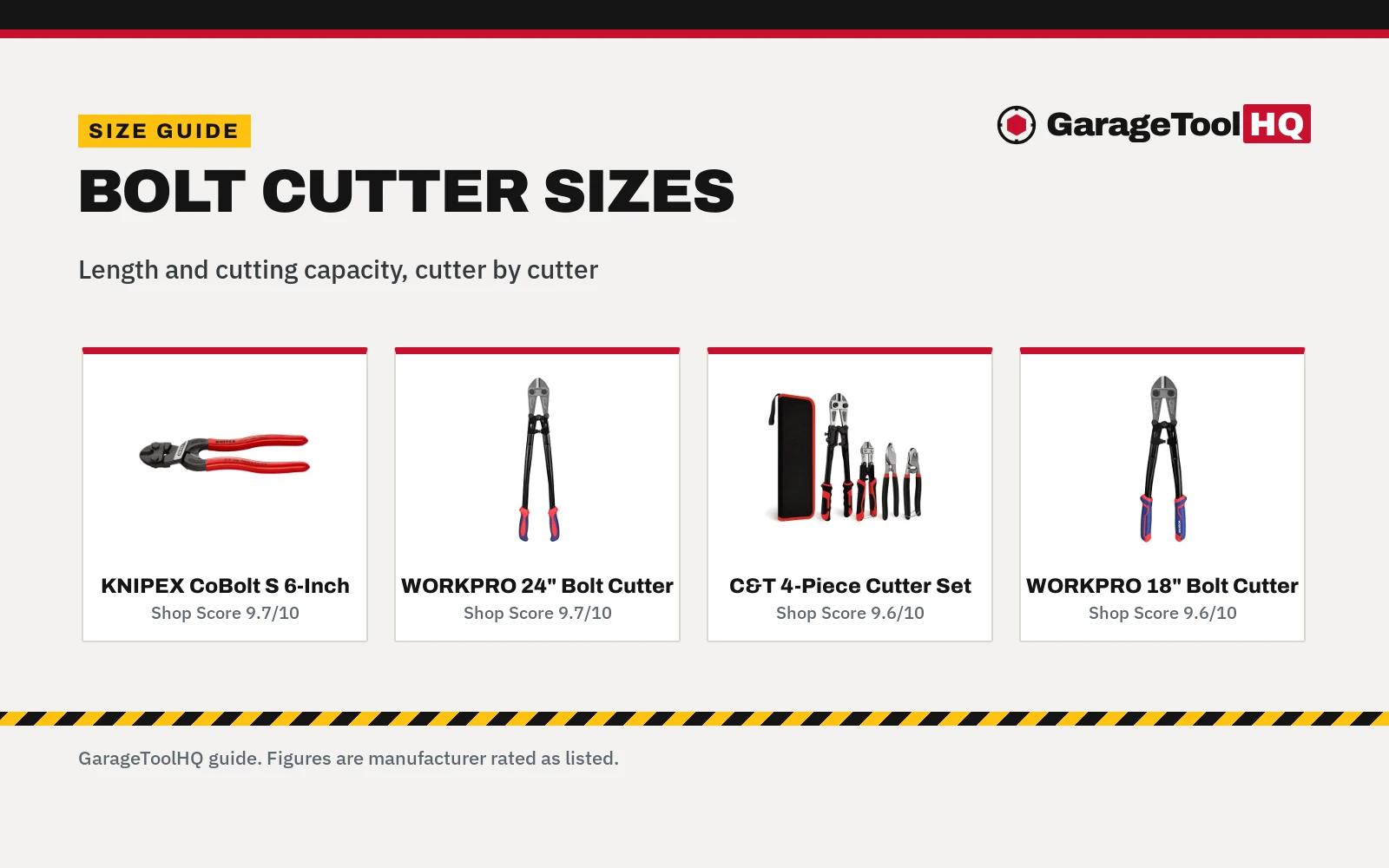
Match the replacement head to the size stamped on the cutter. HARFINGTON lists replacement heads in 14, 18, 24, 30 and 36 inch sizes, and the head for a 24 inch cutter is not the head for a 36 inch cutter. The total length of the head changes with the size, so a head that looks close can still sit wrong on the pivot.
| Head size | Total length |
|---|---|
| 14 inch | 100mm / 3.94 inch |
| 18 inch | 132mm / 5.2 inch |
| 24 inch | 152mm / 5.98 inch |
| 30 inch | 170mm / 6.69 inch |
| 36 inch | 188mm / 7.4 inch |
Check the hole spacing and hole diameter as well. The HARFINGTON CR-V head for a 24 inch cutter lists a hole diameter of 60mm / 2.36 inch, and the head measures 152 x 80 x 9mm / 5.98 x 3.15 x 0.35 inch. A head with the wrong hole spacing will not close tight, even if the size on the box matches. The cutter maker’s own blade is the surest match: Klein Tools lists the 63824 blade for its 24 inch cutter and the 63818 blade for its 18 inch cutter.
Read the size on the cutter itself before ordering. The size is usually marked on the handle or on the head, and the replacement head must carry the same size. For a full chart of cutter lengths, see the guide to bolt cutter sizes.
What the steel and hardness figures mean
Replacement jaws are sold by steel type and by hardness, and both figures tell you what the head can cut. HARFINGTON makes its heads from high carbon alloy steel, listed as T8 tool steel, with a hardness of HRC 55-60. The maker rates those heads to cut materials up to HRC 40 hardness. The CR-V head from the same maker uses high-frequency quenched cutting edges with a hardness of HRC45-82, and the maker lists a black oxide finish for rust resistance.
Klein Tools states cutting capacity instead of a hardness range. Its blades are forged alloy tool steel, precision ground, and the maker lists cutting capacities up to Brinell 300, Rockwell C31 for soft and medium materials and up to Brinell 400, Rockwell C42 for hard materials. Match the capacity to the material in front of you: a head rated for soft material dulls faster on hard rod, and a head rated for hard material is more than a soft-material job needs.
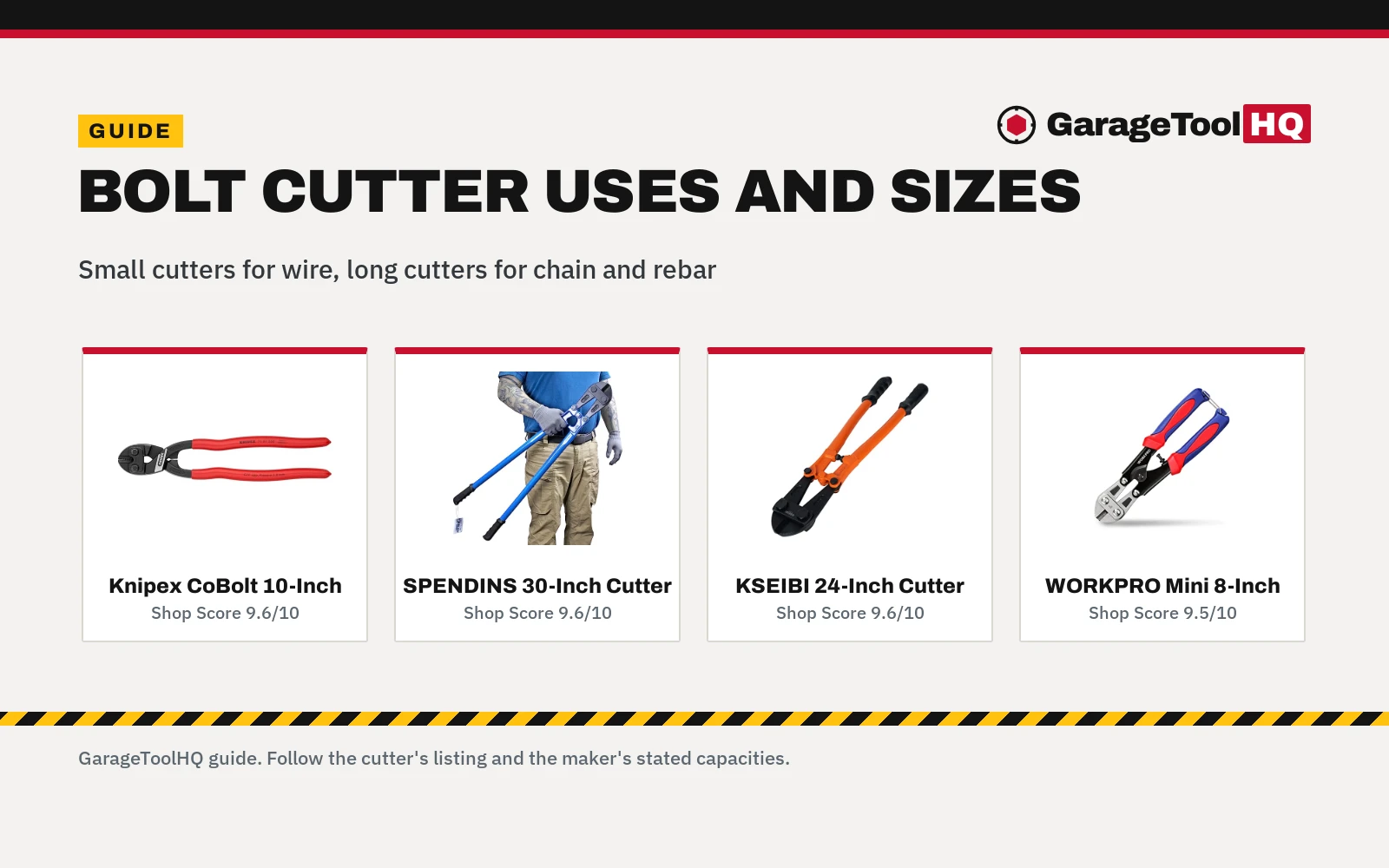
Steel type alone does not set the cut. Utoolmart lists its 24 inch replacement jaws as high carbon steel, drop forged, with heat-treated cutting edges, while YXQ lists CR-V steel for its 24 inch head. For the jobs each size suits, see the guide to bolt cutter uses.
How to replace bolt cutter jaws
- Check the blade condition first. HARFINGTON’s own note says to check the blade condition before using the cutter, and the same check applies before a swap: look for chips, cracks, or edges that no longer meet.
- Wear gloves. The maker note on every HARFINGTON head says to wear gloves for safety, and the fresh edges are sharp.
- Take the old head off. Remove the screws and nuts that hold the jaws to the handles, and keep them if the new head ships without hardware. The HARFINGTON CR-V head ships with 2 screws and 2 nuts in the set.
- Fit the new head. Set the new jaws on the pivot, line up the holes, and fit the screws and nuts. The Utoolmart head notes a standard connecting hole size and a high screw matching rate.
- Realign the cutting edges. Klein Tools notes that one adjustment realigns the cutting edges. Close the jaws slowly and watch the edges meet along their full length.
- Cut a scrap piece. Try the cutter on a scrap length of the same material before the real job. A clean cut with no crushing means the edges meet right.
- Clean and store the cutter dry. HARFINGTON’s note says to keep the cutter clean and store it in a dry place.
If the edges will not meet after adjustment, the head may be the wrong size or the wrong hole spacing for the cutter. Take it off and check the size and the hole diameter again rather than forcing the pivot.
Read the manual before first use, wear eye protection, keep the work area clear and ventilated, and stay within every stated rating. Read our Safety Disclaimer.
When to replace the jaws instead of the whole cutter
Replace the jaws when the cutter body is sound and only the edges are worn. A head that dulls, chips, or leaves a crushed cut is a jaw problem, and a fresh head restores the cut. The Klein blade for a 24 inch cutter carries a 1 Year Manufacturer warranty.
Buy a whole new cutter when the handles bend, the pivot will not hold, or the adjustment no longer brings the edges together. A replacement head cannot fix a bent handle or a worn pivot hole. If the head you need is no longer made for your cutter size, that is also the point to replace the tool.
FAQ: garage tools
What are bolt cutter parts called?
The cutting heads are called jaws or blades. The other parts are the pivot bolt, the adjustment bolt, and the handles. The jaws wear out first, so they are the part sold as a replacement.
How do I know which replacement jaws fit my bolt cutter?
Match the size stamped on the cutter, then check the hole diameter and hole spacing. HARFINGTON lists heads in 14, 18, 24, 30 and 36 inch sizes, and Klein Tools lists the 63824 blade for its 24 inch cutter and the 63818 blade for its 18 inch cutter.
Can I replace just the blades on a bolt cutter?
Yes. Replacement jaws are sold for common cutter sizes. Remove the screws and nuts, fit the new head, and realign the edges, and check the size and the hole spacing before ordering.
What hardness should replacement bolt cutter jaws have?
HARFINGTON lists its T8 tool steel heads at HRC 55-60, rated to cut materials up to HRC 40 hardness, and its CR-V head at HRC45-82. Klein Tools states cutting capacity instead: up to Brinell 300, Rockwell C31 for soft and medium materials and up to Brinell 400, Rockwell C42 for hard materials.
How do I keep new bolt cutter jaws sharp?
Cut only material inside the head’s stated capacity, and keep the cutter clean and stored in a dry place, as the HARFINGTON maker note says. Check the blade condition before each job, wear gloves while handling the cutter, and swap the head when the edges chip or the cut turns ragged.
Do replacement jaws come with screws?
Some do and some do not. The HARFINGTON CR-V head ships with 2 screws and 2 nuts in the set, while other heads list no hardware. Keep the screws and nuts from the old head until the new head is fitted, in case the set ships without them.
Related: bolt cutter sizes, the guide to bolt cutter uses, and the engine and shop equipment hub.