Boost Gauge vs Vacuum Gauge: Which One Should You Buy?
Boost and vacuum gauges compared: what each measures, how the two boost examples differ, and who should pick which side.

On this page
Top picks at a glance
As an Amazon Associate I earn from qualifying purchases.
- 1
 AEM 30-0306 X-Series Boost Pressure Gauge 52mm9.7/10View on Amazon
- 2
 AutoLine Pro HyperSmoke™ Automotive Smoke Machine EVAP Vacuum9.6/10View on Amazon
- 3
 Turbo Boost Gauge Kit Vacuum 30 PSI Tinted 7 Color9.6/10View on Amazon
- 4
 Auto Meter 4305 Ultra-Lite Mechanical Boost GaugeView on Amazon
- 5
 Black 52mm 2" Turbo Boost Gauge 0-30 PSI Pressure VacuumView on Amazon
- 6
 Yellow Jacket 69020 Omni Digital Vacuum Gauge with 1/4"View on Amazon
- 7
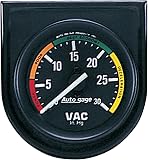 AUTO METER 2337 Autogage Vacuum Gauge PanelView on Amazon
- 8
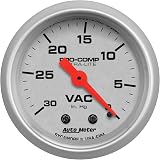 Auto Meter 4384 Ultra-Lite Mechanical Vacuum Gauge RegularView on Amazon
Verdict: Choose a boost gauge if the engine is turbocharged or supercharged and boost pressure is what needs watching. Choose a vacuum gauge if manifold vacuum is the reading that matters for diagnosis. If one gauge must cover both, a boost and vacuum combo gauge such as the GlowShift example reads both sides.
A turbo car that feels flat under load raises a simple question: is boost pressure reaching the engine, or is something else wrong. This comparison of boost gauge vs vacuum gauge explains what each side measures, then uses two boost gauge examples to show how the boost side itself splits between digital and mechanical gauges.
GarageToolHQ earns a commission when you buy through links on this page, at no extra cost to you. Affiliate disclosure.

Auto Meter (3302) Sport Comp 2-1/16" 0-15 PSI
A mechanical boost gauge reading 0 to 15 PSI with a 2-1/16 in dial, incandescent perimeter lighting and no electrical system required for operation.
Pros
- Mechanical operation needs no electrical system for gauge operation
- Traditional incandescent lighting around the dial perimeter
- Kit includes nylon line, compression fittings, adapter and hardware
- 1 year manufacturer warranty stated
Cons
- Boost range of 0 to 15 PSI is narrower than the GlowShift at 45 PSI
- No vacuum range is stated; it is a boost gauge only
- No colour modes or digital display are stated
- Listed item dimensions of 5 by 5 by 5 in give no separate dial depth figure

GlowShift 10 Color Digital 45 PSI Turbo Boost Vac
A digital boost and vacuum gauge kit reading boost from 0 to 45 PSI and vacuum from -30 to 0 inHg, with an electronic sensor, harnesses and a multi-colour LED display.
Pros
- Reads both boost from 0 to 45 PSI and vacuum from -30 to 0 inHg
- Digital LED display with 10 solid colour modes and 2 colour cycle modes
- Full kit: sensor, 9 ft sensor harness, 2 ft power harness, 6 ft line, T-fitting
- Self-calibration at startup, with a full sensor and harness kit
Cons
- No weight figure is stated in the listing
- Bullets describe an aluminum housing while the spec table lists nylon material
- Needs sensor wiring and a power harness, unlike a mechanical gauge
- Digital display may not suit buyers who want a simple dial
Other tools worth a look
 Auto Meter 4305 Ultra-Lite Mechanical Boost GaugeCheck price on Amazon
 Black 52mm 2" Turbo Boost Gauge 0-30 PSI Pressure VacuumCheck price on Amazon
 Yellow Jacket 69020 Omni Digital Vacuum Gauge with 1/4"Check price on Amazon
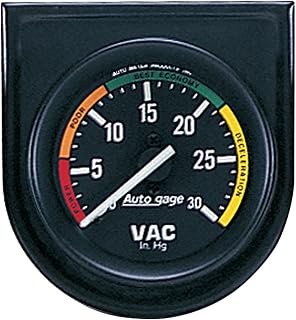 AUTO METER 2337 Autogage Vacuum Gauge PanelCheck price on Amazon
 Auto Meter 4384 Ultra-Lite Mechanical Vacuum Gauge RegularCheck price on Amazon
Boost gauge vs vacuum gauge: side by side
| Boost gauge | Vacuum gauge | Notes | |
|---|---|---|---|
| What it measures | Pressure above atmosphere from a turbo or supercharged engine | Manifold vacuum, negative pressure | Two sides of one intake system |
| Example range | 0 to 45 PSI (GlowShift example); 0 to 15 PSI (Auto Meter example) | No vacuum-side listing here; GlowShift example reads -30 to 0 inHg | Ranges are per listing, not per side |
| Display | Digital LED with colour modes (GlowShift); mechanical dial (Auto Meter) | Not stated; no vacuum-side listing here | Both examples are 2-1/16 in |
| Power needed | Electronic sensor and harness (GlowShift); none for operation (Auto Meter) | Not stated; no vacuum-side listing here | Mechanical operation needs no electrical system |
| Kit includes | Sensor, harnesses, T-fitting, line (GlowShift); nylon line, fittings, adapter (Auto Meter) | Not stated; no vacuum-side listing here | Kit contents are per listing |
| Gauge size | 2-1/16 in for both examples | Not stated; no vacuum-side listing here | Size does not separate the examples |
Example figures are manufacturer rated, as published on each listing and collected 28 October 2026. Both examples here are tagged as boost gauges, so the vacuum column states what the listings do and do not cover rather than inventing a vacuum example.
What boost pressure tells you
A boost gauge reads pressure above atmosphere from a turbocharged or supercharged engine, per the GlowShift listing, which describes monitoring boost pressure and vacuum compression levels of a turbo or supercharged engine. The two boost examples state different ranges: the GlowShift reads boost from 0 to 45 PSI, while the Auto Meter reads boost from 0 to 15 PSI. That gap is a per-listing difference, not a side difference: a boost gauge range is set by its listing, so match the stated range to the engine rather than assuming every boost gauge covers the same span. A boost gauge suits a forced-induction engine where boost pressure is a live reading; on an engine without forced induction there is no boost pressure for it to read.
What vacuum tells you
A vacuum gauge reads manifold vacuum, the negative pressure side of the same intake system, rather than positive boost pressure. No dedicated vacuum gauge example is featured here, so no vacuum-only size, range or kit figure is stated in this comparison. The one vacuum figure available comes from the GlowShift combo gauge, which reads vacuum from -30 to 0 inHg alongside its boost range, showing that a single gauge can cover both sides. A vacuum-only gauge would read that negative side alone, without the boost range, but its figures are not stated here and are not guessed. Where both readings matter, the combo approach in the GlowShift example covers both from one gauge.
Digital or mechanical
The boost side itself splits two ways in these examples. The GlowShift is digital, with an ultra-bright digital LED display, 10 selectable solid colour modes and 2 colour cycle modes, a tinted lens, self-calibration at startup, an electronic pressure sensor, a 9 ft sensor harness, a 2 ft power harness, a 6 ft clear vacuum line, a 1/8 in T-fitting, an air filter, a gauge visor and a mounting bracket. The Auto Meter is mechanical, with a traditional incandescent lighting ring around the dial, no electrical system required for gauge operation, a 1/8 in nylon line, 1/8 in NPT compression fittings, a 1/4 in NPT adapter, a bulb and socket assembly with red and green bulb covers, and mounting hardware. Both gauges share a 2-1/16 in diameter, so size does not separate these two examples; range, display and wiring do. Digital brings colour modes and self-calibration with a sensor and harnesses to run; mechanical brings a dial that works without an electrical system for operation, with lighting as a separate bulb assembly.
Example gauges
Use rated jack stands on solid ground, wear eye protection with power and air tools, keep fuel-burning equipment out of a closed garage, and follow the manual for every tool. Read our Safety Disclaimer.
FAQ: garage tools
Do I need a boost gauge on an engine without a turbo?
No. A boost gauge reads boost pressure from a turbocharged or supercharged engine, per the GlowShift listing, so an engine without forced induction gives it no boost pressure to read. A vacuum reading is the relevant side for such an engine.
Can one gauge read both boost and vacuum?
Yes, as the GlowShift example shows: it reads boost from 0 to 45 PSI and vacuum from -30 to 0 inHg on one digital display. The Auto Meter example reads boost only, from 0 to 15 PSI, with no vacuum range stated.
Digital or mechanical: which boost gauge example is easier to install?
The listings describe different work, not a shared install. The GlowShift kit includes an electronic pressure sensor, harnesses, a vacuum line, a T-fitting and a bracket, while the Auto Meter kit includes a nylon line, compression fittings, an adapter and mounting hardware with no electrical system required for gauge operation. Mechanical avoids sensor wiring; digital adds a sensor and harnesses.
What size are these gauges?
Both state a 2-1/16 in diameter, with the GlowShift also given as 52 mm. Size does not separate these two examples; range, display and wiring do.
Does either gauge need power?
The GlowShift does, with an electronic pressure sensor and a power harness in the kit. The Auto Meter states that no electrical system is required for gauge operation, while its kit still includes a bulb and socket assembly for dial lighting.
Related: the diagnostics and electrical hub.