Chalk Line vs Laser Level: Which One Should You Buy?
When a chalk line beats a laser level for layout marking, when a projected line wins, and 4 chalk lines for garage layout work.

On this page
Top picks at a glance
As an Amazon Associate I earn from qualifying purchases.
- 1
 Self-Leveling Laser Level9.6/10View on Amazon
- 2
 Spectra Precision LL300N-1 Rotary Laser Level Kit inc Tripod9.7/10View on Amazon
- 3
 Self-Leveling Laser Level9.5/10View on Amazon
- 4
 Tajima Chalk LineView on Amazon
- 5
 Zimpty 4PCS Keson P100 Octoganal Chalk Line ReelView on Amazon
- 6
 Zimpty 2PCS Keson P100 Octoganal Chalk Line ReelView on Amazon
- 7
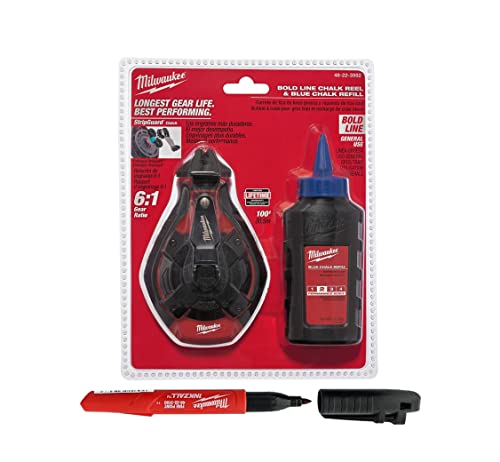 Milwaukee 48-22-3982 100 Ft. Bold Line Chalk Reel w/ StripView on Amazon
- 8
 PREXISO 2-in-1 Laser Level with Bubble Vials & Magnetic NailView on Amazon
- 9
 DEWALT LevelView on Amazon
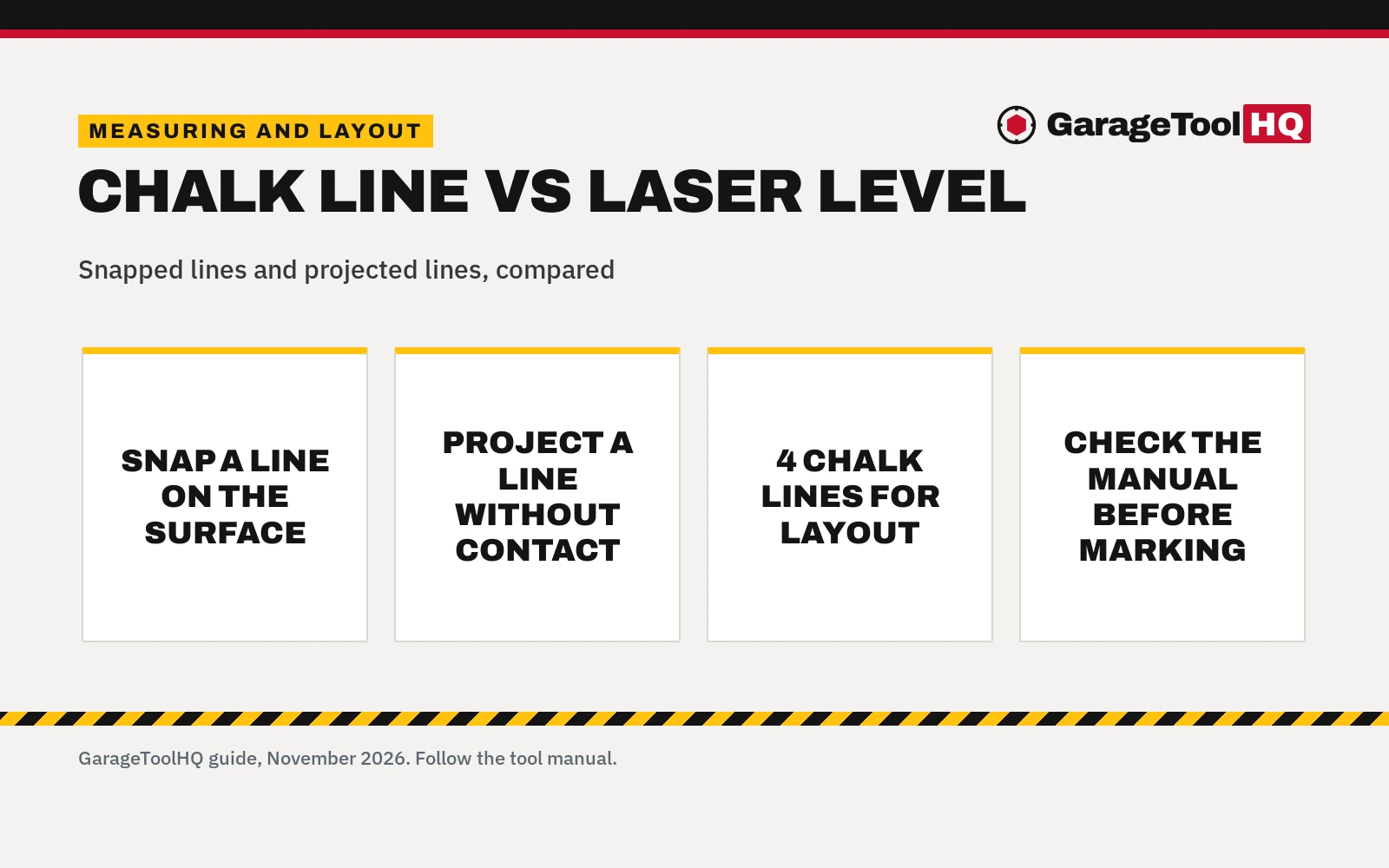
Chalk line vs laser level: which one should you buy? A chalk line suits layout marking on a surface where a line can be snapped, while a laser level suits transferring a level line across a room without touching the surface. For garage layout work on floors, walls and framing, start with a chalk line for snapped lines, and add a laser level when you need a projected line that can be moved without leaving a mark on the surface.
Other tools worth a look
 Tajima Chalk LineCheck price on Amazon
 Zimpty 4PCS Keson P100 Octoganal Chalk Line ReelCheck price on Amazon
 Zimpty 2PCS Keson P100 Octoganal Chalk Line ReelCheck price on Amazon
 Milwaukee 48-22-3982 100 Ft. Bold Line Chalk Reel w/ StripCheck price on Amazon
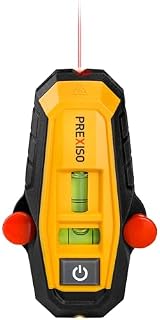 PREXISO 2-in-1 Laser Level with Bubble Vials & Magnetic NailCheck price on Amazon
 DEWALT LevelCheck price on Amazon
GarageToolHQ earns a commission when you buy through links on our product pages, at no extra cost to you. Read our affiliate disclosure.
Below: how each method marks a line, when each one wins, the 4 chalk lines in the gear section, and answers to common layout questions.
Chalk line vs laser level: how each one marks a line
A chalk line is a reel of line coated with chalk dust. Hold the line taut above the surface, lift it, and let it snap back onto the surface, and it leaves a straight chalk mark where the line struck. The mark is left on the surface after the tool is put away, so it can serve as a reference for cutting, drilling and fastening. A laser level works the other way around: it projects a line of light onto the surface, with no contact and no mark left behind. Move the tool and the projected line moves with it, which suits work where the line needs to shift as the job moves along a wall or across a room, once the tool is level in its new position.
The two methods also differ in what they need around them. A chalk line needs a surface the line can snap against and a clear run for the line itself. A laser level needs a surface for the projected line to land on, and a projected line is harder to see in very bright light. Neither method replaces the other outright, since one leaves a mark on the surface and the other leaves a line of light that can be repositioned.
When a chalk line wins
A chalk line suits jobs where the work needs a mark left on the surface. Snapped lines suit long layout runs on floors and walls, marking stud positions, and laying out cuts where a surface mark is the reference while tools come and go. A snapped line needs no power source, so it is ready when the reel is full of chalk. For outdoor layout work in bright conditions, a chalk mark on the surface can stay readable where a projected line can wash out.
The listings in the gear section show how much range a chalk reel can offer. The IRWIN reel below carries a 100 ft line that gives 5 to 6 strikes per pull. Gear ratios matter for rewinding too: a 1:1 ratio gives simple, direct retraction, while a 3:1 ratio pairs with 3X faster line retraction on the compact IRWIN reel. Line width is the other choice on the Tajima listings: a 1.0 mm line gives a bold, easy-to-see snap, while a 0.5 mm line gives a finer mark for finish carpentry work.
When a laser level wins
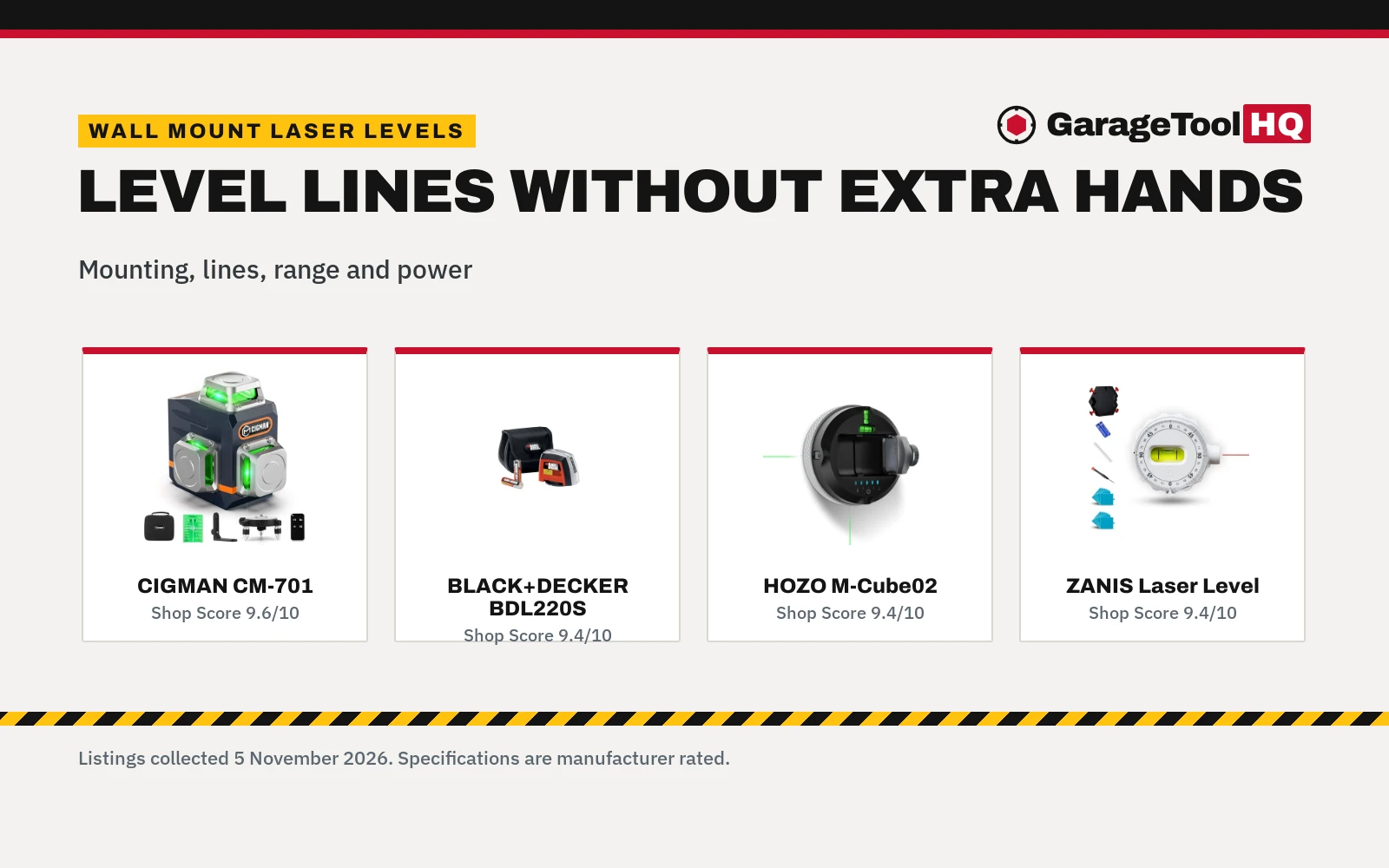
A laser level suits jobs where the work needs a level line projected onto a surface without marking the surface. Hanging shelves, aligning cabinets and setting a level line along a wall all suit a projected line, since the line can be checked on that surface without remarking it. A projected line also suits work where marking the surface would spoil the finish, or where the line must be adjusted slightly and rechecked again and again. For help with shelf work specifically, see the guide to the laser level for hanging garage shelves.
A laser level also helps when a job needs a line held in place while both hands are busy. The projected line stays where it is pointed while the tool stays undisturbed and the work goes on, with no need to hold a line tight or re-snap after every adjustment. That makes it a strong partner to a chalk line rather than a replacement: snap the layout lines with chalk, then use a projected line for the level checks that need to move.
The gear: 4 chalk lines for garage layout
IRWIN 100 ft chalk line. This reel carries a 100 ft abrasion-resistant poly line that gives 5 to 6 strikes per pull, with a 1:1 gear ratio for simple line retraction. The listing describes an aluminum housing for impact resistance, a steel handle with a large center hub, and a wide door for chalk refills. Its center line can be used as a plumb bob, and nested hook storage helps reduce hook snags.
Tajima 1.0 mm chalk line. This reel uses a 1.0 mm braided nylon line that the listing describes as producing clean, clear snaps for precise layout results. A 5-gear fast wind system allows quick line retrieval, and a gear line lock holds the line tight while snapping and releases automatically when winding. The rubberized ABS case carries an elastomer grip, and a large neck makes loading chalk and dye easy and mess free.
IRWIN compact chalk line. This compact reel suits portability and easy storage, with a 3:1 gear ratio for 3X faster line retraction. A wide chalk door gives better ease of fill and vision into the reel, and nested hook storage keeps storage compact without unwanted hook snagging, with the ability to grab the hook with gloves on.
Tajima 0.5 mm chalk line. This reel uses a 0.5 mm braided nylon line that the listing describes for precise finish carpentry work. It shares the 5-gear fast wind system, gear line lock and easy fill neck of the bolder Tajima reel, in a rubberized ABS case with an elastomer grip for added durability. Choose this one when the mark itself must stay fine and unobtrusive on finished work.
Use rated jack stands on solid ground, wear eye protection with power and air tools, keep fuel-burning equipment out of a closed garage, and follow the manual for every tool. Read our Safety Disclaimer.
Chalk line vs laser level: which one should you buy?
Buy the chalk line when the job needs snapped lines left on the surface: floor layout, wall framing marks and long runs marked directly on the surface. Buy the laser level when the job needs a projected level line on a wall, especially for hanging work and alignment that must be checked on that surface. If only one tool is coming into the garage for layout work, a chalk line covers snapped-line marking jobs, since it leaves a mark on a surface where a line can be snapped with a clear run. Add a laser level when projected lines start saving real time on leveling and alignment jobs.
FAQ: garage tools
Can a chalk line replace a laser level?
Not outright, since the two mark lines in different ways. A chalk line leaves a mark on a surface, while a laser level projects a line of light that can be moved without remarking. Use chalk for snapped layout lines and a laser level for projected level lines.
What line width suits finish carpentry?
The Tajima 0.5 mm listing describes its line for precise finish carpentry work. The Tajima 1.0 mm line gives a bolder snap for general layout, so pick the finer line when the mark must stay subtle on finished work.
How far can a chalk line reach?
The IRWIN reel in the gear section carries a 100 ft line.
What does a 3:1 gear ratio mean on a chalk reel?
On the compact IRWIN reel, a 3:1 gear ratio pairs with 3X faster line retraction. The larger IRWIN reel uses a 1:1 gear ratio for simple, direct retraction instead.
Can a chalk line mark a vertical line?
The IRWIN 100 ft listing says its center line can be used as a plumb bob, which gives a vertical reference from a point above. For a projected vertical line on a wall, a laser level is the better choice, as explained in the guide to dot vs line laser level.
Related: dot vs line laser level, laser level for hanging garage shelves, every measuring and inspection guide and all diagnostics and electrical guides.