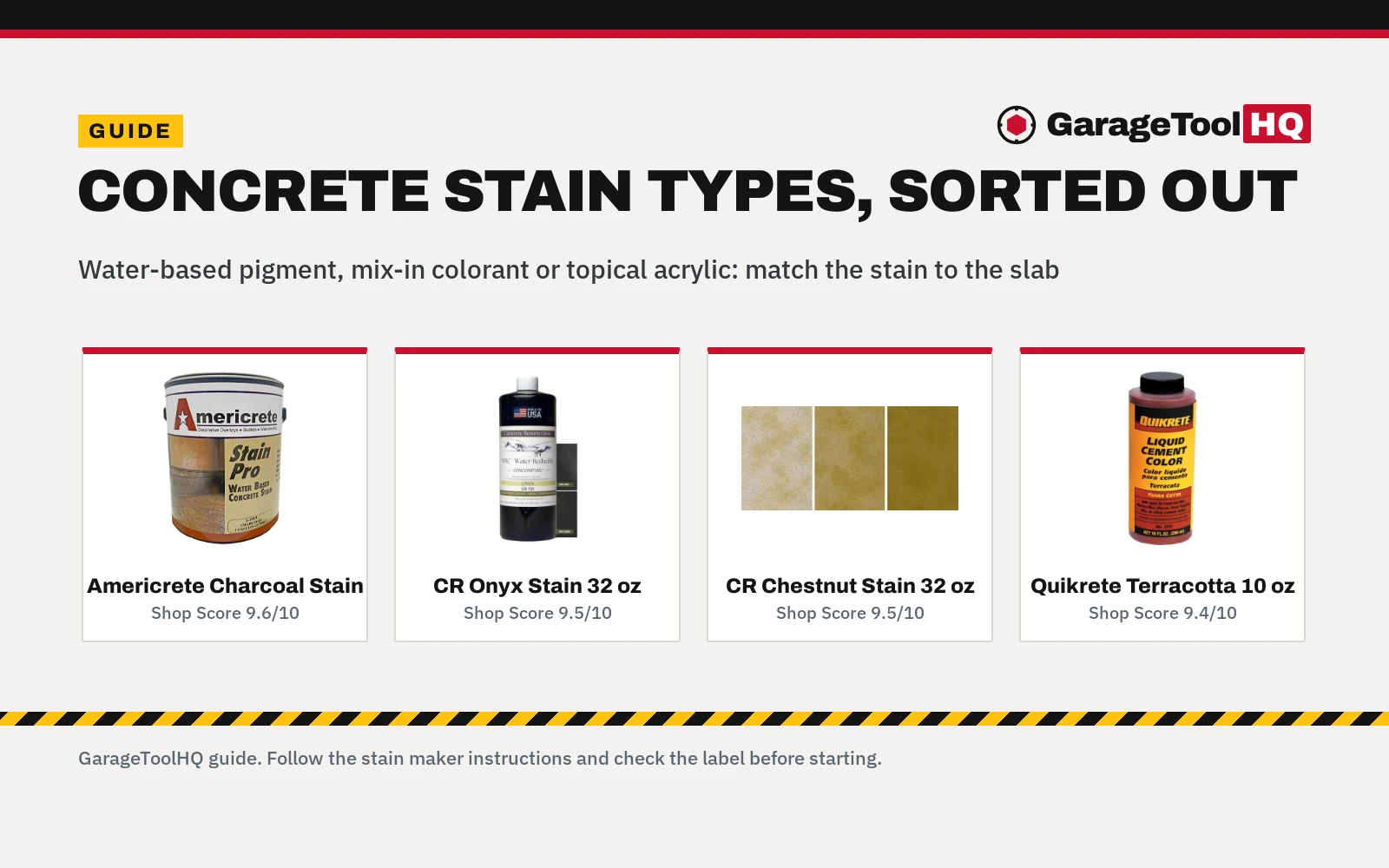
Concrete Stain Types: Water-Based, Topical and Integral Color
Water-based penetrating pigment, colorant mixed into fresh concrete, and semi-opaque topical acrylic stain are the concrete stain types in this guide, and the right one depends on whether the slab is already poured.

On this page
Top picks at a glance
As an Amazon Associate I earn from qualifying purchases.
- 1
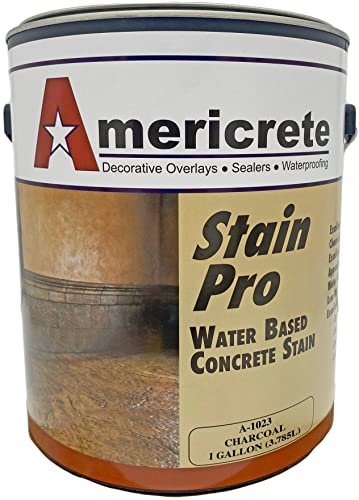 Americrete Concrete Stain - Charcoal9.6/10View on Amazon
- 2
 Concrete Resurrection Cement Stain Concentrate9.5/10View on Amazon
- 3
 Concrete Resurrection Cement Stain Concentrate9.5/10View on Amazon
- 4
 Quikrete Concrete Colorant Bottle, Terracotta9.4/10View on Amazon
A gray garage floor or a plain patio slab does not have to stay plain. Concrete stain types come down to how the color gets into the slab: a water-based pigment that soaks into clean, porous concrete, a colorant mixed into fresh concrete before the pour, or a semi-opaque acrylic stain that penetrates and leaves a semi-glossy finish. This guide sorts the three kinds and shows where each one fits.
GarageToolHQ earns a commission when you buy through links on our product pages, at no extra cost to you. Read our affiliate disclosure.
Below: the three types, how to prep a slab, and the gear for the job.
Americrete Concrete Stain - Charcoal
A 1 gallon semi-opaque topical acrylic stain in Charcoal for concrete, wood, stone, tile, brick and more, applied by sprayer, sponge, rag or broom.
Pros
- 1 gallon bottle suits patios, driveways and garage floors
- Semi-opaque acrylic for concrete, wood, stone and tile
- Applies by sprayer, sponge, rag or broom
- Colors mix and match to reach the shade wanted
Cons
- Semi-opaque color keeps texture visible, not a solid painted cover
- One bottle holds one color, so a layered finish needs more bottles
- No warranty term is stated
- Dark Charcoal does not suit a pale finish
Concrete Resurrection Cement Stain Concentrate
A 32 ounce water-based pigment concentrate in Onyx that penetrates clean, porous concrete for a semi-transparent finish, indoors and out.
Pros
- Water-based pigment penetrates porous concrete, not paint on top
- Layers while wet for marbling and variegated patterns
- Suits indoor floors, patios, pool decks and driveways
- Low-odor formula applies by sprayer, sponge, rag or brush
Cons
- Concentrate must be mixed with water before use
- Concrete must be open, porous and dry, so sealed slabs need prep first
- Needs a compatible clear sealer after it dries
- One bottle holds one color, so a multi-color finish needs more bottles
Concrete Resurrection Cement Stain Concentrate
A 32 ounce water-based pigment concentrate in Chestnut Golden Brown that penetrates clean, porous concrete for a semi-transparent finish, indoors and out.
Pros
- Water-based pigment penetrates porous concrete, not paint on top
- Layers while wet for marbling and variegated patterns
- Suits indoor floors, patios, pool decks and driveways
- Low-odor formula applies by sprayer, sponge, rag or brush
Cons
- Concentrate must be mixed with water before use
- Concrete must be open, porous and dry, so sealed slabs need prep first
- Needs a compatible clear sealer after it dries
- One bottle holds one color, so a multi-color finish needs more bottles
Quikrete Concrete Colorant Bottle, Terracotta
A 10 oz Terracotta colorant that mixes with water into dry concrete mix, mortar, sand topping or stucco for color through the mix.
Pros
- Maker states the color will not fade, chip, peel or wear out
- Mixes into concrete, mortar, sand, stucco and other cement mixes
- Suits Walk Maker projects and small colored pours
- Made in the United States
Cons
- Colors fresh mix only; it does not stain a slab already poured
- 10 oz bottle suits small batches, not a full slab pour
- No warranty term is stated
- Terracotta is the single color in this listing
Concrete stain types at a glance
| Type | How the color works | Where it fits |
|---|---|---|
| Water-based penetrating pigment | Pigment soaks into clean, porous concrete | Indoor floors, patios, pool decks, driveways |
| Colorant mixed into fresh concrete | Color mixes with water into dry concrete mix | Fresh pours, Walk Maker projects |
| Semi-opaque topical acrylic | Acrylic color penetrates, leaves a semi-glossy finish | Floors, garages, porches, decks, driveways |
The timing decides the type: color mixed into the batch only works before the pour, while a slab already poured takes a stain.
Water-based penetrating pigment stain
A water-based pigment stain mixes with water and soaks into clean, porous concrete instead of sitting on top like opaque paint. The result is a semi-transparent color that keeps the concrete texture visible. Colors layer while wet, so one shade or several colors build marbling, mottling and variegated patterns. The finish is low odor, and it applies by sprayer, sponge, rag or brush. After the color dries, a compatible clear sealer goes on as directed.
Colorant mixed into fresh concrete
A colorant is not a stain for a finished slab. It mixes with water into dry concrete mix, mortar, sand topping or stucco, so the color runs through the pour instead of sitting on the surface. Quikrete lists its Terracotta colorant for Walk Maker projects and other cement mixes, and states the color will not fade, chip, peel or wear out. This kind suits a fresh pour or a Walk Maker project, and it cannot color a slab that is already poured.
Semi-opaque topical acrylic stain
A topical acrylic stain is a semi-opaque, semi-glossy penetrating acrylic color that still lets the concrete texture show. Americrete lists its stain for concrete, wood, stone, tile, stamped concrete, floors, garages, porches, decks, brick, sidewalks and driveways. It applies with sprayers, sponges, rags or brooms, and the colors mix and match to reach the shade wanted.
How to prep concrete before staining
Prep decides the finish for a penetrating stain. Clean the surface and clear away existing paint, sealer, dirt, oil and other residue before use. The concrete should be open, porous and dry so the pigment can enter the surface. Mask nearby brick, mortar and stone before spraying.
Concrete stain gear for the job
The staining job needs a stain matched to the slab: the picks below cover each type in this guide, and the water-based pigment stains call for a compatible clear sealer after the color dries.
FAQ: garage tools
Can concrete stain be used indoors and outdoors?
Yes, where the maker lists both. The water-based pigment stains in this guide list indoor floors and outdoor patios, pool decks, driveways and walkways.
How do you prepare concrete before staining?
For a water-based pigment stain, clean the surface and clear away paint, sealer, dirt, oil and other residue. The concrete must be open, porous and dry, and mask nearby brick, mortar and stone before spraying.
Can you layer colors with concrete stain?
Yes, with a water-based pigment stain. Apply one shade or several colors while wet to create marbling, mottling and variegated patterns, then build the color with more coats before sealing.
Do you need a sealer after staining?
The water-based pigment stains in this guide call for a compatible clear sealer after the color dries, applied as directed.
Can you stain concrete that is already sealed or painted?
Not with a penetrating pigment stain as it stands. Paint, sealer, dirt and oil must come off first, and the concrete must be open, porous and dry before the pigment can enter.
Related: the best concrete stain picks, the concrete stain DIY guide, the best concrete floor sealer picks and the garage upgrades hub.