DIY Polishing Compound: Options for Car Paint
How to pick a DIY polishing compound for car paint or bare glass, with a 3-step paint system and a cerium oxide glass kit compared.

On this page
Top picks at a glance
As an Amazon Associate I earn from qualifying purchases.
- 1
 LAUCO Paint Correction Compounds Step 1, 2, 39.6/10View on Amazon
- 2
 Glass Polishing Kit, Cerium Oxide Compound9.5/10View on Amazon
A DIY polishing compound is a paste that levels a dull or marked surface a little at a time, and the right one depends on the surface in front of you. For car paint, a stepped paint correction system that moves from cut to polish to finish handles swirls and light scratches. For bare glass, a cerium oxide paste made for glass clears water spots, oil film and wiper marks. This guide explains how each kind works, how to pick between them, and the kits that cover both jobs.
GarageToolHQ earns a commission when you buy through links on our product pages, at no extra cost to you. Read our affiliate disclosure.
Below: how polishing compound works, how to tell a paint formula from a glass formula, and the kits that handle each job.
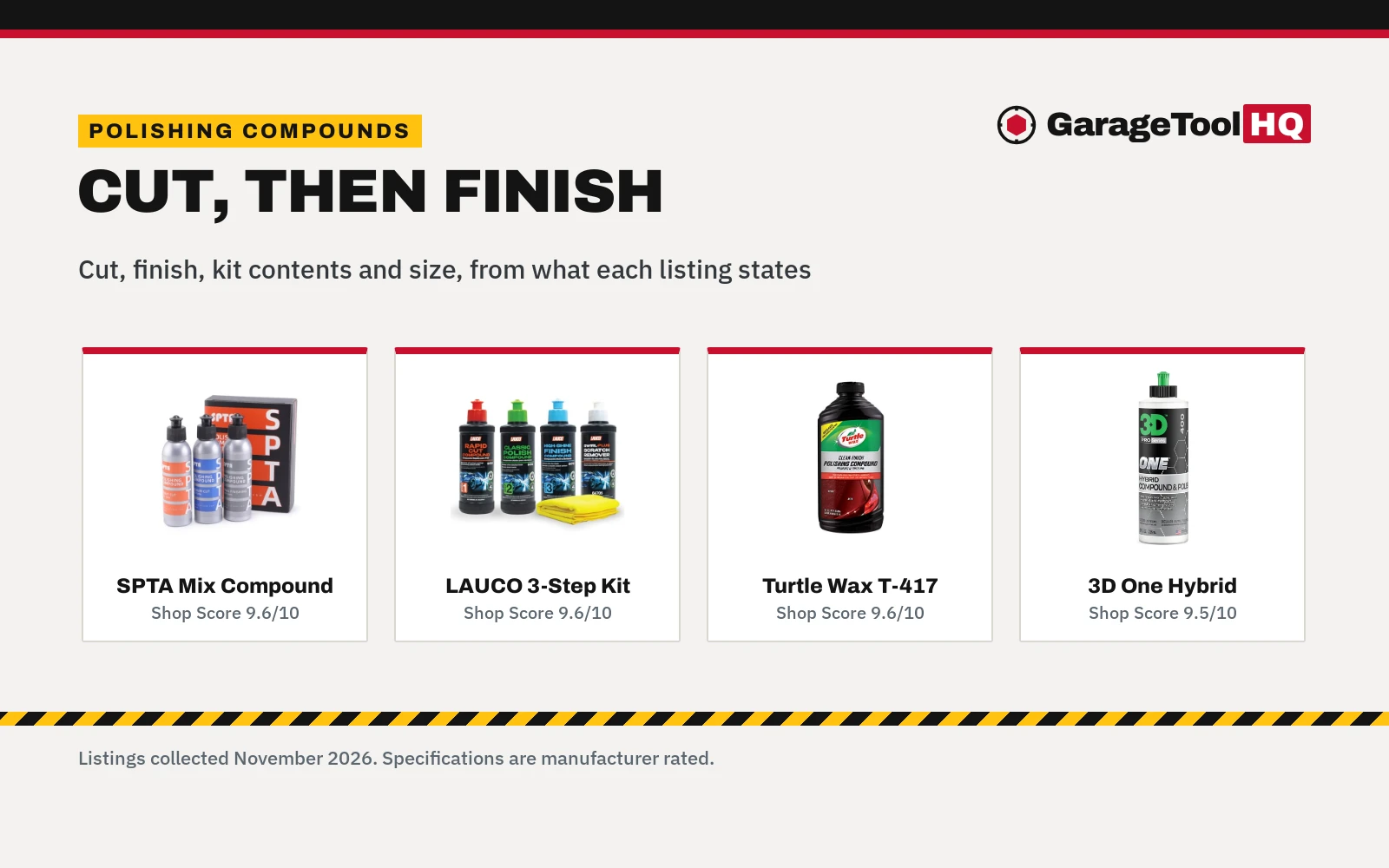
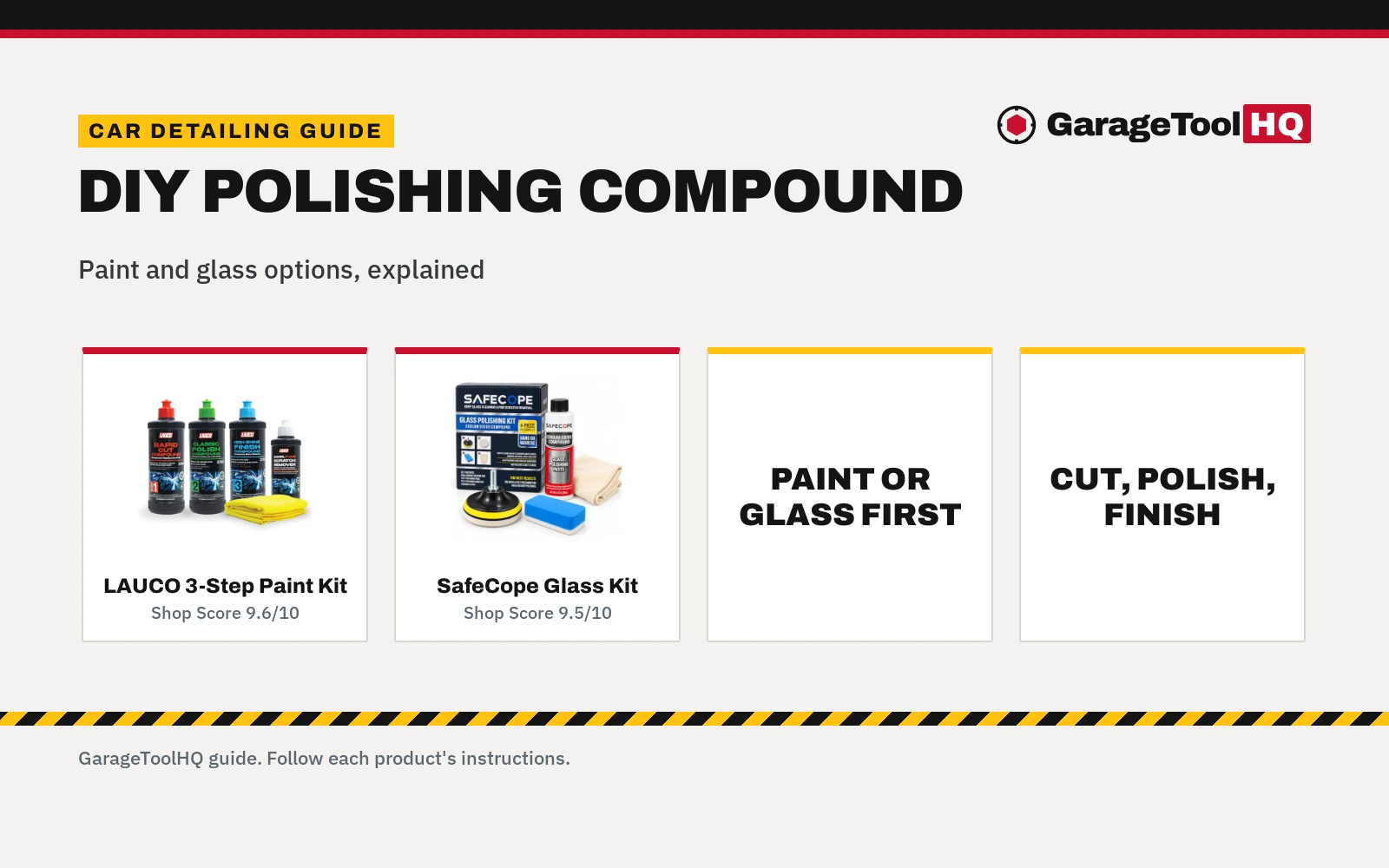
LAUCO Paint Correction Compounds Step 1, 2, 3
A 3-step paint correction system with a heavy cut compound, a fine polish, a high shine finish and a swirl remover, plus a towel.
Pros
- 3-step system covers heavy cut, fine polish and high shine finish
- Swirl remover and a towel included for spot repair and finishing
- Silicone-free formula stated as clear coat safe
- Step compounds in 16 oz bottles with an 8 oz swirl remover
Cons
- No warranty term is stated
- No pads or machine polisher are included, only a towel
- Three separate bottles take more shelf space than a single compound
- Suited to paint correction, not to glass polishing
Glass Polishing Kit, Cerium Oxide Compound
A cerium oxide glass polishing kit with an 8.8 oz bottle of paste, a drill backing pad, a felt pad, a hand pad and a chamois cloth.
Pros
- Ready-to-use cerium oxide paste, no mixing needed
- Drill backing pad and felt pad included for machine polishing
- Hand pad included for edges, corners and individual spots
- 2-year warranty stated
Cons
- For uncoated glass only, not for car paint
- Drill sold separately
- Cannot be used on plastic, acrylic or coated surfaces
- Paste must be kept damp and rinsed before it dries
How a DIY polishing compound works
A polishing compound carries fine abrasive particles in a paste or liquid, and rubbing it over a surface levels the high spots around a mark until the surface looks even again. A heavy cut compound removes more material and handles deep scratches, oxidation and sanding marks. A fine polish refines the surface after cutting, clearing light swirls and haze. A high shine finish removes ultra-fine imperfections and micro-marring for a deep gloss. The same idea applies to glass: a cerium oxide paste polishes away water spots and mineral buildup on uncoated glass.
Paint compound or glass compound: pick by surface
The surface decides the compound. Paint correction compounds are made for clear coat paint, and the LAUCO system states it is silicone-free and clear coat safe. Glass polishing paste is made for bare glass, and the SafeCope kit (on Amazon) states it is for uncoated glass only, with tinted, coated, water-repellent and anti-reflective surfaces listed as surfaces to avoid. Using a paint compound on glass, or a glass paste on paint, is the wrong tool for the job. Match the compound to the surface before opening the bottle.
| Surface | Compound | What it handles |
|---|---|---|
| Car paint | LAUCO 3-step paint correction system | Deep scratches, oxidation, sanding marks, swirls, haze |
| Bare glass | SafeCope cerium oxide glass paste | Water spots, mineral deposits, oil film, wiper marks |
See the polishing compound chart for cut, polish and finish grades, and car compound vs polish if the two terms still blur together.
How to use polishing compound by hand and by machine
With the LAUCO system, Step 1 Rapid Cut Compound handles deep scratches, oxidation and sanding marks, then Step 2 Fine Polish Compound refines the surface, then Step 3 High Shine Finish Compound brings the gloss, with the Swirl+Plus Scratch Remover saved for spot repair and finishing touches. With the SafeCope glass kit, wash away loose dirt, sand and grit before starting, shake the bottle well, and work one small section at a time with the drill backing pad. Lightly mist the work area to keep the paste damp, keep the pad moving, and rinse off residue before it dries. The hand pad suits edges, corners and individual water spots, while the drill pad covers wider glass. Finish with the included cloth.
Polishing compound kits for this job
The steps above need a compound matched to the surface, so the kits below cover the two jobs in this guide: paint correction and glass polishing.
Keep electric pressure washers on a GFCI outlet, never point the wand at people or pets, wear eye protection with polishers and chemicals, and read the label before mixing any cleaning products. Read our Safety Disclaimer.
FAQ: garage tools
Can I use a paint polishing compound on glass?
No. The LAUCO system is made for clear coat paint, and the glass kit in this guide is the SafeCope cerium oxide paste. Use the compound matched to the surface.
Can I use a glass polishing compound on car paint?
No. The SafeCope kit states it is for uncoated glass only. For paint, use a paint correction system like the LAUCO 3-step kit.
What do the 3 steps in a paint correction system do?
Step 1 Rapid Cut Compound removes deep scratches, oxidation and sanding marks. Step 2 Fine Polish Compound refines light swirls and haze. Step 3 High Shine Finish Compound removes ultra-fine imperfections for a deep gloss.
Do I need a machine to use polishing compound?
No. The SafeCope kit includes a drill-mounted backing pad and a hand pad, so the same paste works with a drill or by hand. The LAUCO system lists no machine in the kit.
Is the LAUCO system safe for clear coat?
The maker states the compounds are silicone-free and clear coat safe.
How much compound comes in each kit?
The SafeCope bottle holds 8.8 oz (250 g) of paste. The LAUCO step compounds come in 16 oz bottles with an 8 oz swirl remover.
Related: car detailing guides, the DIY water spot remover guide, types of buffing wheel and the best car wax for scratches.