Do I Need a Brake Flush? Signs to Check
Dark fluid and a soft pedal are the clearest signs a brake flush is due, and this guide covers how to check both.

On this page
Top picks at a glance
As an Amazon Associate I earn from qualifying purchases.
- 1
 3L Brake Fluid Bleeder Kit9.6/10View on Amazon
- 2
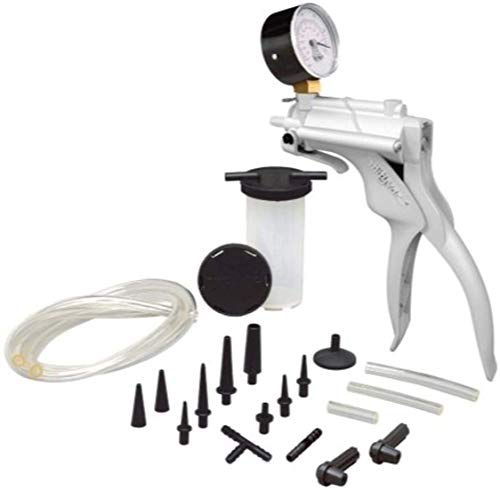 Mityvac MV8000 Automotive Tune-up and Brake9.5/10View on Amazon
- 3
 Brake Bleeder Kit with 3L Pressure Pump9.3/10View on Amazon
A soft pedal at a stop sign, dark fluid in the reservoir, and a service note on the dash all point at the same question: do i need a brake flush? The answer is yes when the fluid looks dark or cloudy, when the pedal feels soft or spongy, or when the vehicle manual calls for fresh fluid, and no when the fluid still looks clear, the pedal feels firm, and the manual schedule is not due. A flush replaces all the old fluid with fresh fluid, while a bleed only clears air from the lines. The signs below show how to tell which job the car needs.
GarageToolHQ earns a commission when you buy through links on our product pages, at no extra cost to you. Read our affiliate disclosure.
Below: the signs, the fluid check, the difference between a flush and a bleed, and the kits for the job.
| # | Product | Shop Score | Buy |
|---|---|---|---|
| 1 | 3L Brake Fluid Bleeder Kit | 9.6/10 | Buy on Amazon |
| 2 | Mityvac MV8000 Automotive Tune-up and Brake | 9.5/10 | Buy on Amazon |
| 3 | Brake Bleeder Kit with 3L Pressure Pump | 9.3/10 | Buy on Amazon |
3L Brake Fluid Bleeder Kit
A manual pressure bleeder with a 3L tank, a 1L waste bottle, 4 adapters, and a gauge that holds 10-15 PSI.
Pros
- 3L tank and 1L waste bottle cut refills
- 4 adapters in 43.5, 45, 49.5 and 50.7 mm for wide vehicle fit
- Dual-scale PSI/Bar gauge holds the 10-15 PSI working range
- Cap wrench and spare O-rings included
Cons
- Needs 45-80 pump strokes to build working pressure
- 1.77 in adapter needs manual ring installation for a seal
- No warranty term is stated
- Measure the master cylinder cap before ordering, within a 0.1 in tolerance
Mityvac MV8000 Automotive Tune-up and Brake
A hand-powered vacuum bleeder with a Selectline hand pump, a gearless diaphragm gauge, a 4.5 oz reservoir and 4 tapered adapters.
Pros
- Hand-powered vacuum pump for precise bleeding
- Gearless diaphragm gauge measures vacuum pressure
- One-finger vacuum release for easy operation
- 1 yr warranty on material and workmanship
Cons
- 4.5 oz reservoir is small for a full flush
- Hand pump needs manual effort through the whole job
- No waste bottle for old fluid
- Vacuum bleeding only, no pressure tank feed
Brake Bleeder Kit with 3L Pressure Pump
A hand pump pressure bleeder with a 3L reservoir that pushes fluid through the lines for a firm pedal.
Pros
- 3L reservoir flushes and bleeds without frequent refills
- Pressure-driven flow pushes air bubbles from the lines
- Hand pump bleeder needs no power supply
- Sturdy materials built for repeated use
Cons
- No pressure gauge, so pressure is not shown during the job
- Pressure-only design, no vacuum option for other fluid jobs
- No warranty term is stated
- A 3L tank takes more shelf space than a hand pump kit
Do I Need a Brake Flush? Signs to Check
Start with the fluid. Fresh brake fluid looks clear to light amber, while old fluid turns dark brown or cloudy as it ages. A dark reservoir is the clearest sign a flush is due. Next, feel the pedal. A firm pedal points to no air in the lines, while a soft or spongy pedal points to air or worn-out fluid. A pedal that keeps sinking under steady pressure points to a fault inside the master cylinder, so get the car to a shop.
The vehicle manual is the last check: it gives the service interval for brake fluid, where the maker sets one, and a car past that interval needs fresh fluid even if the pedal still feels fine. When the fluid is clear, the pedal is firm, and the schedule is not due, the answer is no for now, with another look at the next oil change or tire rotation.
How to Check Brake Fluid Before a Flush
Park on level ground, open the hood, and find the reservoir on the master cylinder, usually on the driver side near the firewall. Wipe the cap clean before opening it, then look at the color against a light background. Clear to light amber fluid is healthy; dark brown or cloudy fluid is due for a change. Check the level against the marks on the reservoir, and look around the master cylinder and lines for wet spots that point to a leak.
Never top up dark fluid and call the job done. If the level is low, find the cause first: worn pads let the level drop, and a leak needs a repair, not a refill. If the fluid is dark, plan a flush. If the pedal feels soft, plan a bleed or a flush.
Brake Flush vs Brake Bleed: What Changes
A bleed removes air from the brake lines. Air gets in when a line is opened or the reservoir runs dry, and it shows up as a soft or spongy pedal. A bleed pushes fluid through until the air is gone and the pedal firms up.
A flush does more: it replaces all the old fluid in the system with fresh fluid. That matters because brake fluid absorbs moisture over time, and old fluid can corrode parts and lower the boiling point of the fluid. A flush is the right call when the fluid is dark, when the schedule is due, or when the system has been open for other work. A bleed is enough when the fluid is still clear and only air needs to come out.
Brake Bleeder Kits for a Flush at Home
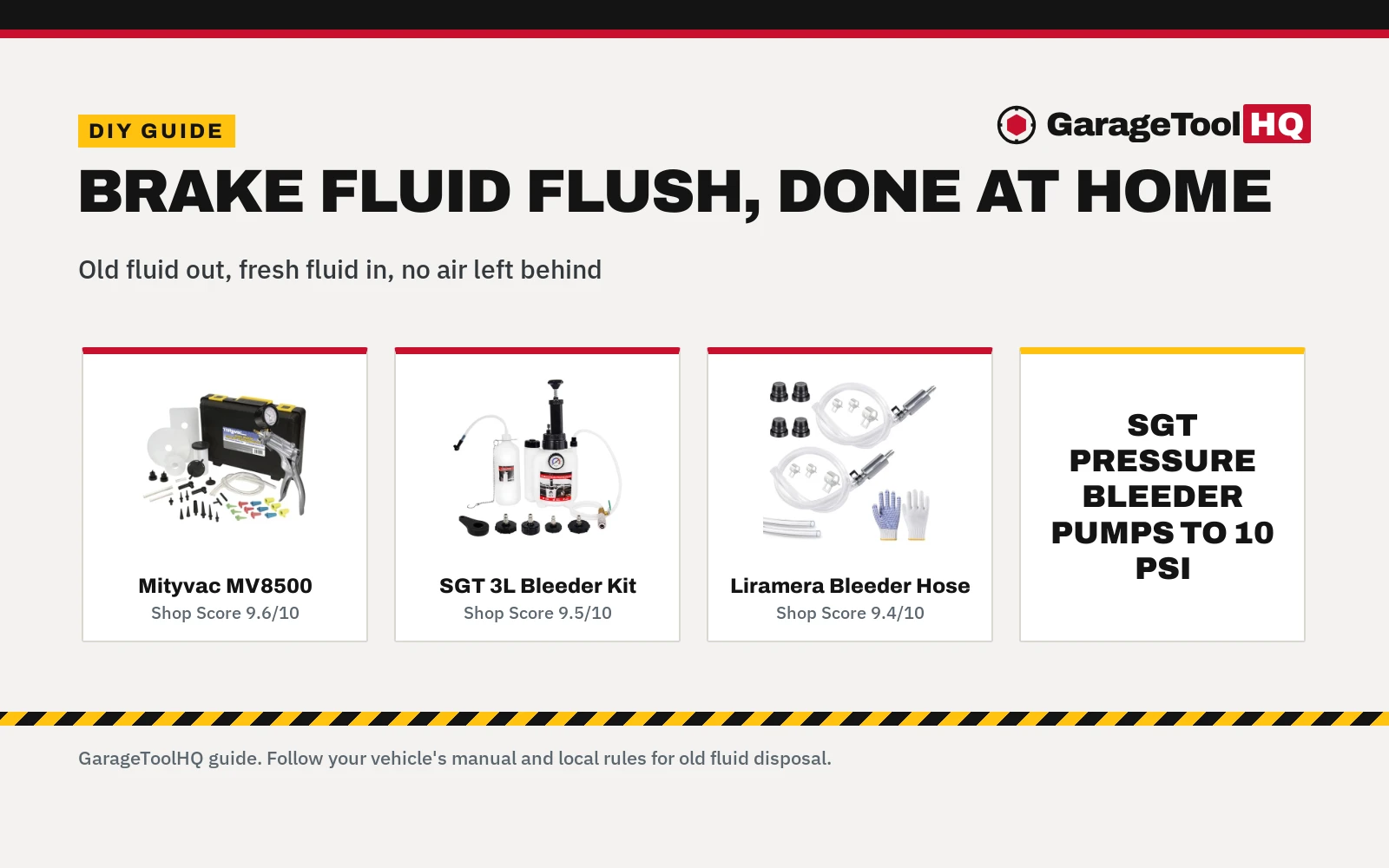
A flush needs a way to push fresh fluid through the lines and catch the old fluid, and the kits below handle that job.
Brake Fluid Safety Basics
Brake fluid eats paint and irritates skin, so wear gloves and eye protection and keep fluid off painted panels. Old fluid goes to a local fluid recycling point, never down a drain. If the pedal stays soft after bleeding, get the car to a shop before driving it again.
Read the manual before first use, wear eye protection, keep the work area clear and ventilated, and stay within every stated rating. Read our Safety Disclaimer.
FAQ: garage tools
How do I know if my brake fluid needs changing?
Look at the color and feel the pedal. Dark brown or cloudy fluid points to a change, and a soft or spongy pedal points to air or worn-out fluid. A car past the manual schedule needs fresh fluid even when the pedal feels fine.
Is a brake flush the same as a brake bleed?
No. A bleed removes air from the lines, while a flush replaces all the old fluid with fresh fluid. A bleed is enough when the fluid is clear; a flush is the call when the fluid is dark or the schedule is due.
Can one person flush brakes alone?
Yes, with a kit made for it. The Aikyciu kit (on Amazon) is built for single-person brake and clutch fluid exchange, and a hand vacuum pump works without a helper on the pedal.
What size adapter does a master cylinder need?
Measure the master cylinder cap before ordering. The Aikyciu kit includes four adapters in 43.5, 45, 49.5 and 50.7 mm, with a 0.1 in tolerance for matching. The 1.77 in adapter needs manual ring installation for a proper seal.
Do I need a brake flush if the pedal feels soft?
A soft pedal points to air in the lines or worn-out fluid. Clear fluid with a soft pedal points to a bleed; dark fluid points to a flush. If the pedal stays soft after bleeding, get the car to a shop before driving it again.