Graphene vs Ceramic Coating: Which One Should You Buy?
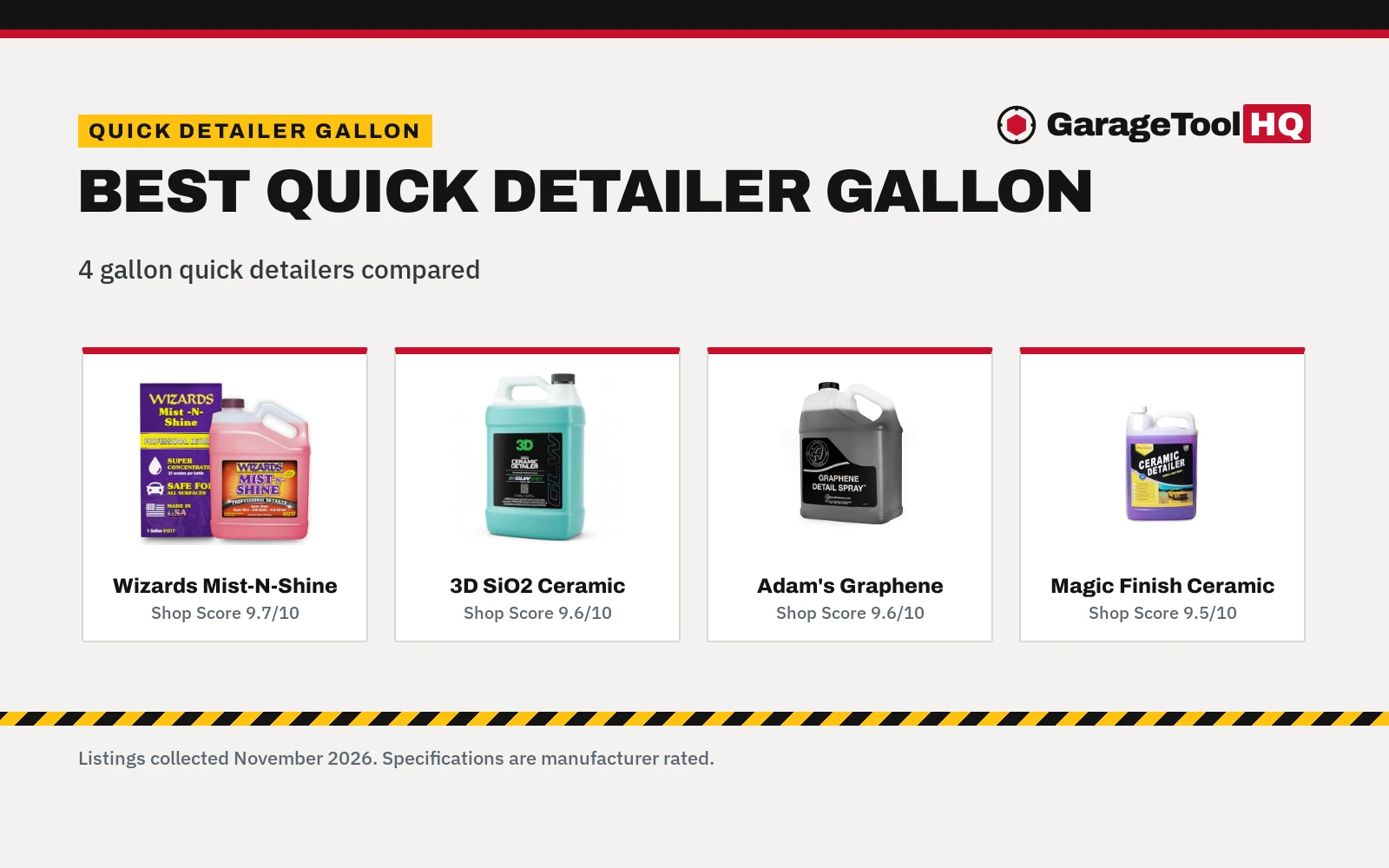
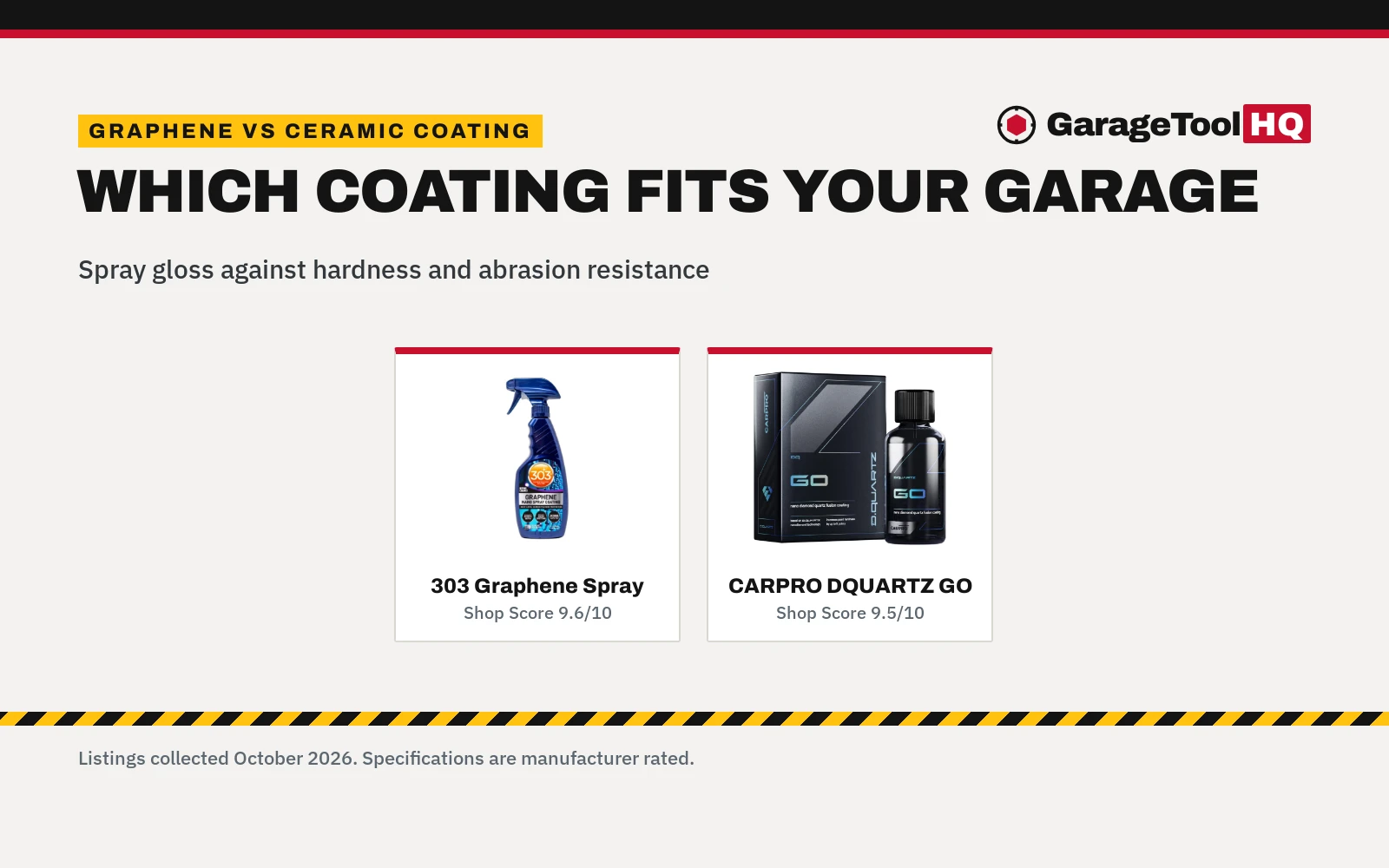
Graphene and ceramic coatings compared for a home garage: spray protection and gloss against hardness and abrasion resistance, with one example of each.

On this page
Top picks at a glance
As an Amazon Associate I earn from qualifying purchases.
- 1
 Adam's Polishes Advanced Graphene Ceramic Coating9.6/10View on Amazon
- 2
 CERAKOTE® Ceramic Coating for Cars9.7/10View on Amazon
- 3
 Turtle Wax Hybrid Solutions Ceramic Graphene Paste Wax9.6/10View on Amazon
- 4
 Ethos Cleanse for Cars Graphene ShampooView on Amazon
- 5
 Chemical GuysView on Amazon
- 6
 CLEAN. Ceramic Coating 8-Year Extreme HydrophobicsView on Amazon
- 7
 Car Plastic RestorerView on Amazon
- 8
 CLEAN. Ceramic Coating 3-Year High-Gloss & ExtremeView on Amazon
Verdict: Choose the graphene spray if you want a spray-on coating with over a year of protection, gloss and beading from a 15.5 oz bottle. Choose the ceramic coating if you want increased surface hardness and abrasion resistance from a professional-grade formula in a 50ml kit.
Graphene vs ceramic coating is a choice between two different protection claims, not two versions of the same claim. The graphene example sells spray-on gloss, beading and UV protection for paint, trim and windows, while the ceramic example sells increased surface hardness and abrasion resistance for paint, metals and appliances. This comparison covers both examples by form, protection claim, application, surfaces and bottle size, using only what each listing publishes.
GarageToolHQ earns a commission when you buy through links on this page, at no extra cost to you. Read our affiliate disclosure.

303 Graphene Nano Spray Coating for Cars
A graphene nano spray coating in a 15.5 oz bottle, stating over a year of protection, gloss, beading and UV resistance.
Pros
- Over a year of protection stated, with enhanced gloss and water beading
- UV protection against water spotting, fading and cracking stated
- Spray application on a microfiber or foam applicator, with a timed buff step
- 15.5 oz bottle, larger volume than the 50ml ceramic kit stated
Cons
- Directions state setting of 5-10 minutes before buffing, while the spec table lists a 12-month full set time
- Spec table lists Wood as surface recommendation, against car paint, trim and windows in the title and bullets
- Only a satisfaction guarantee is stated, with no warranty term
- No hardness figure is stated, unlike the ceramic listing

CARPRO DQUARTZ GO Nano Diamond Quartz Fusion
A nano diamond quartz fusion ceramic coating in a 50ml kit, stating increased surface hardness and abrasion resistance.
Pros
- Surface hardness increased by up to 5 points, per the listing
- Extreme abrasion resistance to UV, chemical, mineral, acidic, alkaline, solvents and mechanical wear stated
- Fluoropolymer smoothing formula for a smooth touch, per the listing
- Works on automotive paint, most metals and home appliances
Cons
- No protection duration is stated, unlike the graphene listing
- No application steps or setting time are stated
- Only a satisfaction guarantee is stated, with no warranty term
- 50ml kit is a smaller volume than the 15.5 oz graphene bottle stated
Other tools worth a look
 Ethos Cleanse for Cars Graphene ShampooCheck price on Amazon
 Chemical GuysCheck price on Amazon
 CLEAN. Ceramic Coating 8-Year Extreme HydrophobicsCheck price on Amazon
 Car Plastic RestorerCheck price on Amazon
 CLEAN. Ceramic Coating 3-Year High-Gloss & ExtremeCheck price on Amazon
Side by side: graphene vs ceramic coating
| Graphene coating | Ceramic coating | Takeaway | |
|---|---|---|---|
| Form | Spray, 15.5 oz | 50ml kit | Different forms and volumes; no coverage area is stated |
| Protection claim | Over a year, graphene-oxide | Hardness up to 5 points, nano diamond | Different claims; neither states the other’s metric |
| Application | Spray on applicator, crisscross, buff after 5-10 minutes | Professional-grade reformulated for home use | Graphene states a timed buff step; ceramic states no timed step |
| Surfaces | Paint, trim, windows | Automotive paint, most metals, home appliances | Different surface lists for the two examples |
| UV and water | UV protection, water repellent, beading | UV, chemical and abrasion resistance stated | Both state UV resistance; graphene states beading |
Example figures are manufacturer rated, as published on each listing and collected 25 October 2026.
How each coating protects
The graphene example is a spray coating that states over a year of advanced protection, enhanced gloss, water beading and UV resistance for paint, trim and windows. Its bullets claim the graphene-oxide formula increases durability and longevity more effectively than any ceramic coating, which is a maker claim rather than a stated measurement. The ceramic example is a nano diamond quartz fusion coating that states increased surface pencil hardness by up to 5 points, extreme abrasion resistance and a fluoropolymer smoothing formula. The two listings do not state each other’s headline metric, so neither claim can be checked against the other from these listings alone.
Application and setting time
Application differs clearly between the two examples. The graphene directions state shaking well, spraying onto a microfiber or foam applicator, applying in a crisscross pattern, allowing the product to set for 5-10 minutes, then buffing off with a clean microfiber towel. The graphene listing also states an expiration of 2 years from opening or first use, and 5 years from the date of production. The ceramic listing states a professional-grade formula reformulated for easy home use, with increased smoothness, but states no application steps, setting time or expiration. A buyer who wants timed steps to follow gets them from the graphene listing only.
Surfaces and durability
Surface coverage differs between the two examples. The graphene listing states paint, trim and windows in its title and bullets, while its spec table lists Wood as a surface recommendation, which the title and bullets do not support. The ceramic listing states automotive paint, most metals and home appliances, with cleanup by a damp microfiber for residue, spilled food and liquids. On durability, the graphene listing states over a year of protection, while the ceramic listing states no protection duration at all, so a longer-lasting claim cannot be compared between them from these listings.
Bottle size and value
Bottle size differs sharply between the two examples. The graphene example is a 15.5 oz spray bottle, listed at 473 ml, while the ceramic example is a 50ml kit with a single 50mL bottle. Neither listing states a coverage area, so area per bottle cannot be compared from these listings. Neither listing states a price, so value here means stated volume against stated claims, not cost per use.
Choose graphene if
- You want a spray-on coating with stated gloss, beading and UV protection
- You want timed application steps to follow
- You want the larger stated bottle volume
- You coat paint, trim and windows
Choose ceramic if
- You want increased surface hardness stated in points
- You want abrasion resistance across chemicals and wear
- You coat metals and home appliances as well as paint
- You want a small kit with an easy home-use formula
Example coatings
Keep electric pressure washers on a GFCI outlet, never point the wand at people or pets, wear eye protection with polishers and chemicals, and read the label before mixing any cleaning products. Read our Safety Disclaimer.
Garage Fit Check
- Check the applicator: the graphene directions state a microfiber or foam applicator plus a clean microfiber towel for buffing.
- Check storage: the graphene listing states expiration 2 years from opening and 5 years from production.
- Check the surface: graphene states paint, trim and windows, while ceramic states paint, metals and home appliances.
- Check the bottle size: a 15.5 oz spray against a 50ml kit, for the area you plan to coat.
FAQ: garage tools
Which coating lasts longer?
The graphene listing states over a year of protection, while the ceramic listing states no protection duration. From these listings alone, a longer-lasting claim cannot be compared.
Which coating is easier to apply?
The graphene listing states timed steps: spray, crisscross, set for 5-10 minutes, then buff. The ceramic listing states easy home use but no timed steps.
Can the ceramic coating go on metals?
Yes, per the listing. The ceramic example states it works on most metals, as well as automotive paint and home appliances.
Does the graphene coating protect against UV?
Yes, per the listing. The graphene example states UV protection against water spotting, fading and cracking.
Do either of these coatings state a warranty term?
No. Both listings state a satisfaction guarantee only, with no warranty term in years or months, so both warranty fields here are empty.
Related: the best premium ceramic coating, the best ceramic coating for beginners, and the best dual action polisher for ceramic coating.