Gravity vs Pressure Brake Bleeder: Which One Should You Buy?
Gravity vs pressure brake bleeder: one is slow and simple, the other is fast and needs a good seal; here is how to pick for a one-person brake job.

On this page
Top picks at a glance
As an Amazon Associate we earn from qualifying purchases.
- 1
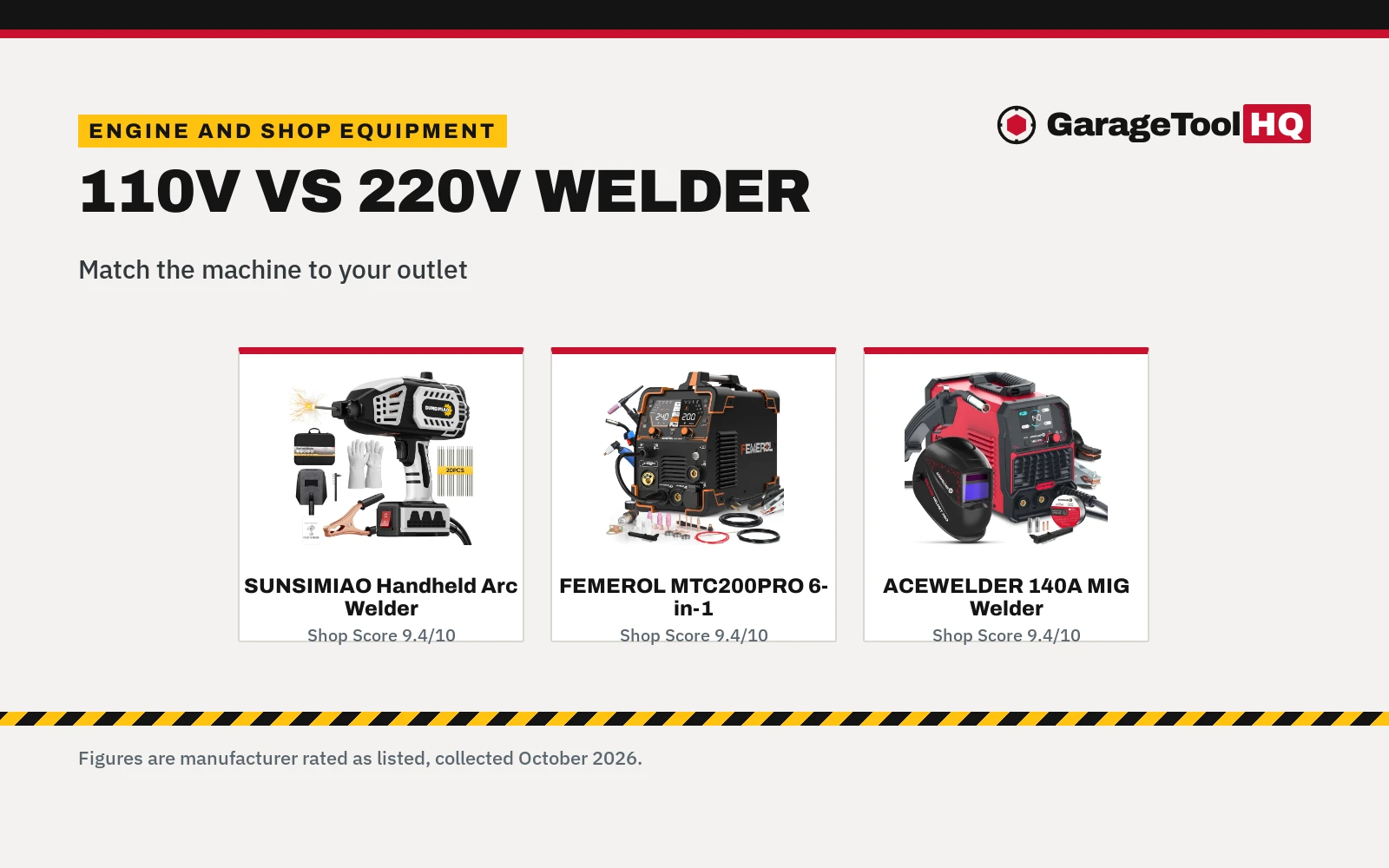
 LE LEMATEC Portable Sand Blaster Gun Kit for Air Compressor9.6/10View on Amazon
- 2
 3L Brake Fluid Bleeder Kit w/ 1L Catch Bottle9.7/10View on Amazon
- 3
 Brake Bleeder Kit with 3L Pressure Pump 1L Waste Bottle & 49.6/10View on Amazon
- 4
 Motion Pro 08-0143 Hydraulic Brake Bleeder Brand: Motion ProView on Amazon
- 5
 AGM Pressure Brake BleederView on Amazon
- 6
 1L Brake Bleeder Bottle One Way Check ValveView on Amazon
- 7
 GEARWRENCH Air Pump Brake Bleeder TankView on Amazon
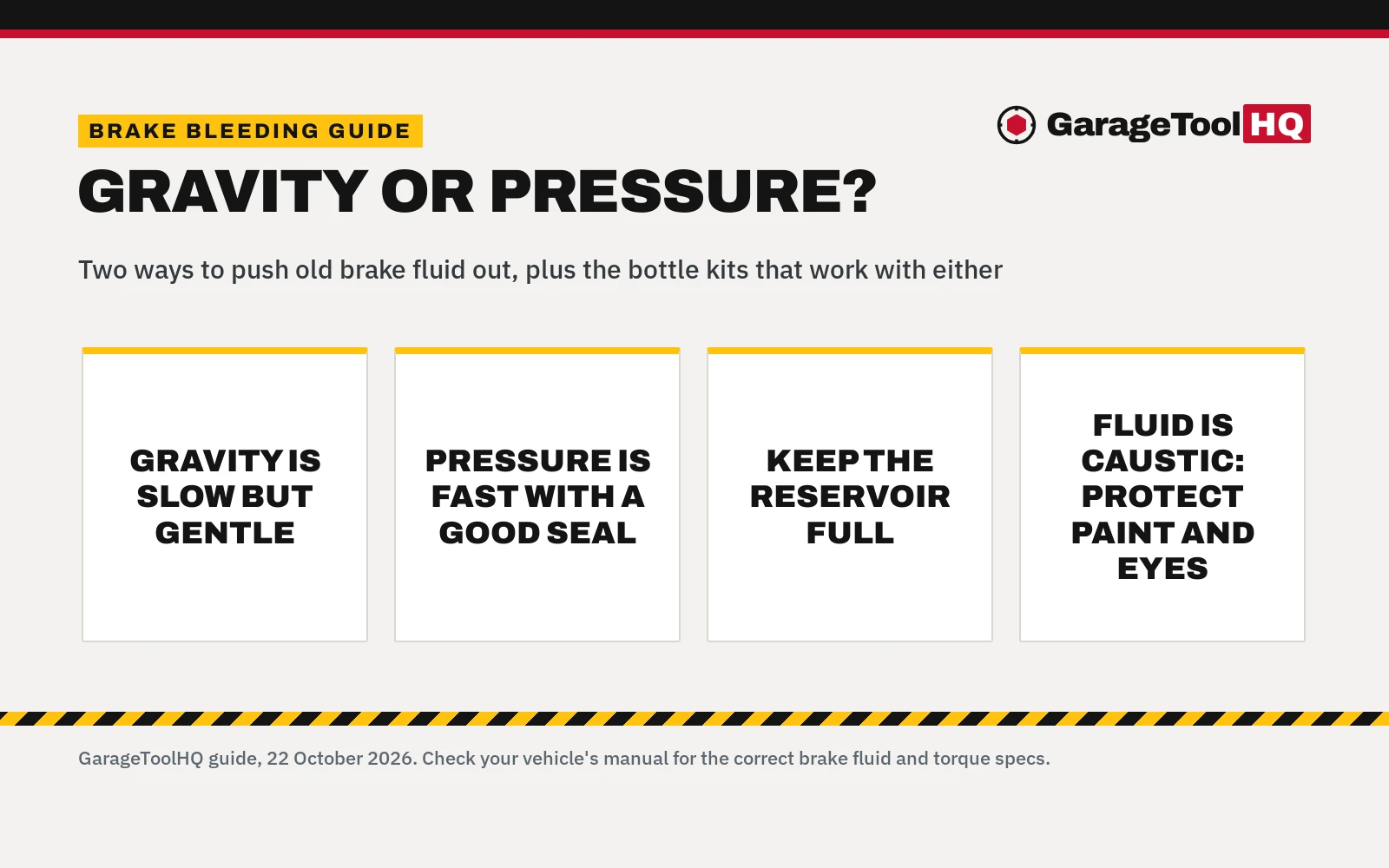
Gravity vs pressure brake bleeder: which one should you buy? Gravity is the simple one, and pressure is the fast one. Gravity bleeding asks for nothing but an open bleeder screw and patience: fluid drains on its own, which keeps the setup simple but slow. A pressure bleeder pushes fluid through from a sealed cap on the reservoir, so a full flush takes far less fiddling, but it only works if the cap seals on your reservoir. If you bleed brakes alone in a home garage, either method pairs well with a one-person bottle kit, and the four kits ranked in the gear section below all work with either approach.
More options to compare
 Motion Pro 08-0143 Hydraulic Brake Bleeder Brand: Motion ProCheck price on Amazon
 AGM Pressure Brake BleederCheck price on Amazon
 1L Brake Bleeder Bottle One Way Check ValveCheck price on Amazon
 GEARWRENCH Air Pump Brake Bleeder TankCheck price on Amazon
GarageToolHQ earns a commission when you buy through links on our product pages, at no extra cost to you. Read our affiliate disclosure.
Below: how each method works, what to watch for, the four one-person bottle kits ranked for a home garage, and the answers to the questions owners ask most.
Gravity vs pressure brake bleeder: how each method moves the fluid
Gravity bleeding is the simplest method. Open the bleeder screw at the wheel, keep the master cylinder topped off, and let fluid drain into a catch bottle. There is no pump, no pressure source and nothing to connect wrong, which is why it survives in every home garage. The trade is pace and consistency: fluid flows only as fast as gravity allows, and a lazy bubble can sit in the line for a while before it gives up.
Pressure bleeding works from the other end. An adapter seals over the master cylinder reservoir and pushes fresh fluid through the system, driving the old fluid out at each wheel in turn. The trade is reversed: the flow is steady and a full flush goes quickly, but everything depends on the seal. If the adapter does not match your reservoir, the pressure escapes and the job turns into a brake fluid sprinkler. For a closer look at the pressure side of the family, see our guide to the pressure vs vacuum brake bleeder decision.
| Method | How it moves the fluid | Watch for |
|---|---|---|
| Gravity | Fluid drains through the open bleeder screw | Slow flow. Keep the reservoir topped off, or air gets in |
| Pressure | A sealed cap on the reservoir pushes fluid through | The adapter must fit your reservoir. Confirm the seal before pressurizing |
| One-person bottle kit | You pump the pedal; the bottle catches the fluid and a hose or check valve stops air coming back | Keep the hose end in fluid. Works as the catch side of either method |
Match the method to the job. Gravity fits a fluid refresh or a slow Saturday with one caliper to bleed. Pressure fits a full flush or several wheels, where steady flow matters. And if you already own one of the bottle kits below, you are not locked in: the same bottle works as the catch can under gravity or as the hose end while a pressure cap does the pushing.
The gear: four one-person bleeder kits, ranked
None of these is a pressure cap or a gravity rig on its own: they are the bottle side of the job, the part that catches the old fluid and keeps air from creeping back in. Ranked by what their listings state, first is the Allstar Performance ALL11017. The listing pairs a magnet with a built-in one-way check valve, and the valve is the feature that matters: it helps keep air from re-entering the system while you pump the pedal alone. Capacity is 16 ounces, the 12-inch flexible hose fits over most bleeder valves, and the spec table states a 90-day manufacturer warranty. At 4.96 ounces it is light, and its magnet holds the bottle in place while you work.
Second is the OEMTOOLS 25036. The listing leans on visibility: an opaque bottle, transparent hoses and tapered fittings, so you can see when the line runs clear and air-free, which the bullets call out directly. A magnet holds the bottle to a metallic surface for one-man work, and the maker describes the two-piece design as durable. The listing states 1.6 ounces and 8.2 x 3.5 x 1.7 inches. The gaps: no capacity, no hose length and no warranty term are stated, so buy it for the visibility and the magnet, not the numbers.
Third is the Genesis GA3076. The listing leads with a 16-pound magnet mount on a self-venting 16-ounce bottle with a 12-inch fluid tube, and it names cars, motorcycles, ATVs, dirt bikes and scooters as intended uses. The bottle is white plastic with stainless steel hardware, and the listing states 3.5 ounces. The magnet claim is the strongest of the four, but the listing gives no warranty term and no dimensions.
Fourth is the Motion Pro 08-0143. This is the thinnest listing of the four: one bullet, no check valve, no magnet and no hose description beyond the title’s Hydraulic Brake Bleeder. The single bullet is a warning rather than a feature: the maker states it will not bleed air from a dry system, which suits fluid refreshes rather than a full flush after a line replacement. The listing states 0.8 ounces and 7.1 x 4.7 x 1 inches. It ranks last because it tells you the least and promises the least.
If you want more than bottle kits, our best brake bleeder kit roundup covers the wider field, and the best brake bleeder for solo mechanics picks focus on exactly this one-person job.
Use rated jack stands on solid ground, wear eye protection with power and air tools, keep fuel-burning equipment out of a closed garage, and follow the manual for every tool. Read our Safety Disclaimer.
Frequently Asked Questions
Can I bleed brakes alone, or do I need a helper?
With a one-person bottle kit you can do it alone: the check valve or the hose end sitting in fluid keeps air from returning while you pump the pedal. Gravity bleeding also needs no helper, just patience. A helper only speeds up the pedal-pump part.
Which is faster, gravity or pressure?
Pressure. Pushing fluid through from the reservoir keeps a steady flow, while gravity moves at its own pace. If you only own a bottle kit, the pedal pump lands in the middle: steadier than gravity, slower than a pressure cap.
How do I know the air is out of the line?
Watch the hose. The OEMTOOLS listing states its transparent hose shows when the fluid runs clear and air-free, and that is the tell on any kit: no bubbles, clean fluid, steady flow. Close the bleeder screw while fluid is still moving, so no air slips back in.
Do I have to bleed all four wheels?
Check your vehicle’s manual for the sequence and whether a full flush is called for. Air introduced at one wheel stays in that circuit, but old fluid is a system-wide question: if it is due, flush all four.
What do I do with the old brake fluid?
Brake fluid is caustic, as the OEMTOOLS listing notes, so keep it off paint and skin. Collect it in the bottle and dispose of it under your local hazardous-waste rules. The listings describe easy disposal, not where to take it: your city or county waste site does.
Related: best flare nut wrench for brake lines, the best torque wrench for brake jobs, the best brake caliper tool and the best mechanic creeper for brake jobs.