Hot Water vs Cold Water Pressure Washer: Which Should You Buy?
Hot water vs cold water pressure washer compared on heat, pressure, flow, power and weight, with two examples of each type and a verdict for the garage.

On this page
Top picks at a glance
As an Amazon Associate we earn from qualifying purchases.
- 1
 BISSELL Little Green HydroSteam Portable Carpet Cleaner9.6/10View on Amazon
- 2
 CRAFTSMAN Electric Pressure Washer9.6/10View on Amazon
- 3
 CRAFTSMAN Electric Pressure Washer9.4/10View on Amazon
Verdict: Choose hot water if you clean grease, oil and heavy soil, where heat does the work cold water cannot. Choose cold water if you wash cars and light grime at home, where a corded electric washer is simpler, lighter and cheaper to run.
Hot water vs cold water pressure washer is a heat-versus-convenience question. The hot-water examples here are commercial machines with burners that heat water to 150 or 300 degrees F; the cold-water examples are corded electric washers for home use. We compared four listings, two of each type, on pressure, flow, power, heat and weight.
A figure from one listing describes that listing only: when we say a washer delivers 5000 PSI, that is what that maker states for that machine, not a claim about the whole side. Read the four examples as case studies of their sides, not as the full market.
GarageToolHQ earns a commission when you buy through links on this page, at no extra cost to you.


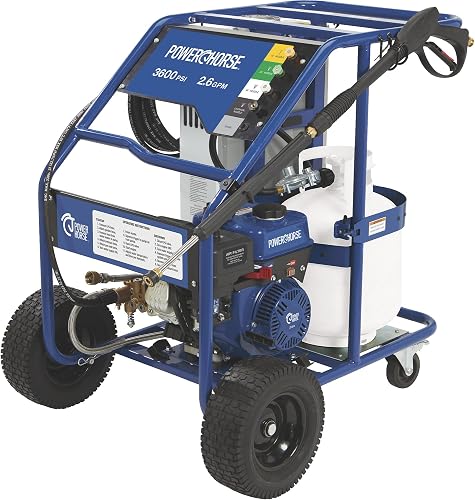
Powerhorse Hot Water Pressure Washer, 3,600 PSI
A hot-water pressure washer with 3600 PSI, 2.6 GPM, propane burner heating to 150 F, 212cc gas engine and 176.5 lb build.
Pros
- 3600 PSI, 2.6 GPM stated
- Propane burner, up to 150 F
- 212cc gas engine
- Triplex pump, thermal protection, low oil shutdown
Cons
- 176.5 lb, heavy
- 49-state, not for California
- No warranty term stated
- Gas and propane to run

NorthStar Hot Water Pressure Washer, 5000 PSI
A commercial hot-water pressure washer with 5000 PSI, 10.5 GPM, up to 300 F, skid-mounted for jobsite use.
Pros
- 5000 PSI, 10.5 GPM stated
- Up to 300 F stated
- Skid-mounted commercial build
- Brass and chrome fittings
Cons
- Commercial scale for home use
- No warranty term stated
- No standard stated
- Jobsite setup needed
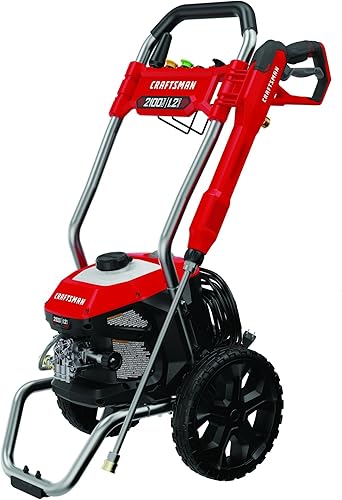
CRAFTSMAN Electric Pressure Washer, Cold Water
A corded electric cold-water washer with 2100 PSI, 1.2 GPM, soap tank, 25 ft hose, 35 ft cord and CETA certification.
Pros
- 2100 PSI, 1.2 GPM stated
- Integrated soap tank
- CETA certified
- 10 in wheels, 32 lb
Cons
- Cold water only
- No warranty term stated
- 25 ft hose
- Corded, needs outlet

RYOBI 1800 PSI 1.2 GPM Cold Water Corded Electric
A corded electric cold-water washer with 1800 PSI, 1.2 GPM, 13A motor, turbo nozzle, soap applicator and CSA.
Pros
- 1800 PSI, 1.2 GPM stated
- Turbo nozzle, 50 percent faster stated
- Soap applicator included
- CSA stated
Cons
- Cold water only
- No warranty term stated
- 20 ft hose
- Corded, needs outlet
Compare the picks
| Factor | Hot water | Cold water | Edge |
|---|---|---|---|
| Pressure | 3600-5000 PSI stated | 1800-2100 PSI stated | Hot water |
| Flow | 2.6-10.5 GPM stated | 1.2 GPM stated | Hot water |
| Heat | Up to 150-300 F stated | Cold water only | Hot water |
| Power | Gas engine; skid-mounted commercial | Corded electric | Even, different needs |
| Weight | 176.5 lb stated on one | 32 lb stated on one | Cold water |
| Example: Powerhorse | 3600 PSI, 2.6 GPM, 150 F, 212cc | Not applicable | n/a |
| Example: NorthStar | 5000 PSI, 10.5 GPM, 300 F, skid | Not applicable | n/a |
| Example: CRAFTSMAN | Not applicable | 2100 PSI, 1.2 GPM, soap tank, CETA | n/a |
| Example: RYOBI | Not applicable | 1800 PSI, 1.2 GPM, turbo nozzle, CSA | n/a |
The rows below follow the listings as published, collected 20 October 2026. “Not stated” means the listing leaves it out, and a missing spec is not a win for the other side.
Hot water vs cold water pressure washer: heat first
Heat is the cleanest split. The Powerhorse heats water up to 150 degrees F with a propane burner and a 212cc gas engine, and the NorthStar runs up to 5000 PSI at 300 degrees F. Both hot-water listings tie heat to grease and grime removal. Neither cold-water example heats water at all: the CRAFTSMAN and RYOBI are corded electric cold-water washers.
What that means in the driveway: if the job is engine bays, shop floors or equipment caked in grease, only the hot side states the heat to break it down. If the job is washing cars and rinsing light grime, the cold side’s 1800 to 2100 PSI is the simpler pick.
Pressure, flow and power
The hot side states bigger numbers: 3600 PSI and 2.6 GPM on the Powerhorse, 5000 PSI and 10.5 GPM on the NorthStar. The cold side states 2100 PSI and 1.2 GPM on the CRAFTSMAN and 1800 PSI and 1.2 GPM on the RYOBI. Power differs too: gas engine with propane burner on the Powerhorse and a skid-mounted commercial build on the NorthStar, versus corded electric on both cold examples.
None of the listings gives a cleaning-efficiency score, so we do not call either side better on results. The listings describe pressure, flow and power, and that is where the comparison stops: pick the machine that matches the dirt you clean.
Size, weight and setup
The hot side is heavy iron: the Powerhorse lists 176.5 pounds with a 30-foot hose, and the NorthStar is a skid-mounted commercial unit. The cold side is portable: the CRAFTSMAN lists 32 pounds with 10-inch wheels, a 25-foot hose and a 35-foot cord, and the RYOBI is described as lightweight and compact with a 20-foot hose. Hot water also needs a fuel or heat source plus more setup; cold water needs an outlet. Portability splits the same way: the hot-side listings describe wheels for maneuvering and skid mounting, while the cold-side listings emphasize compact storage and onboard accessory storage. A washer you roll out weekly should be easy to roll.
Nozzles, soap and hoses
The accessories say how each side gets used. The CRAFTSMAN lists a soap tank for detergent application, and the RYOBI lists a soap applicator plus a turbo nozzle for a stronger rotating spray, both aimed at car washing. The NorthStar lists an ultra flex 50 ft hose and a nozzle coupler for compact storage. The RYOBI is described as lightweight and compact with a 20-foot hose, and its listing mentions hose, cord and wand storage to keep accessories organized. On the hot side, the Powerhorse lists a 212cc gas engine with thermal protection and low oil shutdown. Longer hoses and bigger engines both add capability; they also add weight and setup time.
Four examples
How we scored them
Each example is scored on performance, build, value, safety and warranty, using only what its listing publishes. The CRAFTSMAN states CETA certification and the RYOBI states CSA; the Powerhorse states EPA compliance and 49-state sale; none of the four states a warranty term.
| Product | Shop Score | Perf. /35 | Build /25 | Value /25 | Safety /10 | Warranty /5 |
|---|---|---|---|---|---|---|
| Powerhorse 3600 PSI Hot Water | 9.5 | 30 | 21 | 19 | 1 | 0 |
| NorthStar 5000 PSI Hot Water | 9.4 | 29 | 20 | 18 | 0 | 0 |
| CRAFTSMAN 2100 PSI Cold Water | 9.4 | 26 | 20 | 20 | 0 | 0 |
| RYOBI 1800 PSI Cold Water | 9.4 | 24 | 20 | 20 | 0 | 0 |
Scores run from 9.2 to 9.8: each product’s point total is placed on that range, so more points always means a higher score.
Keep electric pressure washers on a GFCI outlet, never point the wand at people or pets, wear eye protection with polishers and chemicals, and read the label before mixing any cleaning products. Read our Safety Disclaimer.
Frequently Asked Questions
Do I need a hot water pressure washer for cars?
No. The cold-water examples are built for it: the CRAFTSMAN lists 2100 PSI with a soap tank and the RYOBI lists 1800 PSI with a soap applicator and turbo nozzle. Hot water suits grease and heavy soil.
How hot do the hot-water examples get?
The Powerhorse heats water up to 150 degrees F with its propane burner, and the NorthStar runs up to 5000 PSI at 300 degrees F, per their listings.
Which side is heavier?
The hot side: the Powerhorse lists 176.5 pounds and the NorthStar is skid-mounted commercial. The CRAFTSMAN lists 32 pounds and the RYOBI is described as lightweight.
Can I run a hot water washer from a wall outlet?
Not these examples. The Powerhorse is gas powered with a propane burner, and the NorthStar is a commercial skid-mounted unit. The cold-water examples are corded electric.
Which washers state certifications?
The CRAFTSMAN states CETA certification, the RYOBI states CSA, and the Powerhorse states EPA compliance with 49-state sale. The NorthStar states none.
Can a cold water washer handle grease?
Light grease, yes, with the soap systems these listings include: the CRAFTSMAN has a soap tank and the RYOBI a soap applicator. For caked-on grease and oil, the hot side states the advantage: the Powerhorse heats water to 150 degrees F and the NorthStar to 300 degrees F, and both listings tie heat to grease and grime removal.
Related guides
See our car detailing hub for more wash gear.