How to Etch Concrete Before Garage Floor Coating
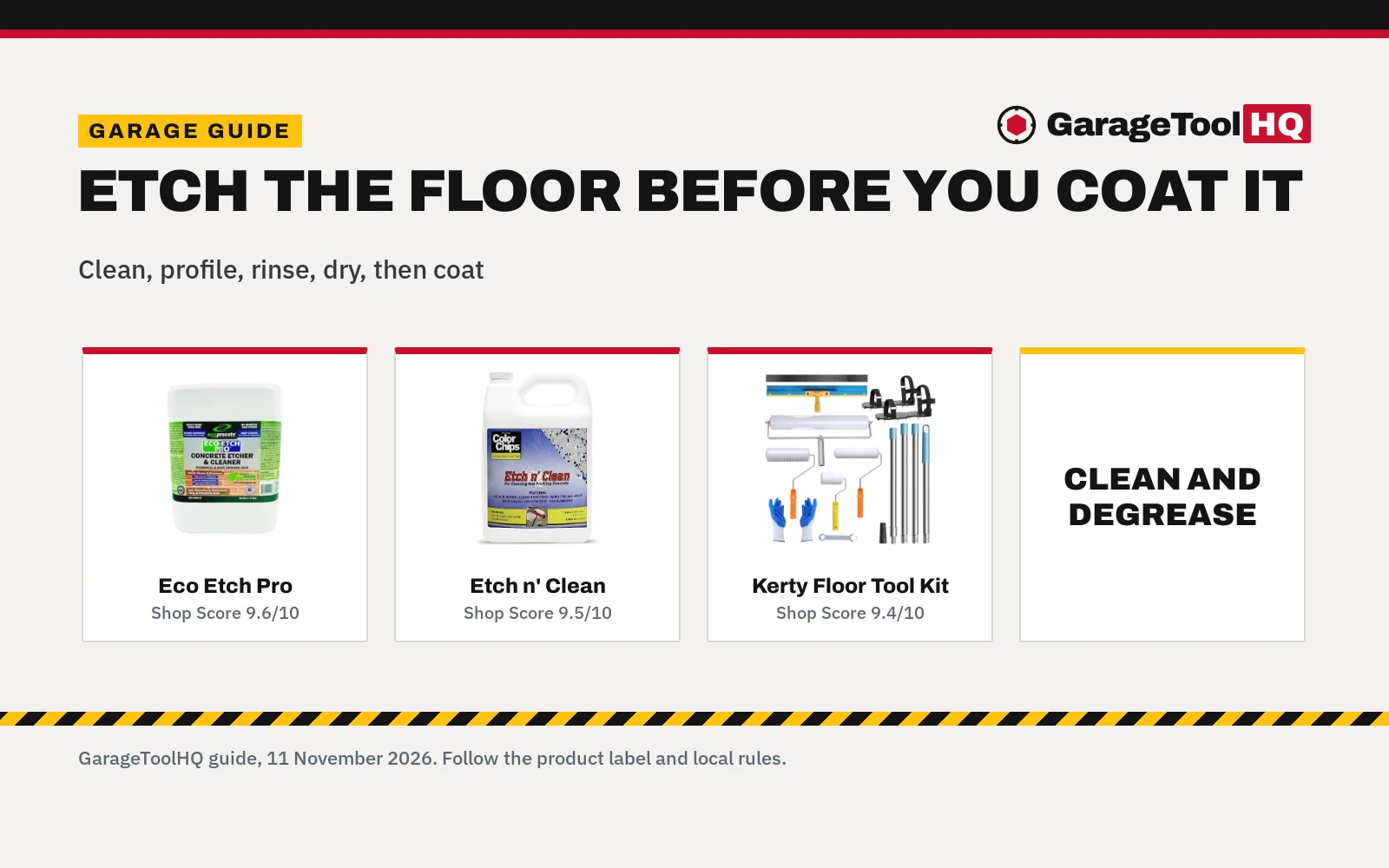
How to etch a garage floor before coating it: clean and degrease, apply an etcher to open the surface profile, rinse, dry, then roll on the coating.

On this page
How to etch concrete before a garage floor coating? Clean and degrease the floor, apply an etcher to open the surface profile, rinse, let it dry, then roll on the coating. Etching is the step that gives the coating something to grip: the etcher removes surface deposits and leaves a profile with micropores behind, so the coating bonds well. This guide walks through the job in order, then shows the gear that handles each part of it.
As an Amazon Associate I earn from qualifying purchases. GarageToolHQ earns a commission when you buy through links on our product pages, at no extra cost to you. Read our affiliate disclosure.
Below: the job in order, what etching does to the floor, and the gear for each part of it.
| # | Product | Shop Score | Buy |
|---|---|---|---|
| 1 |  Eco Etch Pro Concrete Cleaner & Etcher Dissolver | 9.6/10 | Buy on Amazon |
| 2 |  The Original Color Chips Etch n' Clean | 9.5/10 | Buy on Amazon |
| 3 |  Self Leveling Cement Tool Kit | 9.4/10 | Buy on Amazon |
Eco Etch Pro Concrete Cleaner & Etcher Dissolver
A 5 gallon organic acid etcher and cleaner that profiles concrete for coating adhesion and removes efflorescence, rust and dirt, stated non-toxic and biodegradable.
Pros
- 5 gallon size, the largest etcher here
- Etches and cleans in 1 product: efflorescence, rust and dirt
- Non-toxic, biodegradable, no VOCs and no hazardous fumes, per the maker
- Neutralizes on water contact and will not harm vegetation
Cons
- 45.0 lb listed weight, heavy to carry and pour
- No warranty term is stated
- No dilution or coverage figures are stated on the listing
- Acid-strength claim is stated without figures
The Original Color Chips Etch n' Clean
A 1 gallon etcher and cleaner that cleans, degreases and profiles concrete in the same pass, stated odorless, non-flammable and safe near vegetation.
Pros
- Cleans, degreases and profiles in the same pass
- Removes the separate pre-cleaning and rinsing step before etching
- Odorless, non-flammable, no acidic vapors, per the listing
- Safe near vegetation and made for areas with limited ventilation
Cons
- 1 gallon is the smallest etcher here
- No warranty term is stated
- No coverage figure is stated on the listing
- No shelf life is stated on the listing
Self Leveling Cement Tool Kit
A complete epoxy floor tool kit with a stainless steel scraper, spiked and painter rollers, telescopic poles, spike shoes and gloves for spreading and finishing floor coatings.
Pros
- Complete kit: scraper, 2 spiked rollers, 2 painter rollers, spike shoes and gloves
- Spiked rollers remove air bubbles for a smooth finish
- Poles extend for reach without bending and kneeling
- Stainless steel parts resist corrosion and rust, per the maker
Cons
- Title says 16 to 63 in poles while the bullets say 32 to 63 in
- No warranty term is stated
- A coating kit, not an etcher: it handles the coat after the etch
- No weight is stated on the listing
How to etch concrete before a garage floor coating
- Clear the floor. Move cars, tools, boxes and mats out of the garage, and sweep the slab clean so dirt and grit do not get worked into the etch.
- Clean and degrease. Wash off oil, grease and grime, since an etcher works on the concrete surface rather than on a layer of dirt. Etch n’ Clean combines this step with the etch itself, which removes a separate pre-cleaning and rinsing operation.
- Apply the etcher. Spread the etcher over the floor and work it across the surface so it can dissolve efflorescence, calcium and mortar deposits and open the profile. Follow the label for how to apply it and how long to leave it working.
- Scrub the stubborn spots. Give stained patches another pass so the etcher gets to the concrete beneath the deposits.
- Rinse. Rinse the floor with clean water and push the rinse water out of the garage, so no etcher residue dries on the slab. A floor scraper helps push the water out.
- Let the floor dry. Leave the slab to dry before coating. Check the coating label for when the floor is ready.
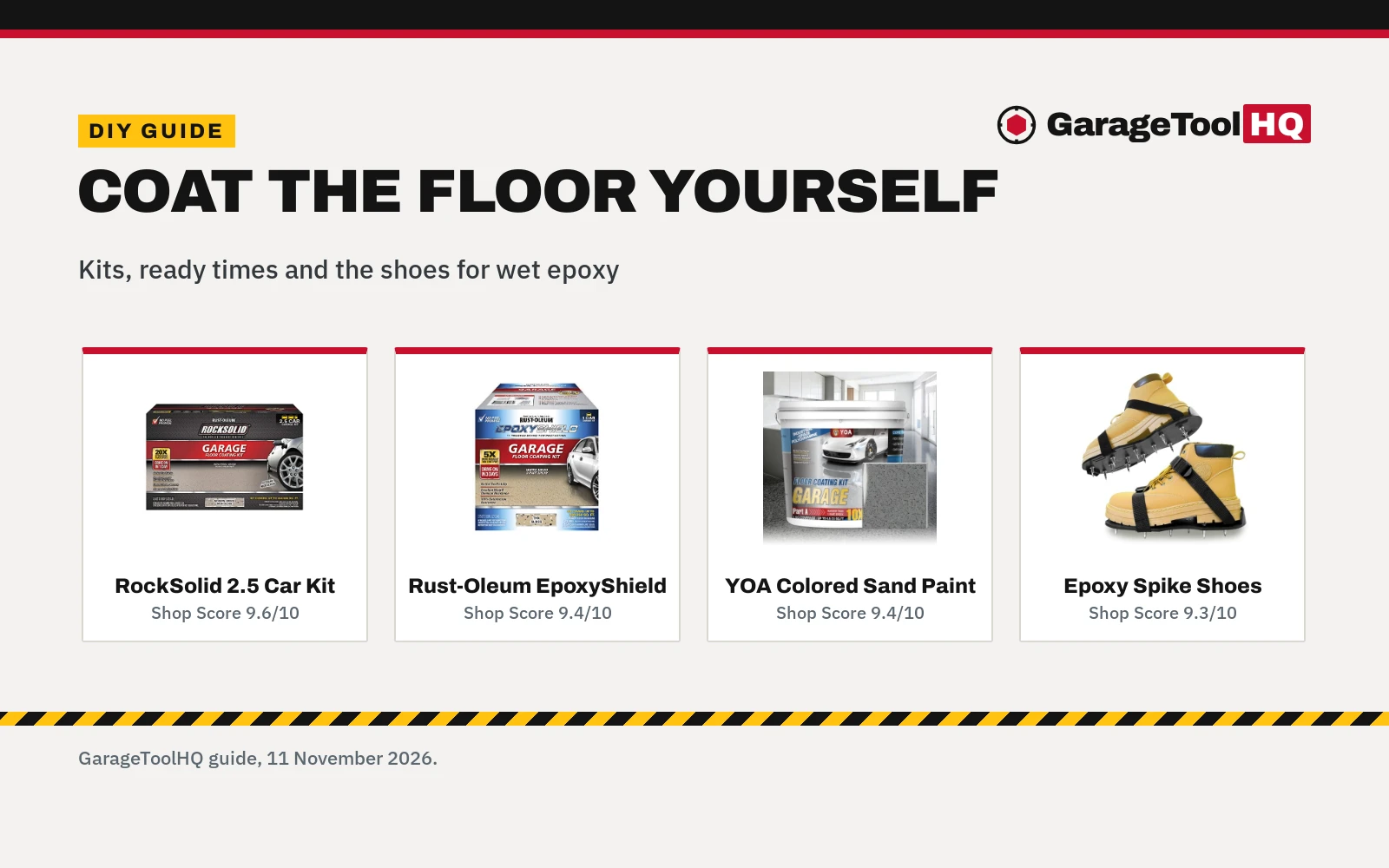
- Coat it. Roll the coating on with painter rollers, and use spiked rollers to remove air bubbles in self-leveling cement or epoxy. Spike shoes let you walk on the wet coat without leaving footprints.
What etching does to the floor
Etching changes the surface of the concrete rather than the slab itself. The etcher removes efflorescence, calcium and mortar deposits and leaves a surface profile with micropores, which gives the coating pores to grip and increases adhesion. Eco Etch Pro is an organic acid etcher that the maker describes as stronger than citric acid and phosphoric acid for creating that profile, while Etch n’ Clean cleans, degreases and profiles in the same pass. A floor that is only swept, and never etched, gives the coating far less profile to bond to.
The gear for the job
The etcher handles the cleaning and profiling, and the tool kit handles the coating that goes on after: the etcher opens the profile, then the scraper, rollers and spike shoes spread and finish the coat.
Etching safely in the garage
Eco Etch Pro is sold as an alternative to hazardous acids: an organic acid that the maker states will not burn skin, emit hazardous fumes or harm vegetation, and contains no VOCs. Etch n’ Clean is odorless and non-flammable with no acidic vapors. Even so, follow the label on the jug, and keep the etcher off skin and out of eyes. Etch n’ Clean is made for areas with limited ventilation such as basements, so follow its label on ventilation and give the garage as much fresh air as the job allows.
Use rated jack stands on solid ground, wear eye protection with power and air tools, keep fuel-burning equipment out of a closed garage, and follow the manual for every tool. Read our Safety Disclaimer.
FAQ: garage tools
Do I need to etch concrete before coating a garage floor?
For a coating that calls for an etched profile, yes. Etching removes surface deposits and leaves a profile with micropores, which increases coating adhesion, and a coating rolled onto an unprepared slab has far less to grip. Follow the coating maker’s prep instructions, since some coatings call for grinding instead of etching.
Can I etch a garage floor that has efflorescence or rust stains?
Yes. Eco Etch Pro is sold as an efflorescence, rust and dirt remover that dissolves white salts and cement mortar, and Etch n’ Clean cleans mortar joints and dissolves efflorescence on masonry and brick.
Is concrete etcher safe to use indoors or near plants?
Both etchers here are made for it, per their listings. Eco Etch Pro is biodegradable, neutralizes on water contact and will not harm vegetation, with no hazardous fumes and no VOCs, per the maker. Etch n’ Clean is odorless, non-flammable, safe near vegetation and has no acidic vapors, per the listing, and is made for areas with limited ventilation such as basements.
What is the difference between etching and cleaning concrete?
Cleaning removes dirt, grease and grime from the surface. Etching goes further and changes the surface itself, dissolving deposits and opening micropores so a coating can bond. Etch n’ Clean does both at once and removes the separate pre-cleaning and rinsing step before acid etching.
Do I need special tools to coat the floor after etching?
A roller kit covers it. The Kerty kit has a stainless steel scraper, spiked rollers that remove air bubbles, painter rollers for even coverage, spike shoes for walking on the wet coat, and poles that extend for reach.
Can I use a concrete etcher on brick?
Yes, for the etchers here. Eco Etch Pro removes deposits from brick as well as driveways and garages, and Etch n’ Clean cleans mortar joints and dissolves efflorescence on masonry and brick.
Related: garage floor coating DIY, the best epoxy garage floor kits for cars, our best concrete etch and cleaner picks and the garage upgrades hub. Patch the slab if it is cracked: see concrete patch repair.