Infrared vs Quartz Garage Heater: Which One Should You Buy?
Infrared and quartz garage heaters compared for a home garage: how each heats, what each asks for in wiring and mounting, and one example of each.

On this page
Top picks at a glance
As an Amazon Associate I earn from qualifying purchases.
- 1
 DR. INFRARED HEATER DR-910F 109.7/10View on Amazon
- 2
 Shinic 120V Electric Garage Heater9.7/10View on Amazon
- 3
 Infrared Space Heater 1500W Electric Heater for Indoor Use9.5/10View on Amazon
- 4
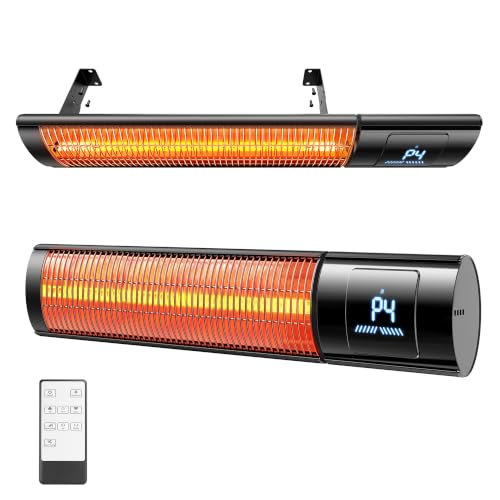 1500W Outdoor Electric Infrared Heater for PatioView on Amazon
- 5
 Heat Storm Tradesman 1500 Watt Weatherproof Infrared HeaterView on Amazon
- 6
 Heat Storm Tradesman 1500 Watt Infrared Heater Tripod ComboView on Amazon
- 7
 DR. INFRARED HEATER Portable Infrared Indoor and OutdoorView on Amazon
- 8
 DR. INFRARED HEATER NEW Upgraded DR-975 7500-Watt 240-VoltView on Amazon
- 9
 Dr. Infrared Heater DR-966 240-Volt Hardwired Shop GarageView on Amazon
Verdict: Choose infrared if your garage already has a 240V dedicated circuit and you want the higher wattage example here. Choose quartz if you want a 120V plug-in heater with a built-in work light for bench work.
Cold air settles over the garage while a brake job waits on the bench, and every wrench feels colder than the last. The question is not whether to add heat, but which kind of heat fits the space, and that is where infrared vs quartz garage heater comes in. Both examples here warm people and objects directly rather than heating the air first, so the choice turns on power, wiring, mounting, and the extras each listing states.
GarageToolHQ earns a commission when you buy through links on this page, at no extra cost to you. Read our affiliate disclosure.
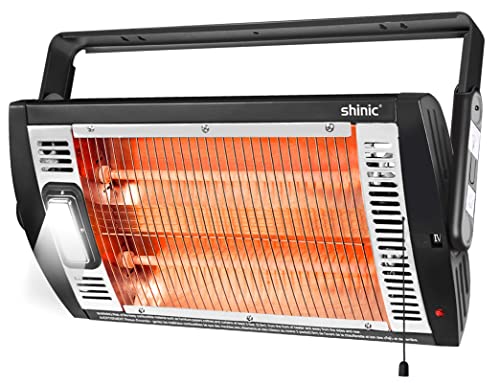
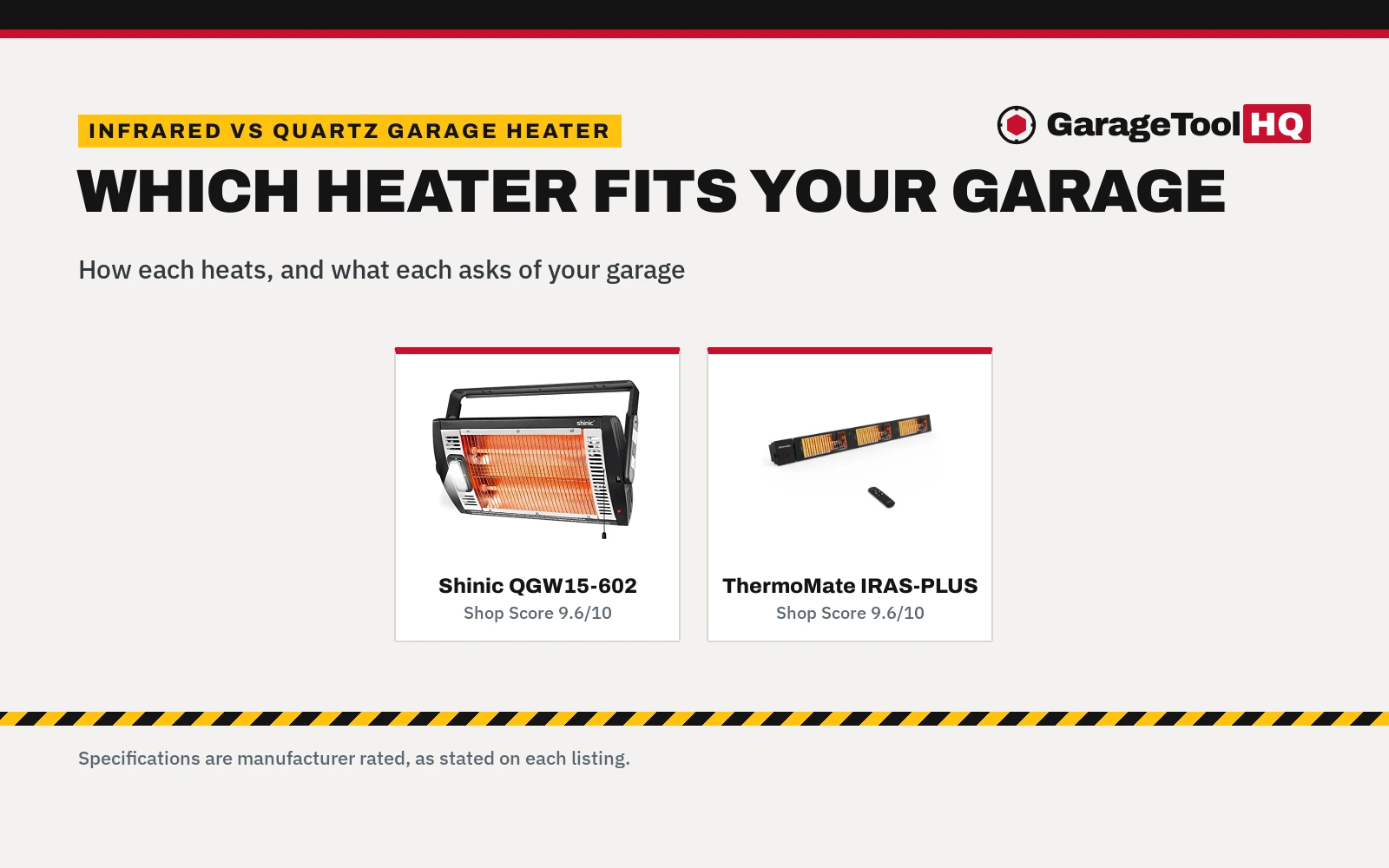
Shinic 120V Electric Garage Heater
A 120V ceiling-mounted quartz garage heater with 1500W and 750W heat settings, a halogen work light, and 90° aiming.
Pros
- 1500W high heat and 750W low heat settings
- Built-in halogen work light for nighttime work
- Ceiling mount with 90° rotation saves floor space
- ETL Listed with overheat auto-off and a grounded plug
Cons
- No coverage area is stated
- Pull-string switch instead of a remote
- Heat tops out at 1500W
- Work light only runs in shared heat and light modes

ThermoMate Infrared Outdoor Patio Heater
A 240V hardwired infrared heater with 4500W high heat, 2250W low and 3600W mid modes, a remote, and a 24-hour timer.
Pros
- 4500W high heat with 2250W and 3600W lower modes
- Remote control with a 24-hour timer
- Wall or ceiling mount with 45° aiming
- Overheating protection and IP54 stated
Cons
- Needs a 240V hardwired dedicated circuit breaker
- Coverage heading says 170 square foot while the same bullet says up to 200 sq.ft.
- Heavier example here at 18.0 pounds
- Recommended least mounting height is 7.88 feet
Other tools worth a look
 1500W Outdoor Electric Infrared Heater for PatioCheck price on Amazon
 Heat Storm Tradesman 1500 Watt Weatherproof Infrared HeaterCheck price on Amazon
 Heat Storm Tradesman 1500 Watt Infrared Heater Tripod ComboCheck price on Amazon
 DR. INFRARED HEATER Portable Infrared Indoor and OutdoorCheck price on Amazon
 DR. INFRARED HEATER NEW Upgraded DR-975 7500-Watt 240-VoltCheck price on Amazon
 Dr. Infrared Heater DR-966 240-Volt Hardwired Shop GarageCheck price on Amazon
Side by side
| Product | Heat type | Power | Mounting |
|---|---|---|---|
| Shinic QGW15-602 | Quartz tube radiant (infrared) | 1500W | Ceiling mounted |
| ThermoMate IRAS-PLUS | Carbon fiber infrared | 4500W | Wall or ceiling mounted |
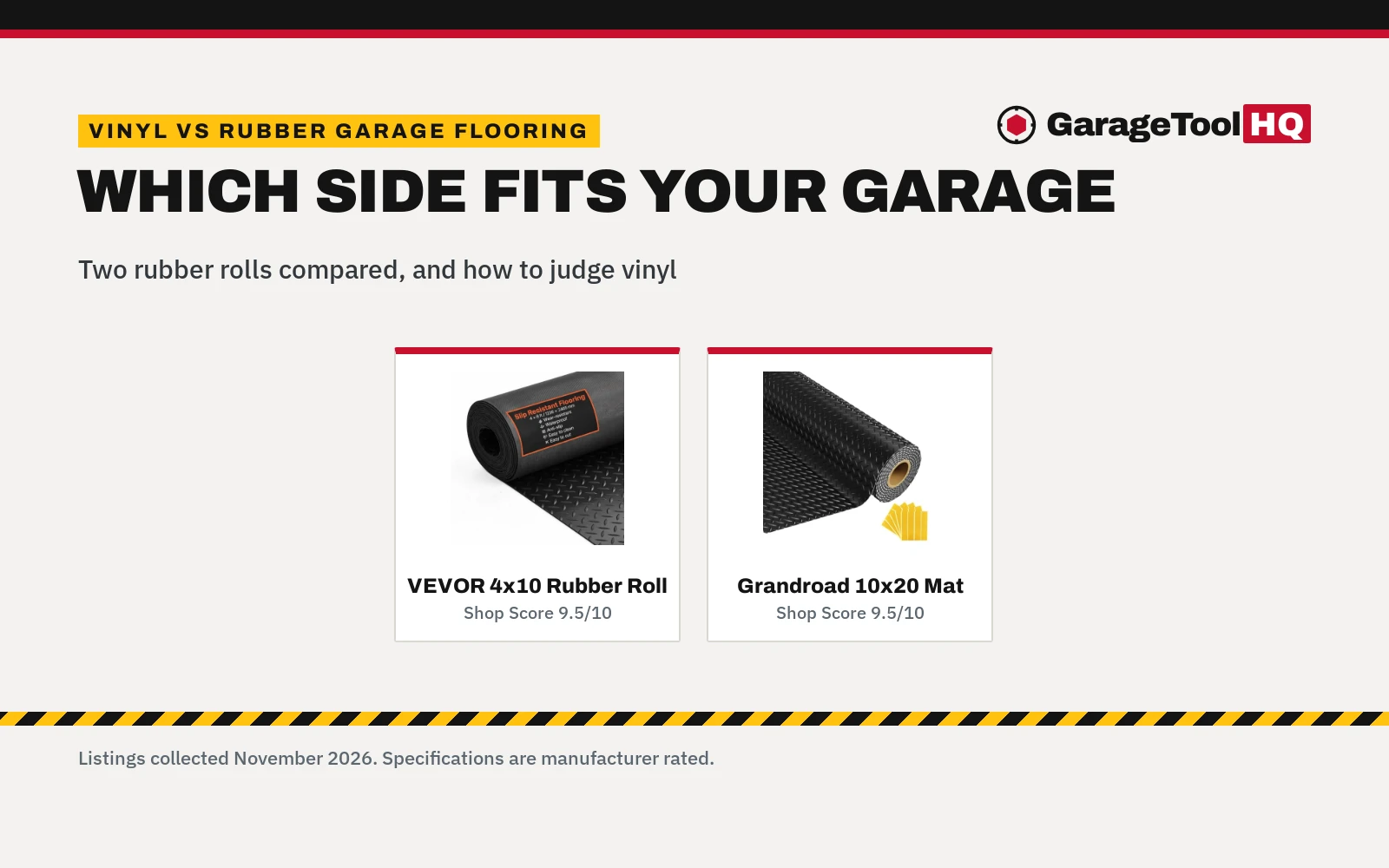
Example figures are manufacturer rated, as published on each listing and collected 1 November 2026.
How infrared vs quartz garage heater options heat
An infrared heater warms people and solid objects directly, and the ThermoMate example uses a carbon fiber tube to do it. The Shinic quartz example works the same radiant way: its dual quartz tubes deliver radiant heat to people and objects directly in front of it, so quartz here is a tube type within radiant heating, not a separate heating principle. The difference is not the basic idea, which both listings share, but the tube type, the power behind it, the wiring each one needs, and how each one mounts.
Power and wiring
The ThermoMate example runs on 240V and must be hardwired to a dedicated circuit breaker, with a 6.3 feet cable cord for the wire connection. Its modes run from low 2250W through mid 3600W to high 4500W. The Shinic example runs on 120V with a 3-prong grounded plug, and its heat settings are 750W and 1500W. That wiring gap matters more than the wattage gap: a hardwired 240V heater calls for a licensed electrician, while a plug-in 120V heater hangs on a ceiling mount and plugs in.
Mounting and aiming
The ThermoMate example mounts on a wall or ceiling and its angle adjusts 45° to aim the heat. The Shinic example mounts on the ceiling and rotates up to 90° to direct heat where it is needed, which also keeps the floor clear. The ThermoMate example measures 6.42 inches x 60.62 inches x 5.39 inches and weighs 18.0 pounds, so it is a long example that needs a solid mount, and the listing recommends a least mounting height of 7.88 feet. The Shinic example measures 11.0 inches x 24.0 inches x 15.0 inches and weighs 5.51 pounds, a 24 inch wide box that suits a ceiling spot over a bench.
Controls and extras
The ThermoMate example comes with a remote that sets a 24-hour timer and switches between its heat modes. The Shinic example uses a pull-string switch with 5 modes, and some of those modes pair heat with its halogen work light, which helps when bench work runs past daylight.
Choose infrared if
- You have a 240V dedicated circuit and a licensed electrician to wire it
- You want the 4500W high mode for a cold bay
- You want remote control with a 24-hour timer
- You can meet the recommended least mounting height of 7.88 feet
Choose quartz if
- You want a 120V plug-in heater with no hardwiring
- You want a halogen work light over the bench
- You want a ceiling mount that rotates 90°
- You want the lighter 5.51 pound example
Example heaters
For more choices, see the best infrared garage heater for a shed, and for a different pairing, the quartz vs ceramic garage heater comparison.
Never run a fuel-burning heater, generator or engine in a closed garage: carbon monoxide builds up fast and has no smell. Fit a CO alarm, keep clearances to cars and storage, use vented gas heaters installed to code, and put 240V electric heaters on a dedicated circuit. See CPSC carbon monoxide guidance. Read our Safety Disclaimer.
Garage Fit Check
- Space: the ThermoMate example is 60.6 inches long, while the Shinic example is 24 inches wide, so measure the wall or ceiling run before choosing.
- Power: the ThermoMate example needs a 240V dedicated circuit breaker, while the Shinic example plugs into 120V.
- Mounting height: the ThermoMate listing states a least mounting height of 7.88 feet.
- Storage: both examples mount off the floor, so check the wiring run for the hardwired example and the plug reach for the plug-in example before the install.
- Before switching either heater on, confirm the circuit, the mount, and the aiming angle.
FAQ: garage tools
Which heats better, infrared or quartz?
Both examples heat people and objects directly, so neither idea wins on its own. The ThermoMate infrared example states 4500W at its high mode, while the Shinic quartz example states 1500W at its high heat setting, and the wiring each one needs is the sharper difference. Wattage alone does not settle which heats a given bay better, since the ThermoMate coverage line is unclear and no coverage area is stated for the Shinic example.
Does the quartz example need special wiring?
No. The Shinic example runs on 120V with a 3-prong grounded plug, so it plugs in rather than needing a dedicated hardwired circuit.
Does the infrared example need special wiring?
Yes. The ThermoMate example runs on 240V and must be hardwired to a dedicated circuit breaker, so use a licensed electrician for the connection.
Can I aim the heat at my work area?
Yes, within limits. The ThermoMate example adjusts 45°, and the Shinic example rotates up to 90°, so the quartz example covers a wider swing.
Which example has a work light?
The Shinic example has a built-in halogen work light for benches and tools. The ThermoMate example lists a remote and a 24-hour timer instead, with no work light stated.
Related: the best infrared garage heater for a shed, the quartz vs ceramic garage heater comparison, the infrared vs convection garage heater comparison, and the portable vs wall mounted garage heater guide.