Lithium vs Lead Acid Battery Charger: Which One Should You Buy?
Lithium vs lead acid battery charger compared for a home garage: chemistry support, charging current and stages, safety features, and one example of each.

On this page
Top picks at a glance
As an Amazon Associate we earn from qualifying purchases.
- 1
 AstroAI S8 Ultra 12V 4000A Lithium Jump Starter Up to All9.8/10View on Amazon
- 2
 NOCO GENIUS2D 2A 12V Onboard Battery Charger9.8/10View on Amazon
- 3
 NOCO GENIUS5 5A 6/12V Smart Battery Charger9.7/10View on Amazon
- 4
 Mroinge MBC022View on Amazon
- 5
 Haisito 20-Amp Smart Battery ChargerView on Amazon
- 6
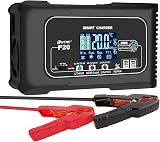 20-Amp Smart Battery ChargerView on Amazon
- 7
 VEVOR Smart Battery ChargerView on Amazon
- 8
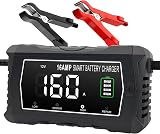 lifepo4 Charger 16-Amp Fully-Automatic MaintainView on Amazon
- 9
 12-Amp Smart Battery ChargerView on Amazon
GarageToolHQ earns a commission when you buy through links on this page, at no extra cost to you. Read our affiliate disclosure.
Verdict: Pick a lithium (LiFePO4) charger if every battery you charge is 12V LiFePO4 and you want a simple, single-purpose unit that connects and runs. Pick a lead-acid charger if your garage holds mixed batteries, cars, trucks, motorcycles, lawn mowers or boats, or you want 24V support and battery repair features.
Saturday morning, you turn the key on the truck and get the slow crank that means the battery sat dead all week. Before any job can start, you need a charger, and then the real question shows up: a lithium vs lead acid battery charger, which one matches the batteries in your garage? This comparison lays out what separates the two sides, using one example of each from the listings we reviewed.

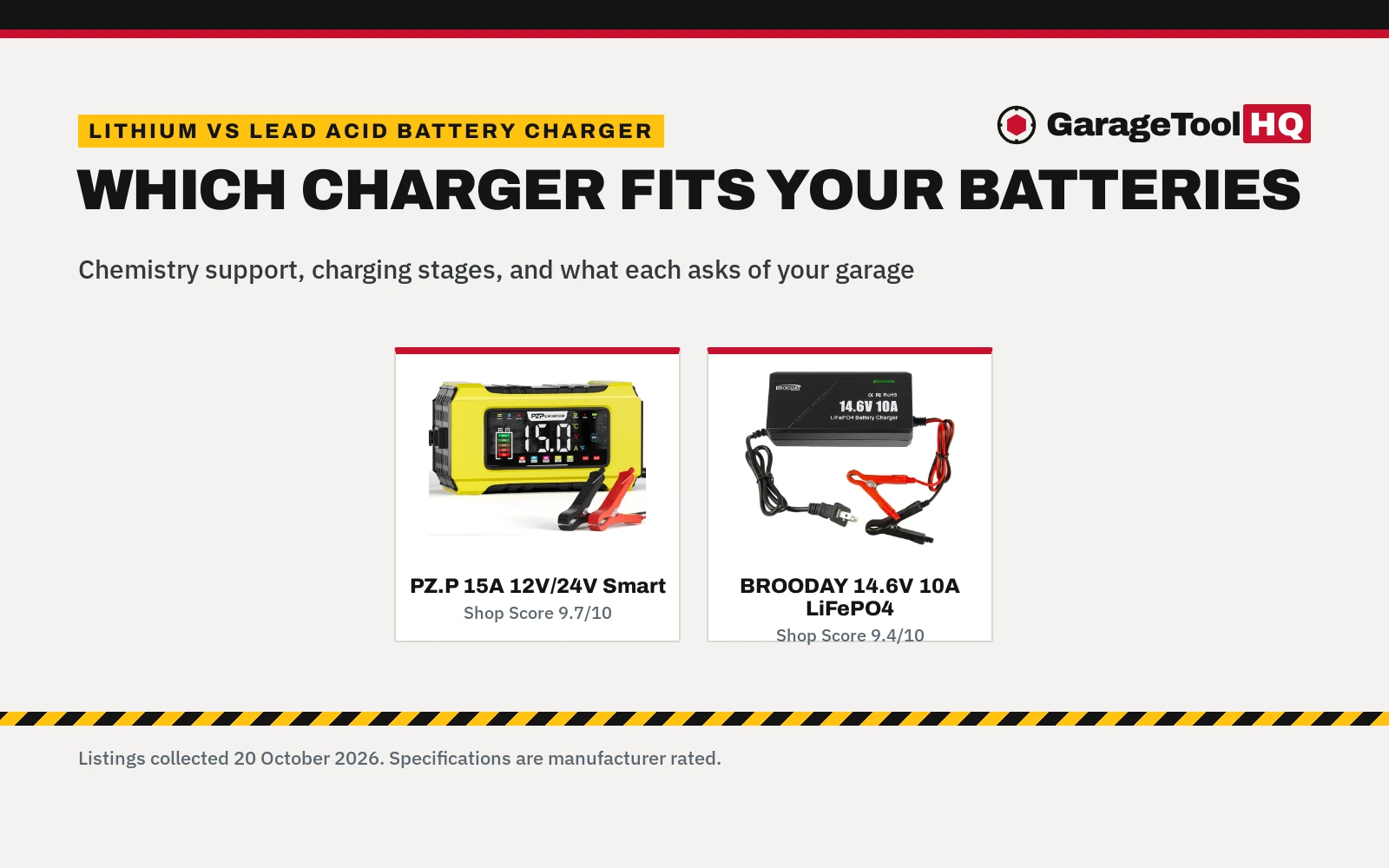
PZ.P 15-Amp 12V/24V Smart Battery Charger
A 15A (12V) and 8A (24V) smart charger for LiFePO4 plus AGM, GEL, SLA and flooded lead acid, with a 9-stage process, pulse repair mode and a color status screen.
Pros
- 15A at 12V and 8A at 24V with a 9-stage automatic process
- Covers LiFePO4 plus AGM, GEL, SLA and flooded lead acid
- Reverse polarity, overcurrent, overvoltage and short-circuit protection; CE, FCC, UL listed
- Color screen shows voltage, current, temperature and charge %, with a 6.7 ft cable
Cons
- Cannot activate or charge totally dead batteries (stated)
- The listing calls it faster than standard 10A or 8A chargers but gives no charge time for a stated battery capacity
- Color screen, summer and winter modes, and 9 stages take more setup than a simple unit
- Listed as a charger, not a jump starter, so it will not start a dead engine on its own

14.6V 10A LiFePO4 Battery Charger for 12V Lithium
A 14.6V 10A charger made exclusively for 12V LiFePO4 batteries, with over 90% stated efficiency, an LED indicator and a cooling fan with overheat protection.
Pros
- 14.6V and 10A output tuned for 12V LiFePO4, over 90% charging efficiency stated
- Charges a 12V 50Ah LiFePO4 battery to 50% in 2.5 hours (stated)
- Alligator clips for a simple hookup
- LED indicator plus a cooling fan that doubles as overheat protection
Cons
- LiFePO4 only; the notice says it is not compatible with lead-acid batteries
- No warranty term is stated
- No certification is stated
- Bullets state 50% of a 50Ah battery in 2.5 hours while the spec table lists a 5-hour charge time, so full-charge timing is unclear
More options to compare
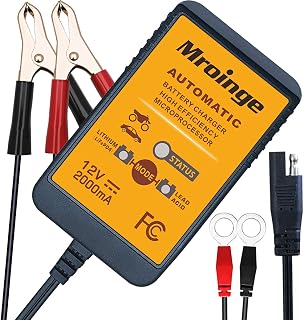 Mroinge MBC022Check price on Amazon
 Haisito 20-Amp Smart Battery ChargerCheck price on Amazon
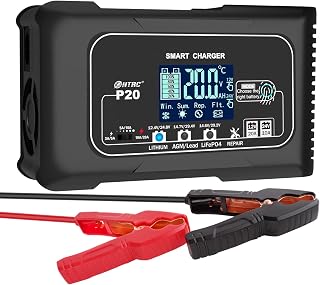 20-Amp Smart Battery ChargerCheck price on Amazon
 VEVOR Smart Battery ChargerCheck price on Amazon
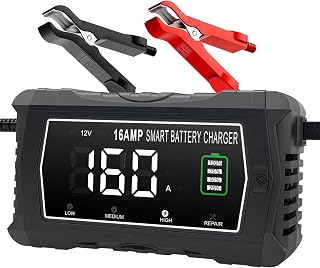 lifepo4 Charger 16-Amp Fully-Automatic MaintainCheck price on Amazon
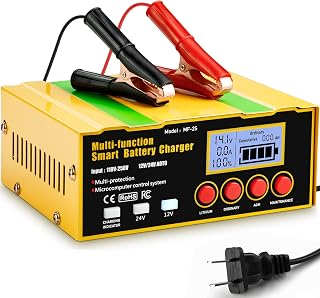 12-Amp Smart Battery ChargerCheck price on Amazon
Lithium vs lead acid battery charger: what the two sides are
A lithium charger is built around one chemistry. The BROODAY example is made exclusively for 12V (12.8V) LiFePO4 batteries, with a 14.6V and 10A output tuned to that chemistry and over 90% charging efficiency stated. Its notice says plainly that it is not compatible with lead-acid batteries. A lead-acid charger covers the classic chemistries: AGM, GEL, SLA and flooded types. The PZ.P example adds LiFePO4 to that list as well, so it works across chemistries, but its side of this comparison is the lead-acid garage, where one charger must handle whatever rolls in.
Side by side
| Lithium example | Lead-acid example | Verdict | |
|---|---|---|---|
| Chemistry it charges | 12V (12.8V) LiFePO4 only; not compatible with lead acid | LiFePO4 plus AGM, GEL, SLA and flooded lead acid | Lead-acid side covers more chemistries |
| Output | 14.6V and 10A | 15A at 12V, 8A at 24V | Lead-acid higher at 12V, plus 24V |
| Charge example | 12V 50Ah LiFePO4 to 50% in 2.5 hours (stated) | No stated charge time for a given capacity | Lead-acid listing leaves charge time unclear |
| Stages and maintenance | No stated maintenance mode | 9-stage with automatic trickle or float mode | Lead-acid states upkeep stages; lithium does not |
| Monitoring | LED indicator | Color screen: voltage, current, temp, charge %, summer or winter mode | Lead-acid screen shows more data |
| Cable | Alligator clips | 6.7 ft cable, clamp or cigarette lighter socket | Lead-acid cable length stated; lithium length not stated |
| Stated safety protections | Overheat protection with cooling fan | Reverse polarity, overcurrent, overvoltage, short-circuit protection, fireproof materials, temperature compensation | Lead-acid states more protections |
| Certifications | Not stated | CE, FCC, UL | Lead-acid lists CE, FCC, UL; lithium states none |
| Warranty | Not stated | 18-month warranty | Lead-acid states 18 months; lithium figure unclear |
| Size | 8 x 4 x 2 in, 0.51 kg | 7.88 x 3.74 x 3.55 in | About even |
Example figures are manufacturer rated, as published on each listing and collected 19 October 2026.
Chemistry support
This is the split that decides everything. The lithium example charges 12V LiFePO4 and nothing else; the listing’s notice is explicit that lead-acid batteries are not compatible. The lead-acid example handles 12V and 24V LiFePO4 plus AGM, GEL, SLA and flooded lead acid, and the maker lists cars, trucks, SUVs, motorcycles, lawn mowers and boats among the compatible vehicles. If your garage holds one LiFePO4 pack, the dedicated unit is enough. If it holds a truck, a bike and a mower, the multi-chemistry side wins on coverage.
Charging current and stages
The lithium example delivers 14.6V at 10A and states that a 12V 50Ah LiFePO4 battery reaches 50% in 2.5 hours, which the maker calls twice as quick as standard 5A chargers. The spec table lists a 5-hour battery charge time, matching that claim for a full charge of the same battery. The lead-acid example pushes 15A at 12V and 8A at 24V, and the maker describes its 9-stage process as significantly faster than standard 10A or 8A chargers, though the listing does not give a charge time for a stated battery capacity. After a full charge, the lead-acid example switches to trickle or float mode automatically, so it can maintain a battery through winter or a holiday season without overcharging. The lithium example has no stated maintenance mode.
Monitoring and connection
The lithium example keeps it simple: an LED indicator for charge status and alligator clips for the battery terminals. The lead-acid example carries a color screen that shows charging voltage, current, internal temperature in Fahrenheit or Celsius, charge percentage, and summer or winter mode, plus a 6.7 ft charging cable for batteries parked away from the outlet. Its connector is a battery clamp or a cigarette lighter socket. More information costs more setup, but the screen answers the question every charger owner asks while waiting: how far along is it?
Safety features
Charger safety comes down to stated protections, not promises. The lithium example states overheat protection through a cooling fan that doubles as a heat sink, and its notice warns to disconnect power before connecting or disconnecting and to match red to positive and black to negative. The lead-acid example lists a longer set: reverse polarity protection, overcurrent, overvoltage and short-circuit protection, fireproof materials, temperature compensation, under-charging prevention, smart controls and a cooling system, with operating temperatures from 14°F to 82°F. It also lists CE, FCC and UL in its specification. The lithium example states no certification.
Lead-acid batteries can release hydrogen while charging, so charge in a ventilated space away from sparks and flames, connect positive first and negative last, set the charger to the battery type (flooded, AGM, gel, lithium), and wear eye protection. Read our Safety Disclaimer.
Choose a lithium charger if
- Every battery you charge is 12V LiFePO4
- You want a simple unit: clips, LED, done
- Your batteries sit on a bench near an outlet
Choose a lead-acid charger if
- You charge mixed chemistries, AGM, GEL, SLA, flooded or LiFePO4
- You need 24V support or winter float maintenance
- You want a screen, repair mode and stated safety certifications
Example chargers
Garage Fit Check
- The lithium example measures 8 x 4 x 2 in and weighs 0.51 kg; the lead-acid example is 7.88 x 3.74 x 3.55 in. Both sit easily on a workbench or shelf.
- Input power is stated as 110V for the lithium example and 120V for the lead-acid example, so either plugs into standard garage power.
- The lead-acid example’s 6.7 ft cable reaches batteries that sit away from the outlet; the lithium example states no cable length, so keep it near the outlet.
- Before the first job, check which chemistries and voltages you actually own. The lithium example cannot charge lead acid, and the lead-acid example’s repair feature cannot charge totally dead batteries.
Frequently Asked Questions
Can I charge a LiFePO4 battery with a regular lead-acid charger?
It depends on the charger. A lead-acid-only charger should not be used on LiFePO4, but the PZ.P example explicitly lists LiFePO4 alongside AGM, GEL, SLA and flooded types, so a multi-chemistry smart charger with a stated LiFePO4 mode covers both.
Does the PZ.P example charge 24V batteries?
Yes. The listing states 15A for 12V and 8A for 24V, with a 9-stage automatic process for both.
What does the pulse repair feature do?
The PZ.P listing says it detects sulfation and acid stratification and uses pulse technology to restore lost performance and extend battery life. It also states the feature cannot activate or charge totally dead batteries.
Can the lead-acid example stay connected over winter?
The listing states that after a full charge it switches to trickle or float mode automatically, so it can maintain the battery during winter or holiday seasons.
Why would a lithium-only charger be the right pick?
If every battery in the garage is 12V LiFePO4, a dedicated unit keeps things simple: 14.6V and 10A output, over 90% stated efficiency, alligator clips and an LED indicator, with nothing to configure.