Mini Polisher vs Rotary Polisher: Which One Should You Buy?
Mini polisher vs rotary polisher compared by motion, speed, pads and power across four listings, with a checklist for reading any polisher listing.

On this page
Top picks at a glance
As an Amazon Associate we earn from qualifying purchases.
- 1
 BATOCA S5 Cordless Mini Car Polisher Buffer Sander Rotary &9.6/10View on Amazon
- 2
 6” RO Rotary Flexible Backing Plate9.6/10View on Amazon
- 3
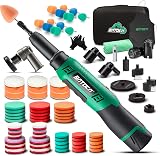 BATOCA S6 Mini Cordless Polisher 2 Heads for Car/Motorcycles9.5/10View on Amazon
- 4
 ENEACRO 1700W Rotary Car Buffer Polisher Waxer 7-inch/6-inchView on Amazon
- 5
 SPTA Cordless Mini Car PolisherView on Amazon
- 6
 GEVEELIFE Buffer PolisherView on Amazon
- 7
 ZOTA Mini Buffer PolisherView on Amazon
- 8
 ZOTA Mini PolisherView on Amazon
A neighbor rolls in with swirls across the hood and asks the classic question: mini polisher vs rotary polisher, which one should you buy? The short answer: a mini polisher is the safer pick for small areas and beginners, because its small pads and dual-action motion are forgiving; a rotary polisher cuts faster on large panels but demands a steadier hand. This guide compares the two by motion, speed and pads, works through four listings as concrete examples, and shows how to read a polisher listing with the same checklist.
More options to compare
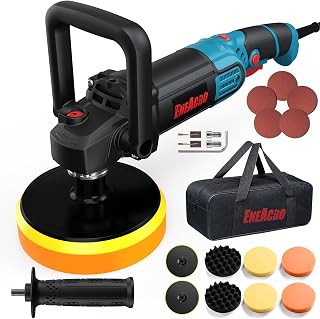 ENEACRO 1700W Rotary Car Buffer Polisher Waxer 7-inch/6-inchCheck price on Amazon
 SPTA Cordless Mini Car PolisherCheck price on Amazon
 GEVEELIFE Buffer PolisherCheck price on Amazon
 ZOTA Mini Buffer PolisherCheck price on Amazon
 ZOTA Mini PolisherCheck price on Amazon
GarageToolHQ earns a commission when you buy through links on our product pages, at no extra cost to you. Read our affiliate disclosure.
Mini polisher vs rotary polisher: the difference in one paragraph
A mini polisher runs a small backing plate, usually 1 to 3 inches, in a random orbital or dual-action motion: the pad spins and oscillates at once, which spreads the cutting work and resists burning through paint. A rotary polisher spins its pad on a single axis, which concentrates the cut and removes defects faster on hoods, roofs and trunk lids. The mini wins on headlights, emblems, bumpers and tight curves; the rotary wins on large flat panels where speed matters.
Side by side
| Mini polisher | Rotary polisher | |
|---|---|---|
| Pad motion | Random orbital / dual action | Single-axis spin |
| Pad size (stated) | 1 to 3 in backing plates | 1, 2 and 3 in base pads |
| Speed (stated) | 2000-5500 rpm, 0-7500 rpm, 2000-4500 opm | 700-2500 rpm |
| Power (stated) | 12V cordless, two batteries | 600W corded |
| Best job | Small areas, headlights, emblems | Large panels, defect removal |
| Forgiveness | More forgiving of technique | Needs a steadier hand |
The table compares the two types as the listings describe them; the figures below come from the four listings only.
The four polishers in this guide
We scored the four listings on stated speed range, pads and kit contents, build and warranty. The BATOCA S5 leads as the only 3-in-1 with rotary and dual-action modes plus a stated 1-year warranty. The SPTA follows with compounds and pads in the box and a 1-year warranty. The AUTIWOZ trades cordless convenience for 600 watts of corded rotary power. The WORKPRO brings the widest speed range and a full kit but no stated warranty.
1. BATOCA S5: a 12-volt cordless 3-in-1: a rotary polisher, a 3mm random orbital polisher and a 12mm random orbital polisher, switched by changing shafts in 5 seconds with no tools. It runs 6 speeds from 2000 to 5500 rpm: low for waxing and buffing, medium for polishing and cleaning, high for removing paint defects and oxidation. The kit includes 1-inch, 2-inch and 3-inch backing plates and two 12V 2.0Ah batteries with 20 to 30 minutes of no-load life, and the listing states a 1-year warranty. One note: only the 1-inch and 2-inch plates fit the straight shaft; the 3-inch plate needs the eccentric shaft.
2. SPTA: a 12-volt cordless mini polisher with RO/DA motion, switching speed between 2000 and 4500 oscillations per minute. The box is generous: 120ML coarse and fine compounds, 9 pads each in 75MM, 50MM and 38MM, two 2000mAh batteries, two extension shanks and a 1-year warranty. It is built for scratches in small areas and corners: bumpers, badges, wheel hubs, grilles and tailgates.
3. AUTIWOZ: a 600-watt corded rotary polisher with six speeds from 700 to 2500 RPM and a slow start. Settings 1 to 2 suit waxing and polishing, 3 to 4 polishing and cleaning, 5 to 6 removing paint defects. The 33-piece kit includes 24 polishing pads, 1/2/3-inch back plates, three extension shafts and an M14 thread. It weighs 3.85 pounds in the bullets and 3.9 pounds in the spec table; we trust the bullets. The listing states 220 volts, so check the outlet before buying.
4. WORKPRO: a 12-volt cordless mini polisher with a variable trigger covering 0-7500 RPM, the widest range here. The kit packs two 2000mAh batteries with a 1-hour fast charger, a 3-inch setup, sandpapers, woolen and sponge pads and a carrying bag. It weighs 1.94 pounds in the bullets and 1.9 pounds in the spec table; we trust the bullets. No warranty term is stated.
When a mini polisher is the better choice
- Small and curved areas. Headlights, emblems, badges, wheel hubs and tight curves are where 1 to 3 inch pads earn their keep; a big pad cannot reach them.
- Beginners. Dual-action and random orbital motion spread the cut, so the pad is forgiving while technique catches up.
- Cordless freedom. Three of the four listings run on 12-volt batteries with two packs in the box, so the work follows the car, not the outlet.
- Waxing and light polishing. Low speed settings on the BATOCA and AUTIWOZ are stated for waxing and buffing, the gentlest jobs.
When a rotary polisher is the better choice
- Large flat panels. Hoods, roofs and trunk lids go faster when the pad spins on a single axis and concentrates the cut.
- Defect removal. Settings 5 to 6 on the AUTIWOZ are stated for removing paint defects, the heavy end of the job.
- Continuous work. A 600-watt corded motor never needs a battery swap mid-panel.
- Knowing the difference from a grinder. A rotary polisher is not an angle grinder; see our rotary polisher vs grinder comparison before swapping tools.
How to read a polisher listing
No single spec tells the whole story, so read the listing like a checklist. Motion type comes first: rotary, dual action or both, as the BATOCA states all three modes. Then the speed range and what each band is stated for, from waxing to defect removal. Then pad sizes: 1 to 3 inch plates cover detail work, and extension shafts reach further. Then power: cordless 12-volt kits name their batteries and charge time, corded listings name watts and volts. Then the box contents and the warranty term, stated as 1 year on two listings here and not stated on the other two. Compare those fields against the job, the way the four listings compare above.
Keep electric pressure washers on a GFCI outlet, never point the wand at people or pets, wear eye protection with polishers and chemicals, and read the label before mixing any cleaning products. Read our Safety Disclaimer.
Frequently Asked Questions
Can a mini polisher remove swirls?
It can, on a small area. The BATOCA states its high speed is for removing paint defects and oxidation. For swirls across a whole hood, a rotary covers ground faster.
What speed should I use for waxing?
The listings agree: low and slow. The BATOCA states low speed for waxing and buffing, the AUTIWOZ states settings 1 to 2 for waxing and polishing, and the WORKPRO trigger starts at 0 RPM for full control.
How long do the cordless polisher batteries last?
The BATOCA listing states 20 to 30 minutes of no-load life per 12V 2.0Ah battery, and all three cordless kits include two batteries. The WORKPRO charger refills a battery in 1 hour.
Can I put a 3-inch pad on the BATOCA straight shaft?
No. The listing states only the 1-inch and 2-inch backing plates fit the straight shaft; the 3-inch plate fits the eccentric shaft. Extension rods fit the straight shaft only, not the eccentric shafts.
Will the AUTIWOZ plug into a standard garage outlet?
Check first. The listing states 220 volts and corded electric power. Confirm the outlet matches before buying, the same way you would check any 220-volt tool.
Related: our cutting vs polishing pad guide, compound vs polish, car polish vs car wax, the best polishing pads for beginners and the the safety disclaimer.