Phone Attachment vs Handheld Thermal Camera: Which One Should You Buy?
Phone attachments borrow a phone screen and battery, while handheld thermal cameras carry their own display, storage and power for longer inspections.

On this page
Top picks at a glance
As an Amazon Associate I earn from qualifying purchases.
- 1
 Teslong 5.0MP USB Auto-Focus Endoscope for Android Phone9.6/10View on Amazon
- 2
 TOPDON TC004 Mini Thermal Imaging Camera9.4/10View on Amazon
- 3
 Flagfront Thermal Camera9.4/10View on Amazon
- 4
 Thermal Master P1 Thermal Camera for USB-C iOS/AndroidView on Amazon
- 5
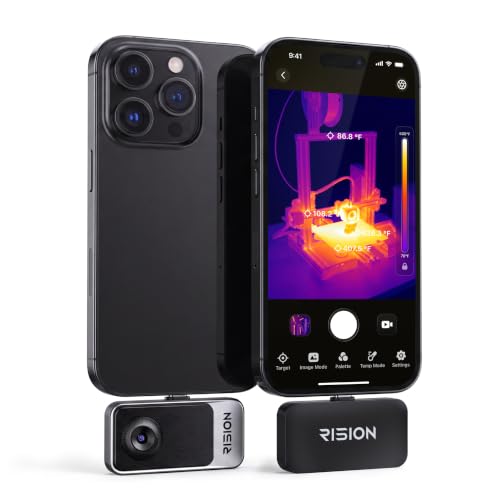 RISION Magic Pro Thermal CameraView on Amazon
- 6
 TOPDON TC002 Thermal Imaging Camera for iOSView on Amazon
- 7
 Fluke TC01A 25HzView on Amazon
- 8
 Mini Thermal Camera for Home Inspection Thermal Imager withView on Amazon
- 9
 FOXWELL RT100 Thermal Imaging CameraView on Amazon
Phone attachment vs handheld thermal camera: which should you buy? A phone attachment wins for quick checks with a phone already in hand, while a handheld unit wins for long inspections that need its own screen, storage and battery. The rest of this guide compares resolution, temperature range, accuracy, controls and documentation for phone attachment vs handheld thermal camera buyers, then ranks the cameras in the gear section below.
Other tools worth a look
 Thermal Master P1 Thermal Camera for USB-C iOS/AndroidCheck price on Amazon
 RISION Magic Pro Thermal CameraCheck price on Amazon
 TOPDON TC002 Thermal Imaging Camera for iOSCheck price on Amazon
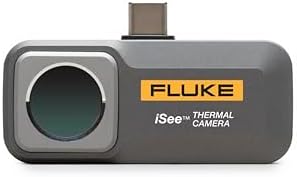 Fluke TC01A 25HzCheck price on Amazon
 Mini Thermal Camera for Home Inspection Thermal Imager withCheck price on Amazon
 FOXWELL RT100 Thermal Imaging CameraCheck price on Amazon
GarageToolHQ earns a commission when you buy through links on our product pages, at no extra cost to you. Read our affiliate disclosure.
Below: how the two forms differ, what resolution and range figures mean, how to choose, and the gear section with the cameras ranked.
Phone attachment vs handheld thermal camera: where the forms differ
A phone attachment plugs into the phone charging port and turns the phone screen into the thermal display, with the maker app handling imaging, settings and saved photos. The Thermal Master P1 plugs into USB-C iPhone, Android, tablets and Windows devices, while Lightning iPhones need a Type-C to Lightning adapter sold separately. The RISION Magic Pro uses a USB-C port with iOS, Android and Windows devices, but not Mac. The FLIR One Pro plugs into USB-C Android devices, with Samsung Galaxy and Google Pixel named in the listing.
A handheld unit carries its own screen, battery and storage, so inspections do not depend on a phone at all. The TOPDON TC005 has a 3.5-inch display, runs up to 8 hours on a full charge, recharges in 2 hours, and stores images on 64 GB of internal storage. It still connects by Wifi to a mobile app and by USB to PC software for analysis and reports, but viewing and capture happen on the unit itself.
Resolution, range and accuracy: reading the figures
Resolution figures need care, because every attachment here starts from a smaller native sensor and upscales the image. The P1 starts at 160 x 120 and reaches 320 x 240 with X³ enhancement, the FLIR One Pro starts at 160 x 120 and reaches 480 x 360 with VividIR, and the RISION Magic Pro starts at 256 x 192 and reaches 512 x 384 with QuadIR. The handheld TC005 states 512 x 384 TISR resolution with a 2MP visual light camera, and states no separate native figure. Upscaling enlarges the picture on screen, but it adds no detail beyond what the native sensor captured, so the native sensor figure is the starting point for detail.
Temperature range and accuracy are stated differently by each maker, so compare them as written. The P1 and the RISION cameras both measure from -4°F to 1112°F with ±3.6°F accuracy, while the TC005 measures from -4°F to 1022°F and states no accuracy figure in the listing. The FLIR states accuracy as ±3°C or ±5% only when the unit is within 15°C to 35°C and the scene is within 5°C to 120°C, and states no full range figure. Sensitivity is stated as 0.04°C for the P1 and 40mK for the RISION, and refresh rate is stated as 25Hz for both of those cameras.
How to choose: phone attachment vs handheld thermal camera
Start from the phone in hand. An attachment suits quick field checks, home insulation checks, HVAC diagnostics, electrical panels and PCB troubleshooting, all uses the P1 listing names, while the RISION listing adds floor heating inspections and vehicle diagnostics. A handheld suits longer inspections where a phone screen, phone battery and phone storage would get in the way, and where a written report is the deliverable.
Then check compatibility before anything else. The FLIR covers Android USB-C only, so an iPhone owner needs a different pick. The P1 covers USB-C iPhone and Android, with an adapter needed for Lightning iPhones, and the RISION covers iOS, Android and Windows but not Mac. The handheld avoids the question entirely, since it carries its own display.
Then check documentation. The TC005 pairs 64 GB of storage with Wifi transfer to a mobile app and USB transfer to PC software for professional reports. The RISION app needs no registration and offers threshold, PIP, spot, line and area analysis with real-time graphs and 12 color palettes. The FLIR app adds step-by-step inspection guides for typical faults, and the P1 adds 15x digital zoom with hot and cold spot alarms and isotherm mode for narrowing in on a fault.
Use rated jack stands on solid ground, wear eye protection with power and air tools, keep fuel-burning equipment out of a closed garage, and follow the manual for every tool. Read our Safety Disclaimer.
Gear section: the cameras ranked
The cameras below are ranked from the strongest overall package to the narrowest fit, using resolution, range, accuracy, controls and documentation from the listings.
RISION Magic Pro. Ranked first for the highest attachment resolution and the deepest analysis tools: 512 x 384 QuadIR from a 256 x 192 sensor, 25Hz refresh, a 52° x 39° view, -4°F to 1112°F range with ±3.6°F accuracy and 40mK sensitivity. The AI fusion aligns the phone visible light camera with thermal data in real time, and the app offers threshold, PIP, spot, line and area analysis with real-time graphs and 12 color palettes, with no registration required.
TOPDON TC005. Ranked second as the only standalone unit here: a 3.5-inch display, 512 x 384 TISR resolution with a 2MP visual camera, -4°F to 1022°F range, laser distance measurement up to 4 meters, 64 GB of storage, 8 hours of runtime with a 2 hour recharge, IP54 housing, 2-meter drop resistance and an LED light. Wifi transfer to a mobile app and USB transfer to PC software cover analysis and reporting.
Thermal Master P1. Ranked third for range and low phone power draw: 320 x 240 detail from a 160 x 120 sensor, 25Hz refresh, 0.04°C sensitivity, -4°F to 1112°F range with ±3.6°F accuracy, 15x digital zoom, hot and cold spot alarms and isotherm mode. It runs from phone power at only 0.32W for about 5-8 hours of use, and includes a zipper case, a 50cm extension cable and a quick start guide.
FLIR One Pro. Ranked fourth because its stated accuracy holds only within narrow conditions and it covers Android USB-C only: 480 x 360 VividIR detail from a 160 x 120 sensor, MSX merging of thermal and visual images, and app inspection guides for typical faults. Accuracy is stated as ±3°C or ±5% when the unit is within 15°C to 35°C and the scene is within 5°C to 120°C, and the unit is rated for a drop from 1.5 meters with a case and USB cable included.
FAQ: garage tools
Do phone thermal cameras work with any phone?
No. The P1 works with USB-C iPhone, Android, tablets and Windows devices, and Lightning iPhones need a Type-C to Lightning adapter sold separately. The RISION works with iOS, Android and Windows devices, but not Mac. The FLIR works with USB-C Android devices only, including Samsung Galaxy and Google Pixel. Check the port and the operating system before buying.
Does a higher resolution number always mean a clearer image?
Not on its own, because attachments upscale from a smaller native sensor. The P1 upscales from 160 x 120 to 320 x 240, the FLIR from 160 x 120 to 480 x 360, and the RISION from 256 x 192 to 512 x 384. Compare the native figure first, then the upscaled figure, and remember that fusion features like MSX and AI bispectrix also affect how readable the image is.
Can a phone attachment run all day on a phone battery?
No: the only phone power figure stated is the P1’s 0.32W for about 5-8 hours of use, so the listings do not support all-day phone-powered use. The other attachments state no phone power figure, so phone-powered runtime cannot be compared from the listings. The handheld TC005 avoids the question with its own battery, running up to 8 hours on a full charge.
What temperature range do these cameras cover?
The P1 and the RISION cover -4°F to 1112°F, and the TC005 covers -4°F to 1022°F. The FLIR states no full range figure, giving accuracy only for scenes within 5°C to 120°C. Match the top of the range to the hottest surface the inspection will meet.
Which form is better for written inspection reports?
The handheld TC005, with 64 GB of storage, Wifi transfer to a mobile app and USB transfer to PC software for professional reports. Among attachments, the RISION app offers analysis reports with real-time graphs, and the FLIR app offers step-by-step inspection guides. The P1 listing describes field checks with zoom, alarms and isotherm mode.
Related: the diagnostics and electrical hub, the best thermal imaging camera and the thermal camera vs infrared thermometer. Also see our best thermal camera for android phone. Also see our best thermal camera for iphone.