Tig vs Mig for Aluminum: Which One Should You Buy?
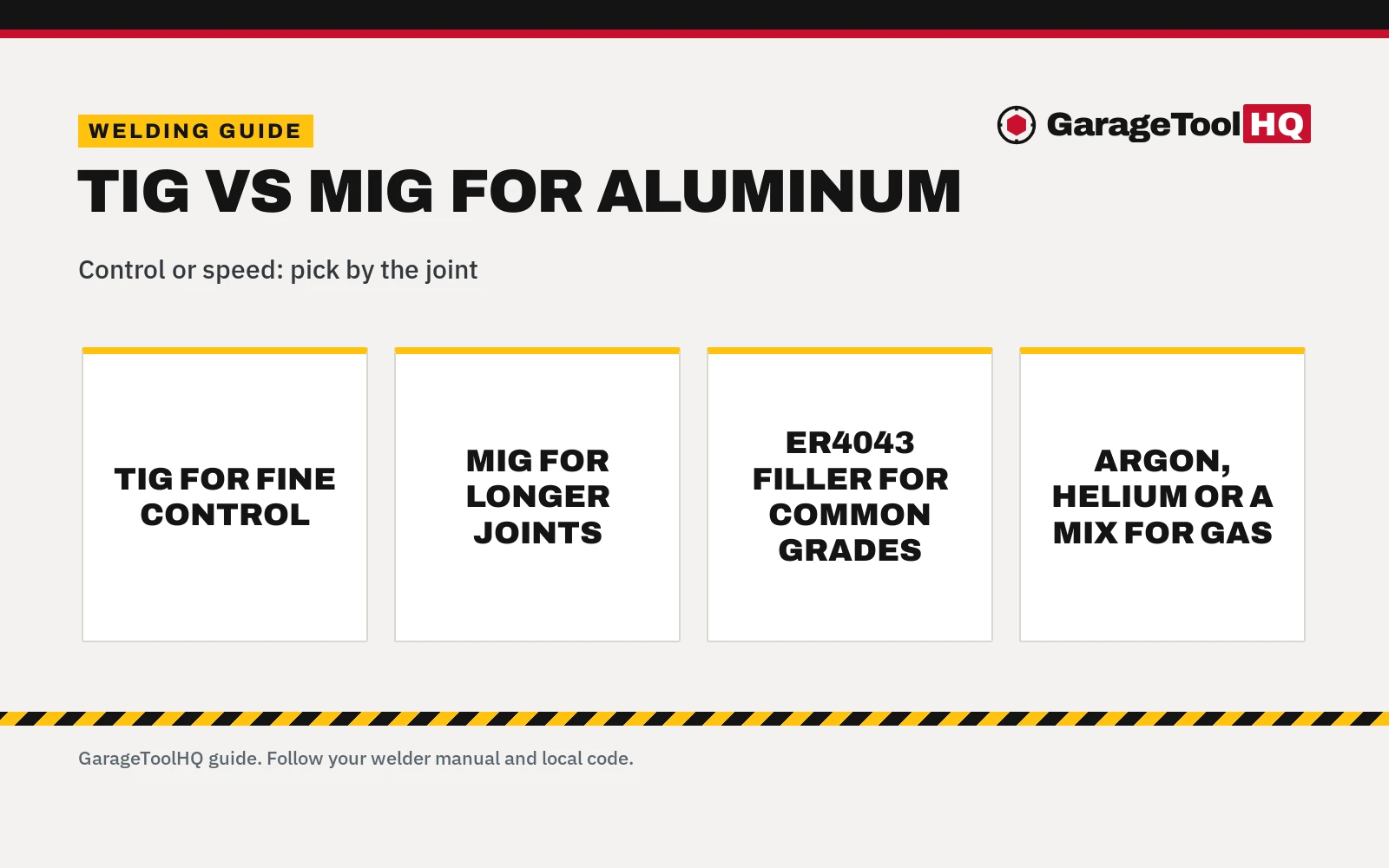
TIG or MIG for aluminum comes down to the joint: fine control and detail work favor TIG, while longer joints favor the faster wire-feed process.

On this page
Top picks at a glance
As an Amazon Associate I earn from qualifying purchases.
- 1
 Weldpro 200 Amp MIG Welder9.8/10View on Amazon
- 2
 TICONN 16" Leather Welding Gloves for Men9.8/10View on Amazon
- 3
 ARCCAPTAIN MIG205MP MIG Welder with Plasma Cutter9.7/10View on Amazon
- 4
 ARCCAPTAIN TIG Welding Tungsten Electrode 10-Pack 0.04" x 7"View on Amazon
- 5
 YESWELDER Aluminum TIG Welding Rod ER4043 1/16"x16" 5LB 5%View on Amazon
- 6
 TOOLIOM ER4043 Aluminum TIG Welding RodView on Amazon
- 7
 TOOLIOM ER4043 Aluminum TIG RodsView on Amazon
- 8
 ARCCAPTAIN ER4043 Aluminum TIG Welding RodView on Amazon
- 9
 250A Aluminum TIG Welder with Pulse ACDC Foot Pedal ControlView on Amazon
A cracked aluminum bracket on a project car, a patch panel for a trailer, or a small fabrication job on the bench all raise the same question: tig vs mig for aluminum, which process fits the job? For fine control on detail work and neat, precise joints, TIG is the usual answer. For longer joints and faster work on bigger sections, MIG is the practical pick. The processes differ in how the arc is held, how filler reaches the joint, and what gear the job calls for, and the right choice follows the joint rather than the machine badge.
Other tools worth a look
 ARCCAPTAIN TIG Welding Tungsten Electrode 10-Pack 0.04" x 7"Check price on Amazon
 YESWELDER Aluminum TIG Welding Rod ER4043 1/16"x16" 5LB 5%Check price on Amazon
 TOOLIOM ER4043 Aluminum TIG Welding RodCheck price on Amazon
 TOOLIOM ER4043 Aluminum TIG RodsCheck price on Amazon
 ARCCAPTAIN ER4043 Aluminum TIG Welding RodCheck price on Amazon
 250A Aluminum TIG Welder with Pulse ACDC Foot Pedal ControlCheck price on Amazon
GarageToolHQ earns a commission when you buy through links on our product pages, at no extra cost to you. Read our affiliate disclosure.
Below: how each process works on aluminum, which jobs suit each one, and the gear that goes with TIG work, ranked.
Tig vs mig for aluminum: how the two processes differ
TIG welding holds an arc from a tungsten electrode while the welder feeds a separate filler rod into the joint by hand. The rod listings for aluminum TIG work state shielding gas as 100% Argon, Helium or a mix, and the filler rod most often named for general aluminum work is ER4043 with 5% silicon. Because the heat and the filler stay under separate control, TIG suits detail work, small joints, and joints where appearance matters.
MIG welding feeds wire through the gun as the arc runs, so filler arrives without another hand. That makes MIG faster on longer joints and on work where bead appearance matters less than pace. The trade is control: the wire feed sets the pace, and thin sections leave less room for error than the hand-fed TIG rod allows.
| Point | TIG | MIG |
|---|---|---|
| How filler arrives | Separate rod fed by hand | Wire fed through the gun |
| Electrode | Tungsten electrode, such as 2% lanthanated | Consumable wire, not a tungsten electrode |
| Shielding gas | 100% Argon, Helium or a mix, per the rod listings | Per the welder manual for the wire in use |
| Control | Heat and filler under separate control | Pace set by the wire feed |
| Suits | Detail work and small joints | Longer joints and faster work |
Neither process is the wrong answer in general. The wrong answer is the process that fights the joint in front of you: TIG on a long production seam wastes time, and MIG on a fine detail joint gives up the control that makes the joint good.
Which process fits which aluminum job
Start from the joint. Thin sections, small brackets, and joints that stay visible reward the control of TIG. Long seams, panels, and repeat work reward the pace of MIG. When the job mixes both, many home shops weld the detail joints with TIG and the long runs with MIG, and the gear below covers the TIG side of that split.
For filler, ER4043 is the general-purpose aluminum rod the listings name most often. The listings state 5% silicon, which improves fluidity in the weld pool and leaves the joint less sensitive to weld cracking. The widest stated grade coverage runs to 3003, 3004, 5052, 6061, 6063, and casing alloys 43, 355, 356 and 214; the TOOLIOM rod listing names the same grades without casing alloy 43. If the base metal falls outside that list, check the rod maker’s guidance before welding.
The gear for aluminum TIG work, ranked
The four listings below are ranked for a home garage stocking up on aluminum TIG consumables, with the larger rod packs first, the electrode next, and the smallest rod pack last.
YESWELDER ER4043 rod, 1/16 x 16, 5LB
At the top of the ranking for range. The listing names ER4043 with 5% silicon, describes it as the oldest and one of the most widely used aluminum welding wires for general purpose work, and states shielding gas as 100% Argon, Helium or a mix. Stated grade coverage runs to 3003, 3004, 5052, 6061, 6063, and casing alloys 43, 355, 356 and 214, and the pack is 1/16″x16″ 5LB. For a garage that welds mixed aluminum grades, that coverage is the reason it leads the ranking.
TOOLIOM ER4043 rod, 1/8 x 16, 5 lb
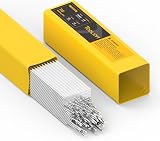
Next in the ranking for the same alloy in a thicker rod. The listing states 1/8″ (3.2mm) diameter and 16″ (406.4mm) length, 5% silicon for fluidity in the weld pool, and a pack of 5 lbs in a plastic case. Stated grade coverage is 3003, 3004, 5052, 6061, 6063, and casing alloys 355, 356 and 214, with shielding gas as Argon, Helium or Argon/Helium mixtures. The thicker rod suits heavier sections than the 1/16″ rod above.
ARCCAPTAIN 2% lanthanated tungsten, 10-pack
In the middle of the ranking because the electrode comes first: no TIG arc starts without one. The listing offers a 10-pack of 0.04″ x 7″ (1.0mm x 175mm) 2% lanthanated tungsten electrodes in blue, marked WL20/EWLa-2, and states that they suit both DC and AC work on aluminum alloys, magnesium alloys, copper alloys, titanium alloys and low-alloyed steels. The maker claims fast arc striking, a low burn off rate, and no splitting under heavy amps on thick aluminum plate, and notes that the electrodes are non radioactive with good electrical conductivity and arc stability. Note a listing clash: the spec table shows a package quantity of 1, while the title and bullets describe a 10-pack, so the 10-pack is the figure to trust.
SONNLER ER4043 rod, 3/32 x 16, 1.8LB
Closing the ranking on pack size rather than alloy: the same ER4043 with 5% silicon, in a smaller 1.8LB pack of 3/32″ x 16″ rods. Stated grade coverage matches the wider list at 3003, 3004, 5052, 6061, 6063, and casing alloys 43, 355, 356 and 214, with shielding gas as 100% Argon, Helium or a mix, and the listing claims a stable arc with a minimal amount of spatter. Read the listing with care: the bullet list names several diameters while the title names 3/32, and the spec table package weight differs from the 1.8LB in the title and bullets. The title wins on diameter and the title and bullets win on weight, so 3/32 and 1.8LB are the figures to use.
Use rated jack stands on solid ground, wear eye protection with power and air tools, keep fuel-burning equipment out of a closed garage, and follow the manual for every tool. Read our Safety Disclaimer.
FAQ: garage tools
Can MIG weld aluminum?
Yes, with the right wire and shielding gas setup for the welder in use. MIG feeds wire through the gun, which suits longer joints, while TIG keeps the filler rod separate for detail work. Check the welder manual for the wire and gas the machine supports, and see the picks for welding wire for aluminum.
What shielding gas does aluminum TIG welding need?
The rod listings in the gear section state 100% Argon, Helium or a mix. Where the gas is argon, an argon gas regulator made for TIG work keeps that supply steady; see the argon gas regulators for TIG welding for the regulator side of the setup.
What filler rod covers common aluminum grades?
ER4043 with 5% silicon is the general-purpose rod the listings name, with stated coverage running to 3003, 3004, 5052, 6061, 6063, and casing alloys 355, 356 and 214, and the YESWELDER and SONNLER listings adding casing alloy 43. The filler rods for TIG welding roundup compares rods by alloy and size.
Is TIG or MIG better for thin aluminum?
TIG, in most home garage cases. The separate filler rod and tungsten electrode give finer control over heat and filler, which matters when the section is thin and the joint stays visible. MIG still works on thin material, but the wire feed pace leaves less room to correct a joint mid-pass.
What tungsten suits aluminum TIG welding?
The listing in the gear section offers 2% lanthanated tungsten in a 10-pack of 0.04″ x 7″ electrodes, rated by the maker for both DC and AC work on aluminum alloys. Lanthanated tungsten is non radioactive, and the maker claims good electrical conductivity with stable arc behavior. For the machine side, see the TIG welders for hobbyists.
Related: the filler rods for TIG welding and welding wire for aluminum roundups, the TIG welders for hobbyists guide, and the engine and shop equipment hub.