Tool Belt Setup: How to Organize Tools for Work
A tool belt setup puts the tools for the job on your hips in reach order, balanced and sized over work clothes, with suspenders when the load gets heavy.

On this page
Top picks at a glance
As an Amazon Associate I earn from qualifying purchases.
- 1
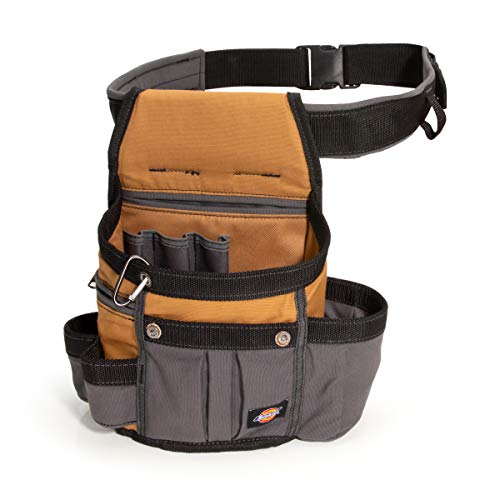 Dickies 8-Pocket Padded Tool Belt/Utility Pouch9.7/10View on Amazon
- 2
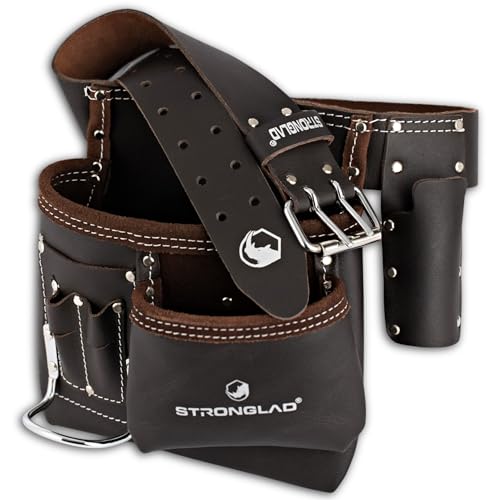 STRONGLAD Leather Tool Belt9.5/10View on Amazon
A brake job stalls when the socket you need is in the toolbox across the garage, the wrench is on the bench and the rag is under the fender. A tool belt setup ends that walk: belt, pouches and suspenders arranged so the tools for the job ride on your hips in the order you reach for them, heavy pieces close to the body and the small stuff where a free hand finds it. Set the rig up at the bench before the job starts, and the rest of the work stays where it belongs, under the car.
GarageToolHQ earns a commission when you buy through links on our product pages, at no extra cost to you. Read our affiliate disclosure.
Below: how to size the belt, how to lay out pouches by hand, how to balance the load, and when suspenders earn their place.
Tool belt setup: what a good rig looks like
A good rig starts with the belt itself. Belts in the listings run from a 1.5-inch stretch nylon web belt to a 3-inch padded work belt, with a 2-inch poly web belt in between, so width is a comfort choice as much as a fit choice. Pouches hang from the belt or clip on and off: the LEFOR·Z belt (on Amazon) carries 3 independent pockets that detach when the job needs fewer tools, while fixed rigs keep every pouch in place. A hammer loop, a tape loop and a pocket for a phone or a pencil covers the small gear that otherwise ends up on the fender.
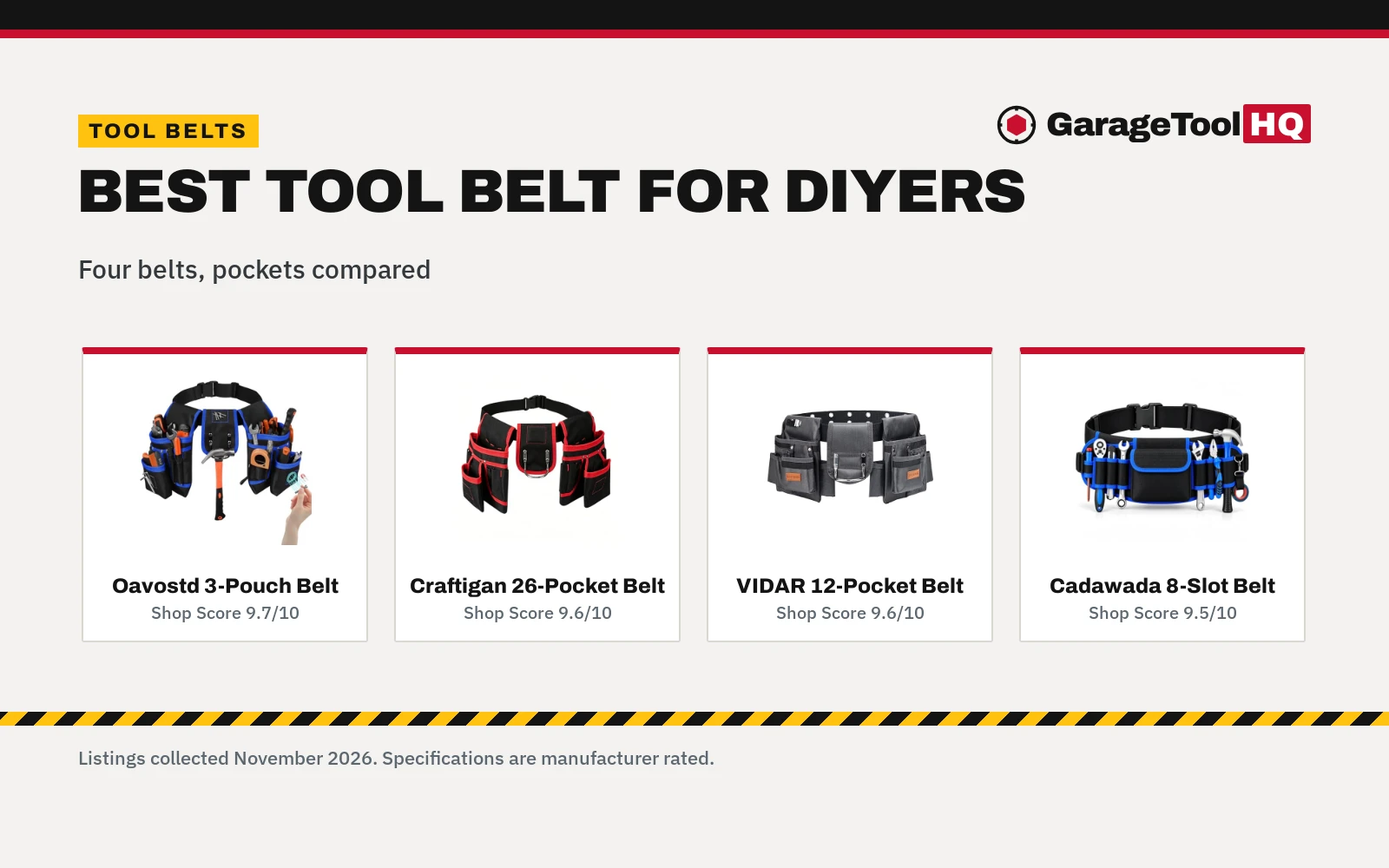
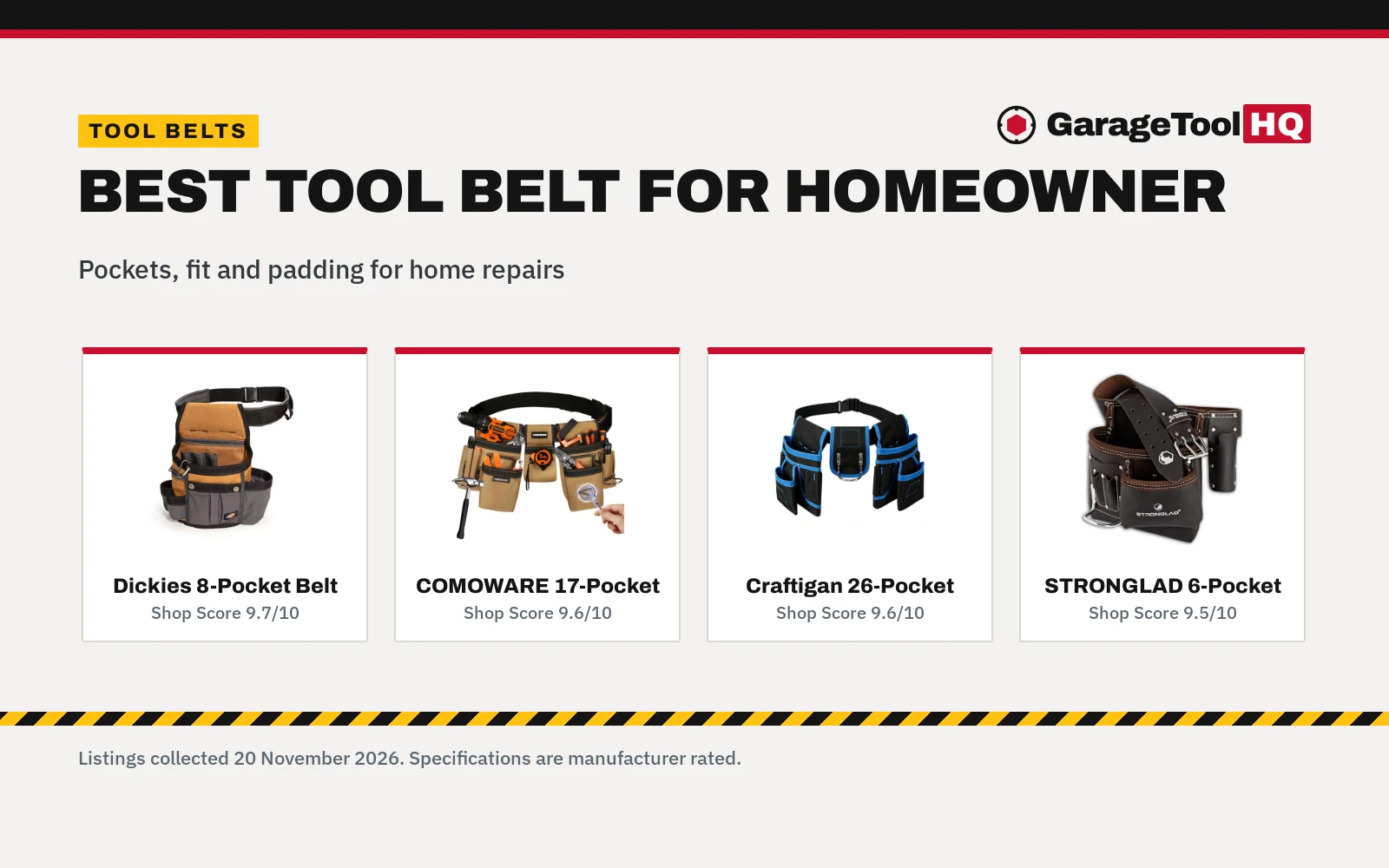
The other half of the rig is what it carries. The listings cover a 6-pocket leather pouch, an 8-pocket canvas pouch, a 12-pocket leather apron, a 13-pocket canvas apron, a 23-pocket rig and a 27-pocket belt. A rig that suits a brake job looks different from one that suits a day of framing, so match the pocket count to the tools the job calls for and leave the rest in the toolbox.
Measure the fit before you load anything
Measure over the clothes you work in, with the pouches on, because a belt that fits over a T-shirt can bind over a jacket. The Klein rig fits waists from 30 to 52 inches, the Dickies belt (on Amazon) adjusts from 32 to 56 inches, the LEFOR·Z belt fits waists from 31 to 48 inches, and the Gatorback Medium (on Amazon) fits 31 to 35 inches. If the waist falls between sizes, the Gatorback listing says sizing is based on average fit measured over clothing, and the maker offers sizing guidance when the tape lands between sizes.
Buckles matter as much as length. The JUKMO belt (on Amazon) uses a quick-release alloy buckle, the Bucket Boss apron uses a quick-release buckle, and the Dickies belt uses a plastic quick-release buckle, while the Custom Leathercraft apron uses a metal interlocking buckle and the MELOTOUGH combo uses a steel double tongue roller buckle. A buckle that opens fast lets the belt come off when the job ends.
Put the tools you reach for most on your strong hand
Start with the dominant hand: wrenches, drivers and pliers go on the side of the hand that grabs them, with fasteners and small parts on the other side. The LEFOR·Z belt adds 3 magnet sections across the hammer holder top and the pouch fronts, and the magnets hold nails and screws where they can be picked up without digging. The Gatorback pouches hold their shape with an ABS lining, so a pouch stays open for easier access.
Hammer loops sit well on the back or the off side, where a swinging handle clears the work. The Bucket Boss apron carries 2 web hammer loops, the Custom Leathercraft apron carries 2 steel hammer loops, and the MELOTOUGH combo carries a steel loop for a hammer. A tape measure clips to the tape loop or the tape measure clip, and a pencil rides in a pencil sleeve: the STRONGLAD pouch (on Amazon) has two pencil sleeves.
Pocket counts and waist fits in the listings
Use the table as a starting point, then match the rig to the job. Counts and fits come from the listings.
| Rig | Pockets | Waist fit |
|---|---|---|
| Klein Tools 55896 rig | 23 pockets | 30 to 52 in |
| LEFOR·Z belt | 27 pockets | 31 to 48 in |
| Gatorback B240 | 27 pockets | 31 to 35 in |
| MELOTOUGH combo | 23 pockets | Not stated |
| Bucket Boss apron | 13 pockets | Up to 52 in |
| Custom Leathercraft apron | 12 pockets | 29 to 46 in |
Counts and fits as stated by each maker.
Balance the load so the belt stays put
Split the weight across both hips. A pouch loaded with wrenches on one side and nothing on the other pulls the belt down on the heavy side, so keep the load even and the heavy pieces close to the body. The Klein rig lists 6.05 lb and the Gatorback belt lists 4.99 lb, while the Carhartt belt lists 1.0 lb and the Bucket Boss apron lists 0.25 lb.
Padding helps when the load is heavy. The Klein rig has a padded belt and padded shoulder supports, the Dickies belt is a 3-inch padded work belt, and the Gatorback pad uses air-channel padding with a foam-backed pad. Padding spreads contact over a wider area of the waist than a narrow belt alone.
When suspenders earn their place
Suspenders move part of the load to the shoulders. The Klein rig and the MELOTOUGH combo include suspenders, and the LEFOR·Z belt carries 4 D-loops made for suspenders, with suspenders not included. A rig with suspenders suits a long day with a full load, while a belt alone suits a short job with a light load. Compare rigs with suspenders in the best padded tool belts with suspenders.
Keep the belt ready between jobs
Hang the belt by its loops when the job ends so the pouches keep their shape: the Carhartt belt carries two loops for hanging the belt when not in use. Empty the magnet sections and the small pockets before hanging the belt, so nails and screws do not spill on the floor. A belt that hangs ready saves the next setup: pouches stay where they were loaded, and the buckle stays set to the same fit.
Read the manual before first use, wear eye protection, keep the work area clear and ventilated, and stay within every stated rating. Read our Safety Disclaimer.
FAQ: garage tools
How tight should a tool belt sit?
Snug over the clothes worn for the job, with room to shift as the body moves. The Klein rig fits waists from 30 to 52 inches and the Dickies belt adjusts from 32 to 56 inches, so measure over work clothes and match the range to the tape. A belt that slides down can have its load rebalanced or its suspenders fitted.
How many pockets does a tool belt need?
It depends on the job. The listings cover a 6-pocket pouch, an 8-pocket pouch, a 12-pocket apron, a 13-pocket apron, a 23-pocket rig and a 27-pocket belt, so match the count to the tools the job needs and leave the rest in the toolbox. A brake job needs fewer pockets than a framing day, so a detachable setup like the LEFOR·Z belt, with 3 independent pockets that come off when the load is light, keeps the belt from carrying tools the job does not need.
Should I wear suspenders with a tool belt?
Wear them when the load is heavy or the day is long. The Klein rig and the MELOTOUGH combo include suspenders, and the LEFOR·Z belt takes suspenders on its 4 D-loops. A light load on a short job rides fine on the belt alone, so add suspenders when the belt starts to slide or the load feels heavy on the hips.
What goes in a tool belt for a brake job?
The tools the job calls for, in the order they get used: wrenches and sockets on the dominant side, a screwdriver and a rag in a side pocket, and fasteners in a magnet section where they stay put. The LEFOR·Z belt holds nails and screws on 3 magnet sections, and the Gatorback pouches keep their shape with an ABS lining, so parts stay in reach without digging. Leave the specialty tools in the toolbox until the job calls for them.
Leather or nylon for a tool belt?
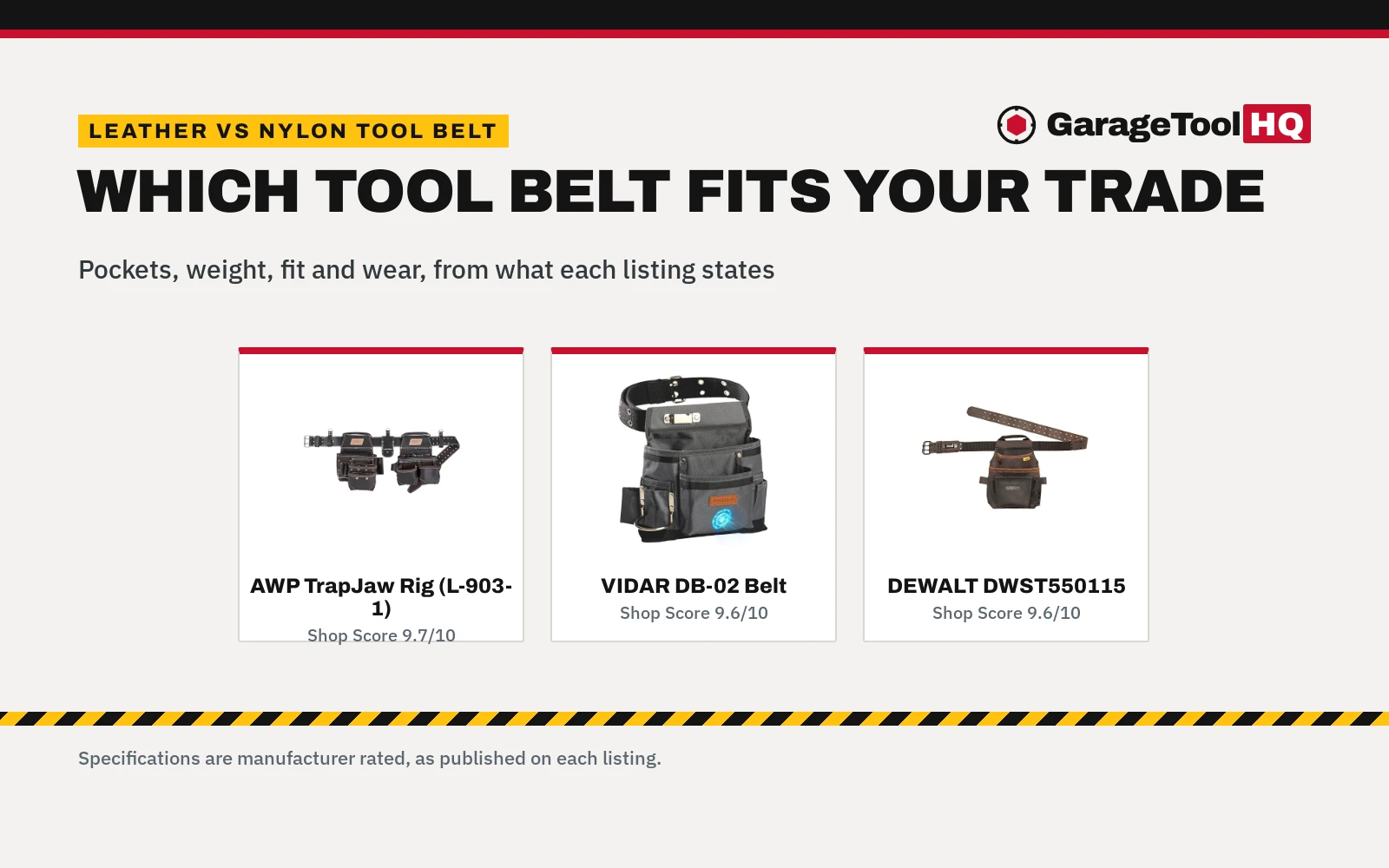
Both show up in the listings. The STRONGLAD pouch and the Custom Leathercraft apron use leather, while the Gatorback belt uses 1250-denier nylon, the Klein rig uses 1680-denier fabric and the MELOTOUGH combo uses 600D ballistic fabric. Leather breaks in with use, while the nylon rigs list heavy denier fabric built for jobsite wear, so the choice is feel against toughness. The leather vs nylon tool belt comparison weighs the two materials side by side.
Related: best tool belt for mechanics, the best adjustable tool belts, the tool storage hub and best tool storage for the garage. Also see the tool belt vs tool bag comparison.