Types of Angle Grinders Compared
Types of angle grinders compared: corded, cordless and pneumatic models, plus related die grinders, with disc sizes, guards and safety checks for garage jobs.

On this page
Top picks at a glance
As an Amazon Associate I earn from qualifying purchases.
- 1
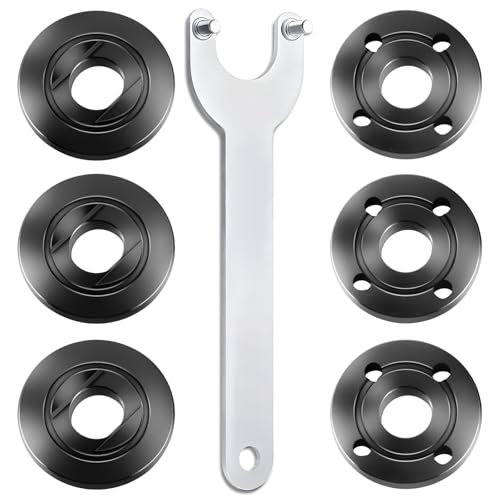 7PCS IALTMEI Angle Grinder Nut & Angle Grinder Wrench Set,9.7/10View on Amazon
- 2
 Metabo HPT 4-1/2-Inch Angle Grinder9.6/10View on Amazon
- 3
 4 Pack Wire Wheel&Cup Brush Set for 4-1/2 Angle Grinder 49.6/10View on Amazon
A rusted bolt on an exhaust flange will not turn, a floor tile needs a notch cut around a pipe, and a mower blade has gone dull after a season of cutting. With the right disc or wheel fitted for each material, one tool can handle those jobs in a home garage: the angle grinder. Types of angle grinders differ mainly in how they get power, how big a disc they spin, and how the switch and handle are laid out, and those differences decide which one fits a given job. A corded grinder suits long cutting sessions at the bench, a cordless one suits work away from an outlet, and a pneumatic one suits a shop that already runs compressed air.
GarageToolHQ earns a commission when you buy through links on our product pages, at no extra cost to you. Read our affiliate disclosure.
Below: the main types of angle grinder, how disc size and guards work, a checklist for picking one, and answers to the questions garage owners ask most.
Types of angle grinders and where the differences come from
An angle grinder spins a disc at a right angle to the body, so the cutting edge meets the work while the handle stays clear. The differences that matter in the garage come from the power source, the disc size, the switch, and the guard. Power source sets where the tool can work and how long it can run. Disc size sets how deep a cut can reach and how much material a pass can remove. The switch and the side handle set how the tool feels in the hand during a long job. The guard sets which discs can be fitted and how much of the disc stays covered while it spins.
- Power source: corded electric, cordless battery, or compressed air.
- Disc size: matched to the guard and the job, with the guard sized for the disc.
- Switch: trigger, paddle, or slide, placed where the hand rests.
- Guard: fitted for the disc size, and kept on for every job.
The main types of angle grinder, and which jobs each one suits
| Type | How it runs | Suits |
|---|---|---|
| Corded electric angle grinder | Plugs into a wall outlet and runs as long as the job lasts | Cutting, grinding and sharpening at the bench |
| Cordless angle grinder | Runs on a rechargeable battery pack | Work away from an outlet and work around the car |
| Pneumatic angle grinder | Runs on compressed air from a shop compressor | Shops with an air supply already in place |
| Straight die grinder (related tool, not an angle grinder) | Small body with the bit in line with the body, powered by air, a battery or a cord | Tight spots, deburring and detail work inside an engine bay |
The label and the manual decide which group a grinder is in, not the shape of the box. A straight die grinder is not an angle grinder, but it handles detail work a full-size grinder cannot reach. If the manual lists a disc size, match the disc and the guard to that size before the first cut.
How to pick the right type: the checklist
- Match the power source to the job. A corded grinder suits long sessions at the bench, a cordless one suits work around the car away from an outlet, and a pneumatic one suits a shop with an air supply.
- Match the disc to the guard. Fit the guard that matches the disc size, and check that the guard sits between the disc and your hand.
- Check the switch. A trigger switch, a paddle switch and a slide switch each sit under a different part of the hand, so hold the grinder the way you will use it before you buy.
- Check the weight and the grip. Weight and grip affect control during a long job, and a side handle gives a second grip for steady cuts.
- Check what comes in the box. A side handle, flanges and guards are the parts that let you fit a disc and hold the tool safely.
- Check the warranty term before you buy, and keep the manual with the tool. The warranty term and the manual are the maker’s word on what the tool covers and how it should be used.
- Wear eye protection and gloves, and clamp the work before the disc touches it. Clamping helps keep the workpiece from moving, though kickback can still occur, and eye protection helps guard against sparks and chips.
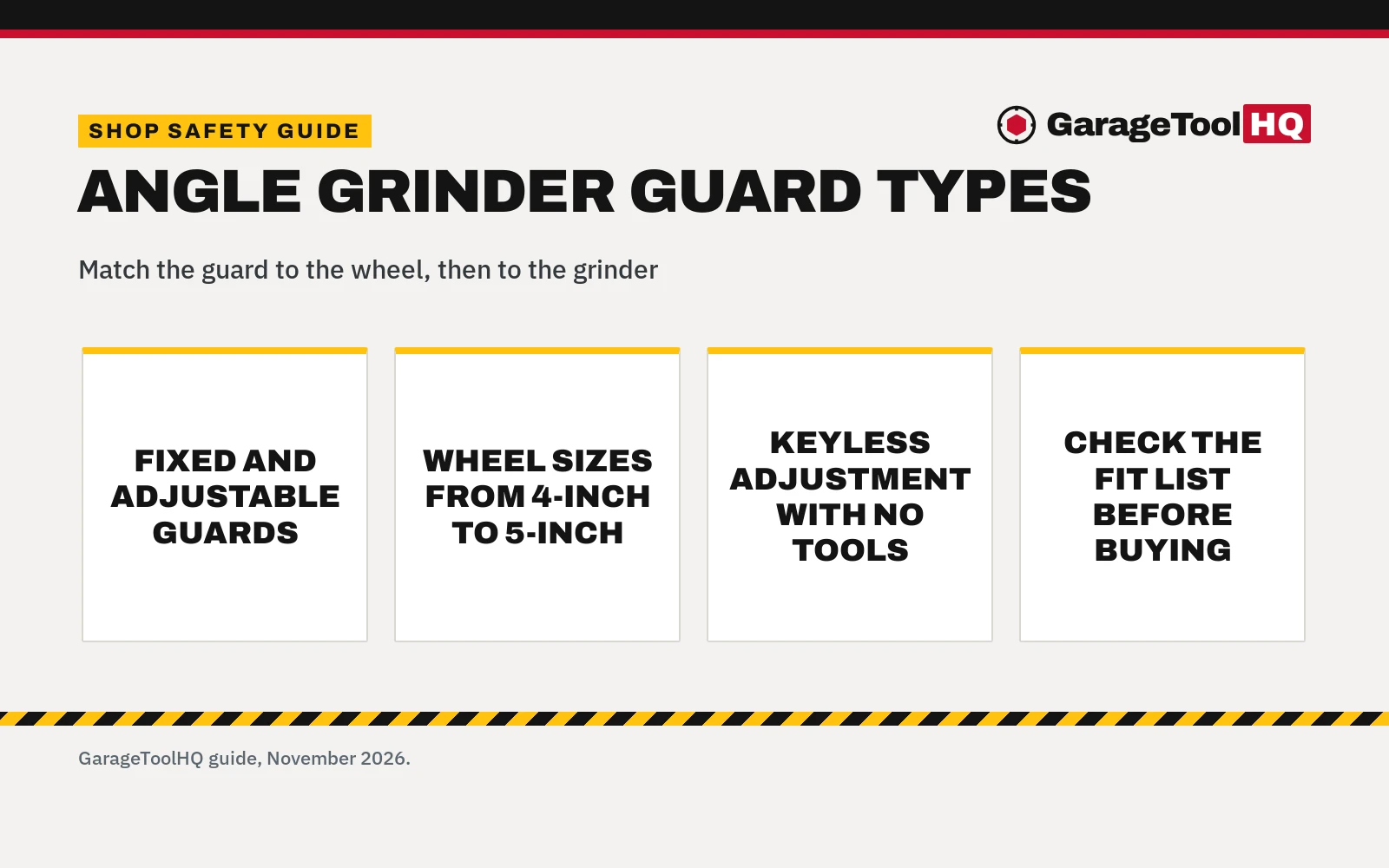
The guard is the part that stands between the spinning disc and your hand. A disc can break if it binds in a cut, and the guard helps deflect pieces away from the user. Never remove the guard to fit a larger disc, and never use a disc that is larger than the guard fitted to the tool.
Read the manual before first use, wear eye protection, keep the work area clear and ventilated, and stay within every stated rating. Read our Safety Disclaimer.
Corded vs cordless angle grinders
If you are still choosing, compare these before buying:
- Runtime: a corded grinder runs as long as the job lasts, while a cordless grinder runs until its battery pack is spent and then needs a recharge.
- Weight: a cordless grinder carries its battery pack, so compare the stated weight with the battery fitted, because weight varies by model and battery size.
- Where it works: a cordless grinder works anywhere, while a corded grinder needs an outlet within reach of its cord.
Work out which jobs you do most, then compare real models in our picks for the best variable speed angle grinder. For cutting work, see our angle grinder cutting guide.
Disc size, guards and what one corded grinder shows
The DEWALT DWE43116 (on Amazon) in the reference listing shows what the figures on a corded grinder look like in practice. Its maker rates the motor at 13 Amp and the speed at 9,000 RPM, and the tool weighs 5.7 lbs. It takes discs from 4-1/2-inch to 5-inch, and the box includes a 5 in. Type 27 guard, a 4.5 in. Type 27 guard and a 6 in. Type 27 guard, plus a side handle and inner and outer flanges. The maker covers it with a 3 year limited warranty, and the tool measures 18.0 inches by 6.0 inches by 5.0 inches. The included 6 in. guard does not change the maker stated disc range of 4-1/2-inch to 5-inch, so fit only discs within that stated range and matched to the guard fitted.
Match the disc to the guard every time you change discs. A Type 27 guard is made for Type 27 depressed-center wheels, and the guard size and type must match the wheel fitted. Replace a disc that is damaged or worn below the size needed for the job, and do not force a disc through a cut.
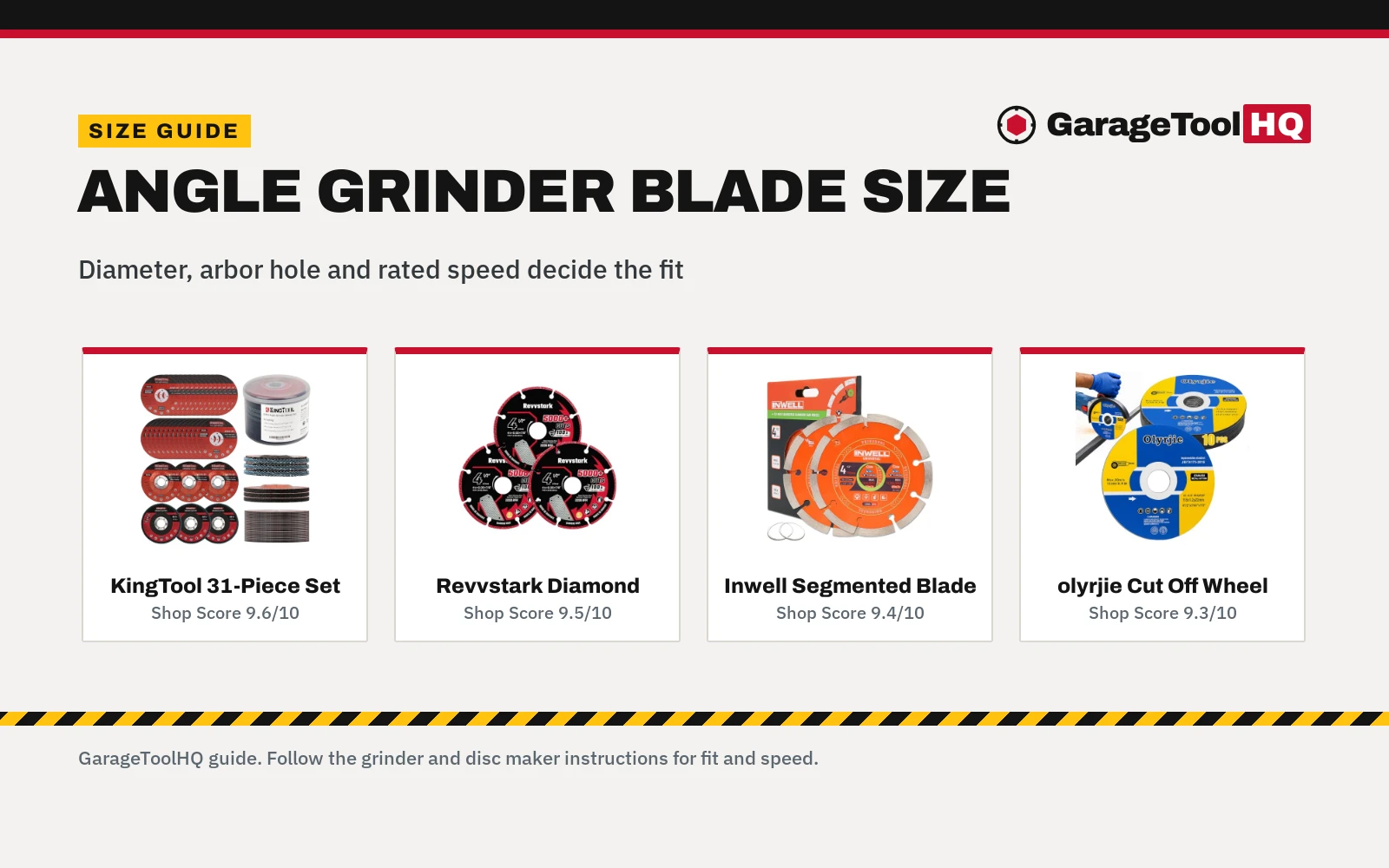
For wheels and discs, see our picks for the best cut off wheels for angle grinder and the best grinder wheel for concrete. For disc sizes, see our guide to the sizes of angle grinders.
FAQ: garage tools
What is an angle grinder used for in a garage?
An angle grinder cuts metal, grinds welds smooth, sharpens mower blades and cleans rust from parts. The attachment decides the job: a cutting wheel slices, a grinding wheel shapes, and a wire wheel cleans, with the guard and speed rating matched to the attachment fitted. Match the attachment and the guard to the job before you start.
What size angle grinder do I need for home garage work?
A grinder that takes discs from 4-1/2-inch to 5-inch covers many garage jobs described in this guide, from cutting bolts to sharpening blades. The DEWALT reference grinder takes that disc range and is rated at 13 Amp and 9,000 RPM. Larger discs can suit larger cutting jobs, and they need a guard sized for the disc and a tool rated for that disc size.
Are cordless angle grinders as strong as corded ones?
A cordless grinder suits work away from an outlet, while a corded grinder suits long sessions at the bench. Corded models draw power from the wall, so they do not lose power as a battery pack drains, though any grinder can slow under a heavy load. Pick the power source that matches where and how long you will cut.
Can I use a cutting disc on any angle grinder?
No. Fit only a disc that matches the grinder disc size and the guard fitted to the tool. Check the disc for cracks before fitting it, and never fit a disc larger than the guard. Replace a damaged disc, and do not force a disc through a cut.
How do I change the disc on an angle grinder?
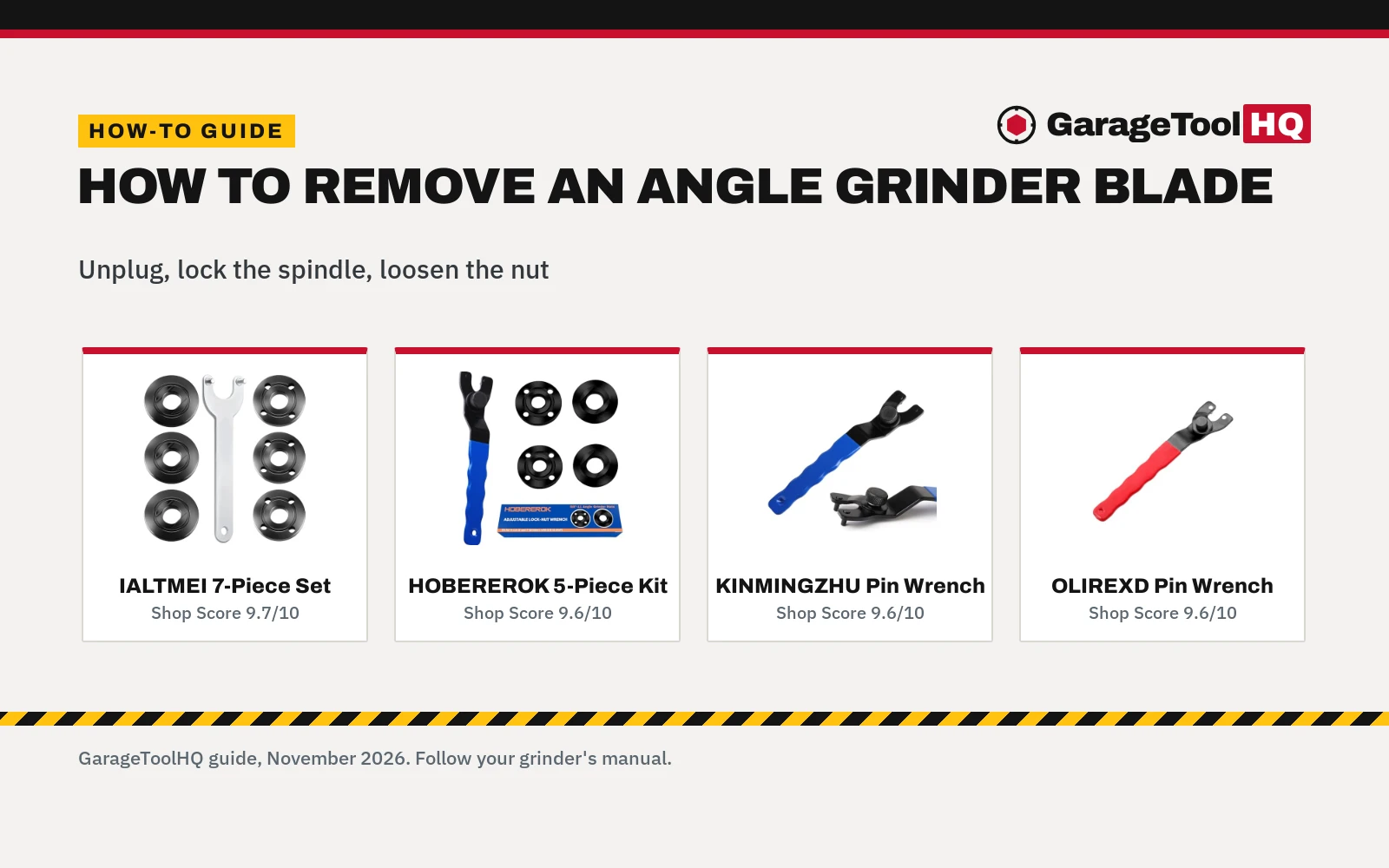
Unplug a corded grinder or remove the battery pack from a cordless one, then lock the spindle and loosen the flange with the wrench and method the manual specifies. Fit the new disc, tighten the flange, and check the guard before you switch the tool on. Our guide to how to remove an angle grinder blade walks through the steps.
Do I need a guard on my angle grinder?
Yes. The guard stands between the spinning disc and your hand, and it helps deflect pieces if a disc breaks. Never run a grinder without the guard fitted, and never remove the guard to fit a larger disc. Our guide to the angle grinder safety guard explains what the guard does and how it fits.
Related: variable speed angle grinders, angle grinder cutting guide and our engine and shop equipment hub.