Types of Impact Wrench: Drive Sizes and Power
A plain guide to the types of impact wrench by drive size and power source, with the torque figures that separate light, mid and heavy garage work.

On this page
Top picks at a glance
As an Amazon Associate I earn from qualifying purchases.
- 1
 ARCCAPTAIN Cordless Impact Wrench9.7/10View on Amazon
- 2
 SOARFLY Cordless Impact Wrench9.7/10View on Amazon
- 3
 Puritron Cordless Impact Wrench 1500N.m9.7/10View on Amazon
A lug nut that will not move is the moment most home mechanics meet the limits of a hand wrench. The breaker bar turns a tire rotation into a long afternoon while the car sits on its stands. That stuck fastener is where the types of impact wrench earn their place in a home garage: the main types split by power source, by drive size, and by how much torque they deliver, and matching those three choices to the job is what separates a wrench that finishes the work from one that strains at it.
GarageToolHQ earns a commission when you buy through links on our product pages, at no extra cost to you. Read our affiliate disclosure.
Below: how the main types differ by power source and drive size, what the two torque figures mean, and how to match a wrench to common garage jobs.
The types of impact wrench, sorted by power source
Power source is the first split, because it decides what else the wrench needs in the garage. A cordless impact wrench runs on a rechargeable battery pack and goes wherever the job is, with no hose and no cord to drag across the floor. The DEWALT combo (on Amazon) in the reference listings runs on the 20V MAX platform, and the SEESII kit (on Amazon) ships with 2 x 4.0Ah batteries, so a second pack can charge while the first one works. A pneumatic impact wrench runs on compressed air from a shop compressor and a hose, which suits a fixed bay with air already plumbed in. A corded electric impact wrench plugs into a wall outlet, which suits a bench job near power.
Cordless is the common pick for a home garage because it needs no compressor and no outlet hunt. Air suits a bay with a compressor already in place, and corded suits one fixed spot. The choice is about the garage: a cordless wrench with a stated breakaway figure that covers the fasteners on the car does the job.
Drive sizes: 1/4, 3/8 and 1/2 inch
Drive size is the square socket mount on the front of the wrench, and it sets the class of fastener the wrench is built for. The three sizes in the reference listings cover the common range of home garage work.
| Drive size | Built for | Figure from the listings |
|---|---|---|
| 1/4 inch | Small screws and light fasteners, with a quick-release hex chuck | 180 N.m on the SEESII impact driver, with 2 speeds up to 2500 RPM and 3500 IPM |
| 3/8 inch | Mid-size bolts and general work where a smaller head reaches in | 250 ft-lbs tightening and 400 ft-lbs breakaway on the DEWALT 3/8 inch wrench |
| 1/2 inch | Lug nuts, suspension bolts and other large, tight fasteners | 800 N.m fastening and 1000 N.m breakaway on the SEESII wrench; 250 ft-lbs tightening and 400 ft-lbs breakaway on the DEWALT wrenches |
The 1/2 inch drive is the garage standard for wheels and suspension: the SEESII kit includes a set of metric sockets with a 5 inch extension. The 3/8 inch drive suits smaller bolts and tighter spaces where a 1/2 inch head will not fit, and the DEWALT combo pairs a 1/2 inch wrench with a 3/8 inch wrench so one kit covers both. The 1/4 inch drive belongs to drivers and light work, not to lug nuts: it drives screws and small fasteners, and its hex chuck takes bits rather than sockets. The 3/8 inch tool in the SEESII kit is a cordless drill with a keyless chuck and 20+1 clutch settings, not an impact wrench, so it drills and drives screws rather than driving sockets.
Working torque vs breakaway torque
Two torque figures matter on an impact wrench, and they answer different questions. Working torque is the force the wrench applies when it drives a fastener in. Breakaway torque is the force it can apply to loosen a fastener that is already tight, rusted or seized, and on the wrenches in the listings here it is the higher of the two. A wrench that lists only one figure leaves the buyer guessing about the other.
The DEWALT wrenches list up to 250 ft-lbs of max tightening torque and 400 ft-lbs of max breakaway torque, and the SEESII wrench lists 800 N.m fastening and 1000 N.m breakaway torque. Read breakaway first when the job is removal: lug nuts, suspension bolts and exhaust hardware are removal jobs, and the breakaway figure is the one that decides whether the nut moves. Read working torque when the job is assembly, and finish wheel and suspension fasteners with a torque wrench set to the vehicle manual figure.
Speed settings and control
Speed settings are how the wrench keeps a strong motor from damaging a small fastener. The SEESII 1/2 inch wrench offers 3 speeds, and the DEWALT 1/2 inch wrench offers 4 speed settings with a variable speed trigger, so the operator can start slow and add force only when the fastener needs it. A variable speed trigger helps when the fastener is small: a light squeeze runs the wrench slowly so it does not over-drive the bolt, and full trigger is there for the stubborn one.
The SEESII kit includes built-in LED work lights, and the impact gun light stays on for about 10 seconds after the trigger is released. The SEESII impact driver weighs 2.0 lb and the cordless drill weighs 2.1 lb, so both stay easy to control in tight spots such as a wheel well. Brushless motors appear across all 3 tools in the SEESII kit.
Read the manual before first use, wear eye protection, keep the work area clear and ventilated, and stay within every stated rating. Read our Safety Disclaimer.
How to match the wrench to the job
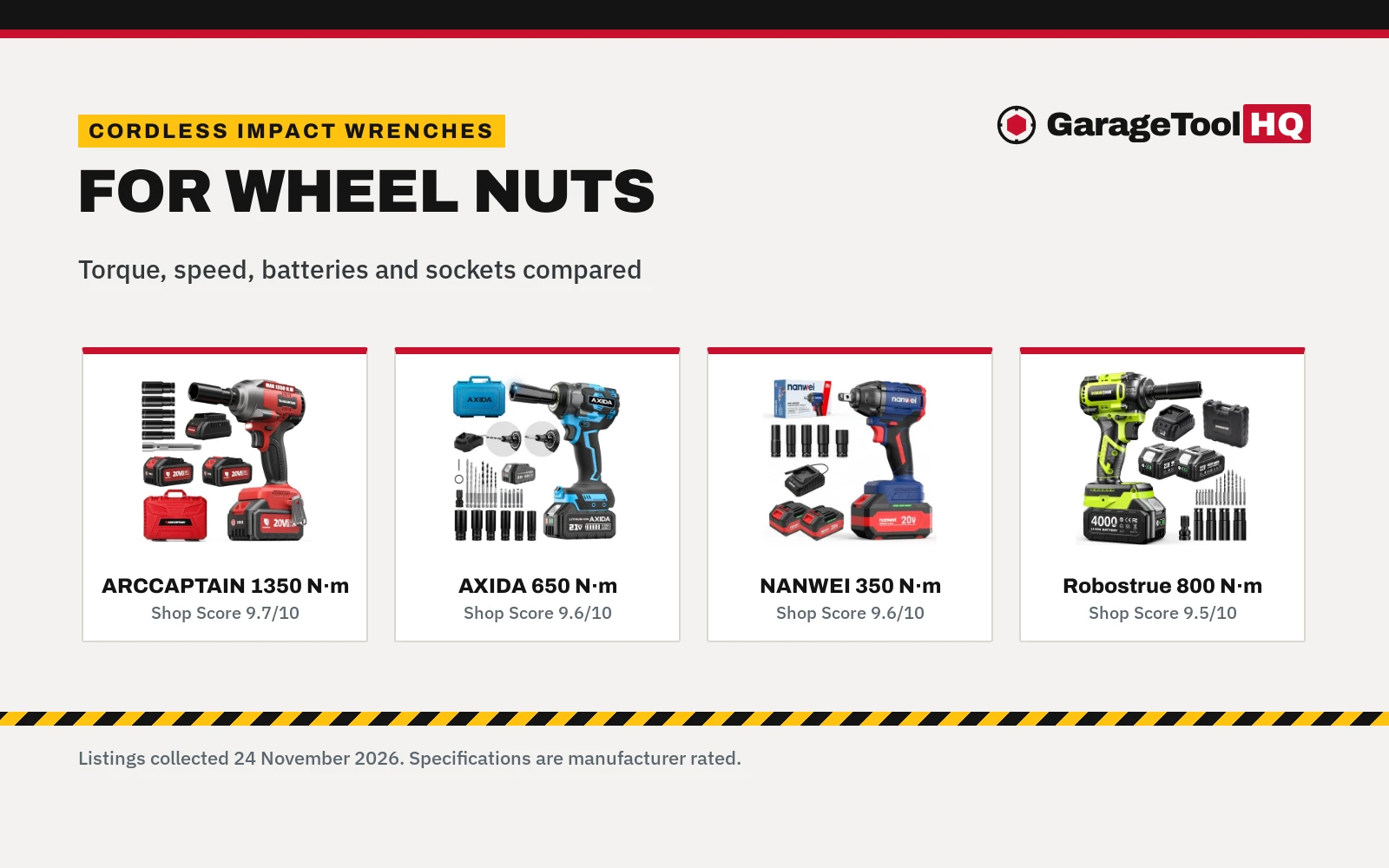
Start from the fastener, not from the catalog. For tire rotations and lug nuts, a 1/2 inch cordless wrench is the usual pick: see the picks for impact wrenches for lug nuts and the best impact wrench for changing tires for models matched to that job. For brake and suspension work, the same 1/2 inch drive applies. For interior trim, small engine bay bolts and light assembly, a 3/8 inch drive or a 1/4 inch driver is the right scale, and a 1/2 inch wrench there is more force than the fastener wants.
Check the manual before the first job: the vehicle manual gives the torque for wheels and suspension, and the wrench manual gives the drive size and the battery care. Keep a torque wrench beside the impact wrench for final tightening, keep sockets impact-rated, and keep the battery charged. A combo kit can be the practical answer when the garage needs more than one drive size: the DEWALT combo pairs 1/2 and 3/8 inch wrenches, and the SEESII kit combines a 1/2 inch wrench, a 1/4 inch driver and a 3/8 inch drill with 2 batteries and a 3-year warranty. For more on the cordless side of the garage, see the cordless tools hub.
FAQ: garage tools
What size impact wrench do I need for lug nuts?
A 1/2 inch drive is the usual pick for lug nuts. The SEESII kit includes a set of metric sockets, and the DEWALT wrenches list 400 ft-lbs of max breakaway torque while the SEESII wrench lists 1000 N.m of breakaway torque. Finish with a torque wrench set to the vehicle manual figure.
Is a cordless impact wrench strong enough for car work?
Yes, when its stated torque covers the fasteners on the car. The DEWALT cordless wrenches list 250 ft-lbs of tightening torque and 400 ft-lbs of breakaway torque, and the SEESII cordless wrench lists 800 N.m fastening and 1000 N.m breakaway torque. The SEESII kit ships with 2 x 4.0Ah batteries.
What is the difference between an impact wrench and an impact driver?
An impact wrench drives sockets on a square drive, usually 1/2 inch or 3/8 inch, for lug nuts and bolts. An impact driver drives bits from a 1/4 inch quick-release hex chuck for screws, and the SEESII driver lists 180 N.m with 2 speeds up to 2500 RPM and 3500 IPM. They are different tools for different fasteners.
Do I need an air compressor for an impact wrench?
Only for a pneumatic impact wrench, which runs on compressed air. A cordless impact wrench runs on a battery pack, and a corded electric impact wrench plugs into a wall outlet, so neither needs a compressor. The DEWALT combo runs on the 20V MAX platform and the SEESII kit ships with 2 x 4.0Ah batteries.
What does breakaway torque mean?
Breakaway torque is the force an impact wrench can apply to loosen a fastener that is already tight, rusted or seized. On the wrenches in the listings here it is the higher figure: 400 ft-lbs against 250 ft-lbs on the DEWALT wrenches, and 1000 N.m against 800 N.m on the SEESII wrench. Read the breakaway figure first for any removal job.
Can one impact wrench do every garage job?
One wrench can cover a lot, but drive size sets the limit. A 1/2 inch wrench suits lug nuts and suspension bolts, while small fasteners and screws suit a 3/8 inch drive or a 1/4 inch driver. A combo kit is the practical middle ground: the DEWALT combo pairs 1/2 and 3/8 inch wrenches, and the SEESII kit combines a 1/2 inch wrench, a 1/4 inch driver and a 3/8 inch drill.
Related: impact wrenches for lug nuts, the best impact wrench for changing tires, mid torque vs high torque impact wrench and the cordless tools hub. Also see impact socket dimensions.