OBD2 Scanner Types: Code Readers to Bidirectional Scan Tools
How OBD2 scanner types differ across home garage jobs: comparing basic code readers, Bluetooth adapters, multi-system units and bidirectional diagnostic tools.

On this page
Top picks at a glance
As an Amazon Associate we earn from qualifying purchases.
- 1
 KINGBOLEN Ediag Elite OBD2 Scanner Bluetooth9.7/10View on Amazon
- 2
 BLCKTEC 460T OBD2 Scanner Car Code Reader Engine ABS SRS9.6/10View on Amazon
- 3
 TOPDON AD600S OBD2 Scanner9.6/10View on Amazon
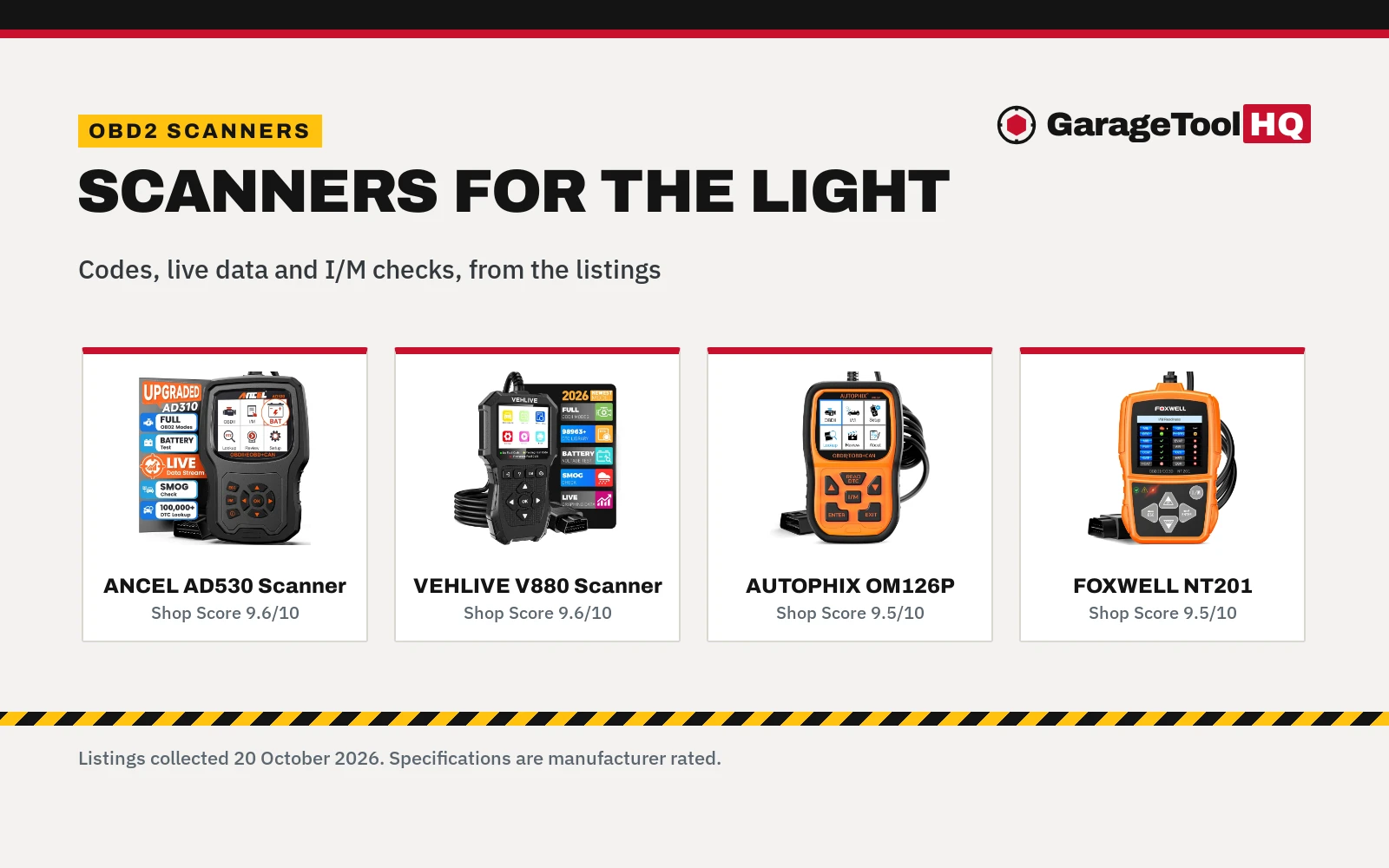
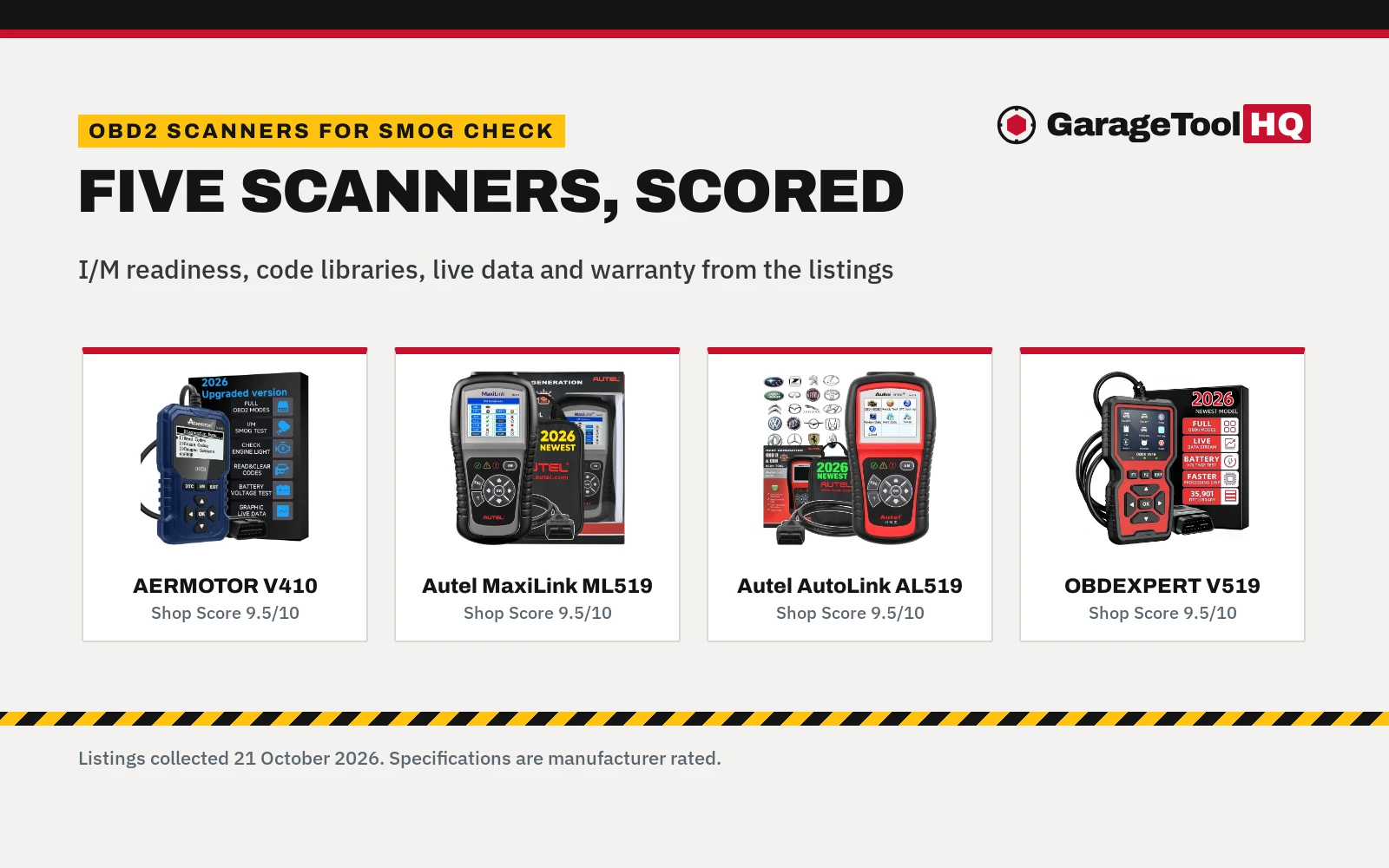
When an engine warning light appears during a routine weekend oil change or spark plug replacement, identifying the underlying vehicle malfunction requires choosing among distinct OBD2 scanner types. OBD2 scanner types fall into distinct functional categories: basic code readers, DIY multi-system handheld scan tools, wireless Bluetooth adapters, and professional bidirectional diagnostic tablets. Basic code readers focus on clearing generic emissions diagnostic trouble codes and checking emissions readiness status. Multi-system handheld units expand troubleshooting into antilock braking, supplemental restraint airbags, and automatic transmission modules. Wireless Bluetooth adapters plug into the diagnostic connector and link directly to smartphone software. Professional bidirectional diagnostic scan tools communicate back and forth with vehicle computers to actuate components, perform system calibrations, and complete complex maintenance resets.
GarageToolHQ earns a commission when you buy through links on our product pages, at no extra cost to you. Read our affiliate disclosure.
Below: how diagnostic trouble codes communicate across automotive electronic control modules, how to compare the primary scanner categories, and a practical checklist to follow before plugging into your vehicle.
OBD2 scanner types: how diagnostic capabilities differ
Modern vehicles contain numerous electronic control units linked through internal communications networks. While every vehicle sold in the United States since 1996 features a standardized 16-pin data link connector beneath the dashboard, the scan tool you plug into that port determines how deep into those vehicle computers you can see. Understanding OBD2 scanner types helps avoid buying equipment that cannot access the specific module causing your dashboard warning light.
Generic diagnostic trouble codes represent standardized faults mandated by federal emissions regulations. A basic handheld reader accesses the engine control module to interpret these generic faults, display freeze frame operating parameters captured at the instant a fault occurred, and reset the check engine light once repairs are completed. For example, the MOTOPOWER listing specifies a 2.8-inch display, a 2.5-foot cable, and compatibility with 9 protocols for vehicles manufactured since 1996. These basic units serve as pocket diagnostic devices for quick verification when an engine warning light suddenly appears on a neighbor car.
However, modern vehicle issues frequently originate outside the primary engine computer. If an antilock braking system warning light glows on the instrument cluster or an airbag service indicator appears after moving the driver seat, a basic code reader will report no codes present. Specialized multi-system tools access proprietary manufacturer networks to interrogate antilock braking, body control, supplemental restraint, and automatic transmission modules. The OnRetul listing details inspection of 8 vehicle systems for emissions readiness and tracking of 20 live data parameters, while the BluSon listing cites a built-in database of 63,000 fault codes with a 2.4-inch screen featuring 10 brightness levels and 13 supported languages. For home mechanics tackling suspension repairs or sensor replacements, reviewing our guide to the best OBD2 scanner for ABS and SRS provides deep insight into multi-module troubleshooting.
Comparing OBD2 scanner types across home garage jobs
| Scanner Category | Diagnostic Depth | Hardware and Connection | Best Garage Job |
|---|---|---|---|
| Basic Code Reader | Reads and clears generic engine trouble codes, checks readiness monitors, displays freeze frame data | Corded 16-pin diagnostic cable, vehicle powered, compact monochrome or color display | Quick check engine light diagnosis, pre-inspection readiness checks |
| Multi-System Handheld Scanner | Engine, transmission, antilock braking, and airbag diagnostics, live sensor datastreams, component lookups | Standalone handheld housing, rubber protective sleeve, color screen with navigation keys | Brake repairs, wheel speed sensor diagnosis, transmission fluid temperature checks |
| Wireless Bluetooth Adapter | Engine and multi-system diagnostics, live smartphone graphing, automated cloud report generation | Compact wireless dongle plugged directly into the diagnostic port, links to mobile software | Glove-box emergency storage, mobile datalogging, quick driveway scans |
| Bidirectional Diagnostic Tablet | Full system scans, active component actuation, service resets, module adaptations, electronic coding | Dedicated touchscreen tablet running specialized operating system, wireless interface module | Actuator troubleshooting, cooling fan activation, electronic parking brake service, injector balance checks |
Choosing between these hardware formats depends on the maintenance tasks you handle in your own garage. A dedicated code reader stays ready in a tool drawer without software updates or pairing steps. For a broader look at entry-level equipment, explore our recommendations for the best OBD2 scanner for DIY diagnostics.
How to choose and connect an OBD2 scanner safely: the checklist
- Verify vehicle protocol compatibility. Confirm that the scan tool supports your vehicle make, model year, and communication protocol. While domestic models manufactured since 1996 use standard protocols, import vehicles and European models adopted standardized interfaces across different model years.
- Locate the diagnostic port carefully. The 16-pin connector sits beneath the dashboard on the driver side, typically near the steering column, knee bolster, or fuse access panel. Inspect the port pins for debris or corrosion before pushing the scanner plug into place.
- Follow the proper ignition key sequence. Push the connector firmly into the vehicle port, switch the ignition switch to the run position without starting the engine, and allow the scanner to establish electronic communication with the on-board computers.
- Record diagnostic trouble codes before clearing. Always write down existing active and pending trouble codes, along with freeze frame parameters, before choosing the erase command. Erasing codes clears stored operational data and resets internal readiness monitors.
- Check emissions readiness monitors. Before presenting a vehicle for state emissions inspection, verify that all required continuous and non-continuous monitors display a ready status. A vehicle with recently cleared codes will fail emissions inspection until driven through a complete drive cycle.
- Inspect battery terminal voltage. Flashing control modules or performing extended live diagnostic scans draws electrical power from the vehicle 12V electrical system. Connect a reliable battery maintainer during lengthy diagnostic sessions to prevent module communication drops caused by low voltage.
- Disconnect properly after scanning. Switch off the vehicle ignition completely before unplugging the diagnostic interface connector from the dashboard port.
When diagnosing engine trouble codes, reading live sensor parameters, or verifying repairs with an OBD2 scanner, the vehicle engine may need to idle. Always perform running engine diagnostics outside in the open air or with the garage overhead door completely open and proper ventilation. Toxic vehicle exhaust contains carbon monoxide, which is odorless and lethal in enclosed spaces.
Use rated jack stands on solid ground, wear eye protection with power and air tools, keep fuel-burning equipment out of a closed garage, and follow the manual for every tool. Read our Safety Disclaimer.
Handheld code readers vs wireless Bluetooth adapters
When selecting a diagnostic tool for a home workshop, one primary decision centers on hardware format: self-contained handheld devices versus wireless Bluetooth dongles that pair with mobile devices. Each design delivers distinct operational advantages depending on how you prefer to work around a vehicle.
Standalone handheld scanners feature an integrated display screen, physical buttons, and a hardwired cable that plugs straight into the vehicle diagnostic port. Power flows directly from the vehicle battery through the 16-pin connector, meaning the scanner requires no internal batteries, charging cables, or wireless pairing steps. The HipEpic listing lists a 2.8-inch display and a library of 4,000 trouble codes for 12V vehicles, while the OBDMATE listing specifies a 3.5-inch screen, 4-in-1 live datastream graphing, and coverage across 60 vehicle brands. These corded handheld devices operate reliably in hot summer garages or freezing winter driveways, free from mobile app updates or smartphone battery limitations.
Wireless Bluetooth adapters offer a miniature footprint that fits neatly inside a vehicle glove box or center console. The adapter plugs directly into the dashboard port and transmits diagnostic telemetry to an iOS or Android smartphone or tablet over a wireless connection. For wireless diagnostics, the Jokovar listing shows Bluetooth 5.1 communication, 4-system coverage across 44 vehicle brands, and a hardware weight of 2.88 ounces. Bluetooth units excel at real-time sensor graphing, digital dashboard customization, and exporting diagnostic reports to cloud storage. For home mechanics who appreciate wireless freedom while moving around the vehicle, our comparison of the best Bluetooth OBD2 scanner options covers top wireless hardware.
Multi-system scanners vs bidirectional diagnostic tools
Moving beyond basic code reading brings mechanics to the distinction between passive multi-system diagnostic tools and active bidirectional scan tools. Passive scanners read data broadcast by vehicle control modules. They retrieve stored trouble codes, display live sensor measurements such as engine coolant temperature or wheel speed, and send commands to clear codes after repairs. However, communication flows in one direction: from the vehicle control modules out to the handheld screen.
Bidirectional diagnostic scan tools establish two-way communication with onboard computers. Rather than simply observing sensor values, a bidirectional tool commands vehicle modules to activate specific actuators and circuits. If a radiator cooling fan fails to turn on, a technician can use a bidirectional tool to command the cooling fan relay closed. If the fan spins, the wiring harness, relay, and motor function properly, isolating the fault to a temperature sensor or computer logic input. In professional bidirectional units, the thinkcar listing details an 8-inch screen, Android 10 software, Bluetooth 5.0 connectivity, and 34 service functions. To understand how two-way communication streamlines electrical diagnosis, read our complete guide explaining what is a bidirectional scan tool or browse advanced units in our roundup of the best bidirectional diagnostic scan tool models.
Bidirectional tools also support essential maintenance routines required after routine mechanical jobs. Modern vehicles frequently demand electronic calibrations after component replacement, including electronic parking brake retraction for rear brake pad changes, steering angle sensor calibration after wheel alignments, throttle body relearns, and antilock brake hydraulic bleeding procedures. While basic code readers reset the check engine light, bidirectional equipment handles the specialized electronic handshakes required by modern computerized vehicle architectures.
Frequently Asked Questions
What is the difference between an OBD2 code reader and a scan tool?
An OBD2 code reader is a simplified device designed primarily to read generic engine diagnostic trouble codes, display freeze frame data, and clear the check engine light. A comprehensive scan tool provides deeper diagnostic access, reading manufacturer-specific codes across transmission, antilock braking, and airbag systems, displaying multi-channel live sensor data, and often performing bidirectional component activations.
Will a basic OBD2 scanner clear ABS and airbag warning lights?
No. Basic OBD2 code readers communicate exclusively with the engine control module to address emissions-related trouble codes. Warning lights for antilock braking systems or supplemental restraint airbags originate in separate chassis and body control modules that require a multi-system scan tool or bidirectional diagnostic unit to access and clear.
Can an OBD2 scanner diagnose vehicle electrical issues?
An OBD2 scanner diagnoses electrical issues that generate diagnostic trouble codes or register abnormal sensor readings across computerized control modules. However, locating wiring breaks, checking parasitic battery drains, or verifying reference voltages often requires pairing your scanner with a dedicated automotive multimeter to measure resistance and voltage drops directly at wiring harnesses.
Do wireless Bluetooth OBD2 scanners require a monthly subscription?
Hardware adapters themselves do not require a subscription, but recurring charges depend on the specific companion software you select. Many wireless adapters include free proprietary mobile applications for basic diagnostics, while advanced third-party diagnostic software packages or vehicle-specific enhanced diagnostic packs may require annual subscription fees.
Why did my check engine light return after clearing codes with a scanner?
Clearing diagnostic trouble codes resets the dashboard warning light and clears stored computer memory, but it does not repair the physical mechanical or electrical defect that triggered the fault. Once the engine control module executes its automated diagnostic routines and detects the unresolved malfunction again, the check engine light reilluminates.
Related: how to choose an OBD2 scanner, our guide to the best OBD2 scanner for DIY, the diagnostics and electrical hub, and our overview of what is a bidirectional scan tool. Also see our guide to what OBD2 codes mean.