Supercapacitor vs Lithium Jump Starter: Which One Should You Buy?
Supercapacitor and lithium jump starters solve the same problem in opposite ways: permanent under-hood assist with no charging, or a portable pack for emergencies. 4 listing examples compared.

On this page
Top picks at a glance
As an Amazon Associate we earn from qualifying purchases.
- 1
 ANCEL BS300 Smart Jump Starter System9.7/10View on Amazon
- 2
 AstroAI S8 Ultra 12V 4000A Lithium Jump Starter Up to All9.8/10View on Amazon
- 3
 ANCEL BS200 Smart Jump Starter System9.6/10View on Amazon
- 4
 DEWALT DXAELJ25C 2500 Peak Amp Lithium Jump Starter with USBView on Amazon
- 5
 Autowit Super Capacitor Jump StarterView on Amazon
- 6
 DEWALT DXAELJ18C 1800 Peak Amp Lithium Jump Starter with USBView on Amazon
- 7
 MEGAWISE 2500A 12V Jump Starter for 8.0L Gas/6.5L DieselView on Amazon
- 8
 Stanley J5C09D 1200 Peak Amp Jump Starter with 120 PSIView on Amazon
- 9
 DEWALT DXAEPS14 2000 Peak Amp Jump Starter with 120 PSI AirView on Amazon
Verdict: Choose a supercapacitor jump starter if you want a unit permanently installed under the hood that assists every start with no charging or maintenance, like the ANCEL BS200 or BS300. Choose a lithium jump starter if you want a portable pack for emergencies across vehicles, with a power bank and flashlight, like the NOCO GB20 or GB150.
The supercapacitor vs lithium jump starter question is really about how you want the boost delivered: the two sides solve the same problem in opposite ways. The supercapacitor examples here install permanently under the hood and assist every engine start automatically. The lithium examples are portable packs you keep in the trunk or glove box for emergencies. This comparison walks through how each type works, then 4 listing examples, 2 per side, scored on what their listings actually state.
The choice matters because the 2 types ask different things of you. A supercapacitor unit asks for a single installation and then disappears into your routine, assisting every start with no charging or maintenance, per the listings. A lithium pack asks for almost no installation but wants a place in your charging routine, since its 20 or 80 starts per charge only exist if the pack is charged. Pick the type that matches how you actually maintain your gear.
GarageToolHQ earns a commission when you buy through links on this page, at no extra cost to you. Read our affiliate disclosure.

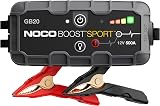

ANCEL BS300 Smart Jump Starter System
A permanently installed supercapacitor starter with 1000A of assist, app alerts and 500,000 stated assist cycles.
Pros
- 1000A starting assist
- Permanent install, zero maintenance
- App with battery alerts
- 500,000 assist cycles stated
Cons
- No engine displacement rating stated
- Installation required
- No power bank or flashlight
- Battery alerts need the companion app on your phone

ANCEL BS200 Smart Jump Starter System
A permanently installed supercapacitor starter with 700A of assist, a Bluetooth app and stated CE/FCC certifications.
Pros
- 700A assist; starts dead batteries alone up to 3.0L/2.5T
- Bluetooth 5.3 app with battery health
- -40F to 176F stated range
- CE and FCC stated
Cons
- Lower assist than the BS300
- Installation required
- Battery-life claims are maker claims
- No power bank or flashlight

NOCO Boost GB150 3000A UltraSafe Jump Starter
A heavy-duty portable lithium pack with 3000A peak, 80 starts per charge and a 500-lumen flashlight.
Pros
- 3000A peak; up to 9.0L gas and 7.0L diesel
- 80 starts per charge stated
- 500-lumen LED with 7 modes
- Power bank plus IP65
Cons
- 7.5 lb, heaviest here
- 1-year warranty
- 7-hour recharge; needs charge management
- No operating temperature range is stated
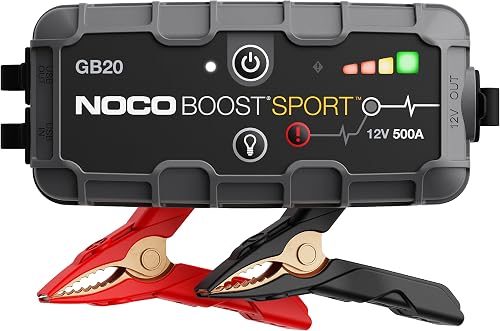
NOCO Boost GB20 500A UltraSafe Jump Starter
A compact portable lithium pack with 500A peak, 20 starts per charge and a 100-lumen flashlight.
Pros
- 500A peak; up to 4.0L gas
- 20 starts per charge stated
- 2.4 lb portable per bullets; IP65
- Recharges in 3 hours stated
Cons
- Spec table says 16 ounces, bullets say 2.4 lb
- 1-year warranty
- Smallest engine coverage here
- 20 starts per charge is the fewest here
More options to compare
 DEWALT DXAELJ25C 2500 Peak Amp Lithium Jump Starter with USBCheck price on Amazon
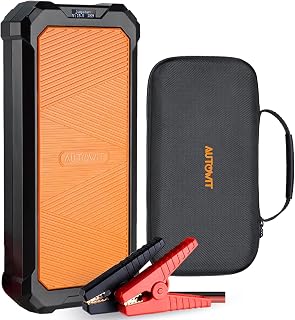 Autowit Super Capacitor Jump StarterCheck price on Amazon
 DEWALT DXAELJ18C 1800 Peak Amp Lithium Jump Starter with USBCheck price on Amazon
 MEGAWISE 2500A 12V Jump Starter for 8.0L Gas/6.5L DieselCheck price on Amazon
 Stanley J5C09D 1200 Peak Amp Jump Starter with 120 PSICheck price on Amazon
 DEWALT DXAEPS14 2000 Peak Amp Jump Starter with 120 PSI AirCheck price on Amazon
Side by side
| Model | Shop Score | Type | Stated amps | Warranty |
|---|---|---|---|---|
| ANCEL BS300 Super Starter | 9.7/10 | Supercapacitor | 1000A assist | 36 months |
| ANCEL BS200 Super Starter | 9.6/10 | Supercapacitor | 700A assist | 36 months |
| NOCO GB150 Boost | 9.6/10 | Lithium | 3000A peak | 1 year |
| NOCO GB20 Boost | 9.6/10 | Lithium | 500A peak | 1 year |
Figures below come from the 4 listings we reviewed, collected 18 October 2026.
Supercapacitor vs lithium jump starter: how each type starts your car
Both sides use stored electrical energy to crank an engine, but the storage differs. The ANCEL BS200 and BS300 use supercapacitors. The BS300 delivers up to 1000A of starting assist, and the BS200 adds up to 700A of assist current to the vehicle’s cranking power, starting dead batteries up to 3.0L/2.5T on its own. Supercapacitors charge and discharge extremely quickly, per the BS300 listing, which suits engine starting, cold-weather operation and repeated assist; the listing states up to 500,000 assist cycles with minimal performance degradation.
The NOCO GB20 and GB150 use lithium batteries. The GB20 delivers 500A peak with up to 20 starts per charge on engines up to 4.0L gas, and the GB150 delivers 3000A peak with up to 80 starts per charge on engines up to 9.0L gas and 7.0L diesel. Note the units differ: the ANCEL listings quote assist current added to the vehicle’s own cranking, while the NOCO listings quote peak output. Treat the amp figures as a rough ordering of the 4 listings, not a lab result.
The assist-versus-peak distinction is worth a pause. The ANCEL listings quote assist current: extra cranking amps added on top of what the vehicle’s battery already delivers. The BS200 adds up to 700A to the cranking power, and it can start dead batteries up to 3.0L/2.5T on its own. The BS300 offers up to 1000A of starting assist. The NOCO listings quote peak output from the pack itself: 500A for the GB20, 3000A for the GB150, with the engine doing the rest once the vehicle battery recovers. Because the numbers measure different things, a direct cross-side amp comparison would mislead; the honest read is that the GB150 example is the strongest portable pack here, and the BS300 example is the strongest assist unit here.
Engine coverage: what each example is rated for
Three of the 4 examples state engine coverage, and the fourth does not. The GB150 example is rated for engines up to 9.0L gas and 7.0L diesel, the widest stated coverage here, which suits trucks and large SUVs. The GB20 example is rated up to 4.0L gas, which covers most passenger cars. The BS200 example states it starts dead batteries up to 3.0L/2.5T on its own. The BS300 example states no engine displacement at all, only its 1000A assist figure, so its coverage is unclear from the listing. If you drive a diesel, the GB150 example is the only one of the 4 with a stated diesel rating.
Permanent install or portable pack
This is the biggest practical split. The ANCEL examples install under the hood permanently. The BS300 wakes automatically at each start, supports it, recharges from the vehicle battery when needed, then sleeps. The BS200 works as part of the vehicle after installation, automatically assisting every engine start. Neither needs repeated charging, and both listings call the supercapacitors maintenance-free. The trade-off is installation: the boxes include alligator clamps for temporary installation and cable ties for the long-term fit, and ANCEL offers support for installation, connection or starting issues.
The NOCO examples are portable. The GB20 example weighs 2.4 pounds per its bullets and is sized for glove boxes and emergency kits; the GB150 example weighs 7.5 pounds. They move between vehicles, double as power banks for phones and tablets, and carry LED flashlights: 100 lumens on the GB20 example, 500 on the GB150, each with 7 modes including SOS and strobe. The trade-off is charge management. The GB20 example recharges in 3 hours and the GB150 in 7, and those 20 and 80 starts per charge only happen if the pack is kept charged.
Cold weather and daily driving
Both ANCEL examples state an operating range of -40°F to 176°F, and the BS300 listing calls supercapacitors ideal for cold-weather operation. The NOCO examples state no temperature range at all, so their cold-weather behavior is unclear from the listings; on this spec, only the supercapacitor side gives a stated figure. For daily driving, the split is about routine: the ANCEL examples fold into the car’s routine automatically, while the NOCO examples fold into yours. The BS200 listing names short-trip commuters, drivers with parasitic drain, and owners of seasonal vehicles or spare vehicles as its audience, which fits the permanent-install concept: the unit is there on the cold morning when the seasonal car has sat for a month.
Warranty and certifications
Both ANCEL examples state a 36-month manufacturer warranty; both NOCO examples state a 1-year limited warranty. On stated warranty terms, the ANCEL examples lead. For certifications, the BS200 example lists CE and FCC, and both NOCO examples list UL; the BS300 listing states no certification, so that comparison stays incomplete. Safety features are stated on all 4 listings: the ANCEL examples cite flame-retardant materials with no swelling, leakage or thermal runaway risk, and the BS200 adds 10 built-in safety protections; the NOCO examples cite spark-proof and reverse polarity protection.
What the listings leave unclear
Operating temperature is stated on one side only: the ANCEL examples claim -40°F to 176°F, while the NOCO examples state nothing, so no comparison is possible there. Engine coverage is uneven too: the NOCO examples state displacement clearly, while the BS200 example states 3.0L/2.5T for its own starting ability and the BS300 example states none. The BS200’s claim of extending battery service life by up to 300% is a maker claim, not a measured result. And the GB20 example contradicts itself on weight: its spec table says 16 ounces while its bullets say 2.4 lb; we used the bullets’ figure, which the listing emphasizes. An odd or missing figure is a gap in the listing, not a win for either side.
Example jump starters
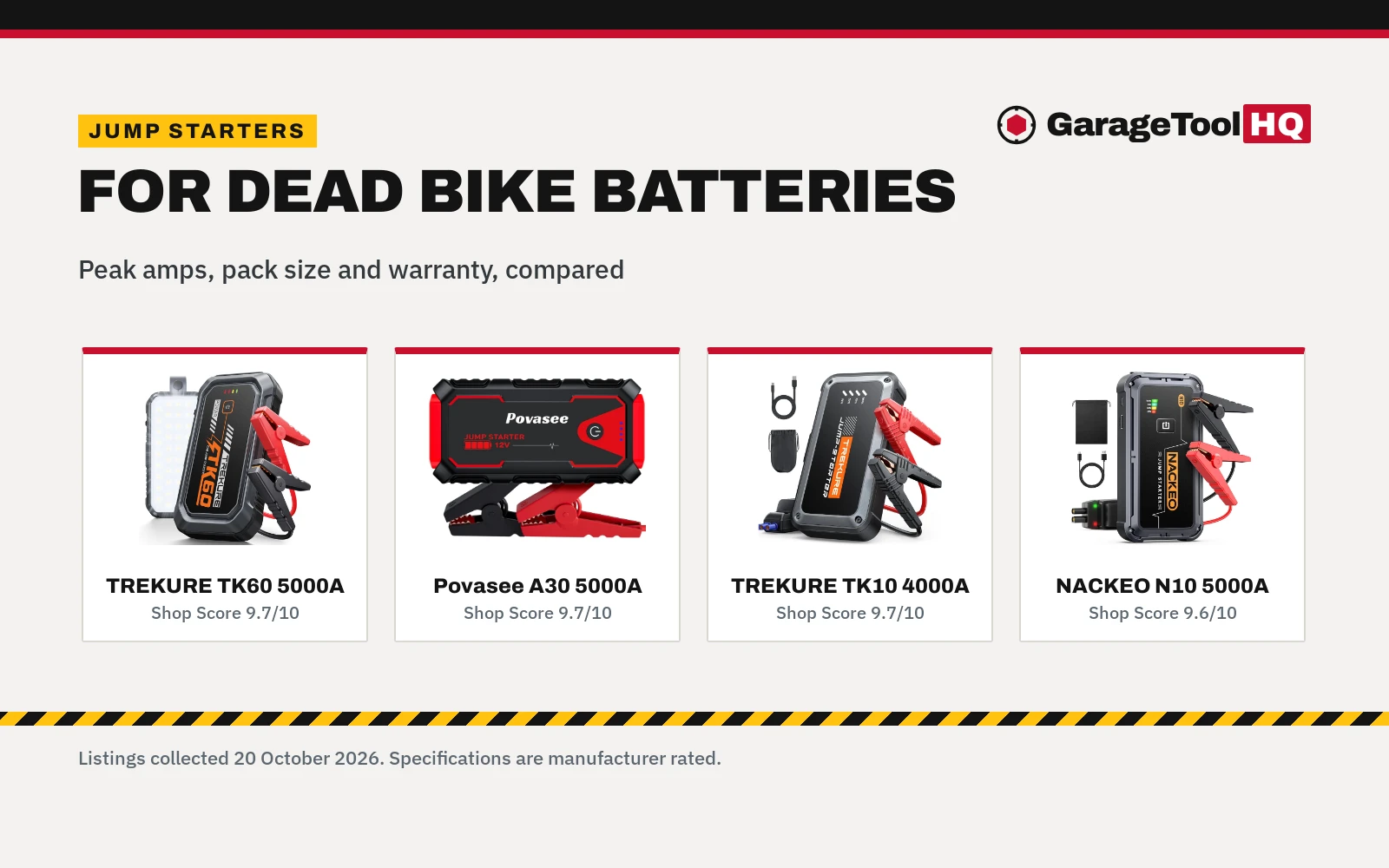
The 4 examples below are ranked by their Shop Scores, which weigh performance, build, value, safety and warranty from what each listing states. 2 are supercapacitor units and 2 are lithium packs.
Lead-acid batteries can release hydrogen while charging, so charge in a ventilated space away from sparks and flames, connect positive first and negative last, set the charger to the battery type (flooded, AGM, gel, lithium), and wear eye protection. Read our Safety Disclaimer.
Frequently Asked Questions
Can a supercapacitor jump starter replace a portable pack?
The listings position them for different roles. The ANCEL examples install permanently and assist every start automatically; the NOCO examples are portable packs for emergencies across vehicles. One stays with the car, the other goes where you carry it.
Do supercapacitor jump starters need charging?
Per the listings, no. The BS300 example says never charge it after installation; it recharges from the vehicle battery when needed. The BS200 example says no repeated charging.
How long do the lithium examples hold a charge?
Not stated. The GB20 example offers up to 20 starts per charge and recharges in 3 hours; the GB150 example offers up to 80 starts per charge and recharges in 7 hours. Keep them charged to have those starts available.
Which side is safer, supercapacitor or lithium?
Both sides state safety features rather than one winning. The ANCEL examples cite flame-retardant materials with no swelling, leakage or thermal runaway risk, plus 10 built-in protections on the BS200. The NOCO examples cite spark-proof and reverse polarity protection. The NOCO examples state UL; the BS200 states CE and FCC.
Which example suits a diesel truck?
Of the 4 examples, only the GB150 states a diesel rating: up to 7.0L diesel alongside 9.0L gas. The other 3 examples state no diesel coverage, so the GB150 is the only stated answer here.
Do the lithium examples work in winter?
The listings do not say. Neither NOCO example states an operating temperature range, while both ANCEL examples state -40°F to 176°F. For a stated cold-weather figure, only the supercapacitor side provides one.
Related: the best portable jump starter brands, jump starter vs jumper cables, and what size jump starter you need.