Garage Ceiling Fan vs Shop Fan: Which One Should You Buy?
A 52-inch Hunter ceiling fan and an 18-inch NewAir shop fan compared by airflow, noise, mounting, safety marks and warranty.

On this page
Top picks at a glance
As an Amazon Associate we earn from qualifying purchases.
- 1
 Comfort Zone Hard-Wired Ceiling Mount Garage Electric Space9.7/10View on Amazon
- 2
 VEVOR Electric Garage Heater9.7/10View on Amazon
- 3
 VEVOR Electric Garage Heater9.7/10View on Amazon
- 4
 120-Inch HVLS Industrial Ceiling Fan +28View on Amazon
- 5
 iLIVING 24" High Velocity Drum Fan IndustrialView on Amazon
- 6
 DEWALT 20 Inch Floor FanView on Amazon
- 7
 DEWALT 18 Inch Floor FanView on Amazon
- 8
 iLiving ILG8P30-72 Commercial Pedestal Floor FanView on Amazon
- 9
 10'' Upgraded Shutter Exhaust Fan with Thermostat & RemoteView on Amazon
Verdict: Choose a garage ceiling fan if you want whole-room circulation from above that stays out of the way, like the Hunter Cassius at 4031 CFM with a maker-claimed whisper-quiet motor. Choose a shop fan if you want a strong breeze aimed at one workbench, like the NewAir WindPro18W at 3000 CFM with an adjustable tilt mount.
Both move air in a garage, but they do it differently. A ceiling fan circulates the whole room from above; a shop fan pushes a directed stream at the spot where you work. This garage ceiling fan vs shop fan comparison covers the two approaches, then one example of each from the listings we reviewed.
GarageToolHQ earns a commission when you buy through links on this page, at no extra cost to you. Read our affiliate disclosure.

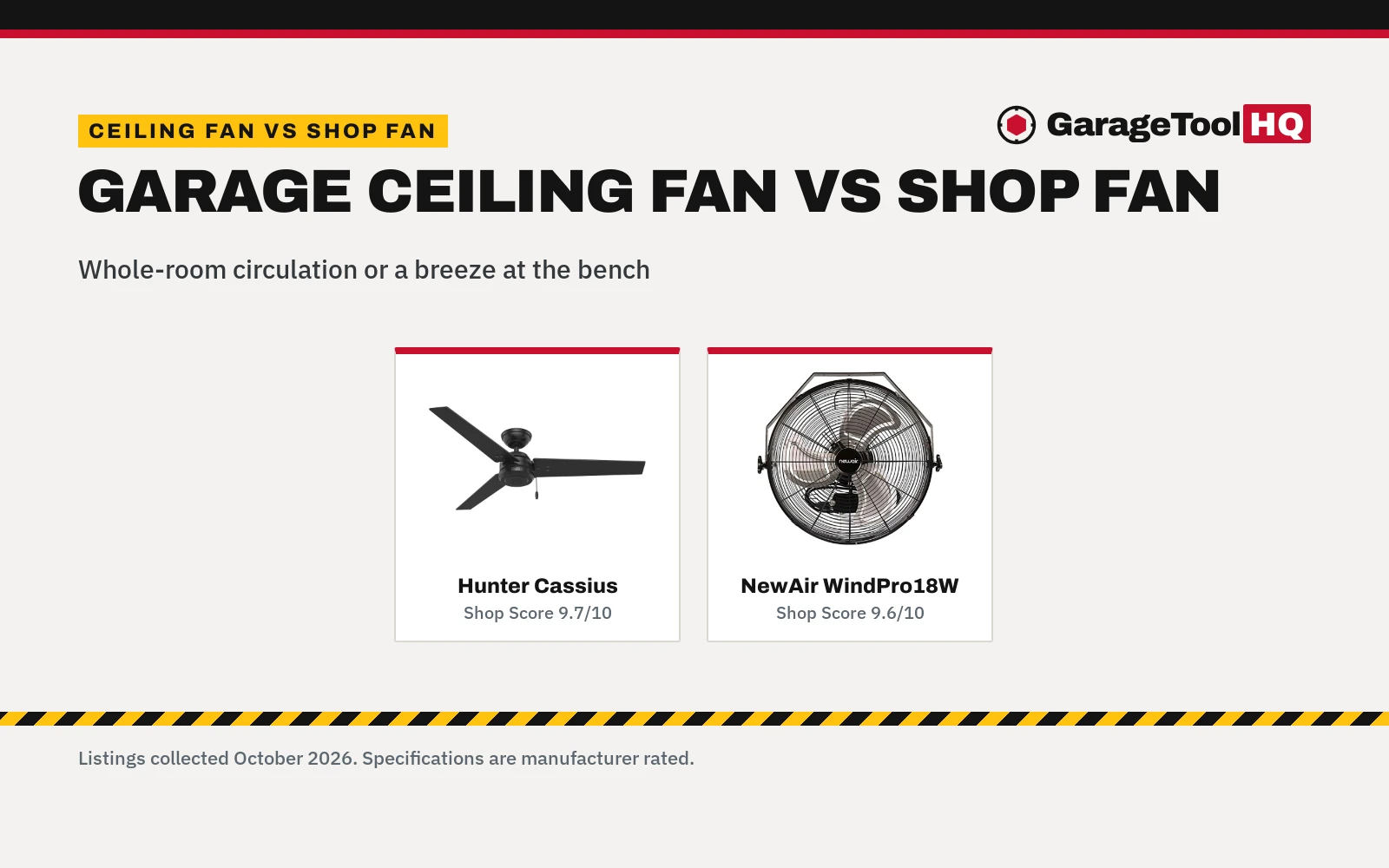
Hunter Cassius, Outdoor or Indoor, Ceiling Fan
A 52-inch ceiling fan with 4031 CFM, a whisper-quiet 3-speed motor and a stated lifetime warranty, for whole-room garage circulation.
Pros
- 4031 CFM stated, the higher airflow here
- ETL and UL safety marks stated in the bullets
- Lifetime warranty stated
- Reversible 3-speed WhisperWind motor for year-round use
Cons
- The spec table lists indoor usage while the bullets say damp-rated for covered outdoor areas
- The spec table lists both pull chain control and a touch control method
- Ceiling mounting on a 5 in downrod; the listing describes no mounting hardware
- A 52 in span that needs clearance around it

NewAir 18" Wall Mount Fan
An 18-inch wall-mount shop fan with 3000 CFM, a sealed motor and a 1 year limited warranty, for a directed breeze where you work.
Pros
- 3000 CFM high-velocity airflow aimed where you work
- Sealed motor housing protects against workshop dust and debris
- Wall mount with adjustable tilt keeps the floor clear
- 45 dB stated noise level with three speeds
Cons
- 1 Year Limited Warranty, far shorter than the Hunter’s lifetime
- The spec table calls it a table fan while the title says wall mount
- 11.3 lb, so use one of the wall types the listing names with the included heavy-duty hardware
- Targeted airflow, so it does not circulate the whole room
More options to compare
 120-Inch HVLS Industrial Ceiling Fan +28Check price on Amazon
 iLIVING 24" High Velocity Drum Fan IndustrialCheck price on Amazon
 DEWALT 20 Inch Floor FanCheck price on Amazon
 DEWALT 18 Inch Floor FanCheck price on Amazon
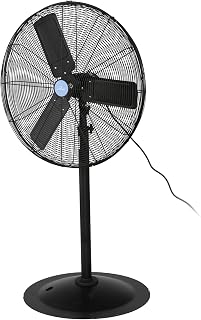 iLiving ILG8P30-72 Commercial Pedestal Floor FanCheck price on Amazon
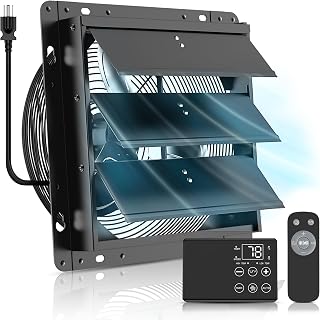 10'' Upgraded Shutter Exhaust Fan with Thermostat & RemoteCheck price on Amazon
Side by side
| Fan | Type | Airflow | Speeds | Warranty |
|---|---|---|---|---|
| Hunter Cassius | Ceiling fan, 52 in | 4031 CFM | 3, pull chain | Lifetime |
| NewAir WindPro18W | Wall-mount shop fan, 18 in | 3000 CFM | 3, pull cord | 1 Year Limited |
Example figures are manufacturer rated, as published on each listing and collected 20 October 2026.
Garage ceiling fan vs shop fan: how they differ
The Hunter Cassius is a 52-inch ceiling fan with three reversible blades and reversible settings the maker describes as for year-round comfort. The NewAir WindPro18W is an 18-inch wall-mount fan with an adjustable tilt bar that aims the breeze exactly where you need it. One circulates the room; the other targets a spot.
Airflow and noise
The Hunter states 4031 CFM from a 3-speed WhisperWind motor the maker calls ultra quiet, with no noise figure stated. The NewAir states up to 3000 CFM on its highest setting with a stated 45 dB noise level and three speeds. The ceiling fan moves more air overall; the shop fan moves less air but points it at you, which can feel stronger at the bench.
Mounting and space
The Hunter mounts to the ceiling on a 5 in downrod with a 52 in span to clear; once up, nothing sits on the floor or walls. The NewAir bolts to the wall with included heavy-duty hardware, mounting to cement, drywall over studs, masonry or steel beams, and its tilt bar aims it without repositioning. The NewAir wall mount with included heavy-duty hardware is the better-documented install of the two.
Safety marks and warranty
The Hunter listing states ETL and UL safety marks and a lifetime warranty, the strongest combination here. The NewAir listing states ETL certification and a 1 year limited warranty, with a sealed motor housing that protects against workshop dust and debris. Both state a safety mark; the Hunter states the longer warranty by far.
Choose a garage ceiling fan if
- You want whole-room circulation from above
- You have a ceiling box and a 52 in clear span
- You want the reversible settings the maker lists for year-round comfort
- You want the stated lifetime warranty of the Hunter example
Choose a shop fan if
- You want a strong breeze aimed at one workbench
- You want to keep the floor and ceiling clear
- You want an easy wall-mount install with included hardware
- You want the sealed motor housing of the NewAir example
Sizing the fan to the garage
The Hunter is a 52-inch, 3-blade ceiling fan: the blades sweep a 52-inch circle and the unit hangs 11 inches tall on a 5-inch downrod. That suits whole-room circulation in a garage with enough ceiling clearance. The NewAir is an 18-inch wall fan, 22.83 inches wide and 21.65 inches tall, that aims its breeze at one spot. Wall mounting keeps the floor and the ceiling clear, which matters in a working garage with tall vehicles or shelving. Pick the ceiling fan for whole-room air movement and the wall fan for a directed breeze at the workbench.
Motors, dust and power draw
The Hunter lists a 3-speed WhisperWind AC motor drawing 64.1 watts, with ultra-quiet operation claimed but no stated noise figure. The NewAir lists a dual ball bearing motor in a sealed metal housing, stated to keep workshop dust, debris and moisture out of the motor, drawing 120 watts with a stated 45 dB noise level. Both are 3-speed with pull-chain or pull-cord control. The NewAir listing states it costs 12 cents per workday to operate. Both listings state ETL certification. A sealed motor housing is the meaningful difference for a dusty shop.
Installation
The Hunter is a ceiling-mount fan with a standard mount and pull-chain control, no remote. The NewAir is a wall-mount fan with heavy-duty mounting hardware included: the listing states it mounts on cement walls, drywall over studs, masonry and steel beams, with an adjustable tilt bar to aim the breeze and a pull cord for speed changes. The NewAir weighs 11.3 pounds; the Hunter lists 6.6 kg. Plan the mount before you buy: the ceiling fan needs a rated ceiling box, the wall fan needs a solid wall.
Damp rating and placement
The Hunter bullets state a damp rating for covered outdoor areas like patios or garages, though the spec table lists indoor usage, a contradiction flagged in the review. Its build is metal with engineered wood blades in matte black. The NewAir lists a powder-coated finish with all-metal blades and a sealed motor housing, and states indoor usage. For an unheated garage that sees humidity, the damp rating on the Hunter is the stated edge; check the listing on the unit you buy.
Example fans
For more ceiling options, see the best garage ceiling fan roundup.
Use rated jack stands on solid ground, wear eye protection with power and air tools, keep fuel-burning equipment out of a closed garage, and follow the manual for every tool. Read our Safety Disclaimer.
Frequently Asked Questions
Is a ceiling fan or a shop fan better for a garage?
It depends on the job. A ceiling fan circulates the whole room from above; a shop fan aims a stronger breeze at one spot, like a workbench.
Which moves more air?
The Hunter ceiling fan example states 4031 CFM; the NewAir shop fan example states up to 3000 CFM. The ceiling fan moves more air overall, but the shop fan concentrates it.
Can a ceiling fan go in a garage?
The Hunter listing states a damp rating for covered outdoor areas like garages, though its spec table also lists indoor usage. Check the listing on the unit you buy.
Which is quieter?
The Hunter claims ultra-quiet operation with no stated noise figure; the NewAir states 45 dB. The listings give no common basis to compare noise.
How much does the shop fan cost to run?
The NewAir listing states 12 cents per workday. The Hunter lists 64.1 watts against the NewAir 120 watts, but neither listing states a per-day cost for the ceiling fan.
Can the ceiling fan run in winter?
The Hunter listing states reversible settings for year-round comfort, so the blades can reverse with the season. The NewAir is a 3-speed directional fan with no reverse stated.
Related: the best garage ceiling fan roundup, our garage heater for a single car garage picks and our garage upgrades hub.