Tire Changer vs Wheel Balancer: Which One for Your Garage?
A tire changer mounts and demounts tires while a wheel balancer removes vibration; learn which one a home garage needs, plus four manual tire-changing tools from the listings.

On this page
Top picks at a glance
As an Amazon Associate we earn from qualifying purchases.
- 1
 XK Tire Changers Machine and Wheel Balancer Combo9.6/10View on Amazon
- 2
 ATPEAM Portable Bubble Wheel Balancer Heavy Duty Tire9.6/10View on Amazon
- 3
 DASBET Portable Bubble Wheel Balancer Tire Balancer with9.6/10View on Amazon
- 4
 KATOOL 39" Max Wheel Diameter Mini Tire Changer Machine TireView on Amazon
- 5
 Portable Bubble Wheel Balancer with Bubble Level StaticView on Amazon
- 6
 Portable Wheel Balancer with Heavy Duty Hubs Tire BalancerView on Amazon
- 7
 Tire Balancer Portable Bubble Wheel Balancer Tire ChangerView on Amazon
- 8
 KATOOL 2.0HP Tire Changer Bead Blaster Wheel Balancer MachineView on Amazon
- 9
 KATOOL ME-T500 2.0HP Tire Changer Machine with 24”Turn TableView on Amazon
A fresh set of tires leaning against the garage wall starts the same argument every time: change them at home or pay the tire shop. The tire changer vs wheel balancer question sits at the center of it. A tire changer takes a tire off a wheel and puts a new one on. A wheel balancer spins the mounted wheel to find heavy spots and tells you where to place weights so it rolls without shaking. For a home garage, a changer (or manual changing tools) covers the job of swapping rubber, while a balancer only earns its floor space when vibration or uneven wear shows up. This guide explains what each machine does, when a home shop needs which one, and which manual tire-changing tools the listings support.
More options to compare
 KATOOL 39" Max Wheel Diameter Mini Tire Changer Machine TireCheck price on Amazon
 Portable Bubble Wheel Balancer with Bubble Level StaticCheck price on Amazon
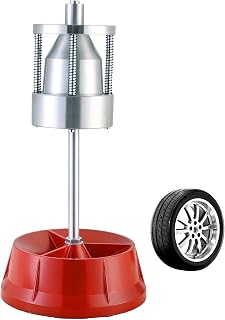 Portable Wheel Balancer with Heavy Duty Hubs Tire BalancerCheck price on Amazon
 Tire Balancer Portable Bubble Wheel Balancer Tire ChangerCheck price on Amazon
 KATOOL 2.0HP Tire Changer Bead Blaster Wheel Balancer MachineCheck price on Amazon
 KATOOL ME-T500 2.0HP Tire Changer Machine with 24”Turn TableCheck price on Amazon
GarageToolHQ earns a commission when you buy through links on our product pages, at no extra cost to you. Read our affiliate disclosure.
Below: what a tire changer does, what a wheel balancer does, which one to buy first, four manual tire-changing tools from the listings, and answers to the questions home mechanics ask most.
Tire changer vs wheel balancer: what each machine does
A tire changer and a wheel balancer do two different jobs that happen to sit next to each other at the tire shop. The changer handles the physical work: breaking the bead loose from the rim, levering the old tire off, seating the new tire on the rim and inflating it. The balancer handles the math: it spins the wheel and tire together, measures where the assembly is heavy, and shows where to stick or hammer on weights so the wheel turns evenly at speed. One changes rubber, the other removes shake. A shop that mounts tires usually runs both machines side by side, which is why buyers confuse them.
| Machine | Job it does | Home garage needs it when |
|---|---|---|
| Tire changer (powered or manual) | Breaks the bead, removes the old tire, mounts and seats the new one | You swap your own tires and want to stop paying for mount and dismount |
| Wheel balancer | Spins the assembly, finds heavy spots, guides weight placement | You feel vibration at speed after mounting, or you see uneven wear |
| Manual changing tools (spoons, duck head kit) | Hand-powered bead breaking, levering and mounting for small to full-size wheels | You change tires a few times a year and have limited floor space |
If you only pick up one capability, make it the changing side: you cannot mount a tire without it, while an unbalanced wheel at least rolls. Read the tire changer vs bead breaker guide for the next split inside the changing family.
Which one should you buy for a home garage
Most home garages should start with changing tools, not a balancer. Manual changers and spoon kits cost less floor space than a powered machine, and the listings below cover wheels from 4 in rims up to 21 in wheels. A balancer is a single-purpose machine that pays off when you mount enough tires to chase vibration yourself; the best wheel balancer for a small garage roundup covers the compact end of that market. If you change tires for the family fleet, a tire bead breaker plus a spoon kit is the smallest kit that does the whole job, and a portable tire inflator tops off pressure after mounting.
The gear: manual tire-changing tools from the listings
The four tools below are all manual, hand-powered tire-changing gear, ranked by their Shop Score. None of them is a powered changer or a balancer: they are the home-garage way to do the changing side of the tire changer vs wheel balancer decision.
Rpeconu 15 in Tire Spoons Kit (JSDLTS1)
The Rpeconu kit is the most complete changing kit of the four, with 29 pieces: 3 tire spoons, 3 rim protectors, 1 valve tool, 10 valve cores, 12 valve caps and a storage bag. The spoons are 15 in long, made of hardened steel with a polished chrome finish that the listing says resists rust, and the set weighs 1.72 lb. The listing calls out rounded edges to avoid pinching inner tubes and an ergonomic non-slip grip, and says the kit suits motorcycles, dirt bikes, mountain bikes, ATVs, mowers and tractors. Who it is for: the home mechanic who wants one bag with every small part for the job. Who should skip it: anyone changing car or truck tires only, since the 15 in spoons are sized for smaller wheels.
EASYBERG Manual Tire Changer
The EASYBERG is the only full manual changer here, with an integrated bead breaker, tire mounting and removal components, and a reinforced steel base with a rectangular footprint. The listing states fitment for 4 in to 16.5 in rims and tires, covers motorcycles, cars, light trucks, trailers, ATVs, UTVs and lawn equipment, and gives the item weight as 30 kg. An adjustable locking collar and contact points hold the wheel during service, with rounded contact areas to reduce contact with the wheel surface. Who it is for: the garage that wants a floor-standing changer without powered equipment. Who should skip it: anyone whose wheels run larger than 16.5 in, or who needs a balancer as well.
NEIKO 20601A Tire Spoon Set
The NEIKO set is a 13-piece kit built around 14.5 in tire spoons made of hardened steel-iron with curved tips. The box also holds 3 polypropylene rim protectors, a 4-point valve tool and 6 valve cores, and the set weighs 1.76 lb. The listing lists applications from bike and dirt bike to ATV, lawn tractor, garden tractor, lawnmower, car and motorcycle. The longer spoons give more leverage than short levers when seating stubborn beads. Who it is for: the DIYer who wants a compact spoon kit from an established tool brand. Who should skip it: anyone who wants a valve core assortment as deep as the 29-piece kit above.
EXODIOS Manual Tire Changer Duck Head Kit
The EXODIOS kit is a duck head adapter for a manual changer, with the steel pipe and duck head integrated and an extended aluminum alloy handle for leverage. The listing states fitment for 16 to 21 in wheels on cars, trucks, SUVs and ATVs, and gives the item weight as 9.66 lb. Note the listing title says the kit comes without the silver cone, so it upgrades an existing manual changer rather than replacing one. Who it is for: the garage that already owns a manual changer and wants smoother mounting. Who should skip it: anyone starting from zero, since this is an adapter kit, not a complete changer.
Use rated jack stands on solid ground, wear eye protection with power and air tools, keep fuel-burning equipment out of a closed garage, and follow the manual for every tool. Read our Safety Disclaimer.
Frequently Asked Questions
Can I change a tire at home without a tire changer?
Yes, with manual tools. Tire spoons, a bead breaker and a duck head kit do the same steps a powered machine does: break the bead, lever the tire off, mount the new one and seat it with air. It takes more muscle and patience, but the kits above are made for exactly that.
Do I need a wheel balancer after changing a tire?
A new tire on an old wheel can change the balance, so a shop balances after mounting as a matter of course. At home, watch for vibration at highway speed or uneven wear across the tread; either one is the sign to have the wheels balanced.
What size wheels do manual tire changers fit?
From the listings: the EXODIOS duck head kit fits 16 to 21 in wheels, and the EASYBERG manual changer fits 4 in to 16.5 in rims and tires. The spoon kits state applications rather than a size range, from bikes and dirt bikes up to cars and motorcycles, so match the kit to the wheels you own.
Do tire spoons damage rims?
They can if used bare. Both spoon kits include rim protectors, 3 in each box, that sit between the spoon and the rim to prevent scratches while levering. The EASYBERG also uses rounded contact areas to reduce contact with the wheel surface.
Is a wheel balancer the same as a wheel alignment?
No. Balancing evens out the weight of the wheel and tire assembly so it spins without shaking. Alignment adjusts the angles of the suspension so the tires meet the road squarely. They fix different problems and need different machines.
Related: tire changer vs bead breaker, the best wheel balancer for a small garage, tire bead breaker for motorcycles picks, the best tire inflator with gauge and the engine and shop equipment hub.