Reflective vs Foam Garage Door Insulation: Which One Should You Buy? (2026)
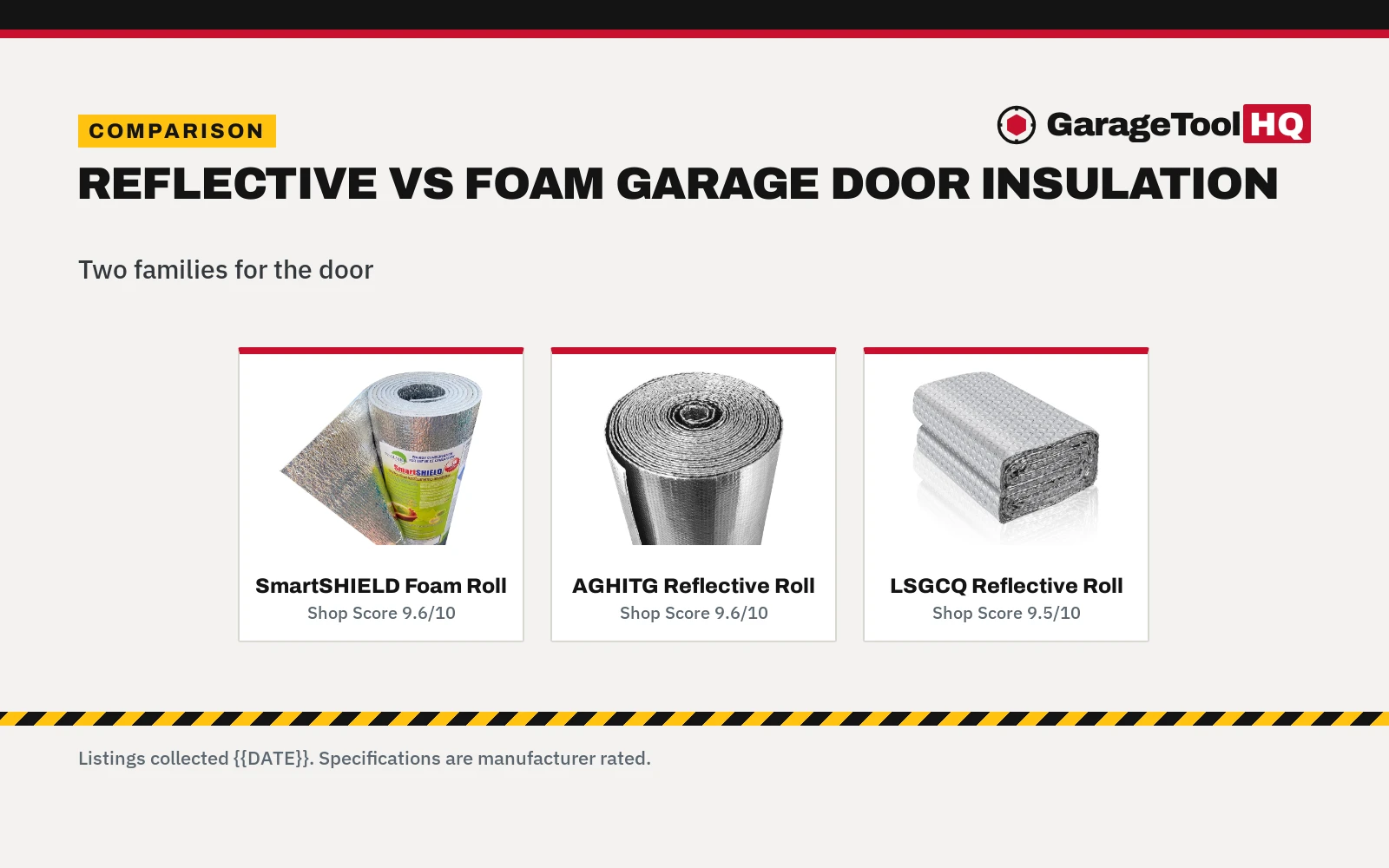
Reflective vs foam garage door insulation: two bubble rolls and a foam-core roll compared on reflectivity, core and install.

On this page
Top picks at a glance
As an Amazon Associate we earn from qualifying purchases.
- 1
 NASA TECH White Reflective Foam Core 2 Car Garage Door9.7/10View on Amazon
- 2
 BEEST FULLSTOP Garage Door Insulation Kit9.7/10View on Amazon
- 3
 Ant NASA TECH White Reflective Foam Core 2 Car Garage Door9.6/10View on Amazon
- 4
 Reflective Window Insulation FoilView on Amazon
- 5
 Double Reflective Bubble Foil Insulation FoamView on Amazon
- 6
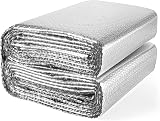 YoleShy Double Reflective Insulation Garage Door InsulationView on Amazon
- 7
 YoleShy Bubble Window Insulation for Winter and Summer HeatView on Amazon
- 8
 USA Reflective Insulation Bubble RollView on Amazon
- 9
 DGSL Double Reflective Bubble Foil Insulation FoamView on Amazon
Verdict: In this reflective vs foam garage door insulation comparison, choose reflective bubble insulation for blocking radiant heat on a budget: foil-faced rolls that cut to fit with scissors. Choose foam-core insulation for a sturdier panel feel: closed-cell foam between foil faces with a maker-stated R-value.
A garage door is a big uninsulated panel, and in summer it radiates heat straight into the shop, turning the garage into the warmest room of the house by mid-afternoon. Insulation kits for the door come in two families: reflective bubble rolls that bounce radiant heat, and foam-core rolls that add a foam layer behind the foil. Knowing which family a roll belongs to tells you what it can and cannot do before you ever unroll it.
This is the reflective vs foam garage door insulation comparison: two reflective bubble rolls and one foam-core roll, scored on stated performance, build, value, safety and warranty, with the listings’ own reflectivity and R-value claims kept separate from what they prove.
GarageToolHQ earns a commission when you buy through links on this page, at no extra cost to you. Read our affiliate disclosure.
| # | Product | Shop Score | Buy |
|---|---|---|---|
| 1 | 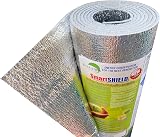 INSULATION MARKETPLACE SmartSHIELD -3mm 24inx50Ft | 9.6/10 | Buy on Amazon |
| 2 |  Reflective Insulation Roll | 9.6/10 | Buy on Amazon |
| 3 |  LSGCQ Reflective Insulation Roll Double Reflective | 9.5/10 | Buy on Amazon |

INSULATION MARKETPLACE SmartSHIELD -3mm 24inx50Ft
A 24 in x 50 ft foam-core reflective roll with 3 mm closed-cell foam and 95% reflectivity.
Pros
- 3 mm closed-cell foam core
- 95% reflectivity stated
- R-value 12 stated
- Non-toxic listed
Cons
- Spec table thickness disagrees
- No warranty stated
- R-12 needs air space
- Single roll only

Reflective Insulation Roll
A 24 in x 50 ft double-foil reflective bubble roll with 95% reflectivity and 365-day support.
Pros
- 95% reflectivity stated
- Double aluminum foil
- 3 mm bubble core
- 365-day after-sales service
Cons
- No warranty stated
- No mounting hardware listed
- Coverage figure unclear
- Single roll only

LSGCQ Reflective Insulation Roll Double Reflective
A 23.6 in x 10 ft double reflective bubble roll with included double-sided tape.
Pros
- Double-sided tape included
- Scratch-resistant film
- Easy scissor cutting
- Versatile surface use
Cons
- 10 ft roll, small coverage
- No warranty stated
- Thinnest value here
- Single roll only
More options to compare
 Reflective Window Insulation FoilCheck price on Amazon
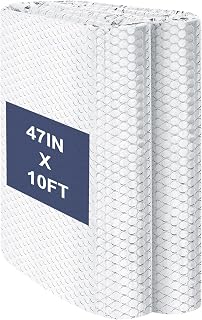 Double Reflective Bubble Foil Insulation FoamCheck price on Amazon
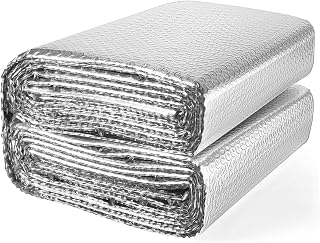 YoleShy Double Reflective Insulation Garage Door InsulationCheck price on Amazon
 YoleShy Bubble Window Insulation for Winter and Summer HeatCheck price on Amazon
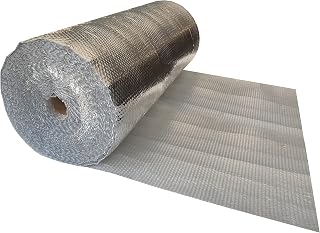 USA Reflective Insulation Bubble RollCheck price on Amazon
 DGSL Double Reflective Bubble Foil Insulation FoamCheck price on Amazon
Side by side
| Insulation | Type | Size (listed) | Core |
|---|---|---|---|
| SmartSHIELD Foam Roll | Foam core | 24 in x 50 ft | 3 mm closed-cell foam |
| AGHITG Reflective Roll | Reflective bubble | 24 in x 50 ft | 3 mm bubble |
| LSGCQ Reflective Roll | Reflective bubble | 23.6 in x 10 ft | Bubble, tape included |
Example figures are manufacturer rated, as published on each listing and collected 22 October 2026.
Reflective vs foam garage door insulation: how the two sides differ
The reflective side is aluminum foil over a bubble core: the AGHITG lists double-side aluminum foil with a 3 mm bubble core, and the LSGCQ a double reflective bubble sheet with an aluminum film layer. The foam side is the SmartSHIELD: 3 mm closed-cell polyethylene foam, not bubbles, sandwiched between engineered foil on both sides. Both families reflect radiant energy; the foam adds a middle layer the bubble rolls do not have. For a door that bakes in afternoon sun, that combination of foil face and foam backing is the closest these kits get to a real insulated panel.
Both reflective listings claim 95 percent reflectivity of radiant energy or sunlight, and the SmartSHIELD claims the same 95 percent plus an R-value of 12 in its spec table. R-values for thin reflective products depend on the air space and install, which the listing does not detail, so treat the R-12 as the maker’s claim, not a lab result. That framing matters because a shopper comparing this roll to batt insulation on R-value alone is comparing two different measurement setups.
One quirk sits on the foam side: the SmartSHIELD spec table lists thickness as 1.5 mm or 1/16 inch while the title and the item thickness field say 3 mm. Trust the title.
What the listings agree on
All three are cut-to-fit rolls for garage doors, walls, attics and similar surfaces. All three list easy cutting, the AGHITG with scissors-friendly lightweight sheet and the LSGCQ explicitly with scissors. None of the three states a warranty term; the AGHITG’s 365-day after-sales service is support, not a warranty. None states a safety certification. For a product that lives on a moving door, a stated warranty would mean something, and none is here.
Size, install and the work
The AGHITG and SmartSHIELD are both 24 in x 50 ft rolls, while the LSGCQ is 23.6 in x 10 ft, a much smaller roll suited to windows or a single panel. The LSGCQ includes double-sided tape for mounting; the other two do not list mounting hardware, so plan your own tape or adhesive. Whatever the mount, press each panel flat and seal the edges: gaps around the insulation let radiant heat sneak past the foil, which defeats the purpose of the 95 percent claim. A dry trial fit with painter’s tape before the real adhesive goes on saves a frustrating afternoon. Measure the door panels before ordering: a 10 ft roll will not cover a full door.
The SmartSHIELD lists non-toxic material that will not irritate skin, eye or throat, which matters when cutting and fitting overhead. The AGHITG lists a sun-protection and heat-insulation build with good sealing performance for winter.
Reflectivity vs R-value
These products sell two different mechanisms. Reflectivity bounces radiant heat off the foil face, which is why all three claim 95 percent. R-value measures resistance to conducted heat, which is what the SmartSHIELD’s R-12 speaks to. On a garage door in summer sun, reflectivity does the visible work; the foam layer adds a little conduction resistance and a lot of rigidity. Do not compare the R-12 to fiberglass batts, which the listing does not mention.
Moisture and vapor
The SmartSHIELD lists vapor barrier behavior, preventing condensation and unaffected by humidity and moisture. The AGHITG lists good sealing performance for winter. Garage doors sweat when warm meets cold, so a vapor-facing layer is a genuine plus, though none of the listings details an install method that guarantees it.
Example insulation
For more choices, see the best garage door insulation kit under 100 and the garage door insulation kit vs foam board comparison.
Use rated jack stands on solid ground, wear eye protection with power and air tools, keep fuel-burning equipment out of a closed garage, and follow the manual for every tool. Read our Safety Disclaimer.
Garage Fit Check
- Measure each door panel and count panels before ordering; the 10 ft roll covers far less than the 50 ft rolls.
- Confirm the roll width against the panel: 24 in and 23.6 in here.
- Plan mounting: only the LSGCQ lists included double-sided tape.
- Confirm the 3 mm thickness on the SmartSHIELD box; the spec table disagrees with the title.
Frequently Asked Questions
Which is better, reflective or foam garage door insulation?
Reflective bubble rolls block radiant heat cheaply and cut easily; the foam-core SmartSHIELD adds a closed-cell foam layer and states an R-value of 12. This comparison scores the SmartSHIELD first.
Does reflective insulation really reflect 95 percent?
Both reflective listings and the SmartSHIELD claim 95 percent reflectivity of radiant energy. That is the makers’ claim for the foil face; installed performance depends on air gaps and sealing.
How much do I need for a door?
Measure the panels. The 24 in x 50 ft rolls cover a full door with cutting to fit; the 23.6 in x 10 ft roll suits a panel or two.
Which of these has a warranty?
None of the three states a warranty term. The AGHITG lists 365-day after-sales service, which is support rather than a warranty.
Can I install it myself?
All three are cut-to-fit rolls, and the LSGCQ even includes double-sided tape. The work is measuring, cutting and sticking panels to the door sections. The listings present it as DIY-friendly; the main skill is patience with a tape measure.
Is the foam core safer to handle?
The SmartSHIELD lists non-toxic material that will not irritate skin, eye or throat. The other two make no such statement.
Related: the best garage door insulation for cold climates, the best garage door insulation for 2 car garage and the garage upgrades hub.