How to Drain Water from an Air Compressor Tank
How to drain water from an air compressor tank step by step: clearing tank moisture, comparing drain valve types, and preventing internal rust damage.

On this page
Top picks at a glance
As an Amazon Associate we earn from qualifying purchases.
- 1
 NANPU 1/2" NPT Industrial Air Compressor Filter Dryer9.7/10View on Amazon
- 2
 NANPU 3/4" NPT Industrial Air Compressor Filter Dryer9.6/10View on Amazon
- 3
 AIRZOE 3/8" NPT Air Dryer for Compressor-Air Compressor Water9.4/10View on Amazon
- 4
 PneumaticPlus PEAD Compressed Air Tank Electric TimerView on Amazon
- 5
 Stark USA 3.5HP 10 Gallons Air Compressor Tank Ultra QuietView on Amazon
- 6
 VIAIR 450C 12V Industrial Air CompressorView on Amazon
- 7
 Ingersoll Rand P1.5IU-A9 2 HP Single-Stage Air CompressorView on Amazon
- 8
 VIAIR 485C High Performance CompressorView on Amazon
- 9
 Ingersoll Rand SS3J5.5GH-WB 5.5 HP Gas Air CompressorView on Amazon
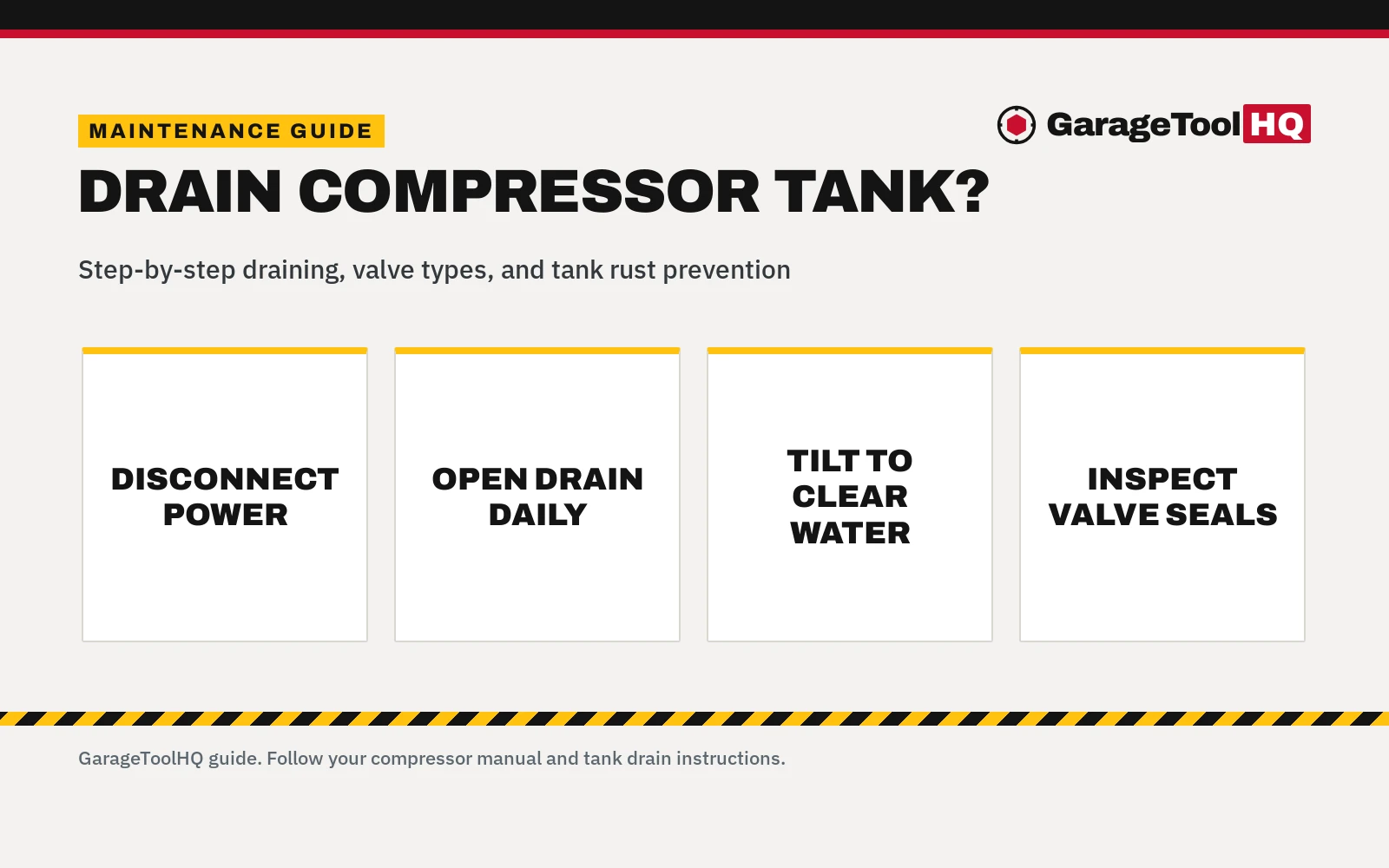
How to drain water from an air compressor tank? To drain water from an air compressor tank, shut off the compressor, disconnect electrical power, let tank pressure drop to a moderate level, place a catch container beneath the drain valve at the base of the tank, and slowly open the drain petcock or valve until all accumulated condensate and oily sludge discharge completely. Leave the valve cracked open until air hisses dry with no liquid spray, tilt portable tanks toward the drain port to clear trapped water pockets, and close the valve firmly before recharging the tank, or leave it cracked open during storage so remaining moisture can evaporate. Draining accumulated moisture prevents internal tank rust, avoids structural vessel weakness, and keeps water from blowing downstream into pneumatic tools.
More options to compare
 PneumaticPlus PEAD Compressed Air Tank Electric TimerCheck price on Amazon
 Stark USA 3.5HP 10 Gallons Air Compressor Tank Ultra QuietCheck price on Amazon
 VIAIR 450C 12V Industrial Air CompressorCheck price on Amazon
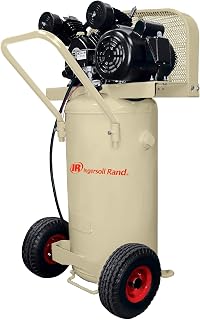 Ingersoll Rand P1.5IU-A9 2 HP Single-Stage Air CompressorCheck price on Amazon
 VIAIR 485C High Performance CompressorCheck price on Amazon
 Ingersoll Rand SS3J5.5GH-WB 5.5 HP Gas Air CompressorCheck price on Amazon
GarageToolHQ earns a commission when you buy through links on our product pages, at no extra cost to you. Read our affiliate disclosure.
Below: why moisture collects inside air tanks, how drain valve designs compare, the step-by-step draining checklist, and how inline filters keep moisture out of shop air lines.
How to drain water from an air compressor tank: where the water comes from
Air compressors draw in ambient air containing moisture vapor. As the pump compresses air into the receiver tank, compression concentrates moisture and raises air temperature. When hot compressed air cools against the steel tank walls, water vapor condenses into liquid that pools at the bottom of the vessel.
Leaving condensation inside the receiver tank creates several shop hazards:
- Internal rust: Standing water reacts with bare interior steel, producing rust scale and thinning tank walls under pressure.
- Lost air capacity: Pooled water displaces usable tank storage volume, forcing the compressor pump to cycle more often.
- Air tool damage: Water blown through hoses strips lubricating oil, corroding bearings and seals in pneumatic tools.
- Finish defects: Moisture downstream causes paint blistering, fisheyes, and contaminated plasma cuts.
Types of air compressor drain valves and how they compare
| Drain Valve Type | How It Operates | Best Shop Use |
|---|---|---|
| Manual drain cock petcock (brass twist or wing style) | Threaded brass valve opens by twisting wings to discharge water and sediment | Standard factory fitment on portable compressors; requires reaching under the tank base |
| Quarter-turn ball valve (direct or extended hose kit) | Lever handle opens fully with a 90° turn for rapid discharge without sticking | Upgraded manual drain; extended braided steel hose brings the valve to the tank side for easy access |
| Electronic timer automatic drain valve | Solenoid valve opens automatically on programmed intervals and cycle times | Stationary shop compressors running daily production or heavy air tool schedules |
Many portable compressors include a factory brass drain cock, such as the Reluen 1/4 inch NPT male petcock rated up to 150 PSI. Standard petcocks sit underneath the tank belly where access is tight and opening the wing handle requires reaching into dark corners.
To speed up maintenance, owners often swap the petcock for a ball valve. SUNROAD lists a brass drain cock ball valve with 1/4 inch NPT male threads, a 90° turn handle, and a 150 PSI working pressure rating. Extended assemblies improve access further: Hromee offers an extended drain kit with a 10-inch braided steel hose, 1/4 inch NPT threads, 175 PSI maximum working pressure, and a ball valve rated to 300 PSI. Similarly, Kbrotech supplies an extended kit with a 15-inch braided steel tube, an overall length of approximately 17 inches, 1/4 inch NPT pipe fittings, and a quarter turn drain valve rated to 300 PSI.
For high-demand shops, automatic timer drains automate the daily discharge cycle. SUNROAD provides an electronic tank drain kit with a timer valve, 1/4 inch NPT fittings, 175 PSI maximum pressure rating, 120 volts operating power, an adjustable interval from 0.5 to 50 minutes, and discharge duration from 0.5 to 10 seconds. PneumaticPlus produces a heavy-duty electric timer controlled condensate drain (PEAD) with 1/2 inch NPT ports, 115V power cord, adjustable interval from 0.5 to 45 minutes, and discharge time from 0.5 to 10 seconds.
How to drain water from an air compressor tank safely: the checklist
- Disconnect electrical power. Turn off the compressor switch and unplug the power cord or shut off the breaker so the motor cannot start during maintenance.
- Lower tank pressure to a moderate level. Bleed off excess air through a blowgun or tool until residual pressure drops to a level that expels liquid without spraying violently.
- Place a catch pan under the drain. Position an oil drain pan or shallow basin directly beneath the drain valve to collect rusty water and sludge.
- Put on eye protection. Escaping compressed air can propel water droplets and rust scale. Always wear safety glasses.
- Open the drain valve slowly. Slowly twist the petcock or turn the ball valve lever, letting residual tank pressure push liquid into the catch pan.
- Tilt portable compressors toward the drain port. Dished tank ends trap water below the bung. Gently tilt the frame toward the drain opening to clear settled pools.
- Wait until air blows dry. Keep the valve open until liquid stops flowing and only air hisses from the port.
- Clear sediment clogs safely. If air remains in the tank but nothing flows, depressurize the tank completely through an air tool or regulator until the gauge reads zero, disconnect power, and clean the valve port.
- Close the valve firmly before refilling, or leave cracked for storage. Close the valve snug before refilling. If storing the compressor in an unheated garage during winter, leave it cracked open so moisture evaporates and cannot freeze.
Compressed air stores tremendous kinetic energy under pressure. If a compressor tank has thinned from internal rust, pitted deeply, or developed a pinhole leak, never attempt to weld, braze, or screw a plug into the tank shell. A structurally weakened pressure vessel can rupture catastrophically without warning. Replace a compromised tank immediately and follow the safety relief valve specifications from the manufacturer.
Drain the tank after use so water does not rust it from the inside, never exceed the tool's rated pressure, wear eye protection, and run 240V units on the circuit the manual calls for. Do not run a gas engine compressor in a closed garage. Read our Safety Disclaimer.
Manual drain valves vs automatic electronic tank drains
When choosing between manual and automatic drain setups, compare these factors:
- Daily discipline: Manual petcocks require kneeling after every work session. Electronic timer valves discharge on a programmed schedule automatically, ensuring regular drainage.
- Air loss: Manual valves stay open until closed by hand. An electronic timer drain, such as the SUNROAD unit, allows setting a short discharge time from 0.5 to 10 seconds across intervals from 0.5 to 50 minutes, conserving shop air.
- Plumbing and access: Extended drain kits from Hromee and Kbrotech use flexible braided steel hose to relocate the valve to an accessible spot without electrical wiring.
- Power needs: Timer drains require electrical power, such as the 115V cord on the PneumaticPlus PEAD or the 110V to 120V plug on the SUNROAD valve.
When selecting the best air compressor for home garage projects, choosing between a manual petcock, an extended hose kit, or an electronic auto drain depends on how frequently your shop runs pneumatic tools and how accessible the tank base is.
Air line filters and downstream moisture protection
Draining the tank daily is essential for tank life, but air leaving the tank still carries water vapor that condenses in cool downstream hoses. Install point-of-use filtration between the compressor and your tools:
- Particulate and moisture filters: Beduan lists a 1/2 inch NPT inline particulate filter with a 5-micron element that removes 95% of moisture and debris, rated for supply pressures up to 230 PSI.
- Filter regulator lubricator combos: For pneumatic tools requiring oil, an FRL assembly pairs particulate filtration and regulation with tool oiling. NANPU provides a 3/8 inch NPT filter regulator lubricator combo featuring a 5-micron brass element, 0 to 125 PSI operating pressure range, and 60 SCFM flow rate at 90 PSI.
- Multi-stage desiccant drying: For paint spraying and plasma cutting, NANPU supplies an industrial 1/2 inch NPT air filter dryer regulator rated up to 175 PSI with a 5-micron pre-filter, a 0.01-micron coalescing filter removing 99.998% of oil and moisture aerosols, and 141 CFM flow capacity.
Frequently Asked Questions
How often should I drain water from my air compressor tank?
Manufacturers recommend draining the receiver tank daily or after every use. In humid conditions or during heavy shop use, water accumulates rapidly, and daily draining prevents standing water from corroding the interior tank walls.
Can I drain an air compressor tank while it is under full pressure?
Opening a manual drain valve under full pressure can eject water, scale, and air violently, creating noise and spraying sludge across the shop floor. Bleeding off excess pressure through a tool first makes draining safer and easier to control.
Why is the water coming out of my air compressor tank brown or rusty?
Condensation reacts with unpainted interior steel walls, creating iron oxide rust. The brown water is a mixture of condensed moisture and rust scale. Regular draining removes standing water, which helps slow internal corrosion.
What should I do if the drain valve is clogged and nothing comes out?
Rust flakes and sludge can settle over the drain orifice. Depressurize the tank completely through an air outlet or regulator until the pressure gauge reads zero, disconnect electrical power, and remove the valve to clean the port or install a replacement brass valve matched to your tank port, such as a Reluen or SUNROAD 1/4 inch NPT valve.
Do aluminum air compressor tanks need to be drained?
Yes. While aluminum resists rust better than carbon steel, moisture inside an aluminum tank still causes oxidation. Standing water also reduces air storage volume and travels downstream into tools.
Should I leave the air compressor drain valve open when not in use?
Leaving the drain valve cracked open during seasonal storage allows residual moisture to evaporate and equalizes tank pressure. In unheated garages during winter, this prevents standing water from freezing and damaging the tank.
Related: our step-by-step air compressor maintenance guide, our tutorial on how to plumb compressed air lines in a garage, our sizing guide on how to choose an air compressor, and the main air compressors hub. Also see our explanation of what CFM at 90 PSI means.