Air Hammer vs Die Grinder: Which One Do You Need?
Air hammer vs die grinder: impact vs rotary motion, how to choose by the job, air supply needs, and four air hammers ranked from the listings.

On this page
Top picks at a glance
As an Amazon Associate we earn from qualifying purchases.
- 1
 AEROPRO TOOLS 1/2-Inch Aluminum Air Impact Wrench9.7/10View on Amazon
- 2
 Chicago Pneumatic CP8759.6/10View on Amazon
- 3
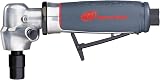 Ingersoll Rand 5102MAX 1/4" Collet Air Die Grinder Max free9.6/10View on Amazon
- 4
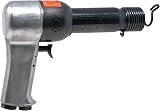 Chicago Pneumatic CP717View on Amazon
- 5
 SUNEX Long Barrel Air HammerView on Amazon
- 6
 3Pcs Smoothing Pneumatic Air Hammer Pneumatic Chisel bit SetView on Amazon
- 7
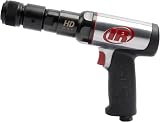 Ingersoll Rand 135MAX 3" Stroke Long-Barrel Air Hammer MaxView on Amazon
- 8
 Chicago Pneumatic CP714View on Amazon
- 9
 Pneumatic Needle Scaler 19 Needles and Air Hammer Pistol 4View on Amazon
Air hammer vs die grinder comes down to the motion: an air hammer pounds, a die grinder spins. Choose an air hammer when the job needs impact: cutting, chiseling, scraping, driving pins, breaking spot welds and scaling rust. Choose a die grinder when the job needs rotary speed: grinding, deburring, porting and polishing with small bits. They are different tools for different jobs, and most air-tool shops end up with both.
More options to compare
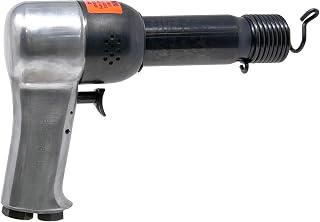 Chicago Pneumatic CP717Check price on Amazon
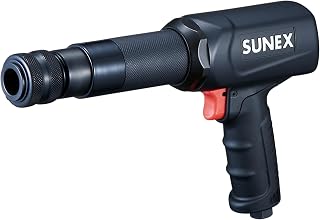 SUNEX Long Barrel Air HammerCheck price on Amazon
 3Pcs Smoothing Pneumatic Air Hammer Pneumatic Chisel bit SetCheck price on Amazon
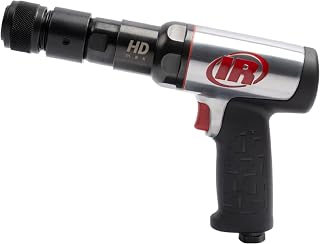 Ingersoll Rand 135MAX 3" Stroke Long-Barrel Air Hammer MaxCheck price on Amazon
 Chicago Pneumatic CP714Check price on Amazon
 Pneumatic Needle Scaler 19 Needles and Air Hammer Pistol 4Check price on Amazon
GarageToolHQ earns a commission when you buy through links on this page, at no extra cost to you. Read our affiliate disclosure.
What an air hammer does
An air hammer is a pneumatic chisel: compressed air drives a piston that pounds a chisel or attachment thousands of times per minute. The four examples here run 1,800 to 4,500 BPM, with strokes from 1.57 inches to 150mm (5.9 inches). The work is impact work: the Ingersoll Rand listing names exhaust and front-end jobs, bolt cutting, pin driving and body shearing; the VEVOR names cutting metal, breaking concrete, removing bolts and rust; the AMGSH names muffler removal, body panel cutting and spot weld breaking; the Chicago Pneumatic names automotive, body shop, metalworking and welding.
Chisels define the job. The Ingersoll Rand kit includes a 5-piece chisel set with a quick-change retainer, the AMGSH includes four chisels (taper punch, panel cutter, flat and spot weld chisels) with a spring retainer, and the VEVOR includes four round-shank chisels plus a 19-needle scaler for rust removal. The Chicago Pneumatic ships with a retainer and takes standard 0.498-inch round shank chisels. Match the chisel to the task: panel cutters for sheet metal, punches for pins, scalers for rust.
Retainers matter on the job. The Ingersoll Rand’s quick-change retainer and the AMGSH’s spring retainer let you swap chisels fast between tasks, which the listings tie to less downtime. The VEVOR’s spring secures the chisel attachment the same way. A hammer that fights chisel changes slows every job it touches.
BPM, stroke and what they mean
The listings give you two numbers to compare: blows per minute and stroke length. The VEVOR and AMGSH state 4,500 BPM, the Ingersoll Rand 3,530 BPM, and the Chicago Pneumatic 1,800 BPM. Strokes run 1.57 inches on the VEVOR, 2 5/8 inches on the Ingersoll Rand, 2.68 inches on the CP717, and 150mm (5.9 inches) on the AMGSH. In general, higher BPM with a shorter stroke means faster, lighter hits for chiseling and sheet metal; lower BPM with a longer stroke means slower, harder hits for pins, bolts and heavy metal.
Weight and size decide comfort. The Ingersoll Rand states 3.9 pounds and 7.2 inches with an anti-vibration system and anti-slip grip, the CP717 4.7 pounds and 7.48 inches, the VEVOR 5.5 pounds, and the AMGSH 1.52 kg. For overhead or extended work, the lighter hammers with vibration control are the easier pick.
What a die grinder does
A die grinder is a high-speed rotary tool that spins small grinding bits, burrs and stones, usually at high speed. Where the air hammer pounds a chisel into the work, the die grinder spins a bit against it: grinding welds smooth, deburring edges, porting heads and polishing tight spots. No die grinder is listed among the four products here, so shop that side separately and compare on speed, collet size and air consumption the same way the hammers are compared below.
The two tools also differ in what they demand from you. The hammer’s chisel does the work in bursts, so control means guiding the point and letting the BPM do the cutting. The grinder’s bit needs a steady hand and light pressure, since speed plus pressure is what overheats the work and wears the bit. Different motions, different skills, and different safety gear: eye and hearing protection for the hammer’s noise and flying chips, plus a face shield for the grinder’s sparks.
Air hammer vs die grinder: how to choose
Choose by the motion the job needs. If the work is separating, cutting or breaking, pounding force wins and the air hammer is the tool. If the work is shaping, smoothing or finishing, rotary speed wins and the die grinder is the tool. Rust removal sits in the middle: the VEVOR’s needle scaler pounds rust off, while a die grinder with a wire wheel or abrasive bit spins it off. For exhaust work, the hammer cuts and shears; for weld cleanup, the grinder smooths.
Air supply matters for both. The Chicago Pneumatic states 90 psi working pressure with 12 CFM consumption at load, and the VEVOR states 90 PSI with 11.5 CFM average. The Ingersoll Rand and AMGSH listings state no CFM figure. Size your compressor to the tool’s stated consumption, and remember the hammer needs the air in bursts while the grinder needs it continuously.
Fittings are standard across the four: the CP717 states a 1/4-inch NPT inlet, the VEVOR states a 1/4 NPT inlet, and the AMGSH includes a fitting for a 1/4-inch hose. The Ingersoll Rand adds a swivel air inlet that the listing says prevents hose tangling. Check your hose ends before the first job.
The gear: four air hammers ranked
The Ingersoll Rand 123MAXK leads: up to 3,530 BPM with a 2 5/8-inch stroke, a 15 percent impact force increase over standard air hammers stated, an anti-vibration system, an anti-slip grip and a swivel air inlet, with a quick-change retainer and a 5-piece chisel set. At 3.9 pounds and 7.2 inches with a stated 1-year limited warranty, it is the refined pick for body shops. The listing states 95/106 dBA sound figures, so plan hearing protection.
The Chicago Pneumatic CP717 is the heavy-duty pick: 1,800 BPM with a long 2.68-inch stroke and a 0.75-inch bore, a spool valve for positive trigger control, and a 0.498-inch round shank. It states 90 psi working pressure, 12 CFM at load, a 1/4-inch NPT inlet, 4.7 pounds and a 1-year limited warranty. Lower BPM with a longer stroke means harder individual hits, which suits the truck and off-road work the listing names.
The VEVOR is the accessory pick: 4,500 BPM with a 1.57-inch stroke, a 19-needle air scaler for rust removal, four round-shank chisels, three air nozzle connectors and a spring, at 5.5 pounds. The powder-coated aluminum alloy housing with an active air spring system is stated for vibration reduction, and the pistol grip is ergonomic. Stated air needs are 90 PSI and 11.5 CFM average. No warranty term is stated.
The AMGSH 150mm kit is the long-stroke pick: up to 4,500 BPM with a 150mm (5.9-inch) stroke stated for greater impact force, four chisels (taper punch, panel cutter, flat and spot weld), a quick-change spring retainer and a 1/4-inch hose fitting, in a rugged aluminum alloy body at 1.52 kg. No warranty term is stated. The long stroke is the standout figure here; compare it against the Ingersoll Rand’s 2 5/8 inches and the CP717’s 2.68 inches.
Warranties split the group: the Ingersoll Rand and Chicago Pneumatic state 1-year limited terms, while the VEVOR and AMGSH state no warranty term. The Ingersoll Rand also states 95/106 dBA sound figures, the only noise figure here, so budget for hearing protection with any of the four.
Wear eye protection with every air tool, use impact-rated sockets on impact wrenches, disconnect the air line before changing accessories, and finish lug nuts with a torque wrench to the vehicle's spec. See OSHA eye and face protection. Read our Safety Disclaimer.
Frequently Asked Questions
Can a die grinder do an air hammer’s job?
No. A die grinder spins bits for grinding and finishing; it cannot pound a chisel, drive a pin or break a spot weld. For impact work you need the hammer.
Can an air hammer grind?
Not really. The hammer pounds; the needle scaler on the VEVOR removes rust by impact, but smoothing welds and deburring want the rotary motion of a die grinder.
What BPM and stroke should I look for?
The listings here run 1,800 to 4,500 BPM with strokes from 1.57 inches to 150mm (5.9 inches). Higher BPM with a shorter stroke suits fast chiseling; lower BPM with a longer stroke, like the CP717’s 1,800 BPM and 2.68-inch stroke, hits harder per blow.
What air compressor do I need?
The Chicago Pneumatic states 90 psi and 12 CFM at load; the VEVOR states 90 PSI and 11.5 CFM average. Size the compressor to the stated consumption, with margin for continuous use.
What chisels do I need?
The kits cover the basics: the Ingersoll Rand brings five chisels, the AMGSH four (including a spot weld chisel), and the VEVOR four plus a needle scaler. The CP717 takes standard 0.498-inch round shank chisels bought separately.
What safety gear do I need?
For the hammer: eye protection, hearing protection (the Ingersoll Rand states 95/106 dBA), and gloves against vibration and chips. For the grinder: a face shield against sparks, plus eye and hearing protection. The listings state anti-vibration and anti-slip features on the Ingersoll Rand and VEVOR, but they do not replace PPE.
Related: the die grinder vs angle grinder comparison, the best air hammer roundup, and our air tools hub.