Auto Circuit Tester How to Use: A Garage Guide
A wire tracer follows a broken wire to the fault, and a power probe checks the part, and the tools here cover both jobs for garage diagnostics.

On this page
Top picks at a glance
As an Amazon Associate I earn from qualifying purchases.
- 1
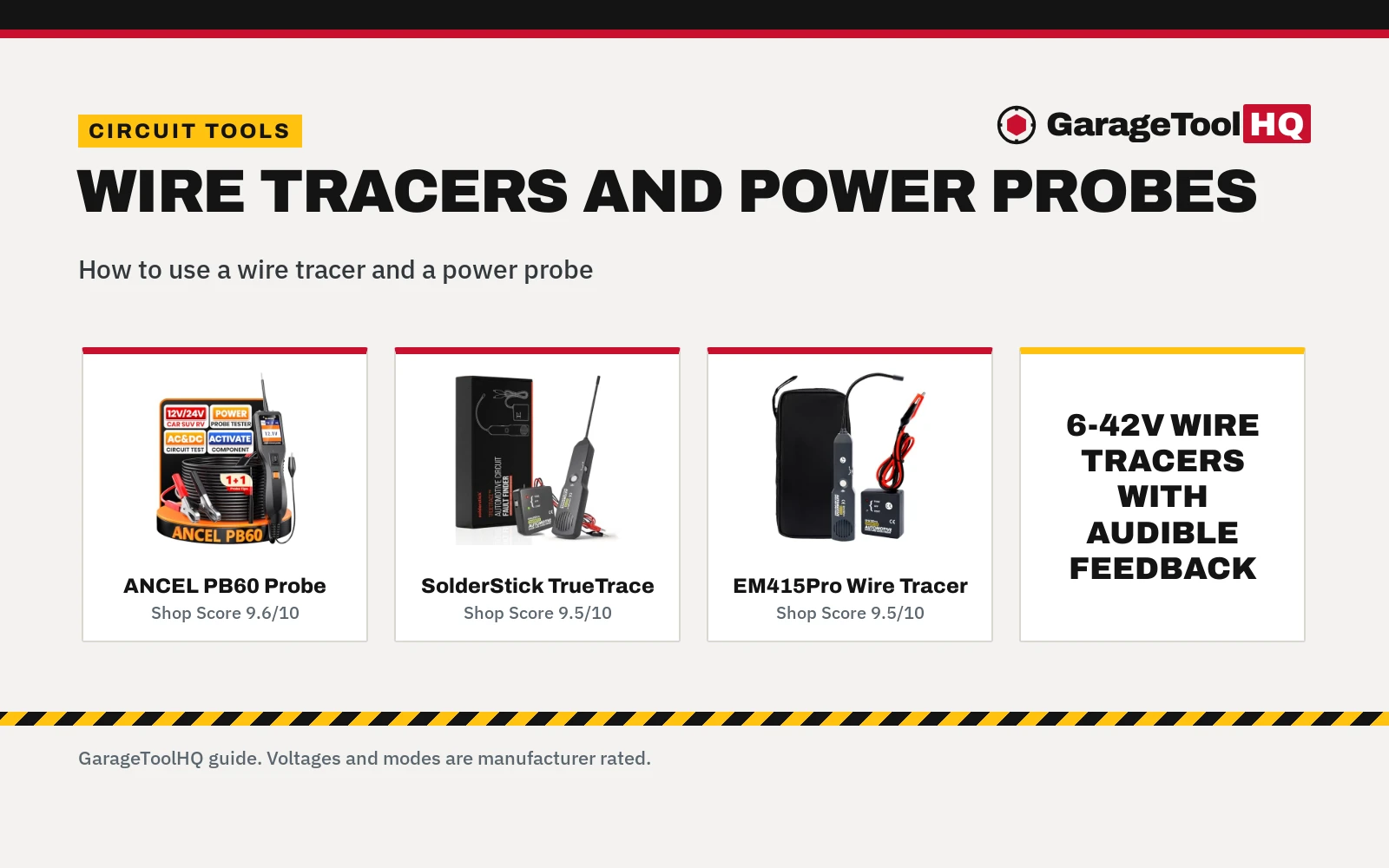
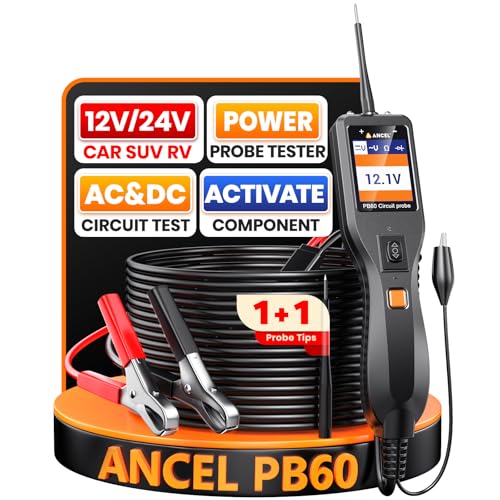 ANCEL PB60 Automotive Circuit Tester9.6/10View on Amazon
- 2
 SolderStick TrueTrace Auto Circuit Tester9.5/10View on Amazon
- 3
 EM415Pro Automotive Wire Tracer Circuit Breaker9.5/10View on Amazon
Learning auto circuit tester how to use starts with a headlight that will not turn on and a fuse that keeps blowing. The fault may sit in the wire or in the part, and the tool tells which: a wire tracer follows the wire to the fault, and a power probe checks the part with battery power or ground.
GarageToolHQ earns a commission when you buy through links on our product pages, at no extra cost to you. Read our affiliate disclosure.
| # | Product | Shop Score | Buy |
|---|---|---|---|
| 1 | ANCEL PB60 Automotive Circuit Tester | 9.6/10 | Buy on Amazon |
| 2 | SolderStick TrueTrace Auto Circuit Tester | 9.5/10 | Buy on Amazon |
| 3 | EM415Pro Automotive Wire Tracer Circuit Breaker | 9.5/10 | Buy on Amazon |
ANCEL PB60 Automotive Circuit Tester
A power circuit probe with 4 diagnostic modes, component activation, a digital display and a built-in circuit breaker for 12-24V vehicle circuits.
Pros
- 4 modes: DC voltage, AC voltage, resistance and diode
- Applies battery power or ground to check parts
- Built-in circuit breaker for overload protection
- Backlit TFT display with red and green LEDs
Cons
- Made for 12V and 24V circuits, so check the system voltage first
- No transmitter or receiver for tracing hidden wires
- No flexible probe for tight spaces
- Handheld design needs a free hand for the probe
SolderStick TrueTrace Auto Circuit Tester
An automotive wire tracer with adjustable sensitivity and audible signal guidance for open and short circuits on 6V-42V DC systems.
Pros
- Adjustable sensitivity with audible signal guidance
- Flexible receiver bends around tight spaces
- Works on cars, trucks, SUVs, motorcycles, RVs and trailers
- Transmitter, receiver and leads included
Cons
- No voltage, resistance or diode modes
- No warranty term is stated
- No power switch to activate parts
- No digital display for readings
EM415Pro Automotive Wire Tracer Circuit Breaker
An automotive wire tracer and cable tracker with a 7 inch flexible probe and audible receiver feedback for 6-42V DC diagnostics.
Pros
- 7 inch flexible probe reaches tight spaces
- Audible receiver feedback for faster troubleshooting
- Traces wires without cutting or damaging insulation
- Works on cars, trailers, trucks and low voltage DC systems
Cons
- No voltage, resistance or diode modes
- No warranty term is stated
- No power switch to activate parts
- No adjustable sensitivity stated
What these tools do
These tools find open circuits, short circuits and bad grounds in a car. A wire tracer sends a signal down the wire, and the receiver follows the signal to the fault without piercing the wire. A power probe applies battery power or ground to a part, so a relay, fan or light can be checked without jumper wires.
Wire tracers vs power probes
A wire tracer follows a wire behind panels and through harnesses to find the fault, while a power probe checks voltage, continuity and grounds at the part. The EM415Pro and SolderStick tools are wire tracers with a transmitter and receiver, and the ANCEL PB60 is a power probe with 4 diagnostic modes. A wire tracer suits a hidden fault in a harness, while a power probe suits a part that will not run.
| Type | What it finds | Tool |
|---|---|---|
| Wire tracer | Open and short circuits along the wire | EM415Pro and SolderStick tools |
| Power probe | Voltage, continuity and grounds at the part | ANCEL PB60 |
The gear: circuit tools for garage use
The trace and check steps above need the tools in these kits, so pick the tool that matches the fault in front of it.
Auto circuit tester how to use
Start with the fault. For a hidden fault, connect the transmitter, trace the wire with the receiver, and follow the audible signal to the fault. The SolderStick tool adds adjustable sensitivity, and the EM415Pro probe bends into tight spaces around dashboards and fuse boxes. For a part that will not run, use the power probe: check the voltage, then apply battery power or ground to the part and watch the red and green LEDs. The ANCEL PB60 switches between DC voltage, AC voltage, resistance and diode modes, and its built-in circuit breaker gives overload protection.
Then match the tool to the system. The EM415Pro and SolderStick tools work on 6-42V DC systems, and the ANCEL PB60 is listed for 12-24V circuits and also gives a 6-30V range. See the diagnostics and electrical hub for the garage setup.
Read the manual before first use, wear eye protection, keep the work area clear and ventilated, and stay within every stated rating. Read our Safety Disclaimer.
FAQ: garage tools
What do these tools do?
These tools find open circuits, short circuits and bad grounds. A wire tracer follows the wire to the fault, and a power probe checks voltage, continuity and grounds at the part.
Do I need to pierce wires to trace a circuit?
No. The EM415Pro and SolderStick tools trace wires without piercing them, and the receiver follows the signal behind panels and through harnesses.
What is the difference between a wire tracer and a power probe?
A wire tracer follows a wire to the fault, while a power probe checks the part with voltage, continuity and ground readings and can apply battery power or ground to it.
Which voltages do these tools work on?
The EM415Pro and SolderStick tools work on 6-42V DC systems. The ANCEL PB60 is listed for 12-24V circuits and also gives a 6-30V range.
Can a power probe activate a part?
Yes. The ANCEL PB60 applies battery power or ground to a part with its built-in power switch, so a light, relay, cooling fan or blower motor can be checked.
Related: automotive multimeters for troubleshooting and our diagnostics and electrical hub.