Does a New Car Battery Need Charging?
A fresh car battery usually arrives ready to start the car, but a long shelf stay can leave it short on charge, so here is how to check it and top it up with a charger.

On this page
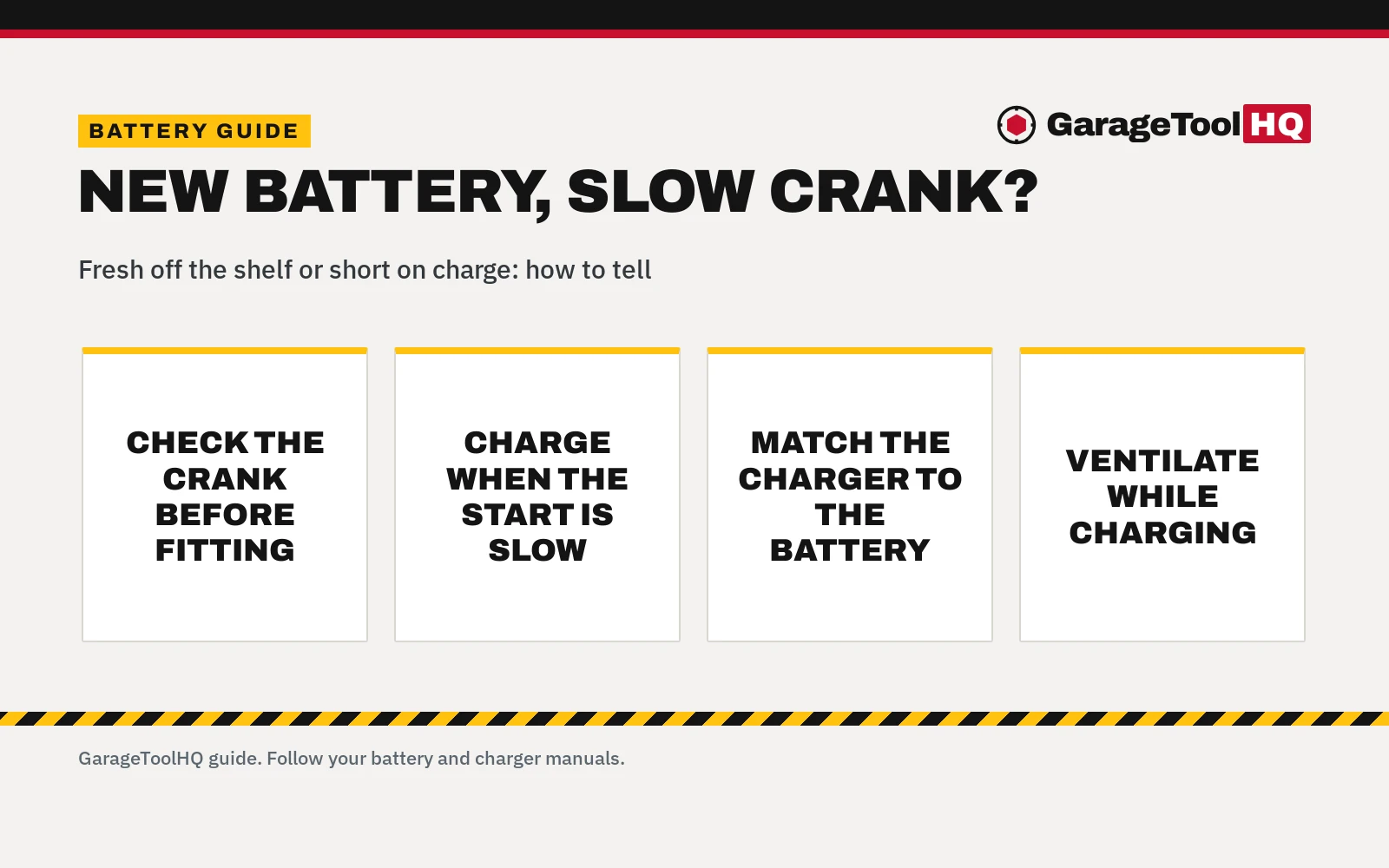
Does a new car battery need charging? In most cases, no. A fresh battery leaves the shelf with enough charge to crank the engine, and the drive home tops it up. A battery that sat on the shelf for a long while, or a battery that cranks slowly right after fitting, may need time on a charger before it earns full trust. This guide explains how to tell the difference, what a charger does for a new battery, and how to hook a charger up without drama.
As an Amazon Associate I earn from qualifying purchases. GarageToolHQ earns a commission when you buy through links on our product pages, at no extra cost to you. Read our affiliate disclosure.
Below: what a new battery holds from the shelf, the signs that it needs a charge, the charger sizes that fit common car batteries, and a hookup routine to follow in the driveway.
Does a new car battery need charging? What a fresh battery holds
A new car battery is sold charged, not dry. The maker fills it, charges it and seals it before it ships, so it arrives ready to work. The catch is shelf time: a battery loses charge slowly while it waits for a buyer, and a battery that waited through a slow season may arrive well short of a full charge. Cold storage slows the drain, but a cold battery still cranks weakly, so a battery that sat in a cold warehouse deserves a closer look than one that moved fast.
The alternator tops the battery up as you drive, so a healthy new battery that starts the car with a brisk crank usually needs no charger at all. The charger earns its place when the start is slow, when the car sat unused before the swap, or when the battery spent a long stretch on the shelf. A drive after fitting helps, but a charger gives a full, even charge that a drive alone may not match.
Signs a new battery needs a charge
A new battery rarely announces itself with a warning light. The signs show up in the crank and the lights, and they are easy to spot if you know what to watch for:
- Slow crank. The engine turns over lazily instead of firing with a brisk crank.
- Dim lights. Headlights and cabin lights look weak with the engine off.
- Clicking sound. The starter clicks or stutters instead of turning the engine.
- Long shelf stay. The battery sat in storage for months before the sale, which drains the charge.
When in doubt, put the battery on a charger rather than guessing. A smart charger watches the voltage and drops to a float charge when the battery is full, so it will not overcharge a battery that was already fine. If the car still cranks slowly after a full charge, the fault may sit elsewhere, and a mechanic can check the starter and the cables.
How to charge a new car battery
Work with the garage door open or outdoors. Flooded lead-acid batteries can give off hydrogen while charging, so keep the area ventilated and keep flames and sparks away from the battery.
- Match the charger to the battery. A 12V charger suits a 12V car battery. A charger that also handles 6V suits a 6V battery, and a 24V setting suits a 24V system only, never a 12V battery.
- Connect the clamps. Clip the red clamp to the positive terminal and the black clamp to the negative terminal, or to a bare metal ground point the manual names.
- Pick the charge rate. The E-FAST 25A lists 2A for small batteries and 25A for rapid charging on large vehicles from 75-400AH, with an Auto mode that picks the rate itself. A low rate suits a small battery, while a high rate suits a large, flat battery.
- Plug in and let it run. Plug the charger into the wall and let it run until it shows a full charge or drops to a float charge. The CRAFTSMAN CMXCESM258 lists a 6-foot power cord and 6-foot battery cables, which give 12 feet of total reach, so the charger can sit clear of the car while it works.
- Watch the time. Do not leave a basic charger running without a watch. The maker of the YDBAO 6A charger warns against leaving it running unattended for more than 12 hours.
- Disconnect in reverse. Unplug the charger, then remove the black clamp, then the red clamp.
Charger sizes that fit a new car battery
Match the output to the battery. The YDBAO charger lists 4Ah-100Ah lead-acid batteries, while the E-FAST 25A lists large vehicle batteries from 75-400AH. A 1A maintainer suits keeping a battery topped up, while a 25A charger suits a large, flat battery that needs a fast refill.
| Charger | Output | Voltage | Warranty |
|---|---|---|---|
| NOCO GENIUS1 | 1A | 6V and 12V | 3-year warranty |
| YDBAO 6A | 6A | 12V | 2-Year warranty |
| E-FAST 25A | 25A for 12V, 15A for 24V | 12V and 24V | 1 year warranty |
| CRAFTSMAN CMXCESM258 | 12A | 6V and 12V | 1 year warranty |
The NOCO GENIUS1 lists a 110-inch DC cable with battery clamps, and the E-FAST 25A lists a booster mode that runs for 200 seconds to help start a car with a flat battery. The E-FAST 25A also lists a repair mode of 16 hours for old or sulfated batteries, plus a winter mode for temperatures under 10°C and a summer mode for temperatures over 28°C.
Lead-acid batteries can release hydrogen while charging, so charge in a ventilated space away from sparks and flames, connect positive first and negative last, set the charger to the battery type (flooded, AGM, gel, lithium), and wear eye protection. Read our Safety Disclaimer.
Charger or maintainer for a new battery
A charger fills a flat battery, while a maintainer holds a full battery at full charge during storage. A new battery that cranks well needs neither, but a maintainer earns its keep when the car sits unused for weeks. The trickle chargers for car batteries keep a battery topped up without overcharging it, and the guide to the best way to recharge a car battery walks through the full routine.
Some smart chargers add a pulse repair mode that the makers say reverses sulfation in lead-acid batteries. The NOCO GENIUS1 lists precision pulse charging, and the E-FAST 25A lists a repair mode of 16 hours. For a brand-new battery, sulfation is rarely the issue, but the mode helps a battery that sat on the shelf for a long while. Learn how the process works in the guide to what a battery desulfator is.
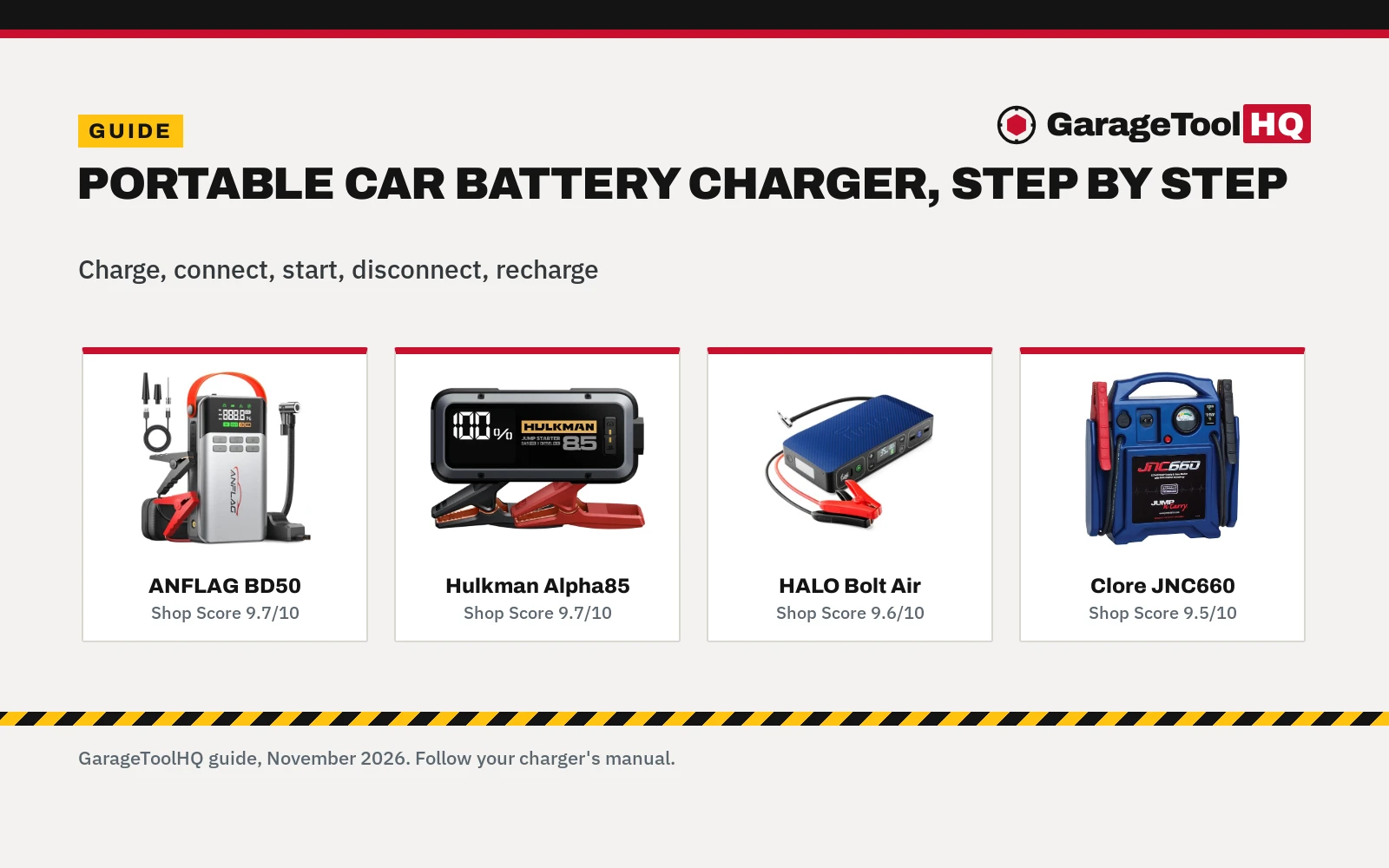
Temperature compensation also matters in a cold garage. The NOCO GENIUS1 adjusts the charge with the ambient temperature, and the YDBAO charger switches between winter and summer modes so the battery reaches a full charge in cold weather without overcharging in heat. Check the manual for the right mode, and see how to use a portable car battery charger for the hookup routine in full.
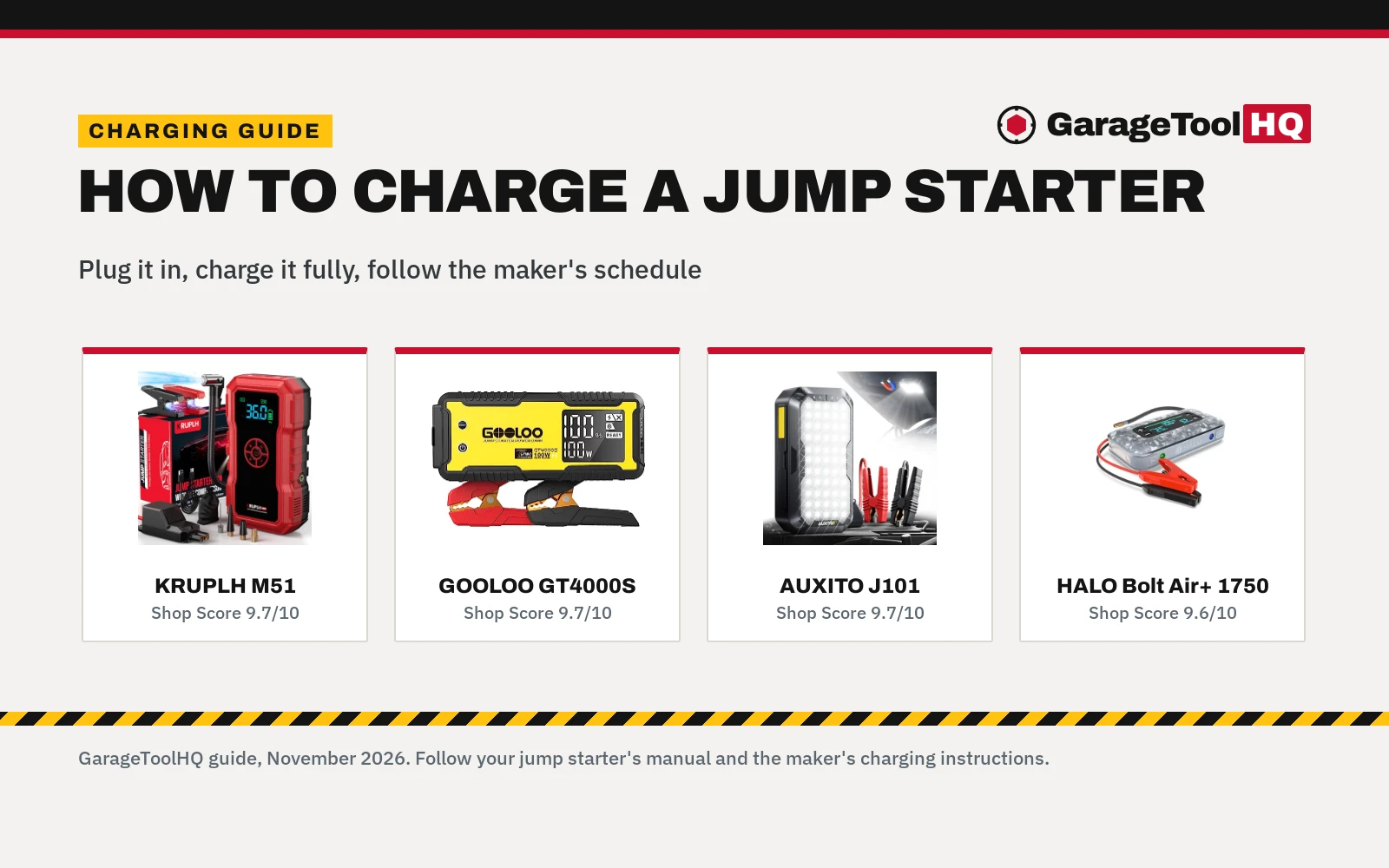
If the car still will not start after a full charge, more charging is not the answer, and a mechanic can check the starter and the cables. A jump starter earns its place as a backup for a flat battery, and the guide to how to charge a jump starter pack covers keeping one ready.
FAQ: garage tools
Does a new car battery come fully charged?
Most new batteries leave the maker charged and ready to start the car, but shelf time drains the charge. A battery that sat in storage for a long while may arrive short of a full charge, so watch the crank after fitting and put it on a charger if the start is slow.
How long should a new car battery stay on a charger?
Let a smart charger decide: it runs until the battery shows a full charge, then drops to a float charge. Do not leave a charger running without a watch, and never leave the YDBAO 6A charger running unattended for more than 12 hours. A repair mode of 16 hours suits old or sulfated batteries, not a new battery.
Can driving replace charging a new battery?
Driving tops the battery up through the alternator, and a healthy new battery that cranks well needs no charger at all. A drive alone may not fully recharge a battery that arrived flat, so a charger gives a fuller, more even charge.
What charger size suits a new car battery?
Use a 12V charger for a 12V car battery. The YDBAO 6A lists lead-acid batteries from 4Ah-100Ah, the E-FAST 25A lists large vehicle batteries from 75-400AH, and a 1A maintainer suits keeping a battery topped up during storage.
Can a new battery stay on a charger overnight?
It depends on the charger. A smart charger or maintainer that drops to a float charge can stay connected, and the maker of the NOCO GENIUS1 says its charger can stay connected without overcharging. A basic charger without that mode should not run unattended, and the YDBAO maker warns against more than 12 hours without a watch.
Will a new battery charge itself once the car runs?
Yes, the alternator charges the battery while the engine runs. A healthy new battery reaches a full charge through normal driving, but a battery that arrived flat still benefits from a session on a charger before it faces cold mornings and short trips.
Related: the guide to how to choose a car battery, battery desulfator vs battery charger and ring terminals for car batteries.