What Is a Battery Desulfator and How It Works
A battery desulfator sends pulses through a lead-acid battery to break down sulfate buildup, and this guide explains how it works, when it can help, and when it cannot.

On this page
The car sat in the garage through the cold months while the snow piled up outside, and when spring came the key turned to a dull click and nothing more. The battery had gone flat from sitting, and a plain charger would only bring back part of what was lost. That flat battery is where the question of what is a battery desulfator comes in: it is a device that sends pulses through a lead-acid battery to break down the sulfate crust that forms on its plates, giving a weak battery a chance to hold a charge again.
As an Amazon Associate I earn from qualifying purchases. GarageToolHQ earns a commission when you buy through links on our product pages, at no extra cost to you. Read our affiliate disclosure.
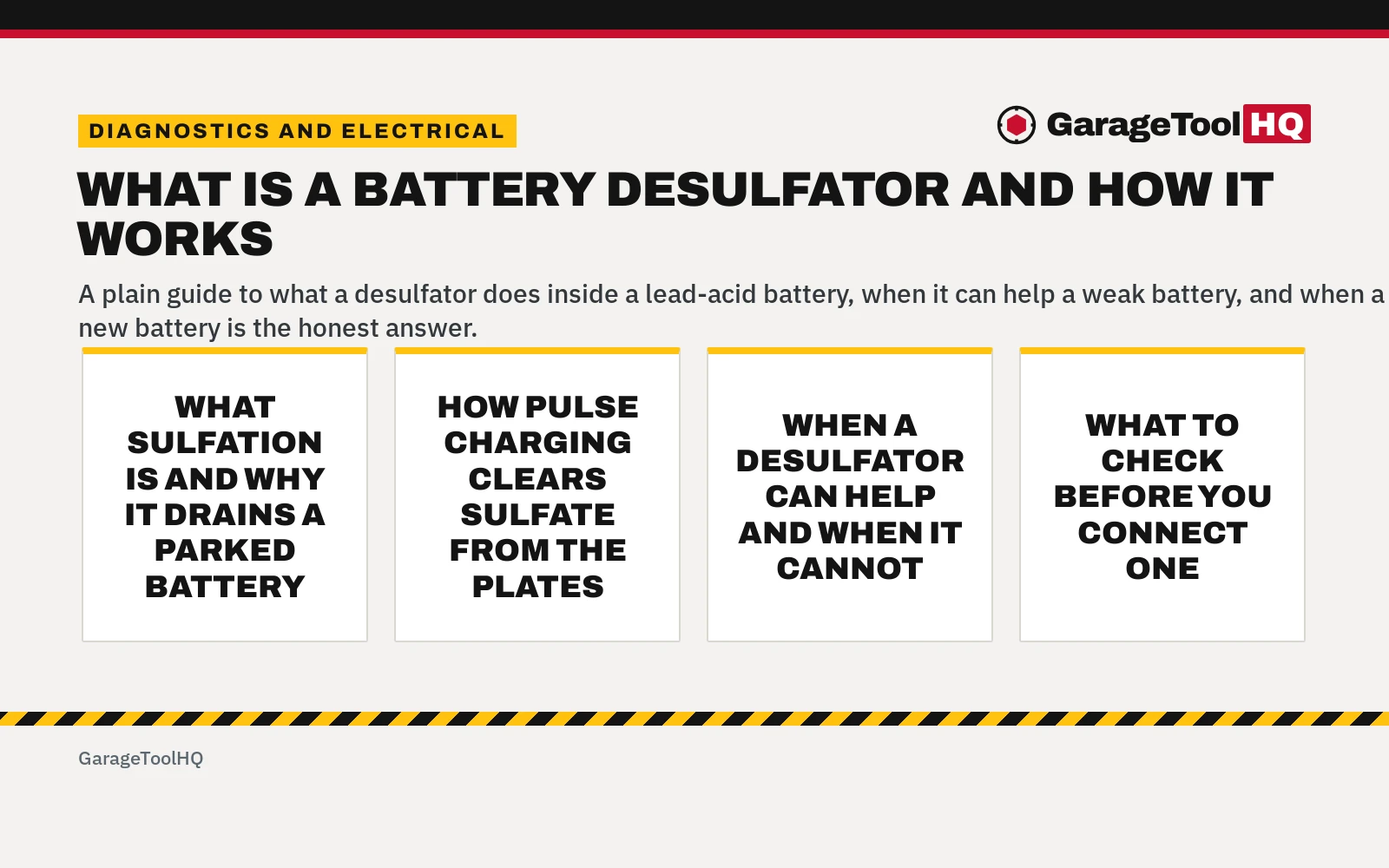
Below: what sulfation is, how pulse charging works, the kinds of desulfator on the market, and a checklist to run before you connect one to a battery.
What is a battery desulfator? Where sulfation comes from
A lead-acid battery makes power through a chemical reaction between its plates and the acid inside the case. When the battery sits unused or stays partly charged for a long stretch, sulfate crystals grow on the plates and coat them. The coating blocks the reaction, so the battery holds less charge and cranks the engine more slowly, and a charger on its own may never clear it.
Sulfation is the normal wear of a battery that spends long spells off charge. Cars that sit through a season, boats in winter storage and mowers parked after the last cut of the year all face the same trouble. The plates may still be sound, but the crust keeps them from doing their job, and that is the gap a desulfator is built to close.
How a desulfator works
A desulfator sends short pulses of current through the battery. Each pulse shakes sulfate loose from the plates so the acid can reach the metal again, and the charge the battery takes rises as the crust clears. The pulses are brief bursts, so the work is slow and steady.
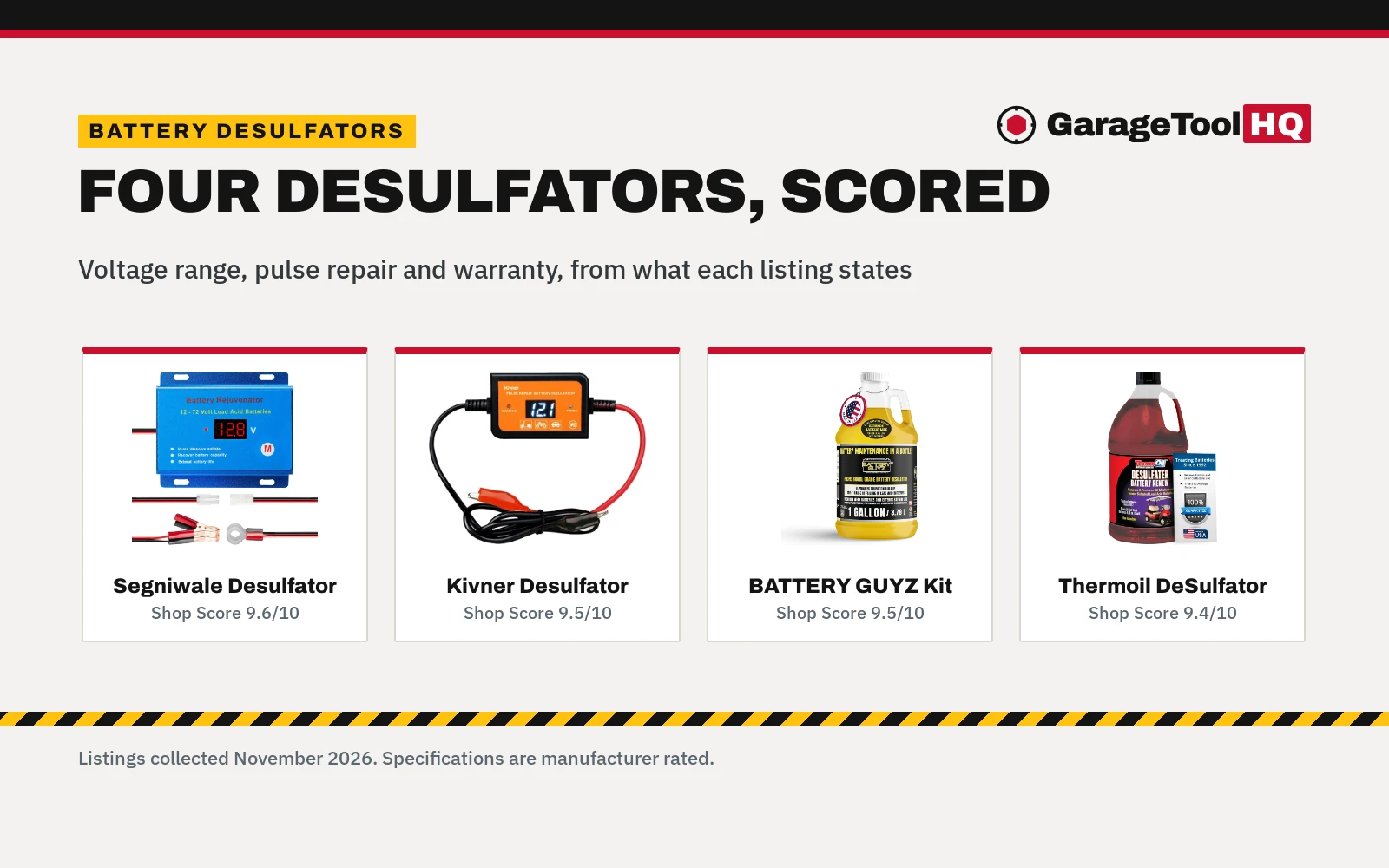
Many desulfators sold today are built into a charger rather than sold as a lone box. The NOCO GENIUS1 is a 1-amp charger for 6-volt and 12-volt lead-acid and lithium batteries, with precision pulse charging that detects and reverses sulfation and acid stratification. The WAVLINK 280W charger offers 4 charging modes, including a desulfation mode, and the E-FAST charger runs an 8-stage process with a repair mode that runs for 16 hours. The YHCHKJ charger uses pulse repair to restore lead-acid capacity and to wake a battery in poor condition.
Current settings vary by model. The E-FAST charger delivers 25 amps for 12V batteries and 15 amps for 24V batteries, with manual settings of 2 amps, 8 amps, 20 amps and 25 amps, plus an auto mode that reads the battery and picks the rate itself. The YHCHKJ charger offers 20 amps, with 12V settings of 5 amps, 10 amps and 20 amps and 24V settings of 3 amps, 5 amps and 10 amps. A low setting suits a small battery and a high setting suits a large one, so check the manual for the charger you own.
Kinds of battery desulfator
Desulfators come in a few shapes, and the right one depends on whether the battery needs charging as well as repair.
| Kind | What it does | Suits |
|---|---|---|
| Standalone desulfator | Sends pulses only, and does not charge | A battery that already holds a charge but has lost capacity |
| Charger with a desulfation mode | Charges the battery and runs a repair cycle | A weak battery that needs charging and repair together |
| Maintainer with desulfation | Holds a stored battery at full charge and pulses now and then | A car, boat or mower that sits unused for long spells |
Chargers with a desulfation mode are the common pick for a home garage, because they cover charging, repair and upkeep in one box. A standalone desulfator makes sense only when a good charger is already on the bench, and a maintainer suits a battery that will sit for months, since it keeps the battery full and slows fresh sulfate from forming.
How to use a battery desulfator: the checklist
- Match the battery. The chargers in the listings cover 6-volt, 12-volt and 24-volt lead-acid batteries between them, and several also suit lithium and LiFePO4 batteries. Read the label on the battery before you connect anything.
- Connect red to positive, black to negative. The E-FAST and WAVLINK chargers include reverse polarity protection, but a wrong connection is still a fault to avoid. The NOCO GENIUS1 ships with a 110-inch DC cable, so the charger can sit on the bench while the clamps reach the battery.
- Pick a low current for a small battery. The E-FAST charger offers 2 amps for small batteries such as motorcycles and lawn mowers, and its auto mode reads the battery and picks the rate itself. A high current on a small battery risks heat, so start low when in doubt.
- Give it time. The E-FAST repair mode runs for 16 hours, and a battery that has sat for months will not recover in an afternoon. Leave the charger to finish its cycle, and do not keep unplugging it to check.
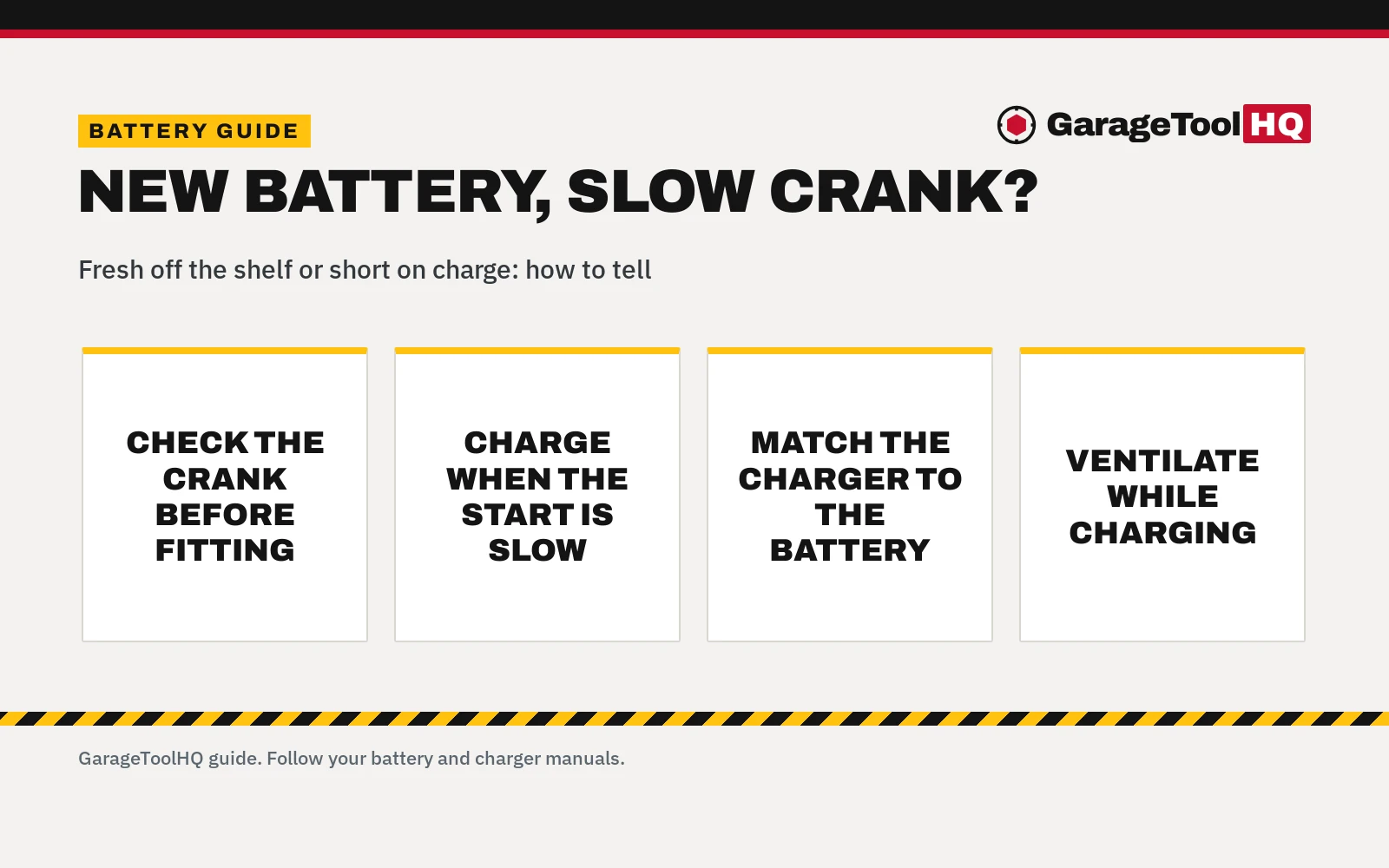
- Charge in fresh air. Lead-acid batteries give off gas while charging, so open the garage door or move the work outside. Keep sparks, flames and lit cigarettes away from the battery, and never charge near fuel or solvents.
- Mind the temperature. The WAVLINK charger works from -20°C to 40°C, and the E-FAST charger switches to a winter mode below 10°C and a summer mode above 28°C. Cold slows charging and heat risks overcharging, so follow the manual for the season.
- Check the result. After the cycle, see whether the battery holds a charge. If the battery still will not hold a charge, it is worn out and needs replacing, not more pulsing.
A desulfator is not a jump starter. The YHCHKJ charger needs a minimum starting voltage of 2V and cannot start a dead battery, and the E-FAST booster mode is a separate jump-start aid that runs for 200 seconds. If the car will not crank at all, charge the battery first or fit a new one.
Lead-acid batteries can release hydrogen while charging, so charge in a ventilated space away from sparks and flames, connect positive first and negative last, set the charger to the battery type (flooded, AGM, gel, lithium), and wear eye protection. Read our Safety Disclaimer.
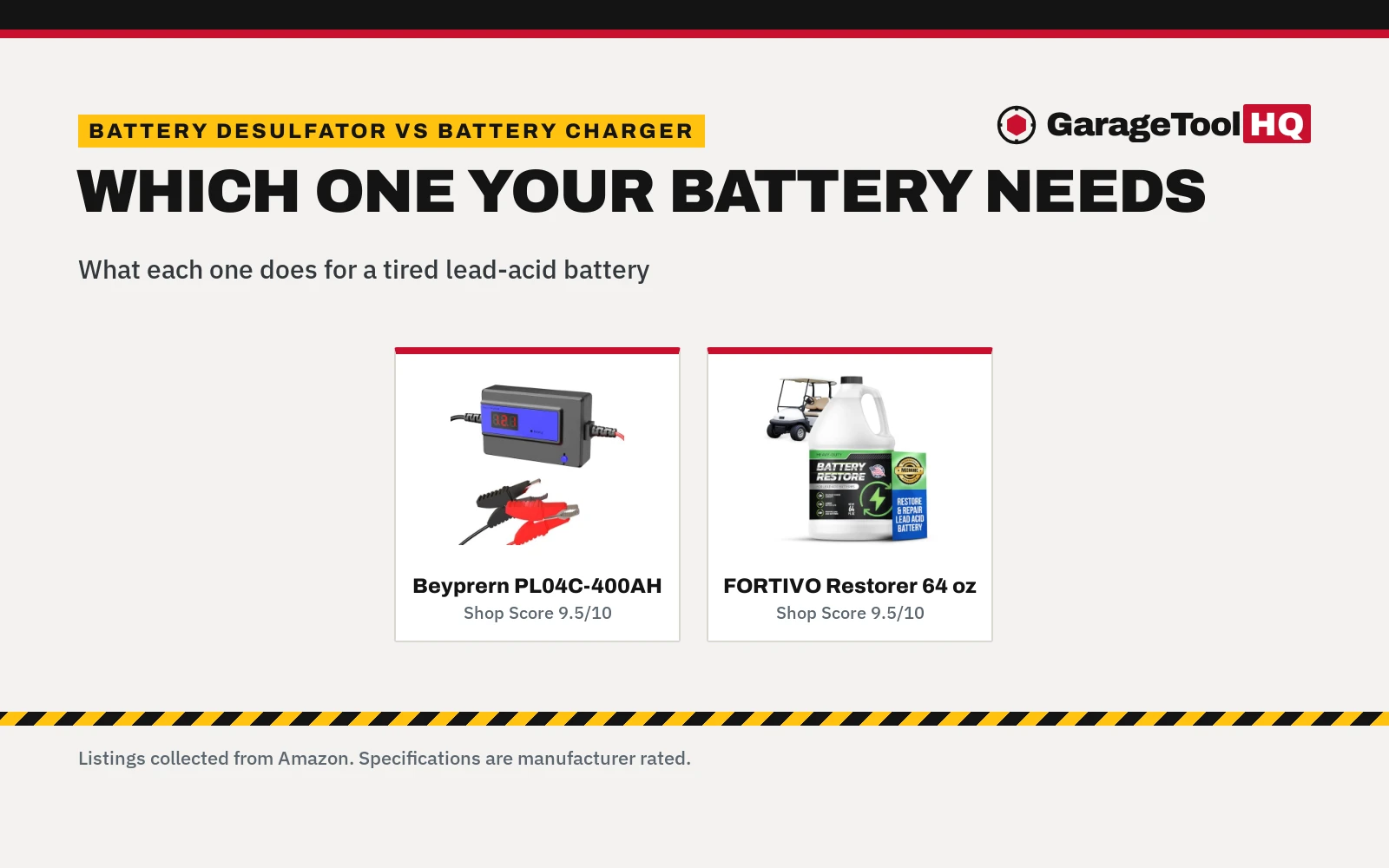
Battery desulfator vs battery charger
A charger restores charge. A desulfator breaks down sulfate. Most home garage units do both, and the choice comes down to whether the battery is flat or weak from sitting. The battery desulfator vs battery charger guide sets out both jobs side by side, and the best car battery desulfator roundup and the best battery charger for lead-acid batteries guide list models with a desulfation mode.
FAQ: garage tools
Will a battery desulfator fix a dead battery?
It can help a battery that is flat from sitting, but it cannot fix a battery with a shorted cell or a cracked case. The NOCO GENIUS1 charges batteries from as low as 1 volt, and its force mode can charge a battery down to zero volts, so a deeply discharged battery is still in reach. If the battery takes no charge after a full repair cycle, it is worn out and needs replacing.
How long does desulfation take?
Plan on hours, not minutes. The E-FAST repair mode runs for 16 hours, and a battery that has sat for months may need more than one cycle before it holds a charge. Leave the charger to finish its cycle.
Can a desulfator charge a battery?
A standalone desulfator only pulses, so it cannot charge a battery on its own. A charger with a desulfation mode does both jobs: it charges the battery and runs a repair cycle. The NOCO GENIUS1 charges, maintains and desulfates in one unit, which is why charger models with a desulfation mode are the common pick for a home garage.
Does a desulfator work on lithium batteries?
Some do, and some do not, so read the label first. The NOCO GENIUS1 suits lithium LiFePO4 batteries, and the E-FAST, WAVLINK and YHCHKJ chargers also suit LiFePO4 and lithium types. A desulfator built only for lead-acid should not go on a lithium battery, so check the battery type setting before you connect it.
Can a desulfator damage a battery?
Pulse charging at the right voltage and current should not harm a sound battery. The risk comes from the wrong setting: too high a current for a small battery. Use the current the manual calls for and pick the battery type on the charger.
Related: How Much Is a Battery Charger and Battery Tender Junior Review.