Automotive Wire Gauge Chart: Sizes for Each Circuit
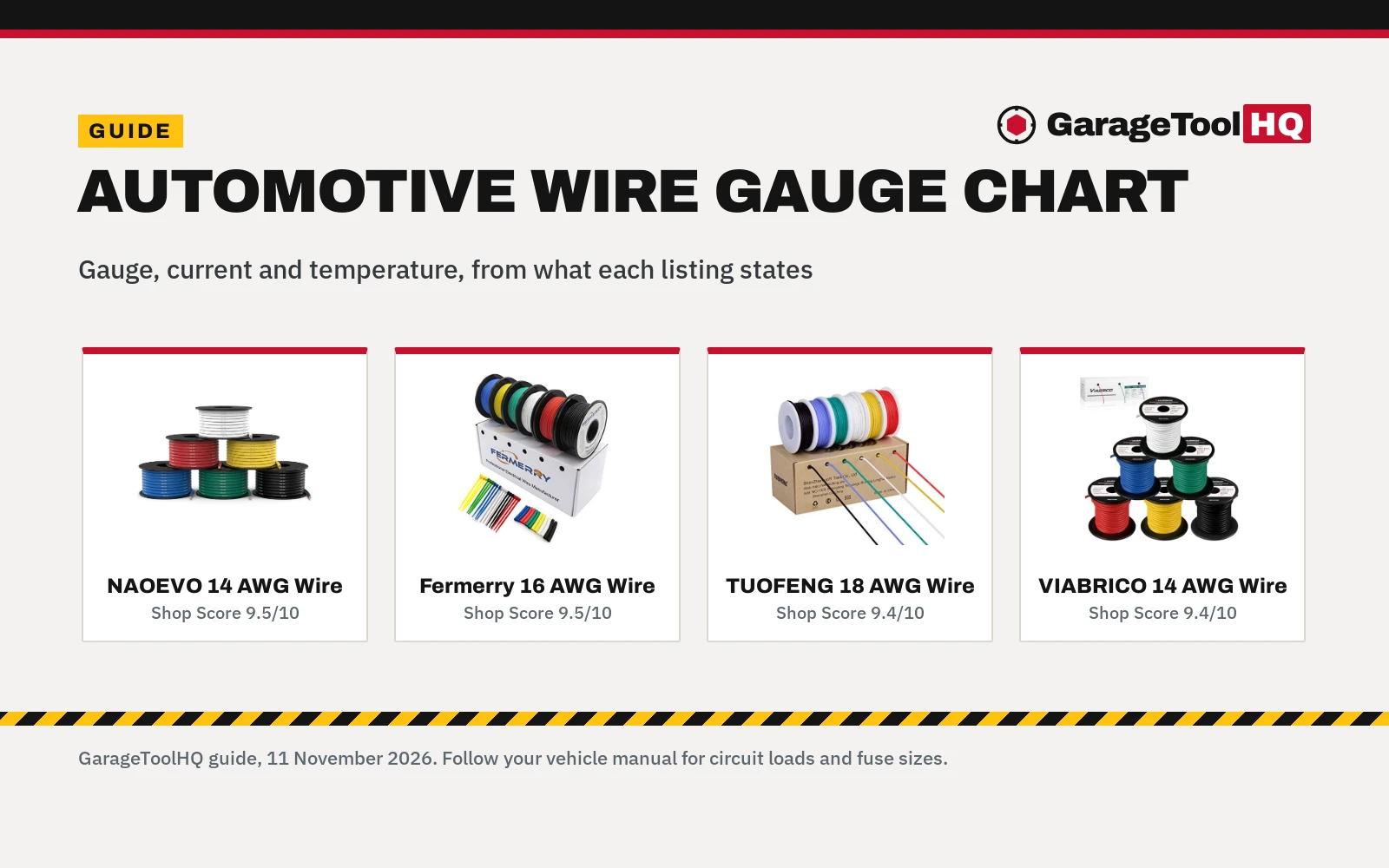
An automotive wire gauge chart pairs each gauge with the current it can carry: 14, 16 and 18 AWG wire kits compared by current, temperature and length.

On this page
A new accessory needs a wire, and the spools on the shelf come in gauges that all look the same until the circuit is loaded. An automotive wire gauge chart is the map for that choice: it pairs each gauge with the current it can carry, so the wire stays within its rating and a fuse sized to the wire blows before the wire does. Thicker wire carries more current, thinner wire suits light loads, and the kits below cover the gauges a home garage reaches for most.
As an Amazon Associate I earn from qualifying purchases. GarageToolHQ earns a commission when you buy through links on our product pages, at no extra cost to you. Read our affiliate disclosure.
Below: how to read the chart, what to check, and the wire kits for garage circuits.

NAOEVO 14 Gauge Wire, Tinned Copper Silicone 14
A 90ft kit of 14 AWG tinned copper silicone wire in 6 colors, 15ft per spool, rated 20A at 600V and -60°C to 200°C.
Pros
- Rated 20A at 600V, the highest current stated here
- 400 strands of 0.08mm tinned copper for flexibility
- Silicone jacket rated -60°C to 200°C
- 90ft across 6 colors with cable ties included
Cons
- No warranty term is stated
- No heat shrink tubing is included
- 15ft per color limits long single runs
- No weight is stated
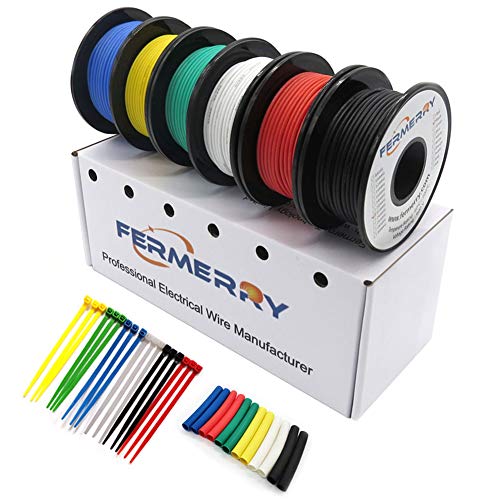
Fermerry 16 AWG Stranded Wire Spool 5ft Each 6
A 30ft kit of 16 AWG tinned copper silicone wire in 6 colors, 5ft per spool, rated 19A at 600V with insulation to 200°C, plus heat shrink tubing and wire ties.
Pros
- Rated 19A at 600V
- 252 strands of 0.08mm tinned copper
- Heat shrink tubing and wire ties included
- Silicone insulation to 200°C
Cons
- Only 30ft total, the smallest total here
- 5ft per spool suits short runs only
- No warranty term is stated
- No temperature low end is stated

TUOFENG 18 AWG Stranded Wire, 6 Colors
A 79.2ft kit of 18 AWG tinned copper silicone wire in 6 colors, 13.2ft per spool, rated -60°C to 200°C for low-voltage electronics.
Pros
- 79.2ft across 6 colors, 13.2ft per spool
- Tinned copper strands for easier soldering
- Silicone jacket rated -60°C to 200°C
- Flexible stranded conductor for confined spaces
Cons
- No current rating is stated
- No voltage rating is stated
- No warranty term is stated
- Listed for low-voltage electronics, not heavier circuits

VIABRICO 14 Gauge Wire 100ft Each Spool
A 600ft kit of 14 AWG copper clad aluminum wire in 6 colors, 100ft per spool, with a PVC jacket rated -20°C to 70°C.
Pros
- 600ft total, 100ft per spool, the longest kit here
- 6 jacket colors with numbered markings
- Flame retardant PVC jacket
- CCA is lighter and more flexible than copper, per the listing
Cons
- Copper clad aluminum, not tinned copper
- No current rating is stated
- No voltage rating is stated
- Temperature range of -20°C to 70°C is the narrowest here
Automotive wire gauge chart: how to read it
Gauge numbers run backward: a lower number means thicker wire, and thicker wire carries more current. The kits here show it: the 14 AWG NAOEVO kit is rated 20A, while the 16 AWG Fermerry kit is rated 19A. If a listing states no current rating, as with the TUOFENG and VIABRICO kits here, the chart cannot confirm the load.
| Gauge | Kit | Rated current | Temperature | Jacket |
|---|---|---|---|---|
| 14 AWG | NAOEVO | 20A | -60°C to 200°C | Silicone |
| 14 AWG | VIABRICO | Not stated | -20°C to 70°C | PVC |
| 16 AWG | Fermerry | 19A | Up to 200°C | Silicone |
| 18 AWG | TUOFENG | Not stated | -60°C to 200°C | Silicone |
Match the wire to the load, not to the spool: a heavier load needs thicker wire, and a run in a hot engine bay needs a jacket rated for the heat.
How to choose automotive wire
- Check the current rating. The wire must state a current rating that covers the circuit load: 20A for the NAOEVO kit, 19A for the Fermerry kit.
- Check the temperature range. Silicone kits here are rated to 200°C; the PVC kit is rated from -20°C to 70°C, so keep it out of hot bays.
- Check the conductor. Tinned copper resists corrosion and solders easily; copper clad aluminum is lighter and more flexible, per its listing.
- Count the length. Kits here run from 30ft to 600ft total, in 6 colors, so pick the length that covers the run without joining mid-circuit.
- Use the colors. Six colors make polarity easy to mark: one color for power, one for ground, kept the same through the job.
Wire kits for the garage
The wire carries the current step of the job, so these picks cover the gauges a garage reaches for: 14 AWG for heavier runs, 16 AWG for mid-size work, and 18 AWG for light low-voltage circuits.
Use rated jack stands on solid ground, wear eye protection with power and air tools, keep fuel-burning equipment out of a closed garage, and follow the manual for every tool. Read our Safety Disclaimer.
Electrical safety first: disconnect the battery before cutting into a circuit, fuse every added circuit, and route wire away from sharp edges and hot parts. Check the work with a meter before powering up: see our guide to the best digital multimeter for home garage.
FAQ: garage tools
What gauge wire do I need for a car accessory?
Match the wire’s stated current rating to the load: the NAOEVO 14 AWG kit is rated 20A and the Fermerry 16 AWG kit is rated 19A. Check the accessory manual for its draw before choosing.
Is 14 AWG bigger than 16 AWG?
Yes. Gauge numbers run backward, so 14 AWG is thicker than 16 AWG, and thicker wire carries more current: 20A against 19A on the kits here.
Can I use CCA wire in a car?
Copper clad aluminum is lighter and more flexible than copper, per the VIABRICO listing, which also claims the same signal frequency and corrosion resistance. The same listing states no current rating, so check the load rating before using it on a circuit that draws real current.
What temperature can silicone wire handle?
The silicone kits here are rated to 200°C: NAOEVO and TUOFENG from -60°C to 200°C, and Fermerry up to 200°C. The PVC kit is rated from -20°C to 70°C, so keep it out of hot bays.
How much wire comes in these kits?
The VIABRICO kit gives 600ft, the NAOEVO kit 90ft, the TUOFENG kit 79.2ft, and the Fermerry kit 30ft, each in 6 colors. The Fermerry kit also adds heat shrink tubing and wire ties.
Related: types of fuses automotive, best wire crimper for heat shrink connectors, automotive fuse vs circuit breaker and our diagnostics and electrical hub.