Bench Grinder Safety: Guards, Eye Shields and Checks Before Every Job
Bench grinder safety comes down to the guard, the eye shield, the wheel rating and a short check before every job, plus the gear that keeps sparks and debris out of the eyes.
On this page
Top picks at a glance
As an Amazon Associate I earn from qualifying purchases.
- 1
 HTC Adjustable Bench Grinder Stand Pedestal9.8/10View on Amazon
- 2
 6" Bench Grinder Wheel 120 Grit & Wire Wheel Brush with 1/2"9.7/10View on Amazon
- 3
 Woodskil 6" 1/2HP High Speed Bench Grinder for sharpening9.7/10View on Amazon
Bench grinder safety starts before the wheel spins: a lawn mower blade, a chisel or a screwdriver tip goes to the grinder for a fresh edge, and the guard, the eye shield and the wheel rating decide whether that quick job stays routine. A bench grinder throws sparks and small chips of metal and wheel, so eyes and face need cover every time the wheel runs, and the wheel itself needs a check before it spins up.
GarageToolHQ earns a commission when you buy through links on our product pages, at no extra cost to you. Read our affiliate disclosure.
Below: where the risk comes from, the guard and eye shield, the wheel check, the setup and the gear.
Bench grinder safety: where the risk comes from
A bench grinder spins a hard wheel fast enough to shape steel, and anything that leaves the wheel leaves it fast. The risk comes from four directions:
- Sparks and chips. Grinding throws hot sparks and small chips of metal and wheel grit in the direction the wheel turns, which is why the guard sits between the wheel and the person using it.
- A wheel that breaks. A grinding wheel is a hard, brittle disc. A cracked, chipped or wrongly mounted wheel can break apart at speed and throw pieces across the shop.
- Dust. Grinding makes fine dust from the metal and the wheel. A dust mask cuts the dust that reaches the lungs, and the mask is still needed when the guard is in place.
- Clothing and hair caught by the wheel. Loose sleeves, a dangling cord, long hair or a rag near a spinning wheel can be pulled in. Short sleeves, tied-back hair and a clear space around the grinder lower that risk.
The guard and the eye shield
The guard is the fixed cover over the wheel, and the eye shield is the clear panel mounted on it. It sits between the wheel and the eyes, and it gets replaced when it turns cloudy, gets scratched or cracks.
| Shield | Size | Material | Stated thickness |
|---|---|---|---|
| DeWalt DW758 replacement, 2-pack | 4.5 by 3.5 inches | Not stated | Not stated |
| Neeki polycarbonate, 2-pack | 4 by 5 inches or 4 by 6 inches | Polycarbonate | 0.23 inches |
| OSFTBVT polycarbonate, 2-pack | 4 by 6 inches | Polycarbonate | 4 mm |
| SCOTTCHEN tempered glass, 2-pack | 4 by 5 inches or 4 by 6 inches | Tempered glass | 4 mm |
| SCOTTCHEN adjustable guard, 1 kit | 17 by 7-1/8 inches | Polycarbonate | Not stated |
Check the size and the mounting holes before ordering: OSFTBVT states a 1-inch interval between its mounting holes, and its brackets are not included. The SCOTTCHEN adjustable guard has a 16-1/2 inch adjustable rod, with pre-designed mounting holes so no drilling is needed. Every shield in the table above is sold in pairs except the adjustable guard, which comes as a single kit.
OSFTBVT states impact resistance at 250 times that of glass and 30 times that of acrylic, with light transmittance of 92% and long-term heat resistance up to about 120 degrees Celsius. The tempered glass shields state heat tolerance of 300 degrees Celsius and higher, with no yellowing over time. A shield that is cloudy, cracked or scratched gets replaced, because a shield that cannot be seen through gets lifted aside.
Check the wheel before every job
The wheel check never gets skipped, because a damaged wheel is the one failure that throws pieces.
- Look at the wheel. Turn the wheel by hand and look for cracks, chips, a flat spot or a wobble on its mount. Any of those means the wheel comes off and is replaced.
- Ring it. Tap the wheel gently and listen: a sound wheel rings clear, a cracked wheel sounds dull. A wheel that sounds dull comes off.
- Match the rating. Every wheel carries a maximum speed rating on its label. Check it against the grinder manual before mounting, and never fit a wheel rated below the grinder speed.
- Mount it right. Seat the wheel flat between its flanges with the blotters in place, the nut snug but not forced, and the guard and eye shield back in position.
- Stand aside for the first spin. Switch the grinder on and let the wheel run for a short while before any work touches it, standing out of the line of the wheel.
A wheel that has been dropped or knocked gets the same check. Wheels are consumables, and a new wheel costs far less than a repair.
Set up the grinder and the work area
A grinder bolted down, with the guards in place and the bench clear, leaves little to go wrong.
- Bolt it down. Bolt the grinder to the bench through its mounting holes. A grinder that walks across the bench under load can tip.
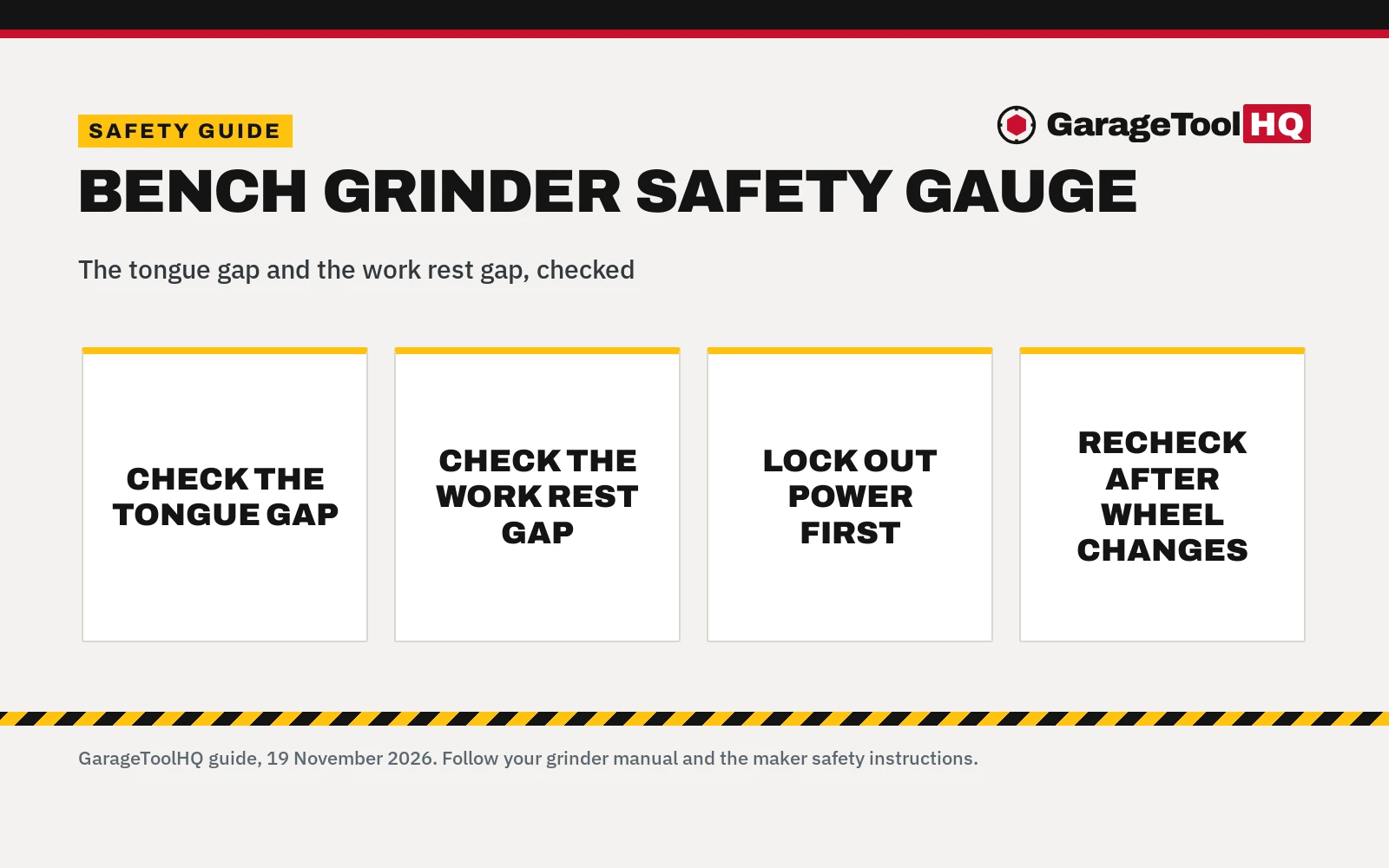
- Keep the tool rest close. Set the tool rest close to the wheel and check it again after the wheel is dressed or changed, since the gap grows as the wheel wears down.
- Keep the tongue guard close. Adjust the tongue guard at the top of the wheel opening as the wheel wears, so the gap stays small. Check it whenever the wheel is changed.
- Clear the bench. Rags, cords, cans and loose tools have no place next to a spinning wheel. A clear bench means the hands never need to reach across the wheel for a rag or a tool.
- Unplug before changes. Wheel changes, guard adjustments and shield swaps happen with the grinder unplugged, not just switched off. A grinder that cannot start cannot catch a hand.
Bench grinder wheels are made to grind on the face, not the side. Side pressure can crack a wheel, and a cracked wheel can break apart. Keep the work on the face of the wheel and the tool rest under it.
Read the manual before first use, wear eye protection, keep the work area clear and ventilated, and stay within every stated rating. Read our Safety Disclaimer.
The gear that goes with the grinder
The guard and the eye shield are part of the grinder. The rest of the gear is worn, and it covers what the guard cannot reach.
- Eye protection first. Safety glasses go on before the grinder starts and stay on until the wheel stops. The eye shield is not a substitute for glasses. See the picks for safety glasses for auto mechanics.
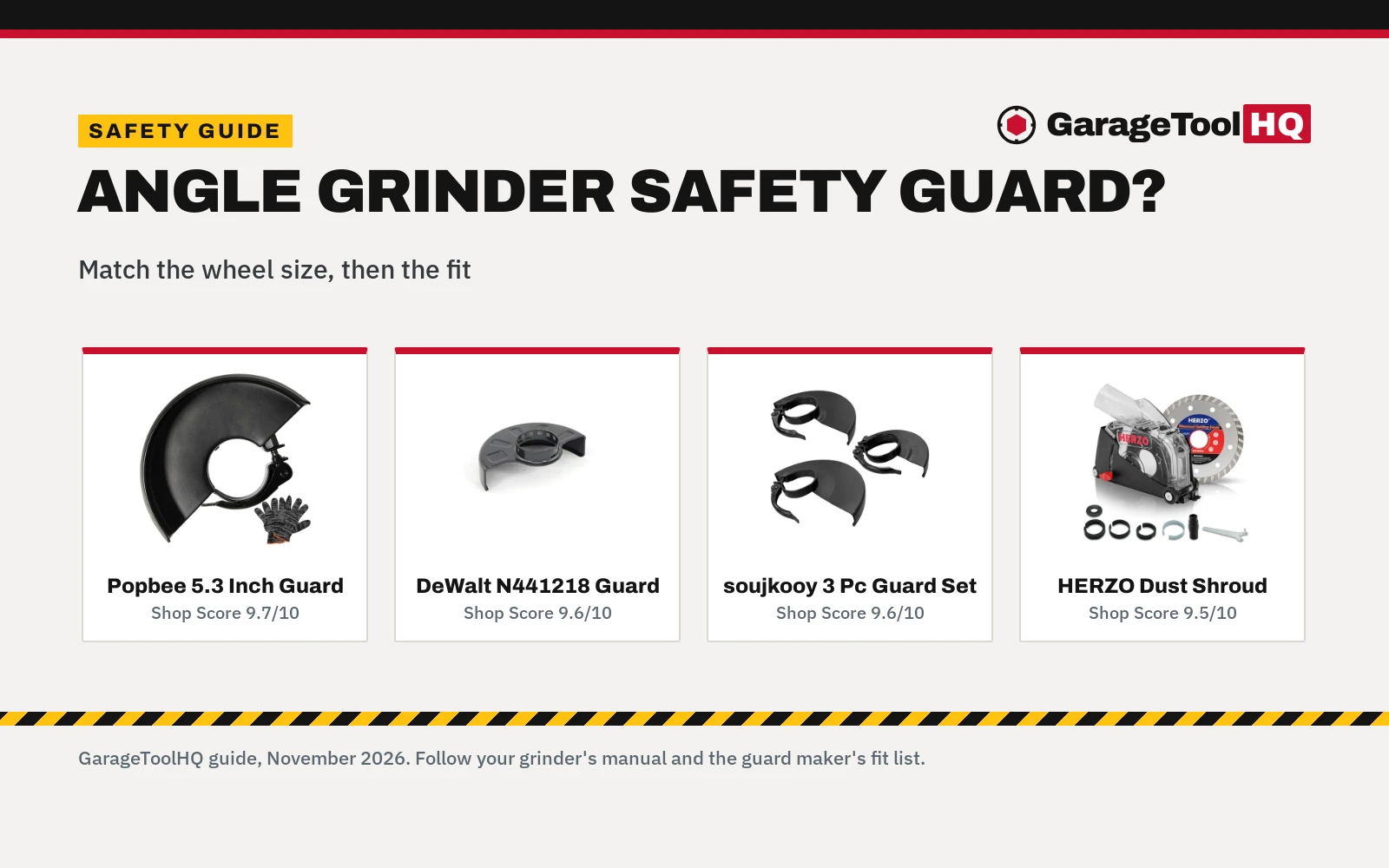
- A face shield for heavy work. A face shield covers the whole face where the eye shield and glasses leave gaps, and it suits heavy grinding and wire wheel work. The angle grinder face shield guide covers shields that also fit bench work.
- A dust mask. Grinding dust stays in the air after the wheel stops. A dust mask is still needed with the guard in place, and it matters most on long sessions and on painted or coated metal.
- Hearing protection. A grinder can be loud on a long session, so ear protection is worth wearing. Plugs or muffs go on for the job and come off when the wheel stops.
- Tight clothing, tied hair. Short sleeves or rolled sleeves, no dangling cords, no loose cuffs, and long hair tied back. Gloves stay off while the wheel spins, since a glove can catch and pull a hand in.
Choosing a grinder and wheels with safety in mind
Safety is also a buying decision: a grinder with a solid guard and an adjustable tool rest is easier to keep safe.
- Wheel size. The OSFTBVT shields (on Amazon) fit standard 6-inch and 8-inch bench grinders, so the shield has to match the grinder size. The picks for the best 8-inch bench grinder compare the larger size.
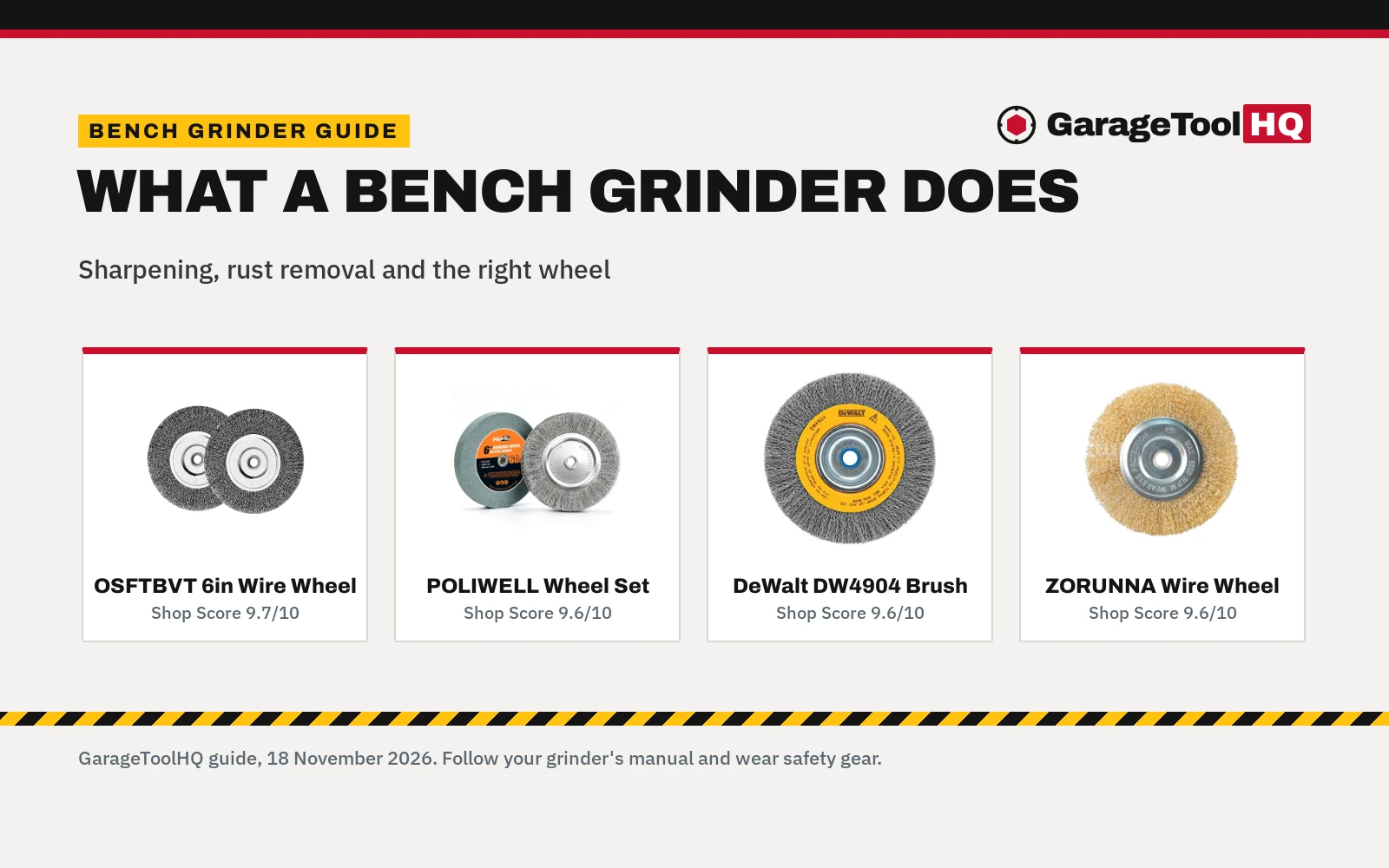
- Wheels. Wheels wear down and get replaced, so check the wheel size, arbor and rating before buying spares, and keep a spare on hand. The best bench grinder wheels guide compares the wheels on offer.
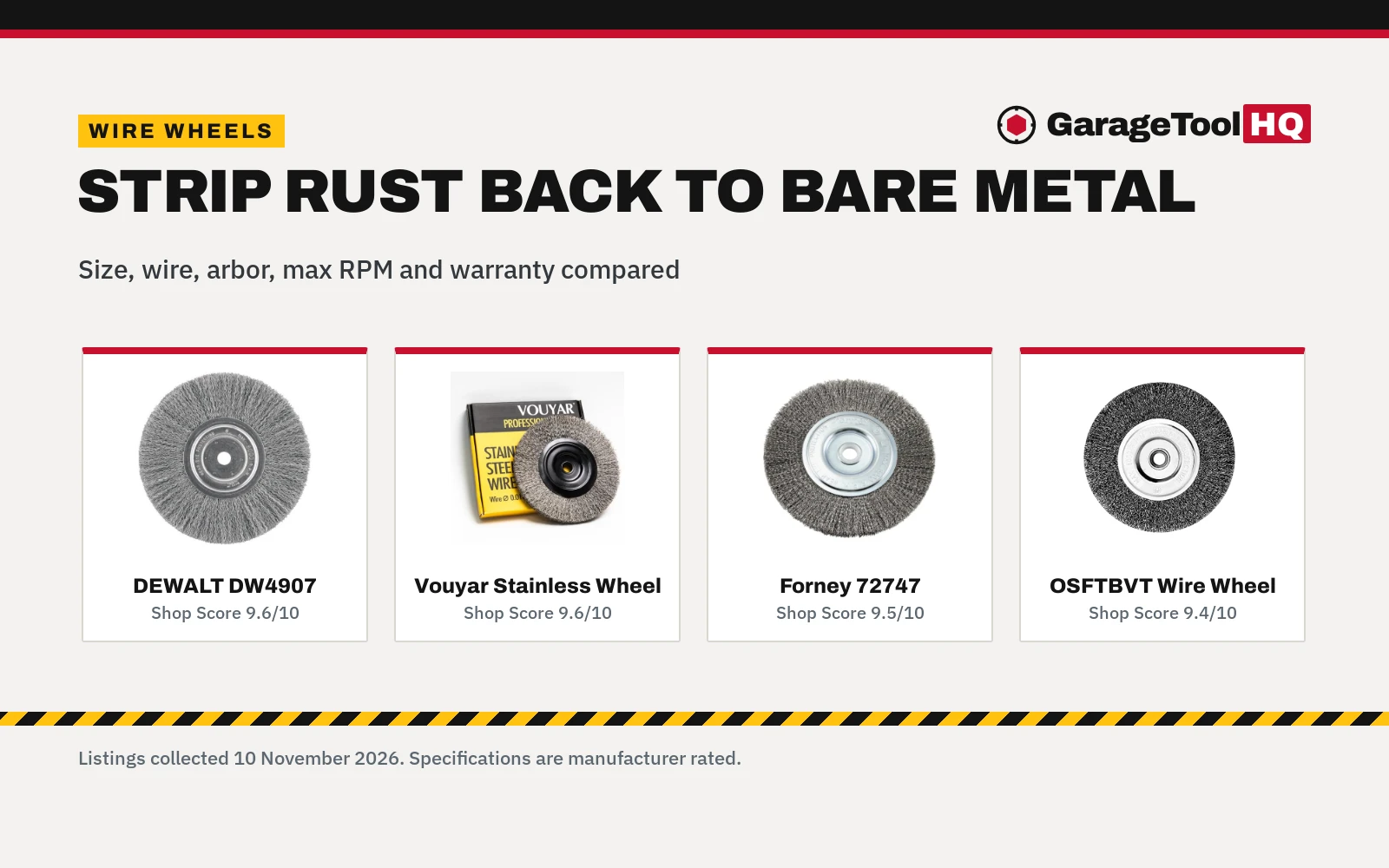
- Wire wheels. A wire wheel throws wires as it wears, and those wires sting. Eye protection and a face shield matter more, not less, with a wire wheel. The best wire wheel for a bench grinder guide covers the wire wheels that fit.
FAQ: garage tools
Are safety glasses needed if the grinder has an eye shield?
Yes. The eye shield blocks the direct spray from the wheel, and safety glasses cover what gets around it. Wear both every time the wheel runs.
How can a cracked grinding wheel be spotted?
Turn the wheel by hand and look for cracks or chips, then tap it gently and listen: a sound wheel rings clear and a cracked wheel sounds dull.
Can a wheel be ground on its side?
No. Bench grinder wheels are made to grind on the face, and side pressure can crack a wheel. Keep the work on the face of the wheel.
What size eye shield fits a bench grinder?
Match the shield to the grinder size and the mounting holes. Common sizes are 4.5 by 3.5 inches for the DeWalt DW758 and 4 by 5 inches or 4 by 6 inches for most small grinders.
Should a dust mask be worn when grinding?
Yes. Grinding makes fine dust from the metal and the wheel, and the mask is still needed with the guard in place. Wear it for the whole job.
Related: bench grinder uses and attachments, the angle grinder safety guard guide, the engine and shop equipment hub and the best bench grinder wheels.