Best Anti Seize Grease for Brakes (2026): 5 Picks for Caliper Pins
Five ceramic, copper and silicone greases for brake caliper pins and pads, compared by heat rating, size, applicator and rubber safety.

On this page
Top picks at a glance
As an Amazon Associate I earn from qualifying purchases.
- 1
 Best OverallKeze Ceramic Grease9.7/10View on Amazon
- 2
 Best for Rubber PartsAGS SIL-Glyde Grease9.6/10View on Amazon
- 3
 Best All-RounderCRC Synthetic Grease9.6/10View on Amazon
- 4
 Best Copper PickRealth Anti Seize9.5/10View on Amazon
A brake job that ends with a squeal on the drive back from the garage usually points at dry slide pins or bare pad hardware. A thin film of grease on the right contact points keeps the caliper sliding, quiets the pads and keeps rust from locking the hardware in place. The best anti seize grease for brakes is the grease that matches the job: ceramic for heat, copper for threads, silicone where rubber boots and seals are involved. This roundup compares greases by heat rating, size, applicator and rubber safety.
GarageToolHQ earns a commission when you buy through links on this page, at no extra cost to you. Read our affiliate disclosure.
Quick picks
- Best Overall Keze Ceramic Grease: Ceramic formula rated to 3000°F in an 8 oz brush-top can for slide pins, calipers and pads. Check price on Amazon
- Best for Rubber Parts AGS SIL-Glyde Grease: Rubber-safe silicone with a brush in the cap for slide pins, boots and pad hardware. Check price on Amazon
- Best All-Rounder CRC Synthetic Grease: Synthetic grease with molybdenum, PTFE and graphite, rated from -40°F to 400°F and safe on plastic and rubber. Check price on Amazon
- Best Copper Pick Realth Anti Seize: Fine copper particles for brake systems, spark plugs and battery terminals in a 1 oz pack. Check price on Amazon
Picks for the garage
Keze High Temp Ceramic Brake Caliper Grease
A ceramic brake grease in an 8 oz brush-top can, combining synthetic MCA with ceramic powder and rated to 3000°F for slide pins, calipers and pads.
Pros
- Resists melting, even at 3000°F
- Brush-top can for slide pins, calipers, pads and shims
- Thick, color-coded purple formula clings to pins and pads
- Corrosion shield against rust, dirt and moisture
Cons
- No low-temperature rating is stated
- No rubber safety rating is stated
- No warranty term is stated
- Listing title spells one word as Break
CRC Synthetic Brake & Caliper Grease
A synthetic brake and caliper grease in an 8 oz tub with molybdenum, PTFE and graphite, rated from -40°F to 400°F and safe on plastic and rubber.
Pros
- Rated from -40°F to 400°F
- Contains molybdenum, PTFE and graphite
- Plastic and rubber safe
- Resists moisture and will not wash out
Cons
- No brush or applicator is stated
- Top end of 400°F sits below the ceramic picks here
- Limited warranty is stated with no term given
- Use is stated for metal-to-metal contact points and sliding surfaces only
AGS SIL-Glyde Silicone Brake Grease
A rubber-safe silicone brake grease in a 4 oz brush-top can, with a brush in the cap for caliper slide pins, boots and pad hardware.
Pros
- Rubber-safe silicone, safe on EPDM and nitrile rubber
- Brush in the cap lays a thin, even film
- Stated for pins, boots, backing plates, shims and seals
- Seals out water and road salt
Cons
- Heat rating is flagged in the listing as needing confirmation
- No warranty term is stated
- 4 oz can is smaller than the 8 oz picks here
- Only a 4 oz size is stated
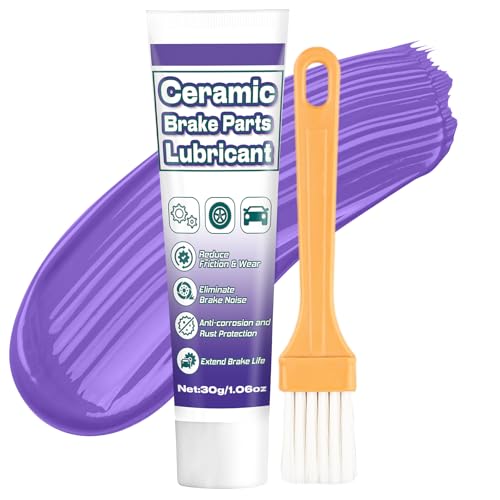
AstraVox Anti-Seize & Squeal Ceramic Brake Grease
A ceramic brake grease in a 1 oz pack with a brush, rated from -50°F to 3000°F for calipers, guide pins, pads and metal parts.
Pros
- Rated from -50°F to 3000°F
- Brush included for calipers, pins and pads
- Corrosion barrier against moisture
- Stated for pads, pins, brackets and threads
Cons
- 1 oz pack is the smallest size here
- No warranty term is stated
- No rubber safety rating is stated
- Use is stated for brake parts and threads, with no battery or electrical use listed
Realth Copper Anti Seize Thread Lubricant 1 oz
A copper anti seize in a 1 oz pack, with fine copper particles for brake systems, spark plugs, battery terminals and metal parts.
Pros
- Fine copper particles for threads and terminals
- Stated for brake systems, spark plugs and battery terminals
- Barrier against moisture, salt and corrosive elements
- Suits marine and high-humidity use
Cons
- No heat figure is stated
- No brush or applicator is stated
- No warranty term is stated
- 1 oz pack is the smallest size here
Compared on paper
| Model | Shop Score | Heat rating | Size | Applicator | Rubber safe | Use |
|---|---|---|---|---|---|---|
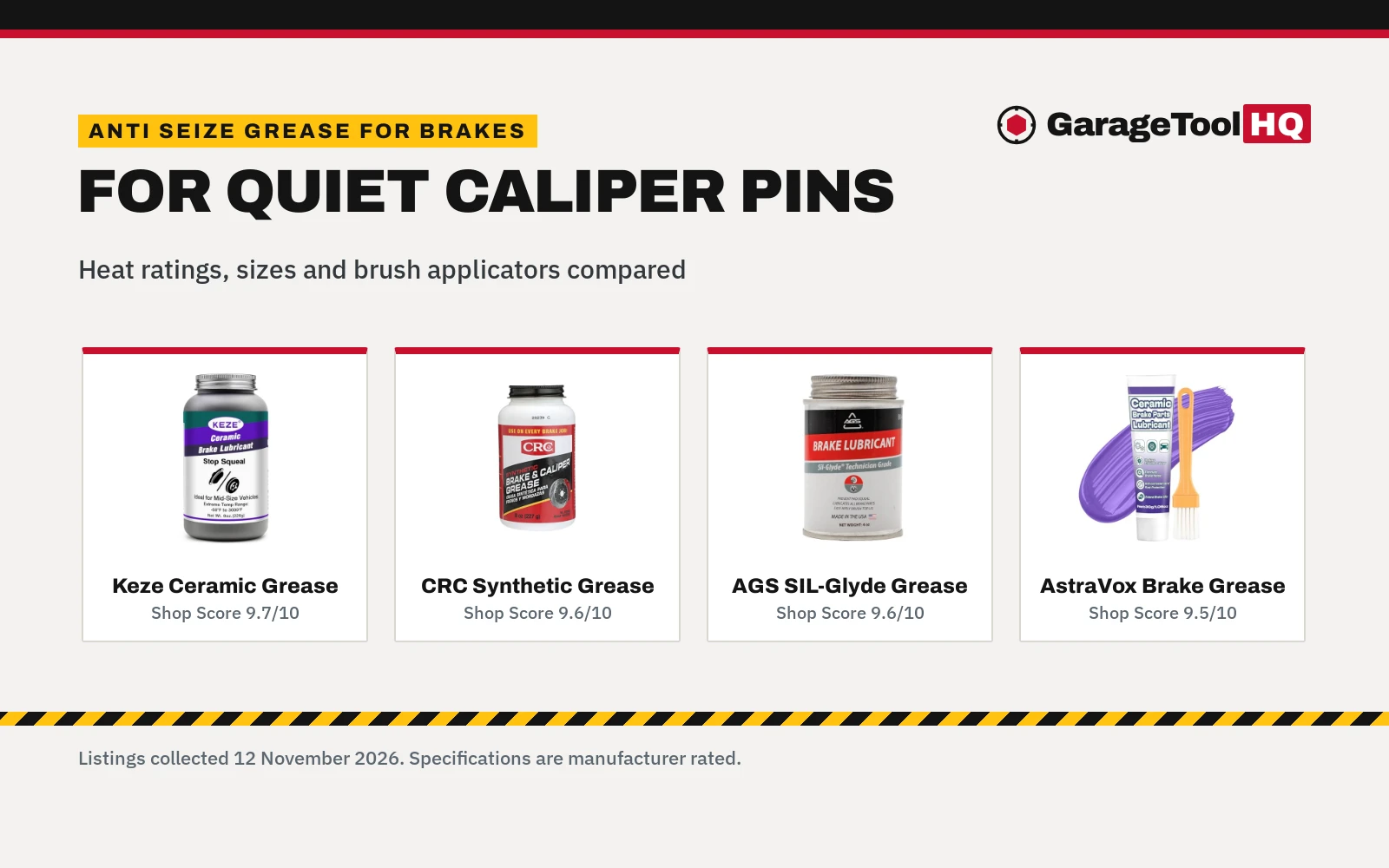
| Keze Ceramic Grease | 9.7/10 | 3000°F | 8 oz | Brush-top can | Not stated | Slide pins, calipers and pads |
| CRC Synthetic Grease | 9.6/10 | -40°F to 400°F | 8 oz | Not stated | Plastic and rubber safe | Sliding surfaces |
| AGS SIL-Glyde Grease | 9.6/10 | Not stated | 4 oz | Brush in cap | Safe on EPDM and nitrile | Pins, boots and pad hardware |
| AstraVox Brake Grease | 9.5/10 | -50°F to 3000°F | 1 oz | Brush | Not stated | Calipers, pins and pads |
| Realth Anti Seize | 9.5/10 | Not stated | 1 oz | Not stated | Not stated | Threads and terminals |
Specs such as CFM, PSI and torque are the manufacturer’s ratings as listed, collected 1 November 2026.
How the points were given
Each grease is scored out of 10 on performance, build, value, safety and warranty, with the weights published on the How We Pick page. A stated heat rating, a brush applicator and rubber safety earn performance and safety points. A stated warranty term earns warranty points, and none of the listings here states one.
| Product | Shop Score | Perf. /35 | Build /25 | Value /25 | Safety /10 | Warranty /5 |
|---|---|---|---|---|---|---|
| Keze Ceramic Grease | 9.7 | 32 | 21 | 22 | 7 | 0 |
| CRC Synthetic Grease | 9.6 | 30 | 21 | 20 | 8 | 0 |
| AGS SIL-Glyde Grease | 9.6 | 29 | 20 | 20 | 8 | 0 |
| AstraVox Brake Grease | 9.5 | 29 | 19 | 19 | 7 | 0 |
| Realth Anti Seize | 9.5 | 27 | 19 | 19 | 5 | 0 |
Shop Scores range from a low of 9.2 to a high of 9.8, with each tool positioned by its weighted points proportionally, and more points always yields a higher score.
What the listings tell you
Five listings were compared. Three include a brush for application, two list a ceramic formula, one lists copper particles, one lists silicone and one lists a synthetic blend with molybdenum, PTFE and graphite. Heat ratings run from -40°F to 400°F on one listing to 3000°F on two others, while two listings state no heat figure at all. Sizes run from 1 oz to 8 oz. Two listings state rubber safety, and one states a limited warranty with no term given.
How to pick the best anti seize grease for brakes
Heat rating
Caliper hardware runs hot, so check the heat rating before anything else. Two listings here reach 3000°F, one is rated from -40°F to 400°F, and two state no heat figure, so those two leave the question open. Match the rating to the job, and treat an unconfirmed rating as no rating at all.
Ceramic, copper or silicone
Ceramic suits caliper pins, pads and brackets. Copper suits threads, spark plugs and battery terminals, and the fine copper particles in the Realth listing also suit ground connections. Silicone suits rubber boots and seals. A comparison of ceramic and copper formulas is in the ceramic vs copper anti seize guide.
Where the grease goes
Grease belongs on slide pins, pad backing plates, ears, shims and abutment clips, never on pad friction material, rotors or drums. The AGS listing states that warning in plain terms. Clean off old hardened grease, brush on a thin film, reassemble, cycle the brakes and wipe off excess.
Brush or tub
Three of the five listings include a brush: a brush-top can on the Keze, a brush in the cap on the AGS and a brush with the AstraVox. A brush keeps the film thin and even and keeps fingers out of the grease. The other two listings state no applicator, so plan on a small brush of your own.
Rubber safety
Boots and seals need a grease that will not swell or soften them. The CRC listing states plastic and rubber safe, and the AGS listing states safe on EPDM and nitrile rubber. The other listings state no rubber rating, so check the listing before using a grease on boots.
For the wider brake job, see the best tools for changing brakes roundup.
Use rated jack stands on solid ground, wear eye protection with power and air tools, keep fuel-burning equipment out of a closed garage, and follow the manual for every tool. Read our Safety Disclaimer.
Garage Fit Check
- Cans here range from 1 oz to 8 oz, so the small packs tuck into a toolbox drawer and the brush-top cans stand on a shelf.
- Three listings include a brush, so no separate applicator is needed for those picks.
- Check rubber safety before the grease touches boots or seals: two listings state it, the rest do not.
- Keep grease off pad friction material, rotors and drums, and wipe off excess after reassembly.
- No power is needed: every pick here is a hand-applied grease.
FAQ: garage tools
What is anti seize made of?
It depends on the formula. The Keze listing states synthetic MCA plus ceramic powder, the CRC listing states molybdenum, PTFE and graphite, the Realth listing states fine copper particles, and the AGS listing states silicone. Each formula suits a different part of the brake job.
How to use anti seize?
Clean off old hardened grease, brush on a thin film, reassemble, cycle the brakes and wipe off excess. Apply it to hardware only, never to pad friction material, rotors or drums.
What is anti seize compound?
A lubricant that keeps metal parts from seizing and galling, cuts friction and guards against rust and corrosion. The listings here use it on caliper pins, pad hardware, threads, spark plugs and battery terminals.
Can you use anti seize on caliper pins?
Yes. Four of the five listings name caliper pins or caliper parts as a use: Keze and AGS name slide pins, AstraVox names guide pins, and CRC is a brake and caliper grease that prevents caliper binding.
Is anti seize flammable?
The listings compared here do not state flammability, so this roundup makes no claim about it.
Related: the best brake caliper tool under 25, the best anti seize for spark plugs, the best ceramic anti seize, the dielectric grease vs anti seize guide and the best tools for changing brakes roundup.