Best Battery Tester for Cold Weather (2026): 4 Compared
Four battery testers compared by voltage range, CCA range, load current, temperature correction and warranty for winter no-start diagnosis.

On this page
Top picks at a glance
As an Amazon Associate I earn from qualifying purchases.
- 1
 Best OverallAcclope BT90 PRO9.6/10View on Amazon
- 2
 Best Load CheckerNEIKO 40510A9.6/10View on Amazon
- 3
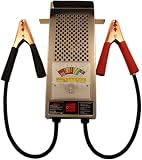 Best 120 AMPMilton 1260M9.4/10View on Amazon
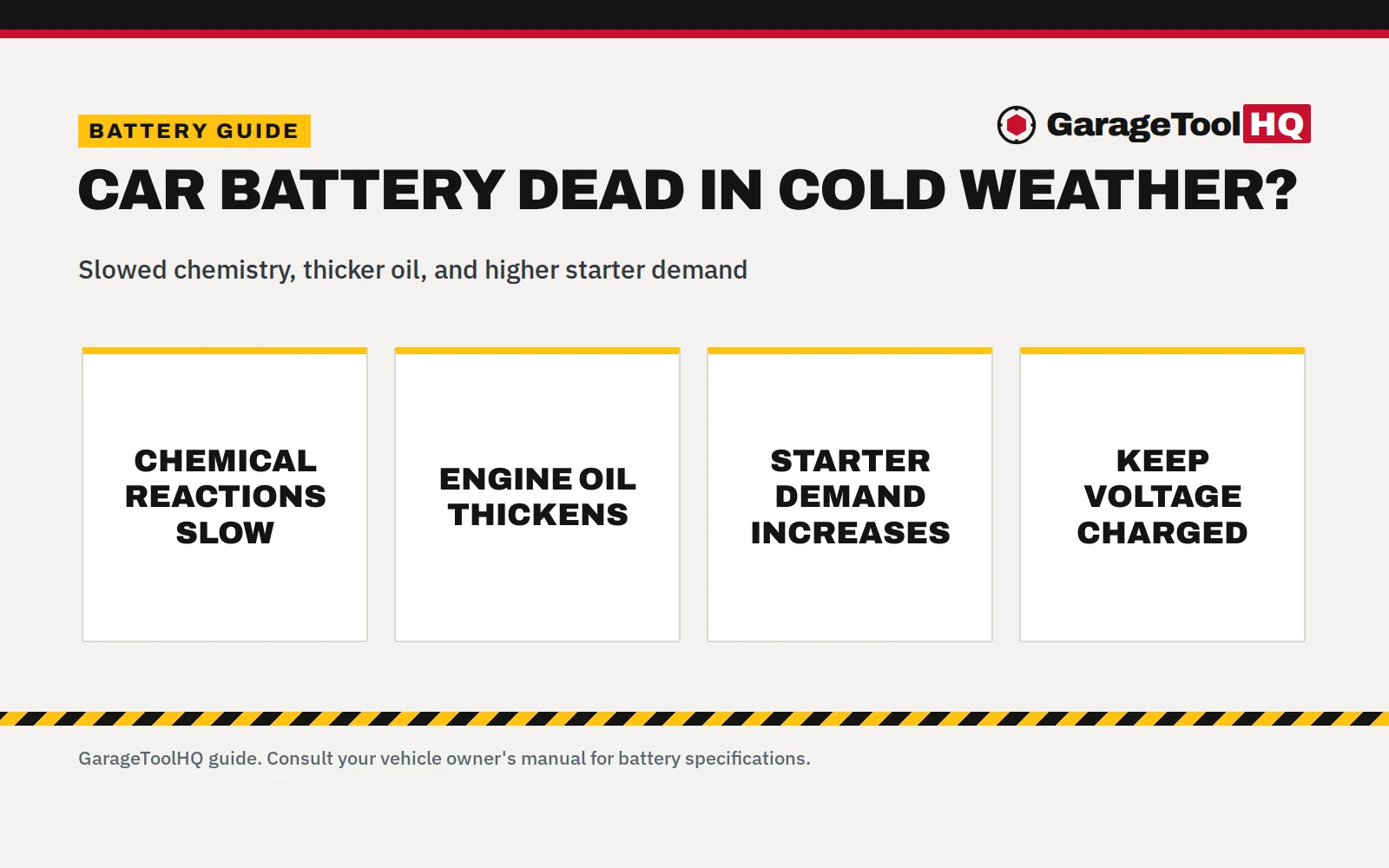
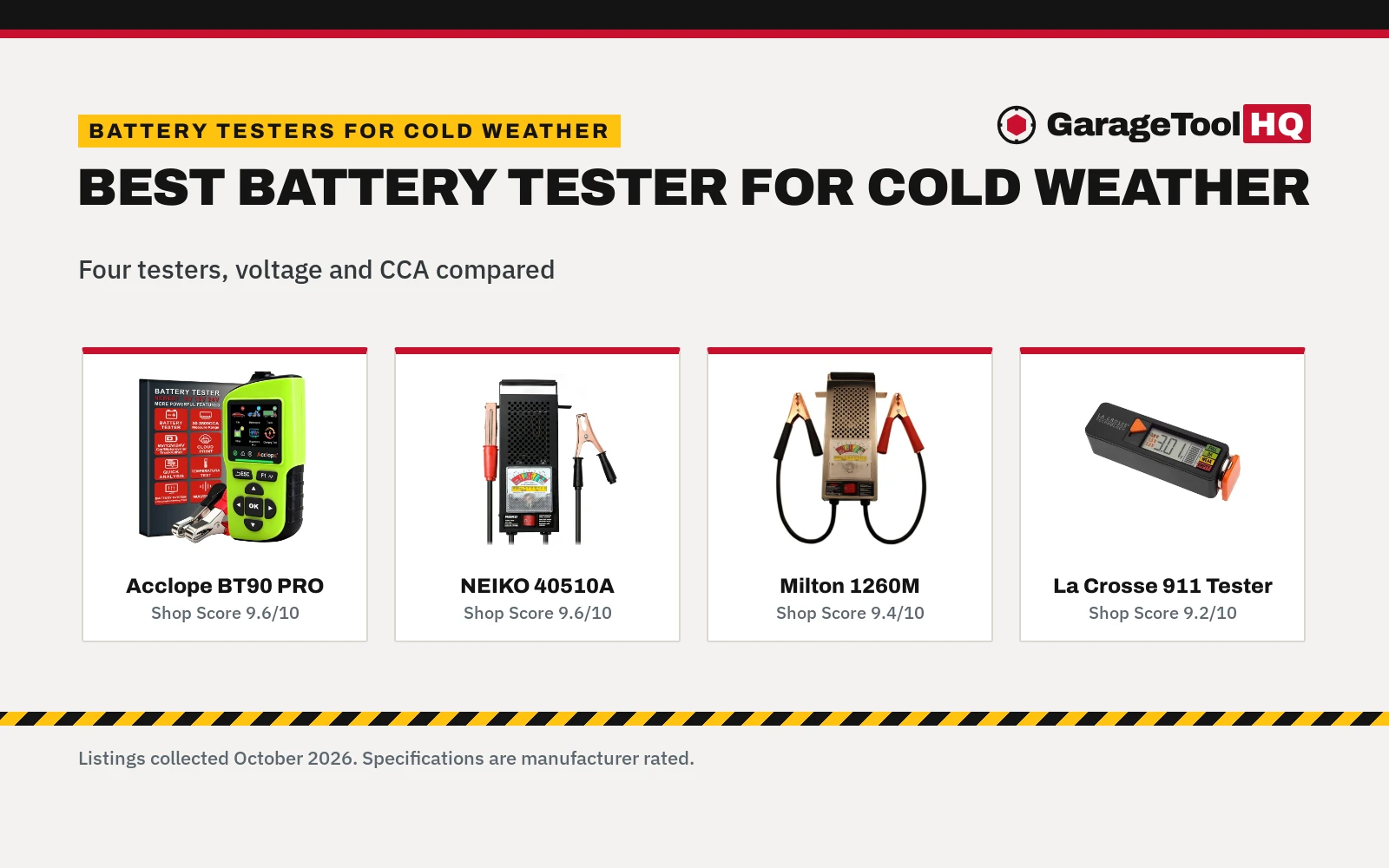
On a cold morning, a car that will not start leaves a driver asking whether the battery, the starter draw or the charging system is at fault, and the best battery tester for cold weather is the unit that answers that question before parts are swapped. This article compares battery testers by voltage range, CCA range, load current, temperature correction, clamps and warranty, using only what each listing publishes.
GarageToolHQ earns a commission when you buy through links on this page, at no extra cost to you. Read our affiliate disclosure.
Quick picks
- Best Overall Acclope BT90 PRO: 6V, 12V, 24V, 30 to 3800 CCA, temperature correction, cranking and charging Check price on Amazon
- Best Load Checker NEIKO 40510A: 100 AMP load, 6V and 12V, up to 1000 CCA, anti-sparking switchgear Check price on Amazon
- Best 120 AMP Milton 1260M: 120 AMP load, 6V and 12V, 1000 CCA, 12 second cut off Check price on Amazon
Picks for the garage
BT90 PRO 30-3800 CCA QR Report 2-360Ah Battery
A digital analyzer covering 6V, 12V and 24V systems, 30 to 3800 CCA, with temperature correction, cranking and charging diagnosis and QR reports.
Pros
- Temperature feed corrects cold bias in CCA and resistance logic, per the listing
- Widest range here: 6V, 12V, 24V, 2 Ah to 360 Ah, 30 CCA to 3800 CCA
- Cranking, charging, SOH, SOC, voltage and resistance in a single pass
- Reverse-polarity and polarity alerts with thickened clamp contacts
Cons
- No concrete warranty term is stated, only a claim process description
- No safety listing such as UL, ETL or CSA is stated in the spec table
- QR cloud reports need a scan step that load checkers do not need
- No fixed load current is stated, unlike the 100 AMP and 120 AMP picks here
NEIKO 40510A Car Battery Tester
A portable load checker for 6V and 12V automotive batteries, with a 100 AMP load, up to 1000 CCA and an analog meter.
Pros
- 100 AMP load for 12V batteries simulates starter motor draw, per the listing
- Covers 6V and 12V batteries up to 1000 CCA
- Anti-sparking internal switchgear with a protection-encased analog meter
- Copper clamps with red positive and black negative rubber grips
Cons
- No temperature correction is stated in the listing
- No concrete warranty term is stated in the listing
- Hold load is limited to a maximum of 10 seconds, per the listing
- No cranking or charging diagnosis is stated, unlike the Acclope

Milton 1260M 120 AMP Battery Tester, Chrome
A 120 AMP load checker for 6V and 12V batteries at 1000 CCA, with a 12 second cut off and an analog display.
Pros
- 120 AMP load is the highest load current here
- Covers 6V and 12V batteries at 1000 CCA
- 12 second cut off limits the load duration, per the listing
- Analog display is easy to read, per the listing
Cons
- No temperature correction is stated in the listing
- No concrete warranty term is stated in the listing
- No clamp description is stated in the bullets

La Crosse 911-65557-INT Portable Digital Battery
A portable digital unit for AAA, AA, C, D, N, 9V and lithium button cells, with an LED voltage and strength display and a 2 year warranty.
Pros
- Covers AAA, AA, C, D, N, 9V and lithium button cells, per the listing
- LED display shows voltage and strength levels, per the listing
- Simple tray operation with voltage range selection, per the listing
- 2 year limited parts and labor warranty is stated
Cons
- No automotive voltage, CCA or load figure is stated
- Cannot diagnose a 12V car battery or a winter no-start
- No temperature correction is stated in the listing
- No safety listing is stated in the listing
Other tools worth a look
 OTC 3181 130 Amp Heavy-Duty Battery Load TesterCheck price on Amazon
 ANCEL BT410 12V 24V Car Battery Tester for Lead-Acid &Check price on Amazon
 TOPDON BC100 12V Car Battery TesterCheck price on Amazon
 TOPDON BT100 12V Car Battery TesterCheck price on Amazon
 MOTOPOWER MP0514A 12V Digital Car Battery Tester VoltmeterCheck price on Amazon
Compared on paper
| Tester | Shop Score | Voltage | CCA range | Load / Diagnosis | Warranty |
|---|---|---|---|---|---|
| Acclope BT90 PRO | 9.6/10 | 6V, 12V, 24V | 30 to 3800 CCA | SOH, SOC, cranking, charging | Not stated |
| NEIKO 40510A | 9.6/10 | 6V, 12V | Up to 1000 CCA | 100 AMP load | Not stated |
| Milton 1260M | 9.4/10 | 6V, 12V | 1000 CCA | 120 AMP load | Not stated |
| La Crosse 911 Tester | 9.2/10 | 1.5V, 1.2V, 3.0V | Not stated | Voltage and strength LED | 2 years |
We copy each listing’s rated specs exactly as the manufacturer gives them; as of 28 October 2026. Where a listing contradicts itself, both figures are shown.
How the points were given
The Shop Score weighs performance, build, value, safety and warranty, with the weights published on our How We Pick page. For a battery tester in cold weather, performance covers voltage range, CCA range, load current or diagnostic depth and temperature correction, build covers housing and clamps, value covers the stated range and accessories for the price of a single unit, and safety covers a stated safety feature such as anti-sparking switchgear or reverse-polarity alerts. Only the La Crosse states a concrete warranty term, so only it scores on warranty here.
| Product | Shop Score | Perf. /35 | Build /25 | Value /25 | Safety /10 | Warranty /5 |
|---|---|---|---|---|---|---|
| Acclope BT90 PRO | 9.6 | 33 | 21 | 21 | 5 | 0 |
| NEIKO 40510A | 9.6 | 29 | 21 | 20 | 5 | 0 |
| Milton 1260M | 9.4 | 28 | 20 | 20 | 0 | 0 |
| La Crosse 911 Tester | 9.2 | 14 | 18 | 15 | 0 | 3 |
The displayed number is the weighted point total scaled linearly between 9.2 and 9.8. Earning more points is the only way up.
What the listings tell you
Voltage ranges run from small-cell voltages on the La Crosse to 6V, 12V and 24V on the Acclope, while the NEIKO and the Milton each list 6V and 12V. CCA ranges run from 30 CCA to 3800 CCA on the Acclope and up to 1000 CCA on the NEIKO and the Milton, while the La Crosse lists no CCA figure at all. Load currents run at 100 AMP on the NEIKO and 120 AMP on the Milton, while the Acclope lists diagnostic metrics instead of a fixed load current.
Buying guide: best battery tester for cold weather
Voltage and CCA range first
Voltage range decides which vehicles a unit can cover, and CCA range decides which batteries it can judge. The Acclope lists 6V, 12V and 24V systems with a capacity range of 2 Ah to 360 Ah and a CCA range of 30 CCA to 3800 CCA, covering small motorcycle 12V systems through heavy-duty 24V dual packs, per the listing. The NEIKO lists 6V and 12V automotive batteries up to 1000 CCA, and the Milton lists 6V and 12V batteries at 1000 CCA. The La Crosse lists only small-cell voltages, so it cannot cover a 12V car battery at all.
Load checker or digital analyzer
A load checker and a digital analyzer diagnose a battery in different ways. The NEIKO draws a fixed load current of 100 AMP for 12V batteries, with a hold load of a maximum of 10 seconds, to simulate starter motor draw, while the Milton lists a 120 AMP load with a 12 second cut off. The Acclope lists a different approach: SOH for degradation, SOC for charge level, voltage, resistance, cranking voltage drop capture and alternator output at idle and load, with a Good, Recharge or Replace decision. A load checker shows starter-draw behaviour, while an analyzer can separate a weak battery from a faulty alternator or diode.
Temperature correction for cold weather
Cold weather changes how a battery reading should be judged, and only the Acclope addresses temperature directly in the material supplied. Its bullets state a real-time ambient temperature feed that informs CCA and resistance logic to correct cold and hot bias, and state that winter under-reads cause misdiagnosis, with a good battery called bad. The NEIKO and the Milton list no temperature correction, so their readings must be judged with the season in mind.
Clamps, polarity and safety
Clamps and polarity protection decide whether a reading is steady and safe to take. The NEIKO lists copper clamp connectors with red positive and black negative rubber grips, protection-encased analog meter display and anti-sparking internal switchgear. The Acclope lists thickened clamp contacts with reverse-polarity and polarity alerts, plus guided hookup through vehicle modes for car, motorcycle and truck. The Milton lists a tester and cable as included components without describing clamps, and the La Crosse lists touch contacts on the left side for a 9V battery and a tray for small cells.
Warranty and what to check
Warranty wording is thin across these listings, with a single exception. The La Crosse spec table states a 2 year limited parts and labor warranty, while the Acclope warranty description describes a claim process with proof of purchase without stating a term, and the NEIKO and the Milton state no warranty term in the material supplied. Weigh the La Crosse term against its narrow small-cell range. For the automotive picks, weigh voltage, CCA, load and temperature correction instead.
Lead-acid batteries can release hydrogen while charging, so charge in a ventilated space away from sparks and flames, connect positive first and negative last, set the charger to the battery type (flooded, AGM, gel, lithium), and wear eye protection. Read our Safety Disclaimer.
Garage Fit Check
- Space: Acclope dimensions are listed as 3.1 inch by 1.1 inch by 5.95 inch, La Crosse as 3.53 inch by 1 inch by 0.98 inch, and Milton as 11.38 inch by 6.38 inch by 3.25 inch.
- Power: check vehicle voltage against the unit range, from 6V and 12V on the NEIKO and the Milton to 6V, 12V and 24V on the Acclope.
- Storage: keep clamps, cables and the user manual with the unit, since the Acclope lists a battery tester and user manual as included components.
- Check before the first job: battery chemistry, since the Acclope lists flooded, AGM, EFB, GEL and lithium chemistries, while the other automotive picks name no chemistry range.
- Safety: check polarity before connecting, and use the anti-sparking and reverse-polarity features where the listing states them.
FAQ: garage tools
What voltage range should a cold-weather battery tester cover?
For a car, a unit should cover 12V at minimum, and 6V and 24V coverage helps for motorcycles, trucks and dual-pack vehicles. The Acclope lists 6V, 12V and 24V, the NEIKO and the Milton each list 6V and 12V, and the La Crosse lists only small-cell voltages, so it cannot cover a car battery.
Does a load checker or a digital analyzer suit a winter no-start better?
A load checker suits a quick starter-draw check: the NEIKO holds a 100 AMP load for a maximum of 10 seconds and the Milton lists a 120 AMP load with a 12 second cut off. A digital analyzer suits a full diagnosis: the Acclope lists cranking, charging, SOH, SOC, voltage and resistance with temperature correction, so it can separate a weak battery from a faulty alternator or diode.
Why does temperature matter for a battery reading?
Temperature biases a reading, and the Acclope bullets state that its ambient temperature feed corrects cold and hot bias in CCA and resistance logic, so winter under-reads do not turn a good battery into a bad verdict. The other listings state no temperature correction, so their readings need to be judged with the season in mind.
Can a household battery tester diagnose a car battery?
No, not on the evidence here. The La Crosse lists AAA, AA, C, D, N and 9V batteries and lithium button cells, with voltage ranges of 1.5V, 1.2V and 3.0V, and it lists no automotive voltage, CCA or load figure. Use an automotive unit such as the Acclope, the NEIKO or the Milton for a car no-start.
Related: the best battery tester for golf carts, the best battery tester for rv, our diagnostics and electrical hub and the best car battery charger for winter.