Why Does My Car Battery Die in Cold Weather? What to Know
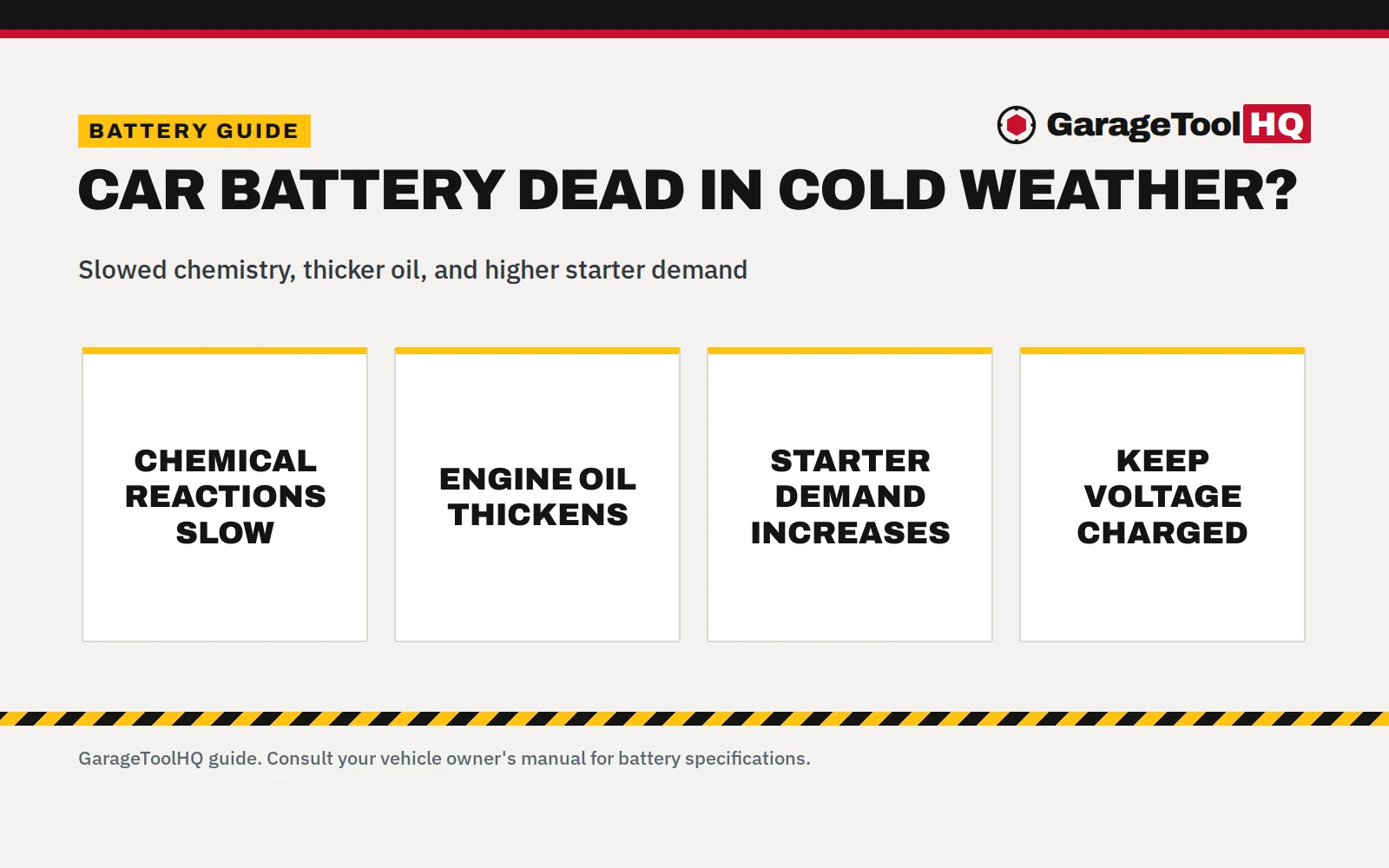
How cold temperatures slow lead-acid battery chemistry, increase engine oil drag, raise starter demand, and how to prevent winter starting failures.

On this page
Top picks at a glance
As an Amazon Associate we earn from qualifying purchases.
- 1
 Schumacher Electric 15A Car Battery Charger & Maintainer9.8/10View on Amazon
- 2
 Battery Tender Plus 12V 1.25 AMP Car & Motorcycle Battery9.7/10View on Amazon
- 3
 TowerTop 2/10/25 Amp 12V Smart Car Battery Charger9.7/10View on Amazon
Why does my car battery die in cold weather? Car batteries die in cold weather because low temperatures slow down the chemical reactions that produce electrical current, while thickened engine oil forces the starter motor to draw substantially more power to crank the engine. Cold weather reduces battery cranking power right when starting demand peaks. If an older battery already suffers from sulfation or parasitic drain, cold temperatures leave it unable to start the vehicle.
GarageToolHQ earns a commission when you buy through links on our product pages, at no extra cost to you. Read our affiliate disclosure.
Below: how cold temperatures degrade battery chemistry, a checklist to keep your battery alive, and equipment to prevent winter starting failures.
Why does my car battery die in cold weather? Where the power loss comes from
Starting an engine in winter creates a severe mechanical and electrical mismatch. Chemical reactions slow inside the battery while mechanical resistance inside the engine rises, producing several distinct problems:
- Sluggish electrolyte chemistry. Lead-acid batteries rely on a chemical reaction between lead plates and sulfuric acid. Cold temperatures slow ion movement, raising internal electrical resistance. The battery cannot discharge stored energy as rapidly as in warm weather, causing slow cranking and voltage drop under load.
- Thickened motor oil drag. Cold temperatures cause motor oil to thicken. When the starter motor engages, turning the crankshaft through viscous oil requires significantly more electrical amperage to reach starting speed.
- Heavy accessory electrical load. Winter driving strains the charging system. Running seat heaters, defrosters, blowers, and headlights simultaneously consumes heavy current. On short trips, the alternator may not run long enough to replenish the battery.
- Impact of baseline parasitic drain. Modern vehicles power onboard modules while parked. While this background draw remains steady, a cold battery operates with reduced reserve capacity, meaning normal drain depletes the remaining charge in fewer days.
Cold weather battery factors and winter ratings
| Equipment Category | Listing Specification | Cold Weather Function |
|---|---|---|
| Starting Battery (OPTIMA) | 12-Volt, 800 CCA, 50 AH, 6 cells | Delivers dedicated starting amperage to overcome cold engine drag |
| Battery Insulation Blanket (Wayona) | 59″x7″, 8mm thickness, rated down to -14°F | Slows engine bay heat loss around the battery case after shutdown |
| Heavy-Duty Booster Cables (Noone) | 2 Gauge, 16 feet, 800A, flexible to -40℉ | Transfers starting amperage between vehicles without cable stiffening |
| Emergency Jump Box (GNTM) | 12V, 4000A peak, rated down to -20°F | Provides standalone boost power for gas engines up to 8.0L and diesel engines up to 7.0L |
A battery Cold Cranking Amps rating indicates the amperage delivered at low temperatures without dropping below critical voltage. For example, the OPTIMA listing specifies an 800 CCA rating on its 12-Volt starting battery, alongside a C20 capacity of 50 AH, 100 minutes of reserve capacity, and a 6 cell design. Choosing a replacement with equal or higher CCA helps provide adequate reserve power in freezing weather.
How to keep a car battery alive in cold weather: the checklist
- Inspect terminal connections. Corroded terminals restrict starting and charging current. Clean corrosion with a wire brush, wipe the posts clean, and tighten clamps securely.
- Evaluate resting voltage. Check battery charge with a quality tool from our guide to the best automotive multimeter. Low voltage indicates the battery requires charging or replacement before winter.
- Connect a smart maintainer. For parked vehicles, connect a unit from our roundup of the best battery charger maintainer picks. A float charger maintains full charge without overcharging, preventing sulfation and freeze damage.
- Install thermal insulation. Wrapping the battery buffers against thermal swings and slows heat loss after shutdown. For example, the Wayona wrap provides an 8mm thick layer rated to handle cold down to -14°F, while the TWAKAP listing offers a 5mm thick wrap, and the HFYZZ listing provides a 5mm wrap with an overlap between 0.5 inches and 1 inch.
- Park in a sheltered garage. Storing your vehicle inside shields the engine from freezing winds that accelerate convective cooling. For workshop heating advice, see our guide on how to keep a garage warm in winter.
- Turn off accessories before cranking. Switch off blowers, seat heaters, headlights, and audio before starting. Directing all amperage to the starter motor maximizes cranking speed.
- Avoid extended cranking. Cranking draws heavy current and heats starter windings. Crank for brief bursts; if the engine fails to start, allow the starter to cool before trying again.
- Drive long enough to recharge. Cold starting consumes significant capacity. Drive on highway routes rather than short trips so the alternator can recharge the battery.
- Carry emergency starting gear. Keep dependable cables in your trunk. The Noone listing specifies 2 Gauge cables measuring 16 feet that remain flexible down to -40℉ for roadside jump starts.
Inspect the battery case before connecting cables or a charger. A discharged battery contains diluted electrolyte that freezes in winter temperatures, risking casing cracks or internal short circuits. If the case bulges or ice is visible inside, bring the battery indoors to thaw completely and inspect for leaks before handling.
Lead-acid batteries can release hydrogen while charging, so charge in a ventilated space away from sparks and flames, connect positive first and negative last, set the charger to the battery type (flooded, AGM, gel, lithium), and wear eye protection. Read our Safety Disclaimer.
Battery maintainers vs portable jump starters
Preparing for winter comes down to choosing between a garage maintainer and an emergency jump box. Both address cold starting trouble, but serve distinct purposes:
- Battery charger maintainers: A maintainer plugs into household power and monitors voltage, supplying a gentle float charge to keep the battery primed. If you wonder about winter storage, read our guide on whether you can leave a battery maintainer on all winter. To compare equipment types, see our breakdown of a jump starter vs battery charger.
- Portable jump starters: A portable lithium jump pack delivers an instant burst of amperage to crank an engine on the spot. For example, the GNTM listing specifies a 12V unit delivering 4000A, rated to crank gas engines up to 8.0L and diesel engines up to 7.0L down to -20°F without a donor vehicle. Compare top models in our guide to the best jump starter.
- Heavy jumper cables: Booster cables transfer current from a running donor vehicle. The Noone listing highlights 2 Gauge cables measuring 16 feet, rated for 800A across 12V and 24V systems. Heavy conductor gauge minimizes voltage drop along the run.
For home parking, a maintainer prevents winter discharge. Away from home, a portable jump pack or booster cables provide immediate starting recovery.
Alternator charging and parasitic electrical drain
A battery that repeatedly dies in cold weather is not always defective. An underperforming alternator or parasitic draw can deplete reserves overnight, leaving too little power for morning cranking.
The alternator powers accessories while running and recharges capacity used during starting. In winter, heavy electrical loads from heaters and defrosters increase demand. On short trips, the system may not run long enough to restore full charge. To inspect charging trouble codes and review sensor data, connect a diagnostic scan tool from our guide to the best OBD2 scanner for DIY to confirm whether the alternator is charging properly.
Parasitic drain occurs when a component draws current after ignition shutdown. A stuck relay or light can drain a cold battery overnight. Vehicle owners can measure dark current with a multimeter connected in series with the negative post, removing individual fuses to isolate the circuit responsible.
Frequently Asked Questions
Does cold weather permanently damage a car battery?
Cold temperatures do not ruin a healthy battery, but freezing conditions destroy a discharged battery. A charged battery contains sulfuric acid that resists freezing. When discharged, the electrolyte becomes diluted water, which freezes, expands, bends plates, and cracks the case, ruining the battery permanently.
How cold does it have to be for a battery to struggle?
A battery loses cranking efficiency as temperatures drop toward freezing, compounding as oil thickens. Extreme winter demands specialized gear: the GNTM jump starter operates down to -20°F, the Noone booster cables remain flexible down to -40℉, and the Wayona wrap material handles cold down to -14°F.
Why does my car struggle to crank only in the morning?
Overnight parking exposes the car to the coldest temperatures, thickening oil while the battery drops to ambient temperature. Background parasitic draw also has hours to siphon charge. Once running, engine heat warms the battery and oil, easing subsequent starts.
Will idling the engine recharge a battery drained by cold weather?
Idling provides minimal alternator output and is inefficient for restoring a drained battery, as accessories consume most available current. Driving at highway speeds provides greater output, though deeply depleted batteries require a dedicated bench charger.
How do I know if my battery is failing or my starter motor is bad?
A weak battery causes rapid clicking from the starter solenoid, dims interior lights, or turns sluggishly. A failed starter produces a distinct click or silence even with full voltage. Checking terminal voltage with a multimeter during cranking identifies the problem.
Can a car battery blanket prevent winter starting problems?
Passive wraps buffer against temperature swings and slow engine bay heat loss after shutdown. The Wayona wrap specifies an 8mm layer handling cold down to -14°F, while TWAKAP specifies a 5mm wrap. However, an unpowered blanket eventually reaches ambient temperature overnight, making a plug-in maintainer more dependable for long parking.
Related: explore our category hub for diagnostics and electrical equipment, learn whether you can leave a battery maintainer on all winter, compare options in our guide to the best battery charger maintainer, inspect our top picks for the best jump starter, and read our diagnostic scanner recommendations in the best OBD2 scanner for DIY guide.