Borescope vs Endoscope: Which One Should You Buy?
Borescope vs endoscope explained for home mechanics: the same inspection camera under two names, and the specs that matter, from the listings.

On this page
Top picks at a glance
As an Amazon Associate we earn from qualifying purchases.
- 1
 DEPSTECH 10FT Articulating Borescope9.6/10View on Amazon
- 2
 FOXWELL Y400 220° 2-Way Articulating Borescope9.5/10View on Amazon
- 3
 Teslong Articulating Borescope with Dual Lens Endoscope and9.4/10View on Amazon
- 4
 Endoscope Camera with LightView on Amazon
- 5
 Articulating Borescope Inspection Camera with Light: 1080P HDView on Amazon
- 6
 DXZtoz Two-Way Articulating Borescope with LightView on Amazon
- 7
 Ralcam 360° Articulating BorescopeView on Amazon
- 8
 Endoscope Camera with Light-1920P HD Borescope 8mm MiniatureView on Amazon
- 9
 Anykit 210° Two-Way Articulating BorescopeView on Amazon
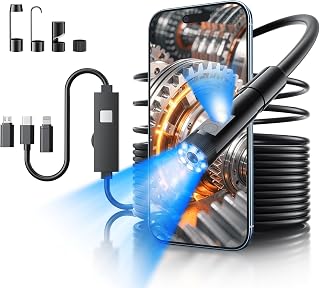
Borescope vs endoscope: for garage work, they are the same tool wearing two names. Both are inspection cameras on a cable that let you see inside cylinders, behind dashboards and down drains without taking things apart. The listings call them endoscopes, borescopes and snake cameras interchangeably, so buy by the specs, not the label.
More options to compare
 Endoscope Camera with LightCheck price on Amazon
 Articulating Borescope Inspection Camera with Light: 1080P HDCheck price on Amazon
 DXZtoz Two-Way Articulating Borescope with LightCheck price on Amazon
 Ralcam 360° Articulating BorescopeCheck price on Amazon
 Endoscope Camera with Light-1920P HD Borescope 8mm MiniatureCheck price on Amazon
 Anykit 210° Two-Way Articulating BorescopeCheck price on Amazon
GarageToolHQ earns a commission when you buy through links on our product pages, at no extra cost to you. Read our affiliate disclosure.
Borescope vs endoscope: the short answer
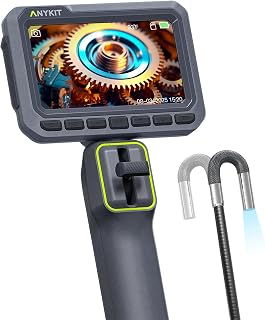
Strictly speaking, a borescope is a rigid inspection scope and an endoscope is a flexible one, but the garage market ignored that distinction years ago. Every listing in this category is a flexible semi-rigid snake camera with a lighted probe, whether the title says borescope, endoscope or both. When a listing says “endoscope camera with light, 1920P HD borescope tools,” it is describing one tool, not two.
What the listings actually sell
The reference listings cluster around a few specs. Resolution runs 1920P HD on most and 1080P HD on some, like the DEPSTECH dual lens listing. Cables run 16.4 to 16.5 ft, semi-rigid so they hold a bend. Probes are IP67 waterproof, with 8 adjustable LED lights around the lens; one listing states a 7.9mm probe. Screens run 4.3 in IPS on several listings, and the Teslong listing carries a 5 in screen. Those are the numbers that matter; the name on the box does not.
Single lens vs dual lens
Several listings offer dual-lens probes: a forward camera plus a side camera, switchable from the screen. That suits looking at cylinder walls and valve seats without twisting the cable into a pretzel. Single-lens probes are simpler and usually cheaper in spirit, though no prices appear here. For engine inspection, dual lens is the useful upgrade; for finding a dropped bolt behind the fender, single lens is plenty.
Screen or phone app
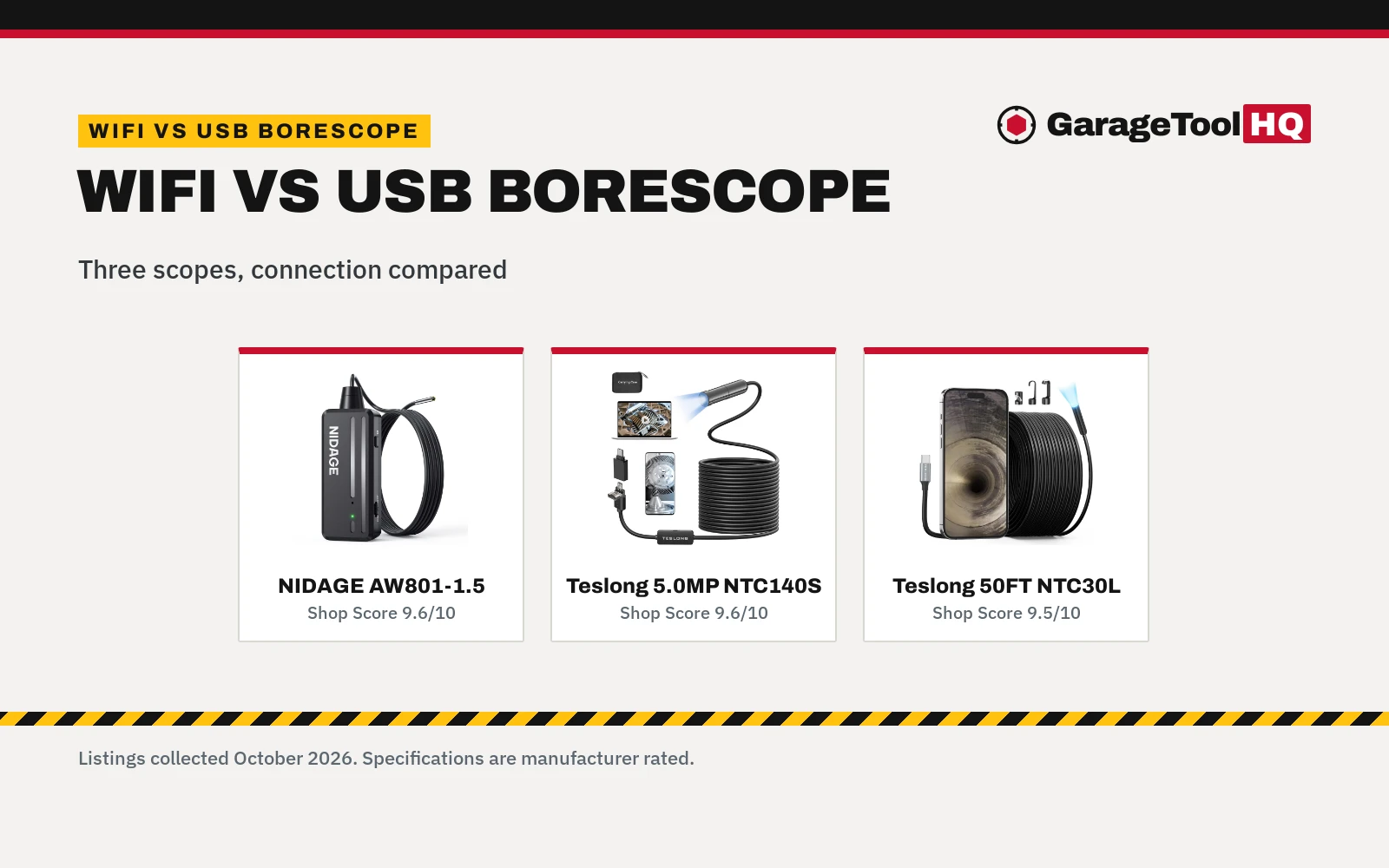
The listings split two ways: units with a built-in screen, usually 4.3 in IPS, and units that show the picture on your phone over Wi-Fi. A built-in screen works with greasy gloves and no app updates; a phone gives you a bigger picture and easy photo saving. The Teslong 5 in screen listing is the biggest display stated here. Pick the one that matches how you work, not the one with the fancier box.
What to check before you buy
Run down this list against the listing. Cable length: 16.4 to 16.5 ft is the stated norm here, enough to snake from the engine bay into most hiding spots. Waterproofing: IP67 is stated across these probes, which suits wet engine bays and drains. Probe diameter: 7.9mm is stated on one listing, slim enough for spark plug holes. Lights: 8 LEDs is the common count. Screen: 4.3 in IPS is typical, 5 in on the Teslong. If a listing omits one of these, that is your sign to look closer.
Service terms, battery life and focus distance
Support terms vary more than the hardware does. DEPSTECH states a 24-month free warranty plus 24-hour after-sales service on the DS300, Teslong states 12 months, Kinpthy states a 12-month free warranty service, Daxiongmao states 180 days and PAPIBLU states 1-year manufacturer support with 24-hour service; the Ditomil listing states no warranty at all. If you lean on the tool for side work, the length of that stated term is worth weighing.
Battery life decides how far into a job you get. DEPSTECH rates about 4 hours of continuous use on a rechargeable battery, Teslong rates about 4.5 hours from a 5000mAh battery with about 5 hours of charging time, and Daxiongmao rates 3.5 hours. Phone-tethered models like the Kinpthy draw from the phone instead, so there is no battery figure to compare.
Focus distance is the spec people skip and then regret. The DEPSTECH lists a front-camera focal range of 3 to 8 cm (1.2 to 3.1 in) and a side camera of 2 to 6 cm, Daxiongmao lists a best observation distance of 1.5 to 5 in, and MugEasy lists an optimal focusing distance of 2 to 10 cm. Match that range to your job: a spark plug hole inspection wants close focus, a wall cavity wants more.
Rigid vs flexible: where the old names still matter
The strict definitions still exist in industry: a borescope is a rigid tube, an endoscope is a flexible fiber or camera cable. In the garage listings here, everything is a flexible semi-rigid cable, so the rigid-vs-flexible choice does not come up. If you ever shop industrial scopes, the rigid tube suits straight bores and the flexible cable suits everything with a bend. For a home garage, flexible is the usual pick.
Garage jobs that suit an inspection camera
Cylinders top the list: pull a plug and look at the piston crown and cylinder walls. Behind the dash for wiring and lost clips. Inside door panels for window regulators. Down drains and wall cavities for leaks, where the IP67 waterproofing earns its keep. Around the engine bay for oil leaks you can see but not reach. The 16.4 to 16.5 ft cable stated here reaches all of these from one standing position.
Probe diameter and lights
The 7.9mm probe stated on one listing fits spark plug holes and tight passages; wider probes suit drains and wall cavities. Eight LEDs is the common count around the lens here, with adjustable brightness on several listings. More light matters in dark cast-iron bores; less matters when the lens sits an inch from the surface.
Use rated jack stands on solid ground, wear eye protection with power and air tools, keep fuel-burning equipment out of a closed garage, and follow the manual for every tool. Read our Safety Disclaimer.
Frequently Asked Questions
Are borescopes and endoscopes the same thing?
In garage listings, yes. The terms are used interchangeably for flexible inspection cameras with lighted probes. Buy by resolution, cable length and waterproof rating, not by which word is in the title.
Can I use an inspection camera in an engine?
Yes, that is their main garage job: cylinders, valves and hidden fasteners. The IP67 waterproof probes stated here handle wet engine bays, and the 7.9mm probe fits tight passages.
What does IP67 mean on an inspection camera?
It is the waterproof and dustproof rating stated across these listings, which suits wet engine bays, drains and outdoor use. Check the listing for the exact coverage behind the rating.
How long a cable do I need?
The listings here run 16.4 to 16.5 ft, which reaches from the engine bay into most hiding spots on a car. Longer is rarely needed in a home garage; the semi-rigid cable holds its shape once bent.
Do I need 1920P or is 1080P enough?
Both appear in these listings. Higher resolution shows finer detail on cylinder walls and small cracks; 1080P is fine for finding dropped hardware and checking general condition.
Are inspection cameras safe around fuel?
None of these listings state a fuel-vapor safety rating. Keep the probe and its electronics away from open fuel and fuel vapors, and work in ventilated air.
Related: best OBD2 scanner for professional, bluetooth vs standalone OBD2 scanner, wired vs wireless OBD2 scanner and bottle jack maintenance.