Bottle Jack Maintenance: Step-by-Step Care and Inspection Guide
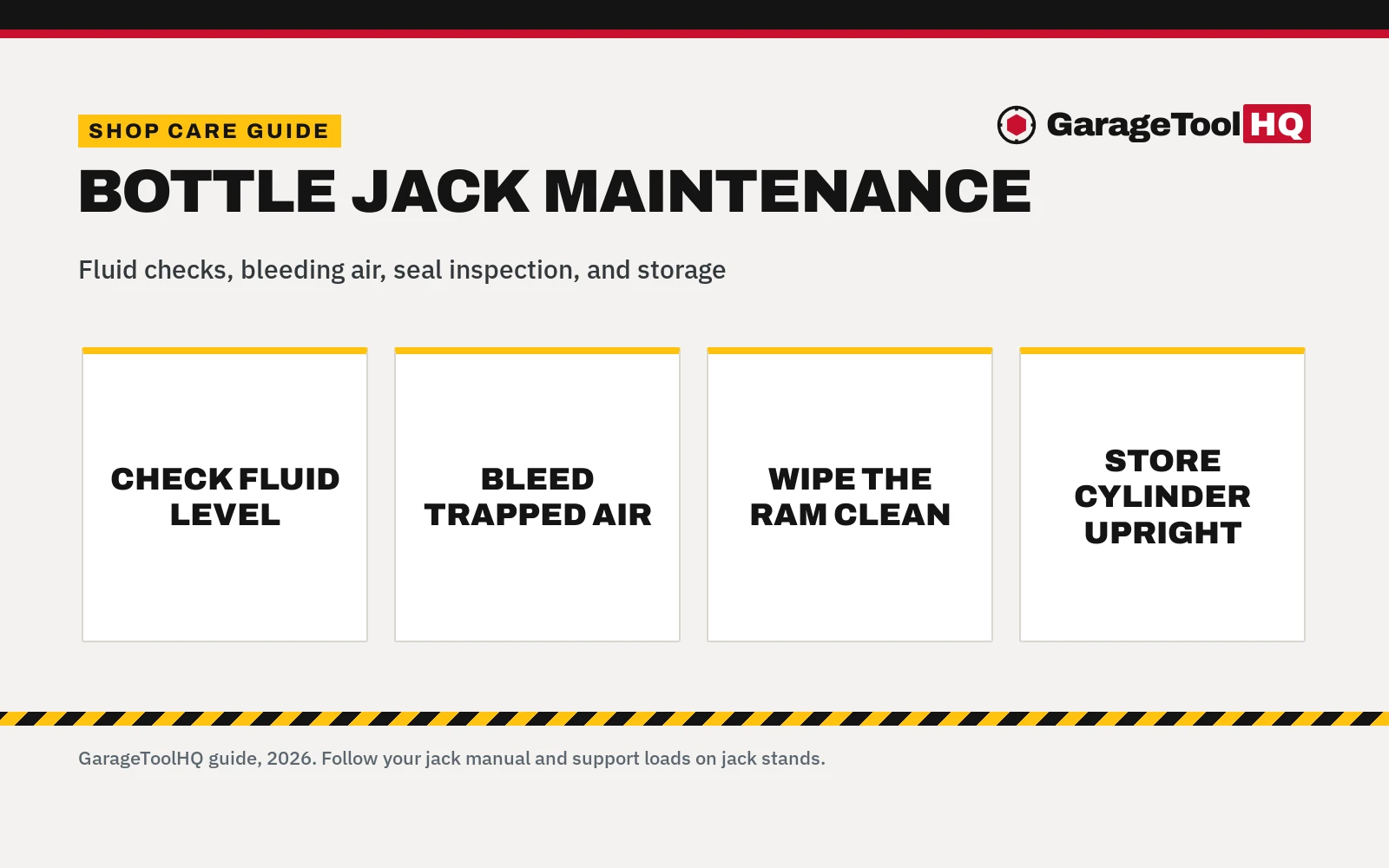
How to handle bottle jack maintenance safely: checking hydraulic fluid, bleeding air from the cylinder, inspecting seals, and upright shop storage.

On this page
Top picks at a glance
As an Amazon Associate we earn from qualifying purchases.
- 1
 Powerbuilt 3 Ton9.7/10View on Amazon
- 2
 POWERBUILT 3 Ton All-in-One Hydraulic Bottle Jack and9.7/10View on Amazon
- 3
 BIG RED T91003B Torin Hydraulic Welded Bottle Jack9.7/10View on Amazon
When sliding a hydraulic bottle jack under a vehicle axle to raise a wheel for a brake job or tire rotation, you rely entirely on trapped fluid and internal valves to lift heavy automotive loads. Bottle jack maintenance is the routine process of cleaning the lifting ram, inspecting external seals for fluid leaks, checking hydraulic oil, and bleeding trapped air so the piston rises smoothly under load. Regular care keeps the pump responsive, prevents internal rust from moisture, and ensures steady lifting performance. Never work under any vehicle supported by a jack alone; always lower the vehicle onto rated jack stands on solid, level ground at manufacturer lift points.
GarageToolHQ earns a commission when you buy through links on our product pages, at no extra cost to you. Read our affiliate disclosure.
Below: why hydraulic cylinder care matters in a home garage, an inspection schedule for routine shop work, step-by-step procedures for topping off oil and purging air, troubleshooting common pump issues, and proper vertical storage.
Bottle jack maintenance: why regular hydraulic care matters
A hydraulic bottle jack generates lifting force using Pascal’s principle. Pumping the handle operates a small piston, drawing fluid from an outer reservoir through an intake check valve and forcing it under pressure into the main cylinder beneath the ram. As fluid accumulates, the ram rises to lift the load. Opening the release valve allows fluid to return to the reservoir so the ram lowers.
Because tolerances are tight, dirt and moisture cause rapid wear. Grit settling on the ram scores polished steel and damages internal rubber seals when retracted. In unheated garages, temperature swings cause reservoir condensation, causing check valves to stick. Understanding what a bottle jack is clarifies why cleaning, fluid checks, and air purging keep the tool dependable.
Bottle jack inspection and maintenance schedule
Consistent inspections prevent surprise failures in the middle of a brake job or suspension project. Use this shop schedule to catch fluid weeping, seal wear, and air contamination early:
| Inspection item | Recommended timing | Action required |
|---|---|---|
| Ram and wiper seal | Before every lift | Wipe the ram clean with a lint-free cloth and inspect for fluid weeping. |
| Release valve | Before every lift | Confirm smooth turning and verify that it seals firmly without excessive force. |
| Hydraulic oil level | Annually or if lift height drops | Lower the ram, remove the rubber fill plug, and verify fluid reaches the fill hole rim. |
| Air bleeding | After storage or if spongy | Open the release valve, cycle the pump handle through full strokes, and close the valve. |
| Base and welds | Periodically | Inspect the forged base and cylinder welds for cracks or distortion. |
| Storage position | Between jobs | Store upright with the ram retracted and the release valve closed. |
Inspecting the tool before placing it beneath an axle takes only moments, but it ensures you never discover a low reservoir or sticking valve while supporting vehicle weight.
How to maintain a bottle jack: step-by-step checklist
Follow these steps in order using clean rags, a screwdriver or pick, a small funnel, and approved hydraulic jack oil:
- Clean the cylinder and ram. Wipe down the exterior housing, base, and extension screw. Extend the ram without load and wipe away grease, grit, and road grime. Avoid solvent sprays on the wiper seal, which dry out rubber compounds.
- Inspect for hydraulic leaks. Check around the ram base, oil fill plug, and release valve screw. Wet fluid film indicates worn seals or a loose plug needing repair before lifting.
- Check and top off hydraulic oil. Lower the ram completely and retract the extension collar. Place the jack upright on a level bench. Pry out the rubber oil fill plug on the reservoir side. Fluid should sit level with the lower rim of the fill hole. If low, slowly add clean hydraulic jack oil until it reaches the edge. Avoid overfilling, which leaves inadequate air space for returning fluid and prevents the ram from retracting fully. Reinsert the plug firmly.
- Bleed trapped air from the circuit. Trapped air causes a spongy handle and uneven pumping resistance. To purge air, remove the rubber oil fill plug and open the release valve counterclockwise. Pump the handle through several rapid, full strokes to expel trapped air. Close the release valve clockwise, reinsert the rubber fill plug firmly, pump the ram to full height, open the release valve to lower it, and confirm immediate handle resistance.
- Lubricate pivot points. Place a drop of light machine oil on handle linkage pins and extension screw threads. Wipe away excess oil to avoid attracting dust.
- Store upright with ram retracted. Ensure the ram is fully retracted, the extension screw lowered, and the release valve closed. Store upright on a shop shelf or in a case.
Hydraulic pressure holds a load only while seals and check valves remain intact. A sudden seal failure or fluid bypass can drop a vehicle instantly. Always transfer vehicle weight onto rated jack stands placed on solid, level ground at manufacturer lift points before crawling underneath.
A jack is for lifting, not holding. Never work under a vehicle supported only by a jack: set it on rated jack stands, on solid, level ground, at the manufacturer's lift points, chock the wheels, and give the car a firm shake before you go under. Read our Safety Disclaimer.
Bottle jack vs floor jack maintenance differences
While both tools use hydraulic pressure to lift vehicles, mechanical layouts create different upkeep demands. Our guide on floor jack vs bottle jack designs highlights these key points:
- Chassis and casters: Floor jacks roll on steel wheels and pivot on large steel arms requiring chassis greasing and caster maintenance. A bottle jack is a compact vertical cylinder with a fixed base, eliminating caster upkeep.
- Pumping assembly: Most modern floor jacks feature dual-piston pump mechanisms. Manual bottle jacks typically use a compact pump piston operated by a direct slip-fit handle sleeve, while air-hydraulic units add pneumatic operation, as detailed in our floor jack maintenance guide.
- Storage orientation: Floor jacks store horizontally on their wheels. Standard bottle jacks must remain upright on their base; storing on their side causes fluid weeping and air intrusion.
- Clearance and capacity: Floor jacks feature long rolling chassis to reach low unibody pinch welds, while bottle jacks deliver high vertical force directly over a compact base, with specific models sized for light sedans up to heavy commercial axles. Pairing a portable bottle jack with sturdy jack stands provides reliable garage lifting.
Bottle jack capacity ratings, build standards, and fluid rules
Selecting the right tool and maintaining it according to manufacturer specifications ensures safe operation across vehicle classes. Listing specifications show how dimensions, weight capacities, and build details vary across garage equipment:
For lightweight maintenance, Performance Tool lists a 2-ton capacity on its W1621 hydraulic bottle jack with an operating range from 7-1/8 inches to 13-1/2 inches, built with a cleated saddle and cast iron base weighing 5.6 pounds. DNA Motoring publishes a 2-ton welded model spanning 6.2 inches to 11.8 inches. For mid-weight tasks, BIG RED provides welded alloy steel units including a 4-ton model lifting from 7-1/2 inches to 14-5/16 inches, a 10-ton jack spanning from 8-13/16 inches to 17-5/8 inches, and a 12-ton capacity jack with a range from 9 inches to 18 inches weighing 13.2 pounds. For heavy trucks and farm equipment, our guide to the best bottle jack for trucks compares options like the BIG RED 20-ton low-profile bottle jack with a 6.63-inch minimum height and a 10.94-inch maximum height, and VEVOR with a 20-ton air hydraulic model operating from 10.2 inches to 19.5 inches with a 2.6-inch extension screw. VEVOR also lists a 4-ton welded model lifting from 7.64 inches to 14.92 inches weighing 7.1 pounds.
Build construction aligns with stated warranties. BIG RED includes a 1-year limited warranty across its welded bottle jack lineup. Pro-Lift backs its 20-ton bottle jack with a 2-year limited warranty and states compliance with ANSI/PALD safety standards.
Crucially, use only clean hydraulic jack oil. Never put automotive brake fluid into a bottle jack; brake fluid destroys nitrile rubber seals, causing rapid leaking. Never use motor oil or transmission fluid, which foam under pressure and cause severe handle sponginess.
Frequently Asked Questions
Why is my bottle jack not lifting to full height?
A bottle jack that stops rising before reaching its stated height usually suffers from low hydraulic oil or trapped air. Air compresses under load, preventing the ram from advancing. Top off the fluid with clean hydraulic jack oil and bleed the circuit. See our guide on why a hydraulic jack stops lifting.
Can I use motor oil or brake fluid in a bottle jack?
No. Never use brake fluid, motor oil, transmission fluid, or power steering fluid. Brake fluid chemically attacks and destroys rubber seals. Motor oil and transmission fluid foam under pressure, causing handle sponginess and sticking valves. Use only dedicated hydraulic jack oil.
How often should bottle jack maintenance be performed?
Inspect the ram, check the release valve, and wipe away debris before every lifting job. Check hydraulic oil annually or whenever stroke distance drops. If a jack has been stored for an extended period, bleed the air before lifting.
Why does the handle feel spongy and fail to lift right away?
A spongy handle indicates air trapped in the high-pressure passage beneath the check valves. Opening the release valve and pumping the handle through several rapid strokes pushes air back into the reservoir. Learn more in our guide on how to bleed a hydraulic jack.
Can I store a bottle jack on its side?
No. Always store a bottle jack standing upright on its base with the ram retracted and the release valve closed. Storing on its side causes oil to weep past the fill plug and draws air into the pumping chamber.
Is a bottle jack safe to hold a vehicle while working underneath?
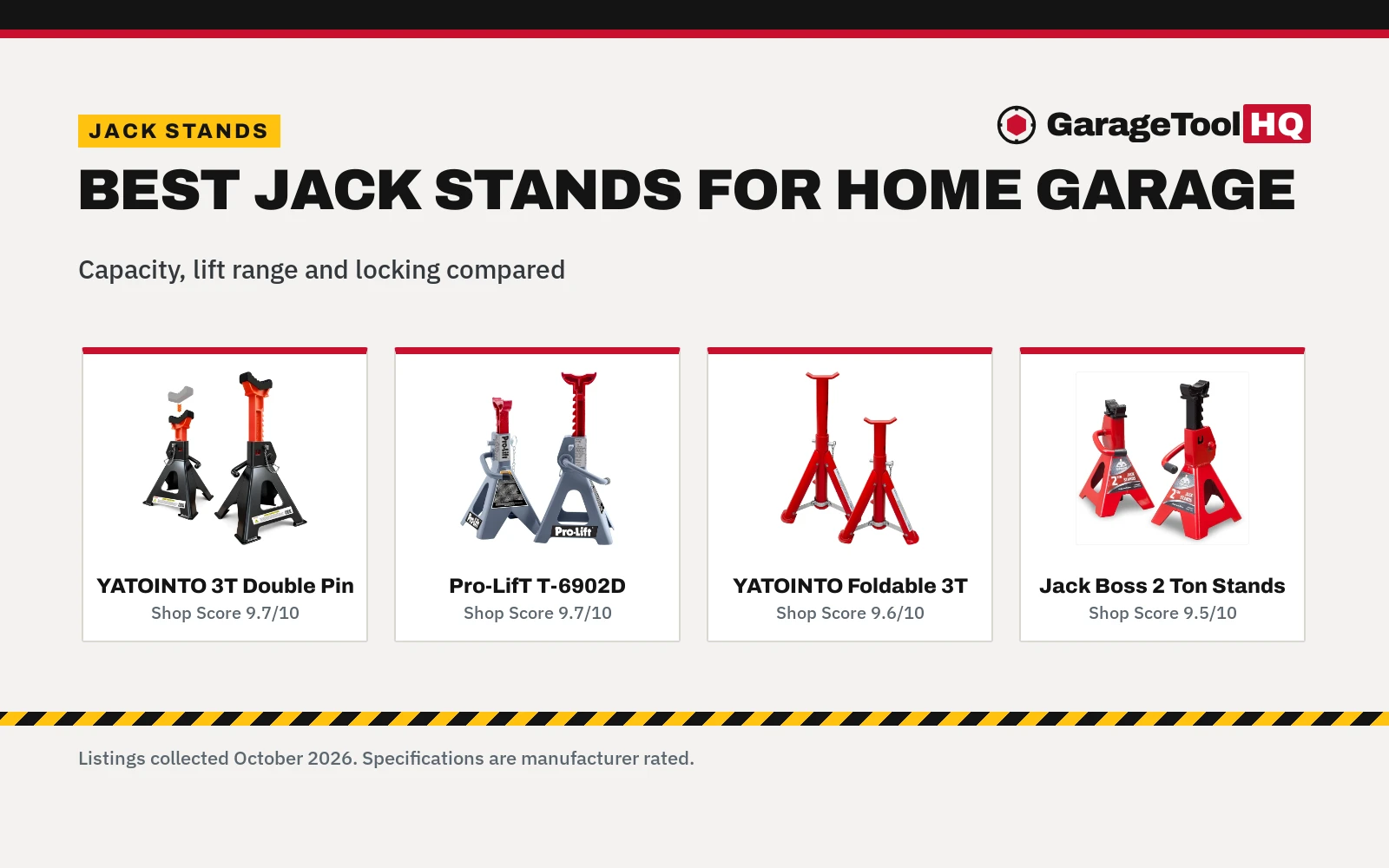
No. A bottle jack is designed exclusively to lift a vehicle, never to support it while working underneath. Seals can fail without warning. Once lifted, immediately transfer vehicle weight onto rated jack stands on solid ground, and chock wheels using our guide on how to use wheel chocks.
Related: our overview on what is a bottle jack, our comparison of floor jack vs bottle jack, step-by-step floor jack maintenance, sizing advice in what size jack stands you need, and our central jacks and stands hub. Also check our equipment roundups for the best bottle jack for trucks and best jack stands.