Car Dent Repair Puller: Choosing the Right One
A car dent repair puller uses suction to lift shallow dents from flat body panels, and cup size plus a clean, dry surface decide whether the pull holds.

On this page
Top picks at a glance
As an Amazon Associate I earn from qualifying purchases.
- 1
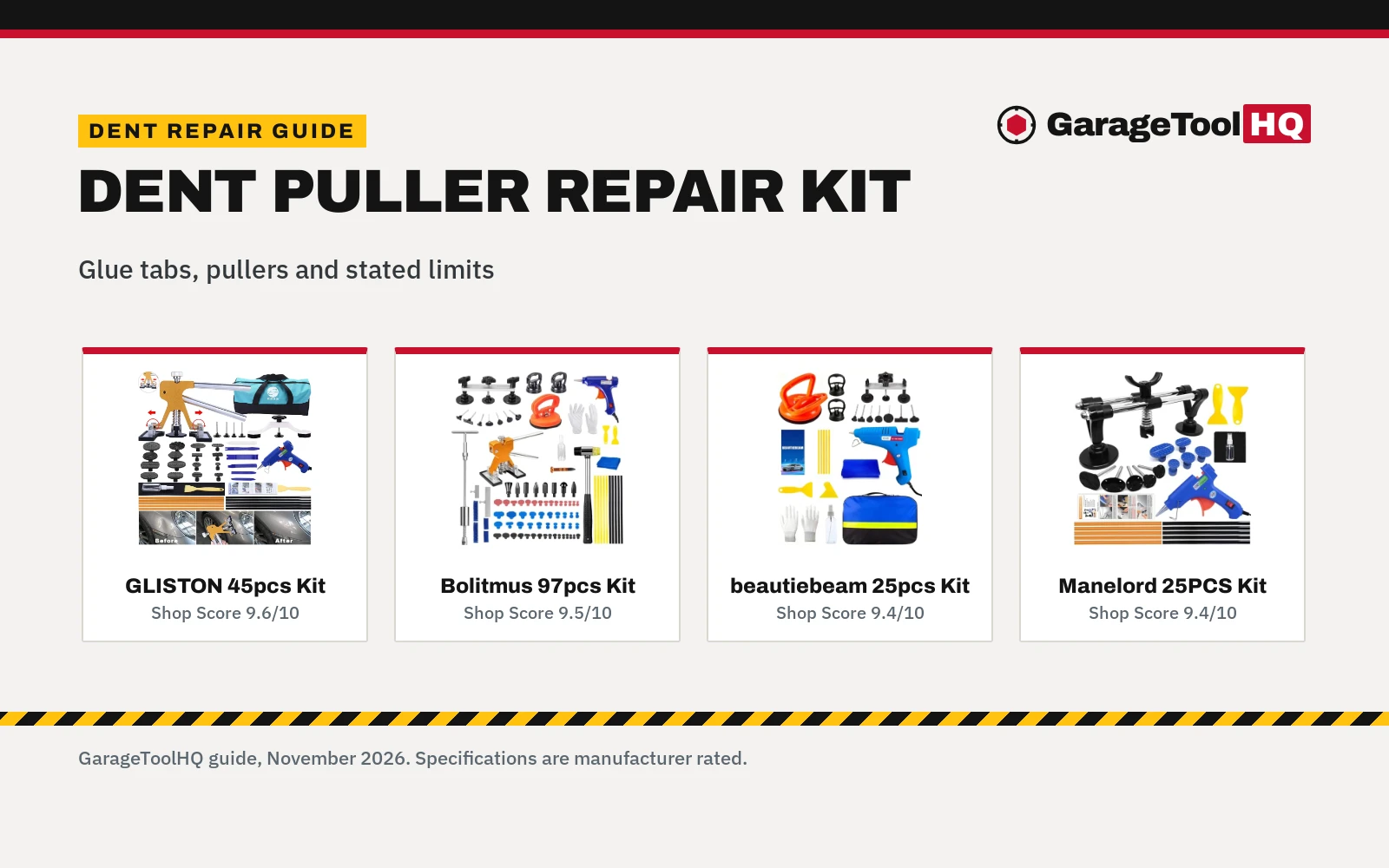
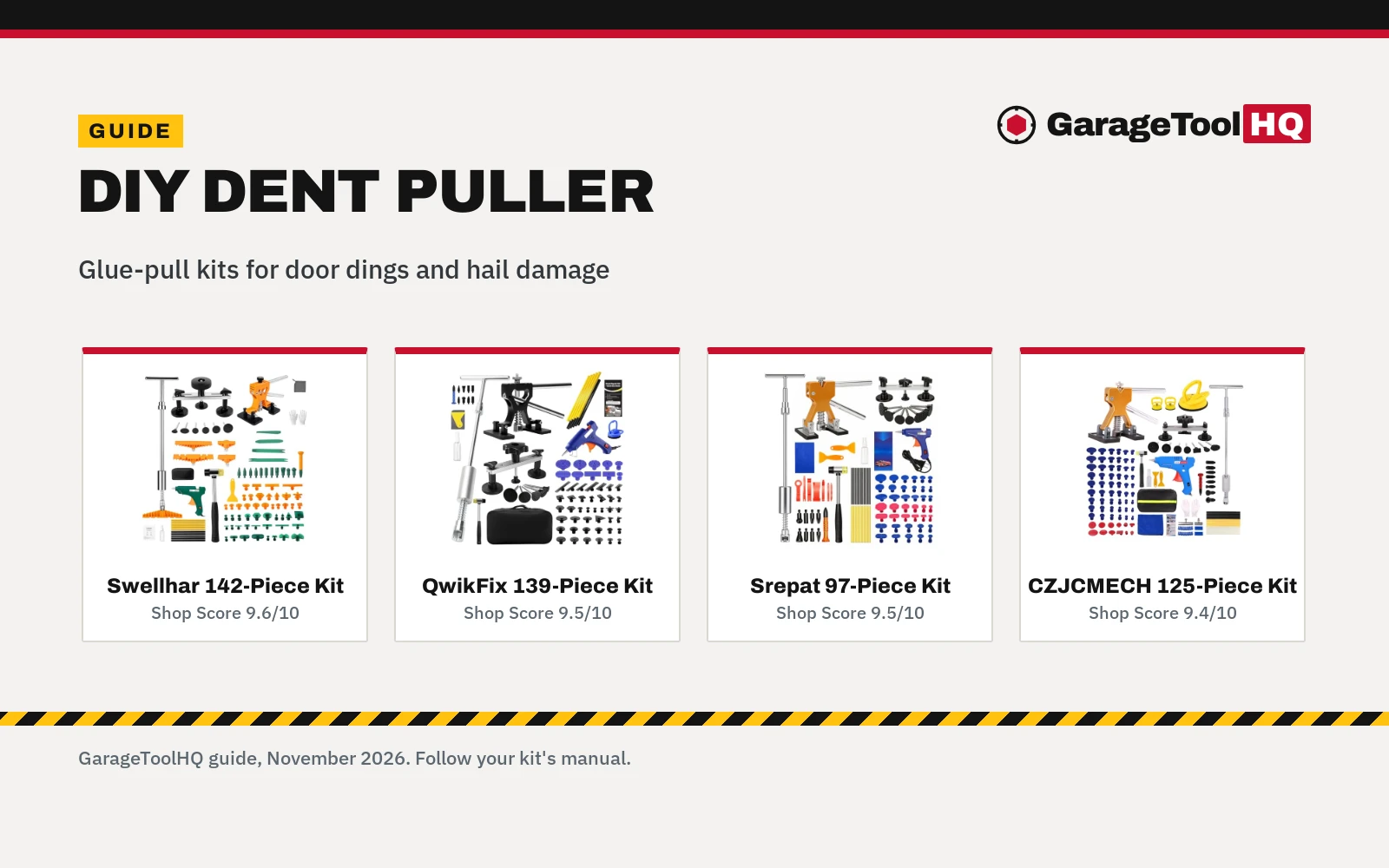
 GLISTON 45pcs Paintless Dent Repair Tool Dent Puller Kit9.6/10View on Amazon
- 2
 97pcs Dent Puller Kit9.5/10View on Amazon
- 3
 25pcs Dent Puller Kit9.4/10View on Amazon
A cart taps the door in a parking lot, and the panel comes home with a shallow dish in the paint. A car dent repair puller is the suction tool for that kind of damage: a rubber cup locks onto the panel with vacuum grip, and a steady pull lifts the metal back toward its shape. It suits shallow dents on flat, smooth panels, and it does nothing for cracked paint or torn metal.
GarageToolHQ earns a commission when you buy through links on our product pages, at no extra cost to you. Read our affiliate disclosure.
Below: how a suction puller works, how to match cup size to the dent, the steps for a pull, and when to leave the panel to a body shop.
How a car dent repair puller works
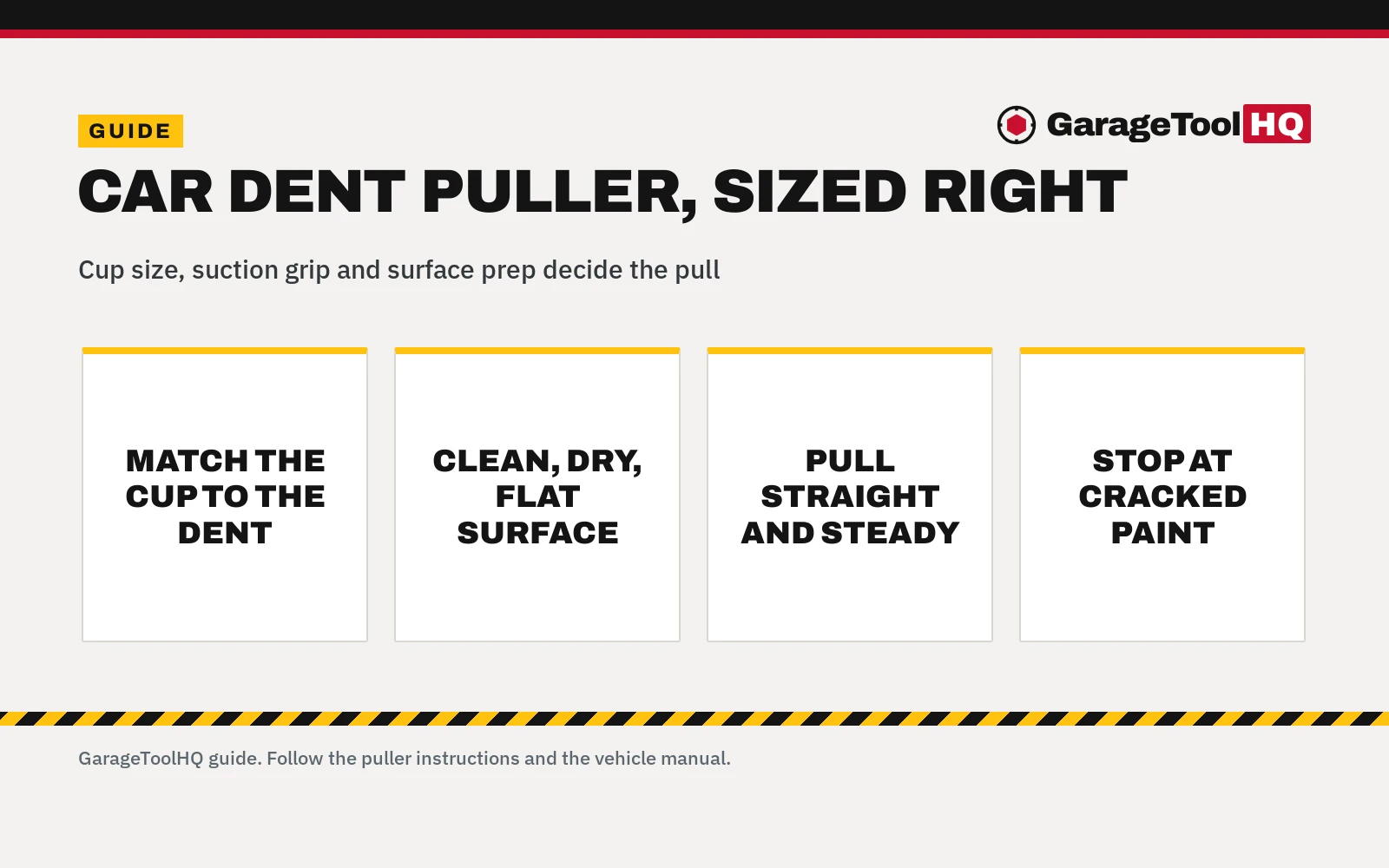
A suction dent puller works on air pressure, not force from a hammer. The rubber cup seals against the panel, the air inside the cup gets squeezed out, and the vacuum holds the cup tight while the puller pulls the metal outward. The pull works when the cup seals flat against the panel, which is why the surface has to be clean, dry, flat and non-porous. Any dirt, water or curve under the rim lets air back in, and the cup lets go.
The maker builds the cups from ABS housing with a solid metal inner core and a high-grade natural rubber seal, and the seal is what keeps the vacuum while the pull is on. The rubber base grips smooth surfaces without scratching original car paint. That grip is the whole tool: a cup that cannot seal cannot pull, whatever the size of the dent.
Cup sizes and suction grip
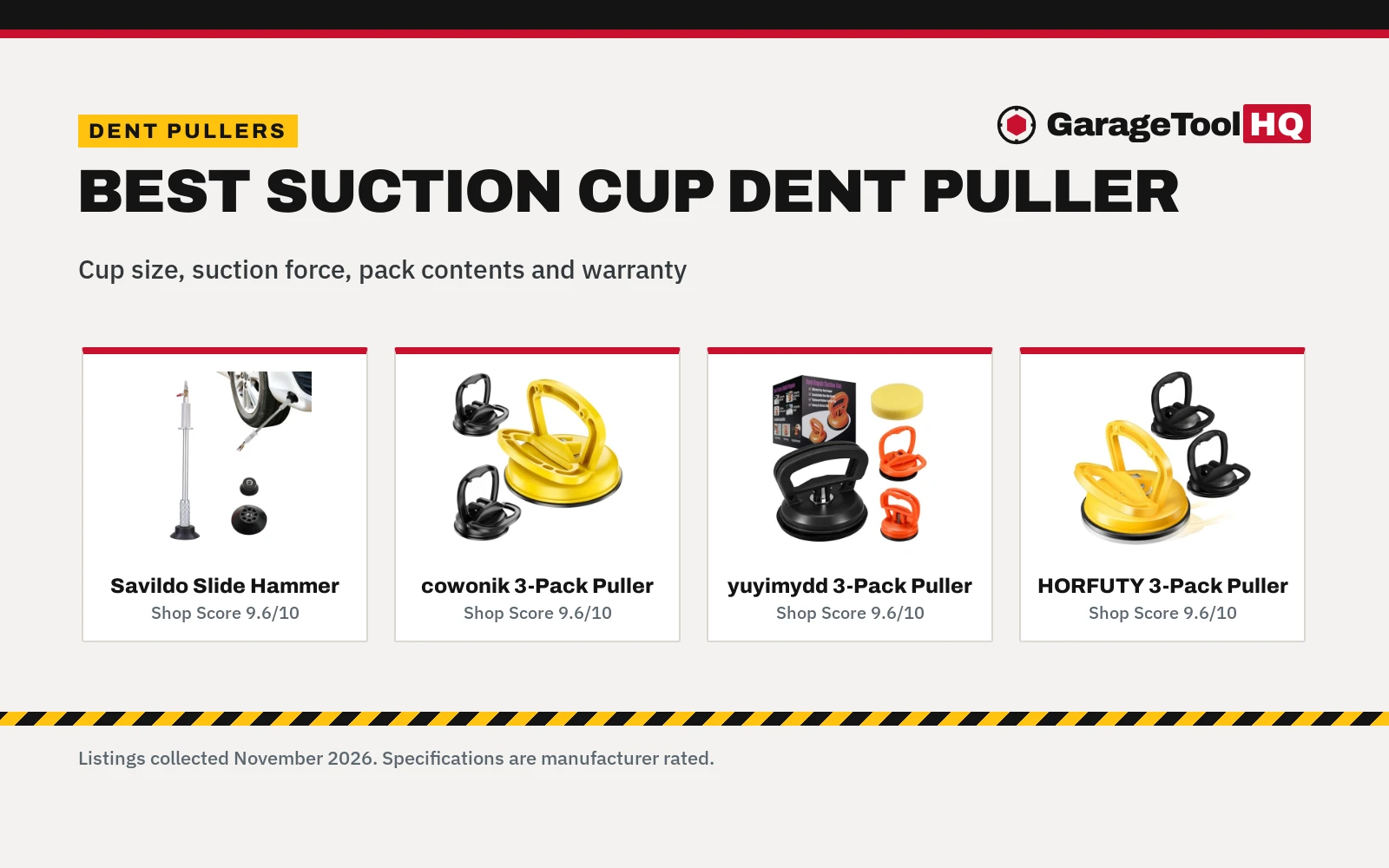
The 9-piece kit holds cups in 2 sizes: 2 large dent pullers at 4.5-inch and 1 small suction puller at 2.2-inch. The large cups cover broad, shallow dents, and the small cup fits tighter spots where a large cup cannot seal. Match the cup to the dent, and check that the cup diameter is smaller than the dent area before the pull.
| Kit piece | Size or count |
|---|---|
| Large dent pullers | 2 at 4.5-inch |
| Small suction puller | 1 at 2.2-inch |
| Polishing extras | Car rag, polishing pads, sandpaper |
The set also holds a car rag, polishing pads and sandpaper for post-repair polishing work, so the panel can be cleaned up after the pull without extra purchases.
The maker states suction up to 130 lbs horizontal and 80 lbs vertical, which is the grip that holds the cup on the panel through the pull. Cup size matters more than grip alone. A large cup on a small dent may not sit flat inside the dent, and a small cup on a broad dent pulls at one spot while the rest of the dent stays put. Pick the cup that sits flat inside the dent area, as the maker directs.
How to use a suction dent puller
Work on a clean, dry, flat, non-porous smooth surface, and heat the dent area before the pull.
- Clean and dry the target surface, then heat the dent area.
- Lock the suction cup onto the flat surface.
- Squeeze the air out of the cup until the seal holds.
- Pull upward steadily to lift the shallow-to-medium dent.
Check the seal before the pull: if the cup rocks or slides, clean the surface again and reseat the cup. A cup that moves under hand pressure will not hold through the pull. Work in daylight or under a bright shop light so the panel can be seen clearly as the dent comes up.
What a suction puller cannot fix
A suction puller suits shallow-to-medium dents on flat panels. It does not suit dents on cracked paint or a damaged car body: the cup cannot seal on broken paint, and pulling on damaged metal risks secondary paint damage. When the paint is cracked, flaked or torn, or the panel is creased, the job belongs to a body shop with filler, paint and proper repair tools.
A suction cup also needs a flat area larger than the cup itself. Dents on sharp body lines, wheel-arch lips or heavily curved panels leave no flat seat for the rim, so the cup cannot hold vacuum. In those spots, a puller that grips from behind the panel or a glue-pull system may be the next step, and a body shop can judge which one fits.
Other jobs for a suction cup
The same cups lift glass, ceramic tiles and flat furniture panels, which makes the kit useful beyond dent work. The kit also serves as a temporary phone holder for daily convenience, though that is a side use rather than the main job.
Read the manual before first use, wear eye protection, keep the work area clear and ventilated, and stay within every stated rating. Read our Safety Disclaimer.
FAQ: garage tools
Will a car dent repair puller damage the paint?
No, when the paint is sound and the surface is clean. The rubber base grips without scratching original car paint, and the pull works on the metal under the finish. Never use the cup on cracked paint or a damaged body, since pulling there risks secondary paint damage.
What size suction cup fits a dent?
Pick a cup with a diameter smaller than the dent area. The 9-piece kit holds 2 large pullers at 4.5-inch and 1 small puller at 2.2-inch, so a broad dent takes a large cup and a tight dent takes the small cup. If no cup sits flat inside the dent, the puller may not seal, and the dent needs another method.
How strong is the suction grip?
The maker states suction up to 130 lbs horizontal and 80 lbs vertical. The grip holds the cup on smooth surfaces through the pull, and the seal depends on a clean, dry, flat surface: dirt or moisture under the rim lets air in and breaks the hold.
Can a dent puller lift glass or tile?
Yes. The same suction cups lift glass, ceramic tiles and flat furniture panels, since all of them give the cup a smooth, flat, non-porous surface to seal on. Clean the surface and check the seal before lifting, and keep the load steady while it is in the air.
When should a dent go to a body shop?
When the paint is cracked, the body is damaged, or the dent sits on a sharp line or a curve where no cup can seal. A body shop can also handle dents beyond the shallow-to-medium range that a suction cup suits, along with any paint work the panel needs after the pull.
Related: dent puller repair kit options, DIY dent puller tools and how to use one, sandpaper for car paint, DIY polishing compound and the engine and shop equipment hub.