Corded vs Cordless Die Grinder: Which One Should You Buy?
Corded vs cordless die grinder compared: speeds, amps, runtime and handling from eight listings, plus where the air grinder fits.

On this page
Top picks at a glance
As an Amazon Associate we earn from qualifying purchases.
- 1
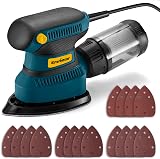 Enventor Detail Sander with 8-Hole Dust Collection9.5/10View on Amazon
- 2
 Chicago Pneumatic CP8759.6/10View on Amazon
- 3
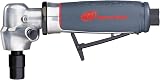 Ingersoll Rand 5102MAX 1/4" Collet Air Die Grinder Max free9.6/10View on Amazon
- 4
 Ingersoll Rand 3107G 1/4-Inch Straight Air Die Grinder withView on Amazon
- 5
 Makita GD0600 1/4" Paddle Switch Die GrinderView on Amazon
- 6
 Milwaukee ElectricView on Amazon
- 7
 Makita GD0603 1/4" Compact Die GrinderView on Amazon
- 8
 Makita GD0800C 1/4" SJS™ Die GrinderView on Amazon
- 9
 DEWALT Die GrinderView on Amazon
A die grinder lives for the detail work, deburring, porting, weld cleanup and shaping in tight spots, and the corded vs cordless die grinder question comes down to power against freedom: corded grinders plug in and run at full speed all day, while cordless grinders go anywhere the battery goes and quit when it dies. Both spin the same 1/4-inch burrs and bits; the choice is about where you work and how long the job runs.
More options to compare
 Ingersoll Rand 3107G 1/4-Inch Straight Air Die Grinder withCheck price on Amazon
 Makita GD0600 1/4" Paddle Switch Die GrinderCheck price on Amazon
 Milwaukee ElectricCheck price on Amazon
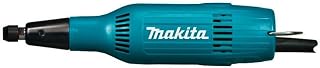 Makita GD0603 1/4" Compact Die GrinderCheck price on Amazon
 Makita GD0800C 1/4" SJS™ Die GrinderCheck price on Amazon
 DEWALT Die GrinderCheck price on Amazon
GarageToolHQ earns a commission when you buy through links on this page, at no extra cost to you. Read our affiliate disclosure.
The quick answer
Choose corded for the bench and the shop: unlimited runtime and the highest speeds here, from the Makita GD0600 at 25,000 RPM and 3.5 amps to the SENCAN at up to 33,000 RPM on 5.5 amps and 600 watts. Choose cordless for field work, the junkyard and anywhere the outlet does not reach: the Milwaukee M18 runs on 18 volts with a braking slide switch, trading some top speed for total mobility. The listings back the split plainly: six corded grinders against one cordless, and the cordless is the only one that lists a battery as its power source.
What corded die grinders offer
Corded die grinders offer continuous power at the top of the speed range. The six corded listings run 25,000 to 33,000 RPM: the Makita GD0600 at 25,000 RPM on 3.5 amps, the Makita GD0603 at 28,000 RPM on 2.2 amps in a 2-1/2-inch barrel at 2.1 pounds, the Makita GD0800C with variable speed up to 28,000 RPM on 6.6 amps and 750 watts with soft start and constant speed control, the Hoteche at 30,000 RPM on 6 amps with a 6.6-foot cable, and both SENCAN grinders variable from 10,000 to 33,000 RPM on 5.5 amps and 600 watts, including the 6-inch extended-reach model at 4.2 pounds for hard-to-reach areas.
Variable speed is the corded advantage the listings keep repeating: the GD0800C dials variable speed up to 28,000 RPM to match the speed to the application, and the SENCAN pair runs 6 speeds across 10,000 to 33,000 RPM. Weights run 2.1 to 5 pounds, and every one takes the standard 1/4-inch collet, 6.35mm, for burrs, mounted points and cutoff wheels.
What cordless die grinders offer
The cordless side is the Milwaukee M18 Fuel braking die grinder: an 18-volt battery tool with a slide switch, spindle lock and braking, listed at 27,000 RPM in the bullets and 20,000 RPM in the spec table. Take the lower figure as the working number, and note the contradiction the listing carries. The tool measures 15.5 by 3.11 by 3.27 inches at 1.63 kg, and the braking slide switch stops the accessory fast when you release it.
What cordless buys is freedom from the cord and the compressor alike: no outlet, no hose, no dragging a cable across the engine bay. What it costs is runtime and, on this listing, some top speed against the 33,000 RPM corded SENCAN pair. For quick deburring and field repairs, a charged battery handles the job; for hours of porting, plan on spare packs.
Corded vs cordless die grinder: the real difference
The real difference is the power contract. Corded promises unlimited runtime at full speed: the tool runs as long as the job does, at the 25,000 to 33,000 RPM the listings state. Cordless promises mobility: the tool goes to the work, and the battery sets the shift length. A corded grinder never fades mid-cut; a cordless grinder never snags its cord on a fender.
Speed control cuts across both sides. The corded listings lean hard on variable speed, the GD0800C constant-speed dial and the SENCAN 6-speed range, because different burrs and materials want different RPM. The Milwaukee listing states no variable speed, so the cordless example here is single-speed thinking: full trigger or nothing. If your work mixes carbide burrs on steel with polishing on aluminum, the corded variable-speed models earn their keep.
Power, runtime and the outlet
Amps tell the corded story: 2.2 on the compact Makita GD0603, 3.5 on the GD0600, 5.5 on the SENCAN pair at 600 watts, 6 on the Hoteche and 6.6 on the GD0800C at 750 watts. More amps means more torque under load, which matters when a burr bites into steel. Runtime is the cordless limit: the Milwaukee runs on its 18-volt pack, and heavy grinding drains packs fast, so field work wants a spare battery on the charger.
The outlet question is practical, not philosophical. A bench grinder station with the Hoteche 6.6-foot cable or the SENCAN on a bench never thinks about power. A grinder that lives in a rollaway for use at the car, the trailer or the fence line wants the Milwaukee and its battery. Buy the power source for where the tool spends its life.
A note on the air grinder in the data
One listing here is neither corded nor cordless: the Ingersoll Rand 3107G is a pneumatic die grinder, running on shop air at 27,000 RPM from a 0.33 hp motor in a 1-pound composite body with a 1-year limited warranty. Air grinders are the shop-duty third option, light, simple and powerful, but they need a compressor that can feed them continuously, and the listing notes the compressor is not included. If the shop already runs air, the pneumatic route deserves a look; see pneumatic vs cordless die grinder for that comparison.
Read the spec tables with suspicion
Three listings contradict themselves. The Makita GD0600 spec table lists 220 volts on a US corded tool, and the GD0603 table says Hand Powered at 127 volts; both are corded electric grinders, so trust the titles and bullets. The Ingersoll Rand table lists 120 volts on a pneumatic tool, which takes air, not wall power. And the Milwaukee lists 27,000 RPM in the bullets against 20,000 RPM in the spec table; work to the lower figure. When a listing contradicts itself, the title and bullets win.
Wear eye protection with every air tool, use impact-rated sockets on impact wrenches, disconnect the air line before changing accessories, and finish lug nuts with a torque wrench to the vehicle's spec. See OSHA eye and face protection. Read our Safety Disclaimer.
Frequently Asked Questions
Can a cordless die grinder replace a corded one?
For mobile and intermittent work, yes. For hours of continuous grinding at top speed, no: the corded listings run 25,000 to 33,000 RPM without a battery to drain. Match the tool to the duty cycle.
What collet size do die grinders use?
The 1/4-inch collet is the standard across these listings, 6.35mm, taking burrs, mounted points and small cutoff wheels. The SENCAN listings state the collet capacity explicitly.
Do I need variable speed?
If you mix materials and accessories, yes: the Makita GD0800C runs variable speed to 28,000 RPM and the SENCAN pair 10,000 to 33,000 RPM across 6 speeds. Single-speed suits one repeated task.
How loud are die grinders?
The Makita GD0600 lists 73dB(A). Wear hearing protection regardless; die grinders scream at full speed.
Corded, cordless or air?
Corded for the bench, cordless for the field, air for the shop that already runs a compressor. See straight vs angled die grinder for the shape choice, and best corded die grinder and best cordless die grinder for the picks.
Related: best air die grinder for porting heads.